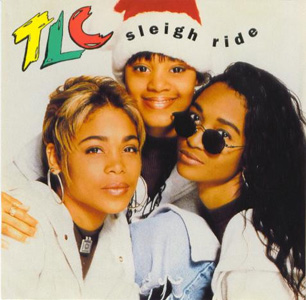
‘Tis the season.
Follow Tunes Du Jour on Facebook
Follow me on Bluesky
Follow me on Instagram
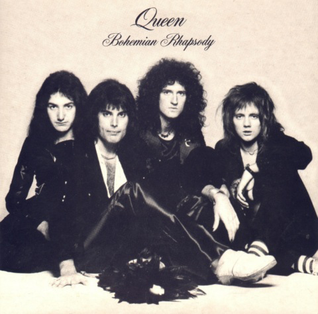
By 1976, disco had moved from underground clubs to the top of the charts, and rock music found itself facing challenges from multiple fronts. Donna Summer’s “Love to Love You Baby” and Diana Ross’ “Love Hangover” showcased the genre’s hypnotic groove and sensuality, while Wild Cherry’s “Play That Funky Music” blurred the lines between rock and funk, proving that even guitar-driven bands weren’t immune to disco’s influence. Hits like Andrea True Connection’s “More, More, More” and Candi Staton’s “Young Hearts Run Free” reinforced that this was no passing trend—it was a movement reshaping popular music.
Mainstream rock, meanwhile, leaned into grandeur and melody. Queen’s “Bohemian Rhapsody” became a landmark in songcraft, a multi-part epic that defied conventional structure and solidified the band’s place in rock history. Boston’s “More Than a Feeling” offered a soaring, polished take on arena rock, while Blue Öyster Cult’s “(Don’t Fear) The Reaper” balanced an ethereal mood with a sinister undercurrent. Even David Bowie, ever the shape-shifter, leaned into a sleeker sound with “Golden Years.”
Yet, outside of the glossy productions and layered harmonies, a different kind of energy was brewing. The Sex Pistols’ “Anarchy in the U.K.” was a shot across the bow, rejecting the excesses of rock in favor of raw urgency. While not a punk act, Thin Lizzy’s “The Boys Are Back in Town” carried a swagger and directness that resonated with rock fans who would soon embrace punk’s stripped-down ethos. Punk’s full-blown arrival was just around the corner, but 1976 gave the first clear signs that the dominant sounds of the decade were about to face a reckoning.
Beyond disco and rock, R&B and soul continued to thrive, offering both lush ballads and infectious grooves. The Manhattans’ “Kiss and Say Goodbye” and Lou Rawls’ “You’ll Never Find Another Love Like Mine” showcased rich, emotive vocal performances, while Spinners’ “The Rubberband Man” and Boz Scaggs’ “Lowdown” leaned into rhythmic sophistication. Daryl Hall & John Oates’ “She’s Gone” marked a breakthrough for the duo, setting the stage for their string of hits in the late 1970s and early 1980s, where they refined their blend of blue-eyed soul and pop.
In a year that saw both nostalgia and forward momentum, songs like the Four Seasons’ “December, 1963 (Oh, What a Night)” and Gordon Lightfoot’s “The Wreck of the Edmund Fitzgerald” reminded listeners of storytelling’s power in song. Meanwhile, ABBA’s “Mamma Mia” and Elton John and Kiki Dee’s “Don’t Go Breaking My Heart” offered sheer pop exuberance. The music of 1976 reflected an industry in transition—disco was ascendant, rock was splintering, and a new wave of rebellion was beginning to make itself heard.
Follow Tunes Du Jour on Facebook
Follow me on Bluesky
Follow me on Instagram
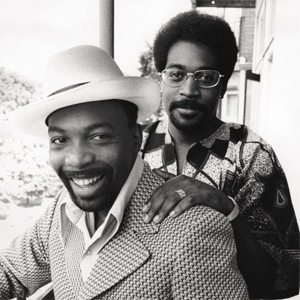
In the 1970s, Kenneth Gamble and Leon Huff shaped the sound of a generation with their signature brand of sophisticated, richly orchestrated soul music. As the architects of what became known as Philly soul, the duo crafted anthems that balanced deep emotional resonance with tight, danceable grooves. Their work as producers at Philadelphia International Records (PIR) established a sonic identity that was as polished as it was powerful, laying the foundation for later developments in R&B and disco.
Philly soul stood apart from other regional styles of the time, thanks in large part to Gamble and Huff’s emphasis on lush string arrangements, driving rhythm sections, and socially conscious lyrics. With a stable of top-tier session musicians—collectively known as MFSB—they created an expansive sound that was both cinematic and immediate. Songs like “Back Stabbers” by The O’Jays and “The Love I Lost” by Harold Melvin & The Blue Notes turned heartbreak and betrayal into dramatic musical statements, while dancefloor favorites like “Do It Any Way You Wanna” by People’s Choice showcased their ability to craft irresistibly propulsive rhythms.
As producers, Gamble and Huff had a particular talent for pairing the right voices with the right material. Lou Rawls’ baritone found a new dimension on “You’ll Never Find Another Love Like Mine,” and Billy Paul’s jazz-influenced phrasing made “Me and Mrs. Jones” a timeless tale of illicit romance. They also helped usher in the rise of Teddy Pendergrass, whose raw, commanding delivery gave Harold Melvin & The Blue Notes a distinct edge on tracks like “Wake Up Everybody” and “Don’t Leave Me This Way” before his successful solo career under their guidance.
Beyond crafting individual hits, Gamble and Huff understood the power of music as a cultural force. Songs like “Love Train” promoted unity and optimism, while “For the Love of Money” took a hard look at greed and materialism. Their productions weren’t just about making records—they were about shaping the mood of the era. Even their instrumental work, such as MFSB’s “T.S.O.P. (The Sound of Philadelphia),” became anthemic, doubling as the theme for Soul Train and solidifying Philly soul’s influence on popular culture.
The legacy of Gamble and Huff’s production work is undeniable. Their seamless blend of elegance and groove paved the way for the disco explosion, influenced generations of R&B artists, and remains a touchstone for contemporary soul revivalists. Whether through the soaring harmonies of The Three Degrees, the anthemic hooks of The Jacksons, or the velvet-toned storytelling of Jerry Butler, their music continues to resonate—proof that the sound of Philadelphia was more than just a moment in time. It was, and still is, a movement.
Follow Tunes Du Jour on Facebook
Follow me on Bluesky
Follow me on Instagram
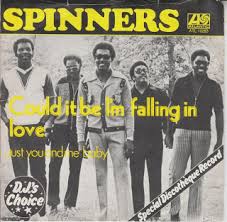

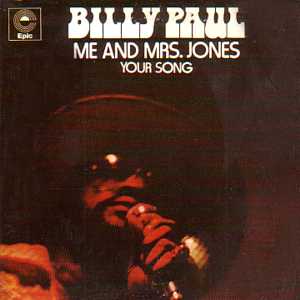
Today’s playlist recognized World AIDS Day and celebrates the December 1 birthdays of Billy Paul, The Doors’ Jon Densmore, Janelle Monáe, Basement Jaxx’s Simon Ratcliff, Blue Öyster Cult’s Eric Bloom, Clap Your Hands Say Yeah’s Alec Ounsworth, Gilbert O’Sullivan, Julee Cruise, Bette Midler, Sandy Nelson, Lou Rawls, Jaco Pastorius, Mary Martin, Matt Monro, Hair‘s Treat Williams, Sarah Silverman, and Jonathan Coulton.
Follow Tunes du Jour on Facebook
Follow Tunes du Jour on Twitter
Follow me on Instagram

Not all records classified as Philly Soul come from Philadelphia-based artists, though all share characteristics – orchestral string arrangements married to rhythm and blues with a funk influence that bridged the way toward disco. Here are thirty examples of the genre, with the songwriting-production team of Kenny Gamble and Leon Huff working on the lion’s share of these releases.
Follow Tunes du Jour on Facebook.
Follow Tunes du Jour on Twitter.
Follow me on Instagram.
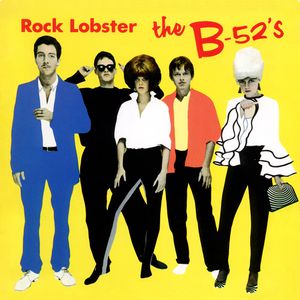
“Rock Lobster” appears on The B-52’s debut album, released in 1979. It was the group’s first single to make the Billboard Hot 100, peaking at #56. One person who heard the track was a retired John Lennon. He heard the obvious influence of his wife’s music on the track, particularly in some of the vocal mannerisms employed by the B-52’s Cindy Wilson and Kate Pierson. This inspired him to come out of retirement and record a new album with Yoko Ono. Their Double Fantasy album was released in 1980.
Here are 30 songs from The B-52’s including some extracurricular activities.
Follow Tunes du Jour on Facebook.
Follow Tunes du Jour on Twitter.
Follow me on Instagram.
Inspired by the season and the December 23 birthdays of Pearl Jam‘s Eddie Vedder, The Chi-Lites’ Eugene Record, Blood Orange’s Dev Hynes, Esther Phillips, Tim Hardin, Chet Baker, Harold Dorman, Johnny Kidd, Rainbow’s Graham Bonnett, and Harry Shearer.

Inspired by the season and the December 6 birthdays of R.E.M.’s Peter Buck, The Dave Clark Five’s Mike Smith, Jonathan King, The Tymes’ George Williams, Everything But the Girl’s Ben Watt, and Dave Brubeck.