Tunes Du Jour Presents 1963

If you could travel back in time and turn on a car radio in 1963, what would you hear? It was a year poised on the brink of profound change, both culturally and musically. Listening to the pop charts from that year is like opening a time capsule of a specific American moment, one just before the British Invasion, led by The Beatles, would arrive on our shores in January 1964 and rearrange the entire landscape. Using a playlist of the year’s biggest hits, we can get a clear picture of the sounds that defined the last year of this particular pop era.

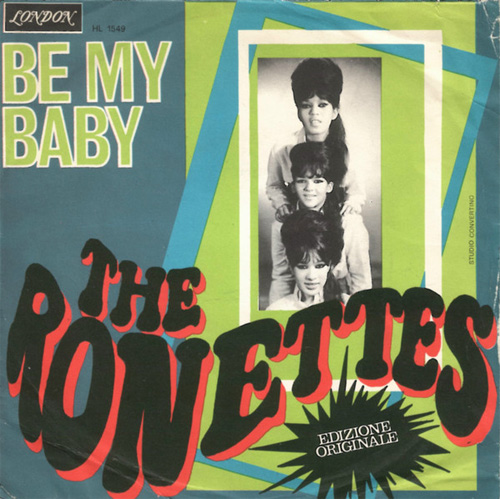
Two major sounds seemed to rule the airwaves, both born from a distinctly American, youthful energy. From the West Coast came the sun-drenched anthems of surf rock. The Beach Boys offered a national invitation with “Surfin’ U.S.A.,” while their friendly rivals Jan & Dean created the idyllic “Surf City.” This wasn’t just a vocal trend; the raw, driving energy of instrumental hits like The Surfaris’ “Wipe Out” and The Chantays’ “Pipeline” provided a visceral, drum-and-guitar-heavy soundtrack for a generation. Complementing this was the sound of the girl groups, often channeling teenage drama through the ambitious production of Phil Spector’s “Wall of Sound” on tracks like The Ronettes’ “Be My Baby” and The Crystals’ “Da Doo Ron Ron.” From the defiant fun of Lesley Gore’s “It’s My Party” to the tough-girl stance of The Angels’ “My Boyfriend’s Back,” these songs were miniature soap operas set to a 4/4 beat.

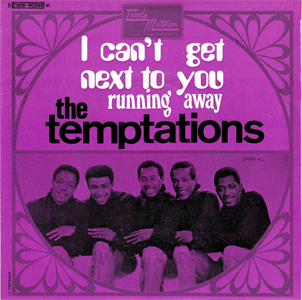
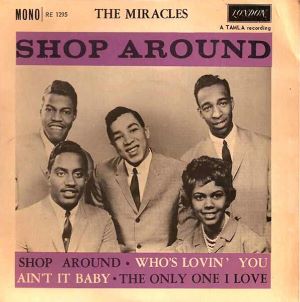
At the same time, a different kind of sound was solidifying its place at the heart of American music, broadcasting from Detroit and other soul music hubs. Motown was hitting its stride, producing hits that were both commercially successful and artistically sophisticated. You could feel the undeniable energy of Martha Reeves & The Vandellas on “(Love Is Like A) Heat Wave” or get lost in the smooth, clever plea of Smokey Robinson & the Miracles’ “You’ve Really Got a Hold on Me.” A teenage prodigy named Stevie Wonder even captured the explosive energy of his live performances on “Fingertips, Pts. 1 & 2.” It wasn’t just Motown, either. The soulful storytelling of groups like The Drifters on “Up on the Roof” and the raw, emotional performance of Garnet Mimms on “Cry Baby” showed the depth and variety within R&B and soul music.

Beyond these dominant movements, the Top 40 of 1963 was remarkably eclectic. The folk revival crashed onto the pop charts with Peter, Paul and Mary’s earnest version of Bob Dylan’s “Blowin’ In The Wind,” introducing a new layer of social consciousness to mainstream radio. Unclassifiable artists with singular visions also found massive success. Roy Orbison’s haunting, operatic ballad “In Dreams” and Johnny Cash’s iconic, mariachi-inflected “Ring of Fire” were worlds unto themselves. The charts even made room for the wonderfully unexpected: Kyu Sakamoto’s “Sukiyaki,” a beautiful Japanese-language ballad that became a number-one hit, and “Dominique” by The Singing Nun, also a number-one hit, proved that a great melody could transcend any language barrier. And in a class all its own was the wonderfully raw and raucous “Louie, Louie” by The Kingsmen, a garage-rock precursor that parents hated and kids loved.

Looking back, the collection of hits from 1963 represents a high point for a certain kind of American-made pop music. It was a world of surf guitars, dramatic girl-group harmonies, sophisticated soul, and a surprising number of unique one-offs. Every song on the radio, from Andy Williams’ smooth crooning to the gritty simplicity of “Louie, Louie,” was part of the same popular conversation. It was a vibrant and diverse scene, but one operating on its own terms. It had no idea that four young men from Liverpool were about to board a plane, bringing with them a sound that would change the rules for everyone.

Follow Tunes Du Jour on Facebook

Follow me on Bluesky

Follow me on Instagram
Tunes Du Jour Presents Holland-Dozier-Holland

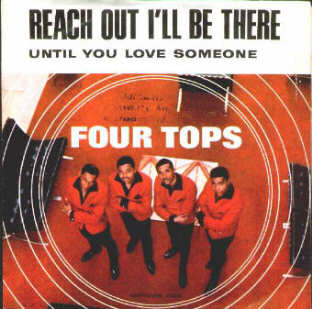
Brian Holland, Lamont Dozier, and Eddie Holland, collectively known as Holland-Dozier-Holland (H-D-H), are synonymous with the sound of Motown. Their string of hits in the 1960s and beyond fueled the success of the record label, shaping popular music and paving the way for R&B to dominate the airwaves. Each song on this playlist, from The Four Tops’ powerful “Reach Out (I’ll Be There)” to The Supremes’ iconic “Where Did Our Love Go,” credits one or more members of H-D-H. With a blend of melody, rhythm, and hooks that remain timeless, the team’s work redefined what hit songwriting could accomplish.

This songwriting trio didn’t merely write songs—they crafted narratives of love, heartbreak, and resilience that resonated with audiences across generations. Tracks like “This Old Heart of Mine (Is Weak for You)” by The Isley Brothers and Marvin Gaye’s “Can I Get a Witness” reveal the emotional depth in their compositions, supported by rhythms and production styles that have endured decades of cover versions. Their songs often feel instantly recognizable, whether it’s the infectious chorus of Chairmen of the Board’s “Give Me Just a Little More Time” or the stomping beat of Junior Walker & the All-Stars’ “(I’m A) Road Runner.”

The irony, however, is that Eddie Holland, despite being a key member of the team, had only one top 40 pop single as a solo artist, “Jamie”—and it wasn’t written by any member of Holland-Dozier-Holland. Instead, it was penned by Barrett Strong and William “Mickey” Stevenson, fellow Motown talents who contributed in their own right to the label’s powerhouse status. Though Eddie found his calling behind the scenes rather than as a performer, his experience as an artist gave him unique insight into the singer’s perspective, a quality that helped make H-D-H’s songs vocally compelling and relatable.

Beyond Motown, the trio’s influence stretched into rock, pop, and soul genres, as evident from covers and reinterpretations by artists like The Rolling Stones, Rod Stewart, and Bananarama. These renditions, like Linda Ronstadt’s cover of “Heat Wave” or James Taylor’s soulful take on “How Sweet It Is (To Be Loved by You),” show how their music transcended genre boundaries. Each version emphasizes the versatility of H-D-H’s songwriting, capable of adapting to various musical expressions while retaining its core appeal.

Ultimately, the legacy of Holland-Dozier-Holland isn’t just in their impressive catalog but in their contributions to the very essence of popular music. They captured the spirit of a generation through music that continues to find new audiences, sounding as fresh today as it did over half a century ago. Their work endures, a testament to their genius, and is rightly celebrated by the many artists who’ve covered and revived their timeless songs.

Follow Tunes Du Jour on Facebook

Follow Tunes Du Jour on Twitter

Follow me on Instagram


Tunes Du Jour Presents 1964

In 1964, the musical landscape was undergoing a seismic shift. From the electrifying British Invasion to the soulful sounds of Motown, 1964 was a year that truly had something for everyone.

One cannot discuss the music of 1964 without acknowledging the unparalleled influence of The Beatles. With their chart-topping hit “I Want To Hold Your Hand,” the Fab Four ignited a phenomenon that would forever alter the course of popular music. Their harmonious blend of catchy melodies and innovative arrangements captivated audiences worldwide, laying the groundwork for the British Invasion that would dominate the airwaves in the years to come.

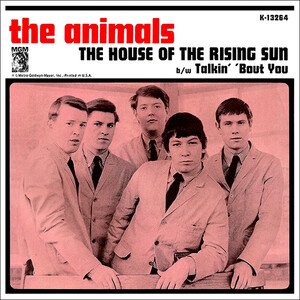
The UK also brought us The Animals, whose “House Of The Rising Sun” captivated audiences with its electrifying intensity, while The Kinks offered a more garage-band, raw sound with “You Really Got Me.”

But 1964 was not just about the British Invasion; it was also a time of soulful sounds and Motown magic. Artists like Martha & The Vandellas, The Supremes, and The Four Tops delivered soul-stirring performances on classic hits.

The surf rock craze was in full swing, with The Beach Boys’ “I Get Around” capturing the carefree California lifestyle. And for those who preferred a more melancholic sound, there were ballads like Dionne Warwick’s “Walk On By.”

Beyond the well-known names associated with 1964, this playlist unearths other soundtracks of the year, like “My Boy Lollipop” by Millie Small, a ska track that became a surprise summer hit, and “The Girl From Ipanema” by Stan Getz & Astrud Gilberto, a bossa nova masterpiece that brought a touch of Brazilian cool to the airwaves.

This playlist is just a taste of the incredible music that 1964 had to offer, though even a brief exploration of 1964’s music reveals a year brimming with creativity and cultural impact. From the infectious melodies of pop anthems to the raw energy of rock and roll, these songs continue to resonate with listeners today, reminding us of the enduring power of music to capture a moment in time and transport us back. It was a year that changed the landscape of popular music forever, leaving behind a legacy that continues to inspire and entertain generations of listeners.

Follow Tunes Du Jour on Facebook

Follow Tunes Du Jour on Twitter

Follow me on Instagram

Your (Almost) Daily Playlist: 2-2-24

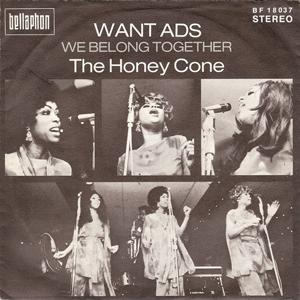
The Honey Cone was the first act signed to Hot Wax Records, a label started in 1968 by Eddie and Brian Holland and Lamont Dozier, who previously were staff writers and producers at Motown Records and in that role wrote twelve number one singles between 1962 and 1967, two performed by The Four Tops and the other ten by The Supremes, with lead vocals by Diana Ross, who would soon leave the trio and be replaced by Jean Terrell in 1970, with Terrell being replaced in 1973 by Scherrie Payne, who before then was the singer in a group called Glass House, also signed to Hot Wax Records, who recorded “Want Ads” prior to The Honey Cone, but neither Scherrie nor the track’s producer, Greg Perry, liked their version, leading Scherrie to re-record the song with her sister Freda, who had a number 3 record in 1970 with “Band of Gold,” a song co-penned by Holland-Dozier-Holland under assumed names, but the sisters’ version of “Want Ads” was also discarded, which then led Scherrie to suggest to Perry that he try the song again with Edna Wright singing, Wright being the lead singer for The Honey Cone and the sister of Darlene Wright, the singer for the group The Blossoms, and while you may not recognize the names Darlene Wright or The Blossoms, you may know their music, for producer Phil Spector renamed Darlene Wright Darlene Love (without her knowledge) and released records by The Blossoms under the name The Crystals, who hit number 1 with “He’s a Rebel,” and should not be but will be confused with another group called The Crystals, also produced by Phil Spector at the same time he was working with Wright/Love and The Blossoms, but let’s get back to Edna Wright, who recorded “Want Ads” with backing vocals by the other two members of The Honey Cone, Shellie Clark, who a couple of years earlier was singing backup for Ike and Tina Turner, and Carolyn Willis, who toured as a member of Bob B. Soxx & the Blue Jeans, a group whose records were produced by Phil Spector and featured vocals from Darlene Wright/Love. In June of 1971 The Honey Cone took “Want Ads” to number 1. (This paragraph is pulled from my long-awaited (by me, anyway) book, which I’m trying to get out this year.) 

The late Edna Wright of The Honey Cone was born on this date in 1945. A couple of the group’s best-known songs, including “Want Ads,” are on today’s playlist.

Follow Tunes du Jour on Facebook

Follow Tunes du Jour on Twitter

Follow me on Instagram

Your (Almost) Daily Playlist: 12-10-23

“Nightshift” was Commodores’ biggest hit following the departure of usual lead singer Lionel Richie. The group’s Walter Orange, a co-writer of the song, sings lead on verse one. Orange also sang lead on Commodores’ hits “Brick House” and “Too Hot Ta Trot.” So there. 

Commodores’ Walter Orange was born on this date (or maybe yesterday’s date) in 1946. Two of the group’s songs on which he sang lead are included on today’s playlist.

Follow Tunes du Jour on Facebook

Follow Tunes du Jour on Twitter

Follow me on Instagram