Tunes Du Jour Presents The Original Versions

Many of us grow up assuming the hit version of a song is the original. This playlist celebrates those surprising musical genealogies: well-known songs that were originally recorded by someone else, often with little fanfare. Here are the stories behind the transformations—where they started, and how they became iconic.


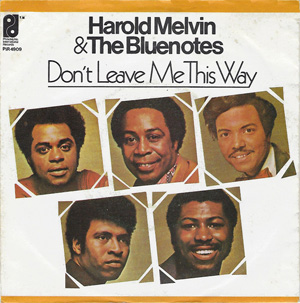
“Don’t Leave Me This Way” – Thelma Houston / Originally by Harold Melvin & the Blue Notes (1975)
Houston’s disco anthem actually began life as a Philly soul track sung by Teddy Pendergrass. Thelma took it to the dancefloor—and to #1.

“War” – Edwin Starr / Originally by The Temptations (1970)
This protest song started as an album cut by The Temptations. Starr’s rawer, angrier take made it a searing hit during the Vietnam era.

“Strawberry Letter 23” – The Brothers Johnson / Originally by Shuggie Otis (1971)
Otis’ dreamy, psychedelic original flew under the radar until producer Quincy Jones supercharged it with funk for The Brothers Johnson.

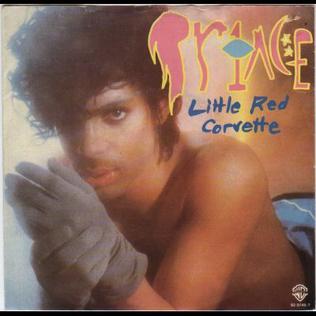
“I Feel for You” – Chaka Khan / Originally by Prince (1979)
Prince wrote it, recorded it, and released it on his 1979 self-titled album. Chaka Khan added Stevie Wonder’s harmonica and Melle Mel’s rap, creating a genre-blurring smash that gave the song a second life—and a much bigger audience.

“Louie Louie” – The Kingsmen / Originally by Richard Berry (1957)
Berry’s calypso-tinged rhythm & blues song became an unintelligible rock ‘n’ roll classic in the hands of teenage garage rockers.

“Pass The Koutchie” – Musical Youth as “Pass the Dutchie” / Originally by Mighty Diamonds (1981)
Musical Youth’s version cleaned up the ganja references but kept the groove. A British reggae hit born from a roots original.

“Tainted Love” – Soft Cell / Originally by Gloria Jones (1964)
This Northern Soul favorite was ignored in the U.S. until Soft Cell’s chilly synth-pop cover turned it into an international sensation.

“You Are So Beautiful” – Joe Cocker / Originally by Billy Preston (1974)
Preston’s gospel-inflected original was co-written with Dennis Wilson of the Beach Boys. Cocker slowed it down into a tearjerking ballad.

“The First Cut Is The Deepest” – Rod Stewart / Originally by P.P. Arnold (1967)
Before Cat Stevens, the song’s writer, sang it himself, P.P. Arnold delivered a powerful version. Stewart’s cover gave it global traction.

“Red, Red Wine” – UB40 / Originally by Neil Diamond (1967)
Diamond’s mournful original was a slow ballad. UB40’s reggae version confused even him—he didn’t recognize his own song on the radio.

“Brand New Cadillac” – The Clash / Originally by Vince Taylor and His Playboys (1959)
This rockabilly obscurity became a snarling punk track on London Calling. Vince Taylor later served as an inspiration for David Bowie’s Ziggy Stardust persona.

“Take Me To The River” – Talking Heads / Originally by Al Green (1974)
Green’s swampy soul gave way to Talking Heads’ jittery art-funk. An old-school spiritual reborn in new wave style.

“The Tide Is High” – Blondie / Originally by The Paragons (1967)
Jamaican rocksteady meets NYC cool. Blondie took this mellow gem and gave it a global pop sheen.

“Brandy” – Barry Manilow as “Mandy” / Originally by Scott English (1971)
English’s sad and simple original got a new name and new polish. Manilow’s grand version topped the charts.

“Don’t Let Me Be Misunderstood” – The Animals / Originally by Nina Simone (1964)
Simone’s pleading ballad became a snarling British Invasion hit. Her nuanced sorrow gave way to the raw edge of rock.

“Bette Davis Eyes” – Kim Carnes / Originally by Jackie DeShannon (1974)
The original was breezy and piano-driven. Carnes and her producer Val Garay turned it into new wave noir.

“Heaven Must Have Sent You” – Bonnie Pointer / Originally by The Elgins (1966)
Pointer’s disco version revived a Motown deep cut and put it back on the charts over a decade later.

“Love Buzz” – Nirvana / Originally by Shocking Blue (1969)
Nirvana turned this obscure Dutch psych-rock tune into a distorted grunge landmark. Their debut single.

“Piece Of My Heart” – Big Brother & The Holding Company / Originally by Erma Franklin (1967)
Aretha’s sister recorded it first, but Janis Joplin made it a fiery centerpiece of her legend.

“It’s Oh So Quiet” – Björk / Originally by Betty Hutton (1951)
A novelty big-band number revived by Björk into a theatrical showstopper. Old Hollywood meets Icelandic art-pop.

“China Girl” – David Bowie / Originally by Iggy Pop (1977)
Co-written with Bowie, Iggy’s version was skeletal and raw. Bowie’s version added synth gloss and MTV appeal.

“Good Lovin'” – The Young Rascals / Originally by The Olympics (1965)
The Olympics had the groove, but The Rascals turned it into a garage-rock rave-up and a #1 hit.

“Valerie” – Mark Ronson featuring Amy Winehouse / Originally by The Zutons (2006)
The Zutons wrote it as a bluesy rock song. Winehouse made it retro-soul perfection.

“Police On My Back” – The Clash / Originally by The Equals (1967)
A stomping, paranoid track from Eddy Grant’s first band. The Clash turned it into a punk fugitive anthem.

“After Midnight” – Eric Clapton / Originally by J.J. Cale (1966)
Cale’s laid-back shuffle was juiced up with guitar licks by Clapton, who kept the songwriter’s cool intact.

“On Broadway” – The Drifters / Originally by The Cookies (1962)
Songwriters Barry Mann & Cynthia Weil gave this to a girl group first, but The Drifters made it a city-slick R&B classic.

“Love Hurts” – Nazareth / Originally by The Everly Brothers (1960)
Gentle heartbreak became hard rock agony. Nazareth’s arena wail made the song a power ballad staple.

“I Love Rock ‘n’ Roll” – Joan Jett & the Blackhearts / Originally by The Arrows (1975)
Jett saw it on UK TV and recorded a fiercer, snarling version that girls (and boys) everywhere could scream along to.

“Without You” – Nilsson / Originally by Badfinger (1970)
Badfinger’s version was plaintive; Nilsson’s was operatic. He didn’t just sing it—he wailed it.

“Superman” – R.E.M. / Originally by The Clique (1969)
A psychedelic pop obscurity turned indie-rock cult classic. One of R.E.M.’s rare early tracks not written by the band.


These songs remind us that inspiration doesn’t always strike where the spotlight shines. Sometimes greatness is borrowed—and reinvented.


Follow Tunes Du Jour on Facebook

Follow me on Bluesky

Follow me on Instagram

Tunes Du Jour Presents 1983

The year 1983 was a vibrant musical landscape, a moment when pop culture was exploding with creativity and technological advancement. It was a year when Michael Jackson’s “Billie Jean” dominated the airwaves, its infectious rhythm and groundbreaking music video revolutionizing how we experienced music. The single was more than just a song; it was a cultural phenomenon that captured the zeitgeist of an era when music was becoming increasingly visual and dynamic.

This was also the year when Prince’s “1999” prophetically danced with apocalyptic themes, and The Police’s “Every Breath You Take” became an anthem of complex emotional surveillance. The diversity of musical styles was remarkable, with artists like Dexys Midnight Runners bringing an unconventional folk-pop energy with “Come on Eileen,” while New Order’s “Blue Monday” pushed the boundaries of electronic music, creating a sound that would influence dance music for decades to come. David Bowie’s “Let’s Dance” marked a vibrant shift in his musical journey, infusing his signature artistic sensibility with an irresistible pop-funk groove.

The single was king in 1983, with an unprecedented number of memorable tracks that seemed to burst from radios and dance floors everywhere. Eurythmics’ “Sweet Dreams (Are Made Of This)” introduced Annie Lennox’s haunting vocals to the world, while Marvin Gaye’s “Sexual Healing” offered a smooth, sensual counterpoint to the era’s more uptempo sounds. Lionel Richie’s “All Night Long” exemplified the period’s sunny, celebratory pop, and Culture Club’s “Do You Really Want to Hurt Me” challenged musical and social conventions with its charismatic lead singer, Boy George.

The year wasn’t just about pop, however. Rock and new wave were thriving, with bands like The Smiths (“This Charming Man”), The Clash (“Rock the Casbah”), and Duran Duran (“Hungry Like The Wolf”) pushing musical boundaries. Hip-hop and early rap were also emerging, with tracks like Melle Mel’s “White Lines” and Herbie Hancock’s groundbreaking “Rockit” signaling a musical revolution that would transform popular culture in the coming decades.

What made 1983 truly special was how it represented a moment of musical transition—a year when synthesizers and drum machines were becoming more prevalent, when music videos were transforming how artists communicated, and when genres were blending in unprecedented ways. From the new romantic sounds of Heaven 17’s “Temptation” to the quirky charm of Men Without Hats’ “The Safety Dance,” the music of 1983 was a testament to creativity, innovation, and the pure joy of sound. It was a year that didn’t just produce hit songs, but created a sonic landscape that would influence musicians for generations to come.

Follow Tunes du Jour on Facebook

Follow me on Bluesky

Follow me on Instagram

Your (Almost) Daily Playlist: 11-19-23

Inspired by an unhoused woman who would sing gospel songs in front of a Washington, DC hotel, the familiar refrain of “la da dee la da da” in Crystal Waters’ “Gypsy Woman (She’s Homeless)” was meant as a temporary placeholder until the real lyrics were written. Here’s to writers block!                                                                                                                                                                           Crystal Waters was born on this date in 1961. A couple of her tracks are included on today’s playlist.

Follow Tunes du Jour on Facebook

Follow Tunes du Jour on Twitter

Follow me on Instagram

(100) Songs Of Summer: A Donna Summer Playlist

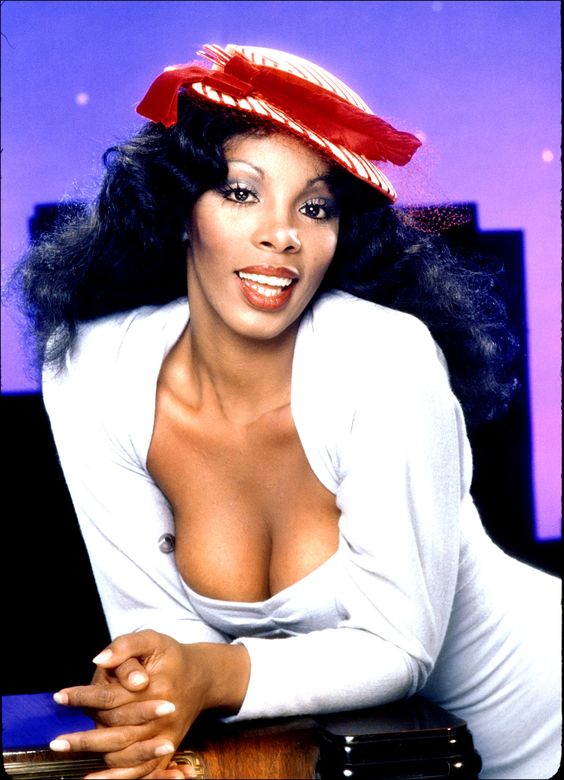
Born LaDonna Gaines in Boston, Massachusetts on the last day of 1948, Donna Summer became a worldwide superstar in the 1970s. She earned the title “The Queen of Disco,” which is accurate and limiting at the same time. Sure, she scored over two dozen top forty hits on Billboard magazine’s Disco/Dance chart; however, her voice and repertoire were not bound by genre, and she placed entries on the Rhythm & Blues and Adult Contemporary charts and has 14 US top ten pop hits to her name.

The first of those pop hits was “Love to Love You Baby,” which reached #2 in 1976. Our playlist begins before that hit, with vocals she provided for a Peter Thomas recording around the beginning of the decade.

Performing musical theater, she joined the cast of a road version of Hair, which brought her to Germany, where she performed in that country’s language. You can hear her German version of “Aquarius” on the YouTube playlist that accompanies this post. (The YouTube playlist encompasses recordings that cannot be found on Spotify at this time.)

Two other significant things happened to LaDonna Gaines in Germany: She married fellow actor Helmut Sommer, and she met producers/songwriters Giorgio Moroder and Pete Bellotte. Moroder and Bellotte signed her to their record label, and the trio began work on her debut album, on which her name was misspelled on the front cover, giving us Donna Summer.

Donna Summer’s debut album, Lady of the Night, produced the singles “The Hostage” and the title track, with the former going to #1 in Belgium and #2 in The Netherlands and the latter cracking the top 40 in Germany as well as being another top five single for her in The Netherlands.

Then came “Love to Love You Baby.” Initially released in The Netherlands as “Love to Love You,” the song was heard by Casablanca Records head Neil Bogart, who suggested they extend the song. The nearly seventeen-minute version was serviced to US clubs in September 1975. Record World magazine’s disco reporter Vince Aletti wrote it sounds “like nothing else I’ve heard before.” Clubgoers shared his enthusiasm, sending the song to #1 on the disco chart for four weeks beginning the month after its release.

While “Love to Love You Baby” was rocketing up the pop chart, Summer’s follow-up became her second #1 disco hit. “Try Me, I Know We Can Make It” is actually four songs: “Try Me,” “I Know,” “We Can Make It,” and “Try Me, I Know We Can Make It.” Those four songs encompassed side one of Summer’s A Love Trilogy album, with side two providing three more top ten disco hits: “Could It Be Magic” (a cover of Barry Manilow’s pop hit from the previous year), “Wasted” and “Come with Me.”

Later in 1976 came yet another album from Summer, Four Seasons of Love. Billboard listed every cut from the album as #1 on the disco chart, where they remained for six weeks. A few months later she released I Remember Yesterday, where once again, all cuts were listed in the #1 position on the disco chart. From that album came the classic “I Feel Love,” about which Brian Eno said to David Bowie “This single is going to change the sound of club music for the next fifteen years.” Bowie agreed.

You may think all this product in quick succession would create a glut from which the public would want a break, but the stats show the exact opposite. Summer’s “Theme from The Deep” (on the YouTube playlist) became a disco hit. “Last Dance” became a disco and pop hit. The double album Once Upon a Time went to #1 on the disco chart (again with all cuts listed). She followed this up with another double album, Live and More (which includes “MacArthur Park” and “Heaven Knows”). Then came another double album, Bad Girls, her commercial and artistic pinnacle.

An interesting piece of trivia for chart geeks: Up to this point every Donna Summer single serviced to dance clubs hit the disco top ten, with her spending 29 weeks at #1 on the chart between 1975 and 1979. Her first entry to make the disco chart but miss its top ten? “Dim All the Lights,” which peaked at #54. Go figure. You may know that song. It performed way better on the pop and rhythm & blues charts.

Let’s pause for a moment and consider not only the quantity of material Summer released and struck gold with. Let’s also look at the quality. These are great records. (Okay, the Live part of Live and More is good, not great.) Disco was predominantly a singles medium, yet Summer cranked out albums that sustained interest throughout. Double albums at that.

A double greatest hits album wrapped up her tenure at Casablanca Records, producing what would be her final #1 on the Disco/Dance Club chart for 15 years, “No More Tears (Enough Is Enough),” a collaboration with Barbra Streisand.

Her star cooled a bit when she released her first post-Casablanca record in 1980. Several factors contributed to this, including the (US) backlash against disco and disparaging remarks attributed to her about gay people, a core and loyal audience until that point. (In 1989 she denied making this comments, saying she would have addressed the controversy earlier but her publicist shielded her from any negative press, so she was unaware. I’m not saying I buy that; I am glad she addressed it.) Also, at the request of her new label’s head, David Geffen, she split with producers Moroder and Bellote following her 1980 album The Wanderer (actually, following that album’s follow-up, I’m a Rainbow, which was shelved until a slim-downed version’s release in 1992).

Despite the dip in popularity, she was far from over. In the eighties she hit the pop top ten with “The Wanderer,” “Love Is In Control (Finger on the Trigger),” “She Works Hard for the Money” and “This Time I Know It’s for Real,” all of which also made the dance top ten. Her pop chart success in the US ended with 1989’s “This Time I Know It’s for Real.”

While she never again hit the US pop top forty, back in the dance clubs she returned to the apex again and again, scoring seven #1s and three additional top tens between 1995 and her death in 2012.

The Donna Summer playlists below include her pop hits, her dance hits, the best non-singles from her studio albums, cuts from compilation albums, songs from soundtrack albums, and some of her guest appearances on other artists’ albums. It may be Labor Day weekend, but Summer never ends at Tunes du Jour!

The YouTube playlist: https://www.youtube.com/playlist?list=PLTkV-h9qkYAyB3JvP5yiWJC6Kf8Lknvc0

Click here to like Tunes du Jour on Facebook!

Follow me on Twitter!

Follow me on Instagram!

Winston + Ini

It’s Ini Kamoze’s Birthday And I Need To Dance!

I’m reading NLP: The Essential Guide to Neuro-Linguistic Programming, subtitled Creating the Person You Want to Be, by Tom Hoobyar and Tom Dotz with Susan Sanders. The book teaches one how to think, as opposed to what to think.

Of the many exercises in the book is one the authors call “Creating a Well-Formed Outcome.” You list things you want and answer six questions related to each want. Within those six questions is an exploration of “meta-outcomes.” To explore the meta-outcomes, one must keep asking what will happen if I achieve this goal.

For example, one of my goals is to have a leaner physique. Using this exercise, I say “When I am leaner, I’m more confident. When I am more confident, more guys will be attracted to me. If more guys are attracted to me, I’ll date more often. If I date more often, I’ll end up with a boyfriend. If I have a boyfriend, I’ll have someone with whom to watch movies, dance, and share other activities I enjoy. If I do more activities I enjoy, I’ll be “in the flow” more often. If I am in the flow more often, my happiness will increase.

Another goal I have is to work with more clients. If I work with more clients, I’ll make more money. If I have more money, I can partake more often in the activities I enjoy. If I partake more often in the activities I enjoy, I’ll be in the flow more often. If I am in the flow more often, my happiness will increase.

Now you try it. What is a goal you have? Keep asking yourself what will happen if you achieve each part. If you don’t end with me being happier, you’re doing it wrong. Start over!

Winston + Ini
Something that makes me happy is dancing. Friday is dance day at Tunes du Jour. Today happens to be the birthday of John Lennon. As he never hit the Billboard dance charts, we’ll kick off this week’s party with someone else whose birthday is today, Ini Kamoze. More accurately, today is the 58th birthday of Cecil Campbell, who later changed his name to Ini Kamoze. Here are twenty songs you can hotstep to.


Click here to like Tunes du Jour on Facebook!
Follow me on Twitter: @TunesDuJour