Tunes Du Jour Presents 1958

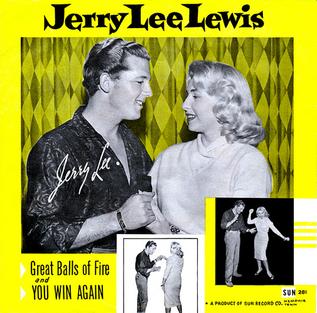
By 1958, rock and roll was no longer a brash newcomer fighting for legitimacy—it had become the dominant sound of American popular music. The charts that year captured a genre in full stride, blending raw energy with increasingly sophisticated production. Jerry Lee Lewis pounded out “Great Balls of Fire” with manic intensity while the Everly Brothers offered the dreamy harmonies of “All I Have to Do Is Dream,” proving that rock and roll could be both wild and tender. Chuck Berry’s “Sweet Little Sixteen” painted vivid pictures of teenage life, and Little Richard’s “Good Golly, Miss Molly” delivered pure, unfiltered excitement. These weren’t just songs—they were the soundtrack to a generation coming into its own.

The year also marked the rise of memorable instrumental tracks that showcased rock and roll’s expanding vocabulary. Link Wray’s “Rumble” pioneered the power chord with its menacing guitar distortion, while Duane Eddy’s “Rebel Rouser” introduced the twangy, reverb-heavy “twang” that would influence countless guitarists. The Champs’ “Tequila” proved that a single word and an infectious sax riff could dominate the airwaves. These instrumental hits demonstrated that rock and roll didn’t always need lyrics to communicate emotion or get people moving.

While rock and roll dominated, 1958 was hardly monolithic in its musical offerings. Tommy Edwards’ orchestral “It’s All In The Game” and Peggy Lee’s sultry “Fever” showed that traditional pop still had plenty of commercial power. Domenico Modugno’s “Nel blu, dipinto di blu (Volare)” became an international sensation, bringing Italian pop to American audiences. The Platters’ “Twilight Time” continued doo-wop’s evolution toward lush, romantic balladry. This variety revealed an industry still figuring out how different styles could coexist and cross-pollinate.

The playlist also captures the emergence of future stars and the refinement of group vocals. Cliff Richard’s “Move It” announced Britain’s first major rock and roll talent, foreshadowing the British Invasion that would come later. Meanwhile, doo-wop groups like The Chantels with “Maybe” and Jerry Butler & the Impressions with “For Your Precious Love” brought sophistication and emotional depth to their harmonies. Novelty hits like David Seville’s “Witch Doctor” and lighthearted fare like The Chordettes’ “Lollipop” added playful moments to the mix, reminding listeners that music could simply be fun without carrying cultural weight.

What’s striking about 1958 is how much ground the music covered while maintaining a coherent identity. Whether it was Eddie Cochran’s rebellious “Summertime Blues” or Conway Twitty’s heartbroken “It’s Only Make Believe,” these songs spoke directly to young people navigating the complexities of modern life. Rock and roll had proven it wasn’t a passing fad—it was a versatile, evolving force that could express the full range of teenage emotion, from joy to heartbreak, from rebellion to romance. The music of 1958 didn’t just entertain; it validated the experiences of an entire generation.

Follow Tunes Du Jour on Facebook

Follow me on Bluesky

Follow me on Instagram
Tunes Du Jour Presents 1969

The music of 1969 captures a unique crossroads in cultural history—a year teetering between optimism and cynicism, unity and rebellion. Looking at a playlist from this year reveals a blend of genres and voices, each reflecting a society in flux. The playlist’s tracks encompass themes of love, social change, disillusionment, and raw individualism, echoing the era’s contradictions and bold spirit.

On one end of the spectrum, songs like Elvis Presley’s “Suspicious Minds” and Tammy Wynette’s “Stand By Your Man” echo traditional themes of love, loyalty, and heartbreak, though with a hint of modern skepticism. Presley’s soulful performance marked his return to chart-topping success, while Wynette’s hit became a polarizing anthem, embraced by some for its devotion and questioned by others for its apparent passivity. Meanwhile, Glen Campbell’s “Wichita Lineman” captured a more introspective side of the decade, blending pop and country into a haunting portrayal of loneliness and perseverance.

But 1969 wasn’t all about introspection; it was also a year of unrestrained expression and pushing boundaries. Creedence Clearwater Revival’s “Bad Moon Rising” hinted at a sense of looming danger, with its ominous lyrics striking a nerve during a time of political upheaval. In contrast, “Honky Tonk Women” by The Rolling Stones embraced the gritty allure of rock and roll without aiming for a larger societal message. Jagger’s tales of chance encounters and gin-soaked nights represent the Stones’ unapologetic celebration of indulgence, sidestepping introspection in favor of pure hedonism.

Amidst the wild spirit of rock, 1969 also offered more uplifting messages with a hint of idealism. Sly & The Family Stone’s “Everyday People” and The Youngbloods’ “Get Together” conveyed calls for unity that resonated deeply in an era fraught with political and racial tensions. Sly Stone’s anthem became a rallying cry for acceptance, emphasizing individuality while embracing common ground. Similarly, “Aquarius/Let the Sunshine In” by The 5th Dimension captured the essence of the countercultural movement in all its utopian ambitions, even if the optimism was a bit idealistic in hindsight.

Then there was the music that addressed disillusionment head-on, perhaps best captured by Simon & Garfunkel’s “The Boxer” and Peggy Lee’s “Is That All There Is?” Both songs offer reflective, sometimes jaded perspectives on life’s struggles and the disappointments that can accompany maturity. Where “The Boxer” tells the story of a young man grappling with hardship and loss, Lee’s dry wit in “Is That All There Is?” confronts the emptiness that can lie beneath life’s surface pleasures.

Ultimately, this playlist from 1969 feels like a time capsule of an era balancing between hope and disillusionment. From the raw proto-punk of The Stooges to the tender balladry of Stevie Wonder’s “My Cherie Amour,” the year’s music speaks to a generation grappling with unprecedented social changes. Through these songs, 1969 continues to resonate, reminding us that music often reflects the spirit of its time while challenging listeners to consider where they stand.

Follow Tunes Du Jour on Facebook

Follow Tunes Du Jour on Twitter

Follow me on Instagram

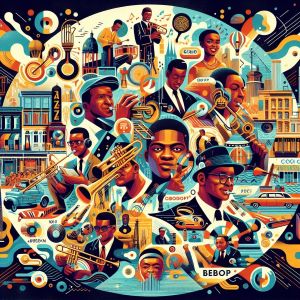
Tunes Du Jour Celebrates International Jazz Day

Jazz is a genre that defies easy definition, yet its influence is undeniable across decades of music history. At its core, jazz represents freedom – freedom of artistic expression, freedom to improvise and venture into uncharted musical territory. From the early days of jazz pioneers like Louis Armstrong, Duke Ellington, and Billie Holiday, this artistic freedom has been the driving force behind the ever-evolving sounds of jazz.

The genius of jazz lies in its ability to seamlessly blend composition and spontaneity. Take Miles Davis’ seminal album Kind of Blue, where masterful musicians like John Coltrane and Cannonball Adderley were given a simple modal framework to build upon through their improvisations. The result was a transcendent exploration of space, melody, and emotion that still captivates listeners today. Similarly, Dave Brubeck’s “Take Five” broke new ground with its innovative use of quintuple meter, exemplifying jazz’s boundary-pushing spirit.

Yet jazz is more than just innovative time signatures and harmonic progressions. It’s a language of human experience, a means of conveying the full spectrum of emotions through sound. Billie Holiday’s haunting rendition of “Strange Fruit” transformed a song into a searing indictment of racism and injustice. Nina Simone’s stirring vocals on “My Baby Just Cares for Me” radiate warmth and playfulness. And Chet Baker’s rendition of “My Funny Valentine” captures the exquisite vulnerability of heartbreak with effortless cool.

As the genre evolved through the latter half of the 20th century, jazz continued to defy conventions and push creative boundaries. The modal jazz of John Coltrane’s “A Love Supreme” was a spiritual exploration unlike anything that came before it. Ornette Coleman’s pioneering free jazz broke down traditional concepts of melody and harmony. And the fusion era saw artists like Herbie Hancock, Weather Report, and Grover Washington Jr. incorporate elements of funk, rock, and R&B into their jazz foundations.

From its humble beginnings in New Orleans to its modern global influence, jazz has remained a quintessential expression of artistic freedom. Its ability to constantly reinvent itself while maintaining a deep reverence for its roots is what makes it one of the most vital and culturally significant art forms of our time. Jazz is more than just a genre – it’s a living, breathing embodiment of the human spirit’s endless capacity for creativity and innovation.

Follow Tunes du Jour on Facebook

Follow Tunes du Jour on Twitter

Follow me on Instagram

Your (Almost) Daily Playlist: 12-12-23

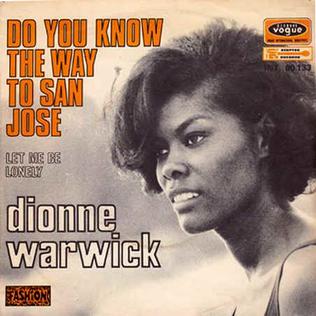
Is technology ruining music? I’ll answer that with another question: If we had GPS in the 1960s, would we have gotten “Do You Know The Way To San José?” If you request Alexa to play “Do You Know The Way To San José” by merely stating its title, would Alexa play it or ramble on about making a left here and bearing right there, which would make for a real crap song? When presented with “Do You Know The Way To San José” by its writers, Burt Bacharach and Hal David, Dionne Warwick was not taken by it. “What is this whoa whoa whoa whoa whoa whoa whoa whoa whoa crap?” she asked. I’m paraphrasing. She eventually came around, for decades later she said that winning the Grammy Award for Best Female Pop Vocal Performance for her recording of that song was the highlight of her career. 

Dionne Warwick was born on this date in 1940. Lots of songs performed by her are included on today’s playlist.

Follow Tunes du Jour on Facebook

Follow Tunes du Jour on Twitter

Follow me on Instagram

Your (Almost) Daily Playlist: 10-1-23

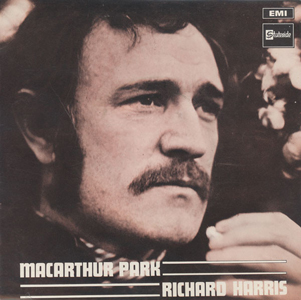
In 1993, humor columnist Dave Barry surveyed his readers to find the worst song. The clear winner for Worst Overall Song and Worst Lyrics was “Mac Arthur Park.” Culture critic Joe Queenan disagreed with the results “because ‘Ebony and Ivory’ exists, as do ‘You Don’t Bring Me Flowers,’ ‘Baby, I’m-a Want You,’ ‘Feelings,’ ‘Benny and the Jets,’ ‘Witchy Woman’ and ‘Sussudio,’” adding “On a planet where somebody thought it would be a good idea to write ‘Scenes from an Italian Restaurant,’ the best ‘MacArthur Park’ is ever going to earn in the sucky-song sweepstakes is a tie.”

The late Richard Harris was born on this date in 1930. Celebrate his birthday with a piece of soggy cake and by listening to today’s playlist, which includes the song many hate.

Follow Tunes du Jour on Facebook

Follow Tunes du Jour on Twitter

Follow me on Instagram

Your (Almost) Daily Playlist (5-26-20)

Inspired by the May 26 birthdays of Stevie Nicks, Ms. Lauryn Hill, The Band’s Levon Helm, Peggy Lee, Lenny Kravitz, Swinging Blue Jeans’ Ray Ennis, Alphaville’s Marian Gold, Nashville Teens’ Art Sharp and Black; and the May 25 birthdays of The Jam’s Paul Weller, Disclosure’s Guy Lawrence, Tom T. Hall, The Tokens’ Mitch Margo, and Jessi Colter.

https://open.spotify.com/playlist/4C0pvzTH8O6tp7PrQrEM9z