Tunes Du Jour Celebrates International Drum Month

Welcome to a journey through rhythm. November is International Drum Month, and this collection honors the masters of the drum kit, the players whose feel, power, and ingenuity define the songs we love. From the tightest pockets to the most explosive solos, these are the heartbeats of modern music. Let’s give the drummers some.

Good Vibrations – The Beach Boys
The legendary session musician Hal Blaine provides the sharp, inventive percussion, using everything from sleigh bells to a detached kick drum to build the song’s complex and sunny atmosphere.

Cissy Strut – The Meters
Joseph “Zigaboo” Modeliste, the architect of New Orleans funk, creates a syncopated, greasy, and endlessly influential groove that has been the blueprint for funk drummers ever since.

Smells Like Teen Spirit – Nirvana
Dave Grohl’s performance is a masterclass in quiet-loud dynamics, with his simple, powerful groove in the verse exploding into a torrent of raw energy for the iconic chorus.

One – Metallica
Lars Ulrich’s machine-gun double bass drumming on the intro is one of metal’s most defining moments, perfectly mimicking the sound of battlefield artillery.

Superstition – Stevie Wonder
The irresistible funk pattern that drives this track was played by none other than Stevie Wonder himself, who laid down the clavinet, bass, and drum parts to create a perfect storm of groove.

The Glamorous Life – Sheila E.
A tour de force from the legendary percussionist and drummer Sheila E., this track is a showcase of her technical virtuosity and incredible funk sensibilities.

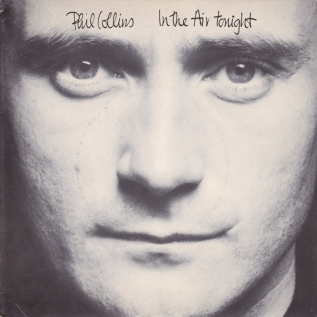
In The Air Tonight – Phil Collins
For three minutes, Phil Collins builds unbearable tension before unleashing the most famous drum fill in history, a thunderous burst of gated reverb toms that everyone has air-drummed to.

Rosanna – Toto
The late, great Jeff Porcaro gives a masterclass in the half-time shuffle, creating a feel so iconic and difficult to replicate that it’s now simply known as the “Rosanna shuffle.”

Come Together – The Beatles
Ringo Starr’s signature swampy, tea-towel-dampened tom groove is the unmistakable foundation of this track, proving that feel and creativity are more important than flash.

Brick House – The Commodores
Walter “Clyde” Orange not only provides the lead vocals but also lays down a funk groove so solid and deep you could build a house on it, proving that sometimes the simplest beat is the most effective.

Rock With You – Michael Jackson
Session giant John “JR” Robinson creates a beat that is smooth, sophisticated, and impossibly deep in the pocket, providing the perfect shimmering pulse for dancing.

Sing, Sing, Sing (With A Swing) – Benny Goodman & His Orchestra
Gene Krupa became music’s first superstar drummer with this performance, his primal, floor-tom-driven solo setting the standard for all drum features to come.

Voodoo Child (Slight Return) – The Jimi Hendrix Experience
Mitch Mitchell’s jazz-influenced, wildly improvisational drumming is the perfect foil for Hendrix’s guitar, a chaotic and conversational force of nature.

When The Levee Breaks – Led Zeppelin
Recorded in a stairwell with two microphones, John Bonham’s colossal, booming groove is arguably the most recognizable and revered drum sound ever committed to tape.

Message in a Bottle – The Police
Showcasing his unique, reggae-infused style, Stewart Copeland’s intricate hi-hat work and signature use of the splash cymbal give this song its nervous, driving energy.

Funky Drummer – James Brown
Here, Clyde Stubblefield plays what is perhaps the most-sampled drum break in history, a 20-second piece of rhythmic perfection that became a cornerstone of hip-hop.

Gimme Shelter – The Rolling Stones
The picture of restraint and taste, Charlie Watts enters the song with a deceptively simple beat that carries all the dread and swing the track demands.

I’ve Seen All Good People – Yes
Bill Bruford’s crisp, creative, and complex drumming is on full display, navigating the song’s shifting sections with technical precision and musical grace.

50 Ways to Leave Your Lover – Paul Simon
Steve Gadd lays down one of the most recognizable and clever marching-band-inspired beats in popular music, a sophisticated and instantly memorable pattern.

Think (About It) – Lyn Collins
Another gift to hip-hop from the James Brown band, this track features John “Jabo” Starks’s impossibly tight groove and a legendary drum break that keeps on giving.

White Room – Cream
The inimitable Ginger Baker announces this psychedelic classic with a powerful 5/4 tom-tom intro, setting the stage with his heavy, melodic, and groundbreaking style.

Hot For Teacher – Van Halen
Alex Van Halen’s frantic, shuffling intro sounds like a barely-contained engine, kicking off one of the most exhilarating double-bass-fueled drum tracks in rock history.

Sunday Bloody Sunday – U2
Larry Mullen Jr.’s militaristic, unrelenting snare drum pattern, recorded in a reverberant stairwell, serves as the song’s defiant and unwavering backbone.

Schism – Tool
A master of complexity, Danny Carey navigates the song’s dizzying array of shifting time signatures with a tribal power and mathematical precision that is simply breathtaking.

Baba O’Riley – The Who
The untamable Keith Moon crashes and tumbles through this rock anthem, playing with a frenetic energy that threatens to send the song flying off the rails at any moment.

Dig Me Out – Sleater-Kinney
Janet Weiss is the roaring engine of this track, playing with a ferocious power, impeccable timing, and creative fills that drive the song forward relentlessly.

I Heard It Through the Grapevine – Gladys Knight & the Pips
Funk Brothers drummers Uriel Jones and the great Benny Benjamin create a powerhouse rhythm section, delivering a performance full of simmering tension and explosive release that punctuates the song’s raw emotion.

Dancin’ Fool – Frank Zappa
Terry Bozzio is the manic force behind this track, navigating Zappa’s absurd rhythmic twists and turns with an explosive combination of power, precision, and theatrical flair.

One Love/People Get Ready – Bob Marley & The Wailers
Carlton “Carly” Barrett, the originator of the “One Drop” rhythm, gives this song its iconic reggae heartbeat, where the accent is on the third beat of the measure.

Footprints – The Miles Davis Quintet
At just 20 years old, Tony Williams redefined jazz drumming with his explosive and interactive playing, shattering old conventions and pushing the entire band to new heights.

Follow Tunes Du Jour on Facebook

Follow me on Bluesky

Follow me on Instagram
Tunes Du Jour Presents Earth, Wind & Fire

Few bands have shaped the landscape of funk, soul, and R&B quite like Earth, Wind & Fire. Founded in Chicago in 1969 by Maurice White, the group created a signature sound that blended African and Latin musical elements with funk, soul, jazz, disco, and rock. Their innovative fusion approach, coupled with spiritual lyrics and elaborate stage shows, helped establish them as one of the most successful and influential bands of the 1970s and early 1980s.

The band’s commercial peak came with a string of hits that remain iconic today. Songs like “September,” “Shining Star,” and “Let’s Groove” showcase their masterful combination of uplifting lyrics, tight horn arrangements, and irresistible rhythms. The distinctive falsetto of Philip Bailey complemented by Maurice White’s tenor vocals created vocal harmonies that became a hallmark of their sound, particularly evident in songs like “That’s the Way of the World” and “Sing a Song.” This dynamic vocal partnership could shift seamlessly between unison power and intricate interplay, while their individual strengths added another dimension to the group’s vocal arsenal.

What set Earth, Wind & Fire apart was their ability to transcend musical boundaries while maintaining broad appeal. “That’s the Way of the World” and “Fantasy” exemplify their talent for creating music that was both commercially successful and artistically ambitious. The incorporation of African instruments like the kalimba (thumb piano), along with their integration of jazz elements and complex orchestrations, brought a unique sophistication to popular music of the era.

The group’s influence extended beyond their musical innovations. Their positive messages of universal love, spiritual awareness, and self-empowerment resonated with audiences across racial and cultural lines. Their elaborate live performances, featuring disappearing acts, levitation, and Egyptian-themed costumes, set new standards for concert spectacle and influenced generations of performers who followed.

Looking at their body of work, represented in this playlist of their most celebrated songs, it’s clear why Earth, Wind & Fire has endured as one of popular music’s most respected acts. Their induction into the Rock and Roll Hall of Fame, their lifetime achievement Grammy, and their Kennedy Center Honors all speak to their lasting impact. Perhaps most telling, though, is how their music continues to bring joy and inspiration to new generations of listeners, proving that their message of positivity and musical excellence truly transcends time.

Follow Tunes Du Jour on Facebook

Follow me on Bluesky

Follow me on Instagram
Tunes Du Jour Celebrates International Left-Handers Day

Happy International Left-Handers Day! 🖐

Did you know that in the 1600s, lefties were suspected of witchcraft? Fast forward to today, and we’re still navigating a world designed for righties. From scissors to can openers, life’s full of little challenges for the left-handed among us.

Even language hasn’t been kind – check a thesaurus and you might find some surprisingly negative synonyms for “left-handed.” (Have you ever been accused of giving a left-handed compliment?) But lefties in good company! Some of the world’s most creative minds have been southpaws.

To celebrate this most important of holidays, I’ve put together a playlist featuring 30 incredible left-handed musicians. From rock legends to pop icons, these artists have left their mark on music history.

Tunes Du Jour Presents 1981

As the new decade dawned, 1981 emerged as a year of significant musical transformation. The eclectic mix of songs that defined this period reflected a music industry in flux, with established genres evolving and new sounds emerging to captivate listeners across the globe.

Rock music continued to hold its ground, adapting to the changing times. The Rolling Stones proved their enduring relevance with the gritty “Start Me Up,” while Journey’s “Don’t Stop Believin'” became an arena rock anthem that would stand the test of time. Bruce Springsteen’s “The River” showcased his storytelling prowess, and Phil Collins’ “In The Air Tonight” introduced a new dimension of atmospheric rock with its iconic drum break. George Harrison’s “All Those Years Ago,” a touching tribute to John Lennon, marked Harrison’s first U.S. top ten single in eight years, demonstrating the lasting appeal of the former Beatles.

New Wave and post-punk sounds flourished in 1981, pushing boundaries and incorporating electronic elements. Talking Heads’ “Once in a Lifetime” demonstrated the genre’s art-rock leanings, while The Go-Go’s brought a pop sensibility to new wave with “Our Lips Are Sealed.” Duran Duran’s “Girls on Film” hinted at the new romantic movement that was gaining traction. The Psychedelic Furs’ “Pretty in Pink,” with its blend of post-punk edge and pop accessibility, showcased Richard Butler’s distinctive vocals and would later inspire and lend its name to a defining film of the ’80s.

The year also saw the emergence of hip-hop as a force in popular music. Blondie’s “Rapture” became the first song featuring rap vocals to reach number one on the U.S. Billboard Hot 100, fusing new wave with hip-hop influences. Meanwhile, Grandmaster Flash’s innovative “The Adventures of Grandmaster Flash on the Wheels of Steel” was one of the first records to extensively use sampling, laying the groundwork for hip-hop’s future.

Dance music was evolving beyond disco into new, exciting forms. Grace Jones’ “Pull Up to the Bumper” blended funk, new wave, and reggae influences, pointing towards a more eclectic and experimental future for club music. Taana Gardner’s “Heartbeat” helped define the emerging genre of garage house with its stripped-down beat and soulful vocals. Kool & the Gang’s “Celebration” remains a party staple, bridging the gap between disco and contemporary R&B.

In the realm of R&B and funk, Luther Vandross’ “Never Too Much” marked the acclaimed background vocalist’s first hit under his own name, showcasing his smooth, sophisticated style. Rick James pushed funk to new heights with “Super Freak,” incorporating rock elements and a memorable synth line that would be sampled for years to come. The Pointer Sisters’ “Slow Hand” kept R&B smooth and soulful.

1981 also witnessed the continued rise of synth-pop and electronic music. Heaven 17’s politically charged “(We Don’t Need This) Fascist Groove Thang” and New Order’s “Ceremony” showcased the genre’s range from danceable pop to moody post-punk.

As some artists embraced new sounds, others used music to comment on social issues. The Specials’ “Ghost Town” reflected the urban decay and racial tensions in Britain, while Black Flag’s hardcore punk anthem “Rise Above” railed against societal norms. Prince’s “Controversy” challenged listeners both musically and lyrically, blending funk, rock, and new wave while tackling taboo subjects and questioning social norms, hinting at the boundary-pushing artist he would become.

From the chart-topping pop of Kim Carnes’ “Bette Davis Eyes” and Olivia Newton-John’s “Physical” to ABBA’s emotionally charged ballad “The Winner Takes It All,” 1981 was a year of contrasts and transitions. It was a time when established stars adapted to new trends, emerging artists made their mark, and genres blended in exciting ways. This rich musical landscape set the stage for the diverse and innovative sounds that would define the rest of the decade, making 1981 a pivotal year in the evolution of popular music.

Follow Tunes Du Jour on Facebook

Follow Tunes Du Jour on Twitter

Follow me on Instagram

It’s Philip Bailey’s Birthday And I Need To Dance!

Gravelly-voice rapper Ja Rule told Fox Business that while Jeb Bush is a good candidate for President of the United States of America, he plans on voting for Hillary Clinton.

This surprised me, as I thought Mr. Rule was still in prison or back in prison or somewhere where he couldn’t appear on Fox Business.

I figured with Ja behind bars it would be a while before I found out who his candidate of choice for President of the United States of America is. Finding out his selection in May of 2015 is a wonderful surprise, and I’ll sleep better because of it.

This is just one more excuse to dance. Today is the 64th birthday of Philip Bailey of Earth, Wind and Fire. We kick off our weekly dance party with that band’s “Saturday Nite,” which Bailey co-wrote.


Click here to like Tunes du Jour on Facebook!
Follow me on Twitter: @TunesDuJour

It’s Lesley Gore’s Birthday And I’ll Party If I Want To

Ten facts about Lesley Gore:
1. Today is her birthday. Like me, she was born in Brooklyn, New York. Back then she was Lesley Sue Goldstein. Like me, she was raised in Bergen County, New Jersey – she in Tenafly, me in Englewood Cliffs. Like me, she went to high school in Englewood, New Jersey – she at the Dwight School for Girls, me at Dwight Morrow High, which was not a school for girls.
2. Quincy Jones produced all of Gore’s charted singles between 1963 and 1965, including the top ten hits “It’s My Party,” “Judy’s Turn to Cry,” “She’s a Fool” and “You Don’t Own Me.”
3. Jones recorded Gore performing a song written by his dentist’s nephew. The song is “Sunshine, Lollipops and Rainbows;” the nephew is Marvin Hamlisch. The record reached #13 on the pop charts, becoming the first hit for songwriter Hamlisch, who also composed Gore’s “California Nights,” a top twenty single in 1967.
4. “California Nights” is one of the songs Gore performed in 1967 on the television series Batman, on which she portrayed Pussycat, one of Catwoman’s minions.
5. She was given first dibs at recording “A Groovy Kind of Love,” but an executive at her record company turned it down, as he didn’t want Gore to sing the word “groovy.” The song became a #2 smash for The Mindbenders in 1966 and a #1 for Phil Collins in 1988.
6. While having hit records, Lesley stayed in school. She earned a Bachelor’s degree in American Literature from Sarah Lawrence College.
7. In a conversation with k.d. lang published in Ms. magazine, Gore said she never received a gold record for “You Don’t Own Me,” though the song’s two male writers, John Madara and Dave White, did. That shit ain’t right.
8. She received an Academy Award nomination for Best Original Song for “Out Here on My Own,” which she wrote with her brother Michael. She considered the song a sequel to “You Don’t Own Me.” “Out Here on My Own” was written for the movie Fame, whose theme song won the Oscar. “Fame” was written by Michael Gore and Dean Pitchford.
9. Lesley co-wrote a song for the 1996 film Grace of My Heart. In the movie, the song, “My Secret Love,” is performed a closeted young lesbian singer character with a flip, portrayed by Bridget Fonda. Gore was not invited to the film’s premiere. That shit ain’t right.
10. Gore came out as a lesbian in 2005, the year she released Ever Since, her first album in thirty years and her final album release. She was with her partner, Lois Sasson, from 1982 until Gore’s death in February of this year.

Here are Lesley Gore’s nineteen charted singles, plus her rendition of her Oscar-nominated tune.


Click here to like Tunes du Jour on Facebook!
Follow me on Twitter: @TunesDuJour

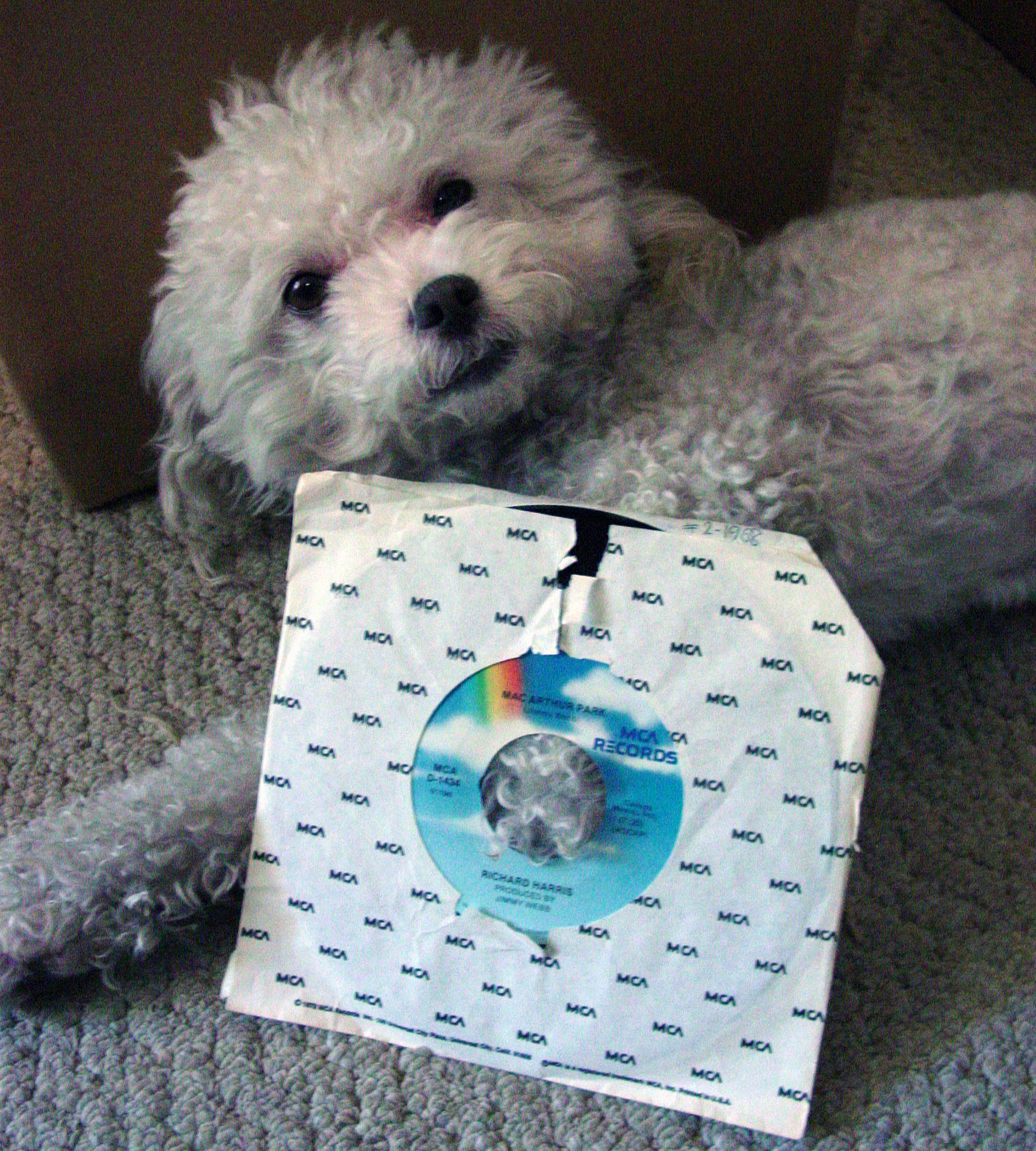
Ringo + Harris 2014-08-15 12.17

It’s Friday And I Need To Dance!

As a songwriter, Jimmy Webb scored his first hit in 1967 at age twenty when The 5th Dimension took “Up, Up and Away” to the top ten. Later that year Glen Campbell had a hit with Webb’s composition “By the Time I Get to Phoenix.”

Webb then wrote a 22-minute cantata. His friend Bones Howe, with whom Webb worked on The 5th Dimension’s Up, Up and Away album, invited Webb to play the new piece for The Association, who Howe was then producing. Their reaction was less than enthusiastic. Per Howe, one group member said “Any two guys in this group could write a better piece of music than that.”

Sometime after, Webb received a telegram from actor Richard Harris, who he met at a fundraiser in Los Angeles. Harris was nominated for an Academy Award in 1963 for This Sporting Life and again in 1990 for The Field. He later went on to play Professor Dumbledore in the first two Harry Potter movies. The telegram read “Jimmy Webb, come to London and make a record. Love, Richard.”

Webb flew to London, bringing a satchel of songs he’d written. He played each for Harris, but nothing struck the actor. Webb recalled “I looked down with some dread because there was only one thing left.” That one thing was the last movement of the cantata he presented to The Association. He called it “MacArthur Park.”

Here are the lyrics to “MacArthur Park.” Raise your hand when they get confusing.

The opening lines are “Spring was never waiting for us, girl / it ran one step ahead, as we followed in the dance.”

I see some hands raised. The next line should help you understand: “Between the parted pages and were pressed in love’s hot fevered iron, like a striped pair of pants.” Now you got it! Harris, who is from the UK, where “pants” means underwear, uses an iron, a hot fevered iron, on his striped underwear. You may be asking: Does he iron his solid-colored underwear? Does he have solid-colored underwear? Boxers or briefs? Relax – there are still six and a half minutes left in the song, so maybe you’ll find out.

Moving on, we learn that MacArthur Park, which Harris calls MacArthur’s Park for the duration of the song, is melting. In the dark. Its icing is flowing down. Who hasn’t been there?

We now arrive at the classic lines about a cake left out in the rain, which appears to be causing Harris to have a breakdown. “I don’t think that I can take it ‘cause it took so long to bake it and I’ll never have that recipe again. Oh no!” Calm down. It’s just a cake. Bake another one. I know – this song was recorded in the pre-Internet age when finding a cake recipe required one to open a cook book, but come on! This cake can’t be that special if you chose to leave it out during inclement weather.

By the end of verse one we have learned several things: 1) Harris is singing to a girl; 2) Harris irons his striped underwear; 3) a park is melting; 4) if you bake a cake and wish to leave it outside, check The Weather Channel first; and 5) never write a song while you are on an acid trip.

As the song continues it gets more bizarre. The melody changes and Harris threatens us by singing “There will be another song for me, for I will sing it.” Luckily, this other song never became a hit. (And may I add, he is being rather presumptuous by calling his performance on this record “singing.”)

The song clocks in at nearly seven and a half minutes, and though it reached #2 on the US pop charts, most listeners had no idea why Harris was singing about a melting park, ironed underwear and a waterlogged dessert.

Songwriter Webb didn’t understand the confusion. He told Q Magazine that the song is “clearly about a love affair ending, and the person singing it is using the cake and the rain as a metaphor for that.” Clearly. Clear as mudcake.

The love affair was one from Webb’s own life. He and his girlfriend would meet for lunch at MacArthur Park, where there would sometimes be birthday parties, with cake. Their breakup devastated Webb, who wrote “Mac Arthur Park” and “By the Time I Get to Phoenix” based on their relationship. (Bonus trivia – the woman went on to marry Linda Ronstadt’s cousin.)

In 1993, humorist Dave Barry surveyed his readers to find the worst song. The clear winner for Worst Overall Song and Worst Lyrics was “Mac Arthur Park.” Culture critic Joe Queenan disagreed with the results “because ‘Ebony and Ivory’ exists, as do ‘You Don’t Bring Me Flowers,’ ‘Baby, I’m-a Want You,’ ‘Feelings,’ ‘Benny and the Jets,’ ‘Witchy Woman’ and ‘Sussudio,’” adding “On a planet where somebody thought it would be a good idea to write ‘Scenes from an Italian Restaurant,’ the best ‘MacArthur Park’ is ever going to earn in the sucky-song sweepstakes is a tie.”

Good or bad, the song is a classic. A 1968 Grammy winner for Best Arrangement Accompanying Vocalist, the song has been recorded by top artists in diverse genres, including Frank Sinatra, Tony Bennett, Sammy Davis Jr., Liza Minnelli, the Four Tops, Maynard Ferguson, Stan Kenton and Woody Herman. Waylon Jennings’ 1969 version won a Grammy. In 1978, Donna Summer’s rendition became her first #1 pop record and stands as the only US #1 pop song for Jimmy Webb, who also wrote “Wichita Lineman,” “Galveston,” “Worst That Could Happen” and “All I Know.”

It has been rumored that Webb and Harris had a falling out due to the song’s success. Harris promised Webb his Rolls Royce if the song went top ten. When the record did, Harris offered Webb a different Rolls Royce. It is because of this that people named Richard are often called Dick. Allegedly, the pair stopped speaking.

Ringo + Harris 2014-08-15 12.17
Today Jimmy Webb turns 68 years old. Hopefully he’s somewhere celebrating with a nice piece of wet cake. We kick off our weekly dance party with Donna Summer’s version of “MacArthur Park,” which she, like Harris, insists on calling “MacArthur’s Park” for the duration of the song.

Like Tunes du Jour on Facebook. Click here.