Or more accurately, with three: “Law of the Land” (Temptations), “The Laws Have Changed” (New Pornographers), and “You Can’t Rule Me” (Lucinda Williams). A trifecta of declarations, all suggesting that whether you’re enforcing the law or dodging it, someone’s about to get into trouble.
This playlist is my musical tribute to International Be Kind To Lawyers Day — a real holiday, celebrated annually on the second Tuesday in April, for reasons that are presumably legal. It’s not just about lawyers, though. This 30-track journey follows the trajectory of a full-blown legal drama: rules are established, rules are broken, crimes are committed, time is served, lawyers are called, and justice is… complicated.
We meet a few Fun Lovin’ Criminals, some Smooth Criminals, and even those who insist they’re just Criminal Minded. The lawbreakers get caught — there’s fighting, testifying, jail time, and at least one unfortunate visit to the Court of the Crimson King (which, I suspect, is not a traffic violation court).
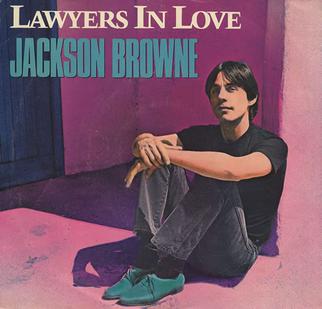
And let’s not forget the lawyers themselves. They’re gun-toting in one song, love-struck in another, and altogether overburdened. But in honor of their service — and in defense of their billable hours — we end on a note of redemption: “Return to Innocence” by Enigma. Because if music has taught us anything, it’s that legal complications can always be resolved in just over four minutes.
So, whether you’re in the mood to break the law, beat the rap, or rap to the beat of the Fat Boys (or Snoop, Freddie Gibbs, Boogie Down Productions…), press play and pass the gavel. And if you happen to know a lawyer, consider saying something nice. After all, they know where all the paperwork is buried.
The music of 1993 was a vibrant mix of genres and styles that reflected the diverse cultural landscape of the early ’90s. This year saw the continued dominance of hip-hop, the rise of alternative rock, and the evolution of pop music, all while established artists pushed their creative boundaries.
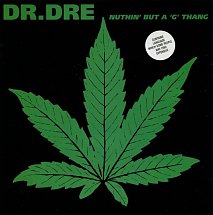
Hip-hop was undeniably a driving force in 1993’s musical landscape. Dr. Dre featuring Snoop Dogg’s “Nuthin’ but a G Thang,” with its laid-back groove, epitomized the G-funk sound that defined West Coast rap. Ice Cube’s “It Was a Good Day” painted a vivid picture of a perfect day in the hood, showcasing the humor and storytelling skills that made him a beloved figure in the rap world. Meanwhile, East Coast artists like Wu-Tang Clan made their mark with the gritty “Protect Ya Neck.” The genre’s influence extended beyond coastal rivalry, with Naughty By Nature’s “Hip Hop Hooray” and Tag Team’s “Whoomp! (There It Is)” becoming nationwide party anthems.
Alternative rock continued its ascent into the mainstream. Radiohead’s “Creep” showcased the band’s angsty beginnings, its melancholic melody and introspective lyrics striking a chord with those struggling with feelings of inadequacy, while Rage Against the Machine’s “Killing in the Name,” a powerful anthem of rebellion, its aggressive sound and socially conscious lyrics that captured the angst and disillusionment of a generation, sparking protests and inspiring a generation of activists, brought politically charged rap-rock to the forefront. R.E.M., already established icons, delivered an anthem for those seeking comfort through emotional vulnerability with the poignant “Everybody Hurts.” Blind Melon’s “No Rain” became an iconic track with its unforgettable music video, featuring the “bee girl” that resonated with audiences worldwide. The year also saw the emergence of Britpop with Blur’s “For Tomorrow” and Suede’s “Animal Nitrate” hinting at the UK’s impending musical revolution.
Pop music in 1993 was anything but one-note. Janet Jackson’s “That’s the Way Love Goes” exemplified smooth R&B-infused pop, while Madonna continued to push boundaries with “Deeper and Deeper,” blending house music with her signature pop style. Whitney Houston’s cover of “I’m Every Woman” breathed new life into a classic, and Prince continued to defy categorization with “7.”
Nineteen ninety-three also saw female artists making bold statements across genres. PJ Harvey’s raw “Rid of Me,” Björk’s ethereal “Venus as a Boy,” and Liz Phair’s unapologetic “Fuck and Run” challenged conventions and expanded the scope of women’s voices in rock. In the realm of hip-hop, Salt-N-Pepa’s “Shoop” showcased women owning their sexuality, while Bikini Kill’s “Rebel Girl” became an anthem for the riot grrrl movement.
The year also highlighted the genre-blending creativity that would come to define the decade. Digable Planets’ “Rebirth Of Slick (Cool Like Dat)” brought jazz-rap into the mainstream, showcasing hip-hop’s versatility and its ability to incorporate sophisticated musical elements. This fusion of styles demonstrated how artists were increasingly willing to experiment and push the boundaries of their respective genres, setting the stage for the eclectic musical landscape that would unfold throughout the rest of the 1990s.
From the gritty sounds of West Coast hip-hop to the introspective lyrics of alternative rock, from the bold statements of female artists across genres to the genre-bending experiments that defied classification, the music scene of 1993 was bursting with creativity. This rich variety not only reflected the cultural zeitgeist of the early ’90s but also laid the groundwork for the musical evolution that would define the rest of the decade and beyond.
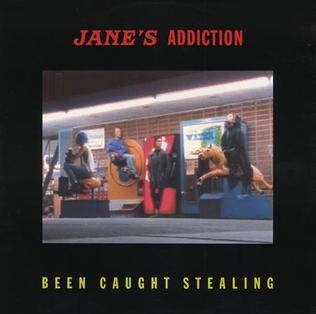
Peretz Bernstein was born on this date in 1959. He took the word peripheral and used that as the basis for his stage name, Perry Farrell. Some of Farrell’s work with Jane’s Addiction and Porno For Pyros is included on today’s playlist.
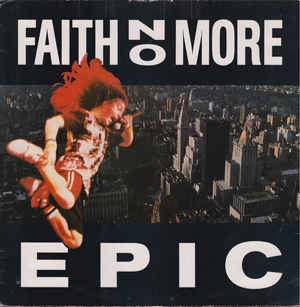
Faith No More’s Mike Patton was born on this date in 1968. A few of the band’s songs are included on today’s playlist, including one released before Patton joined the band, something I just learned moments ago.
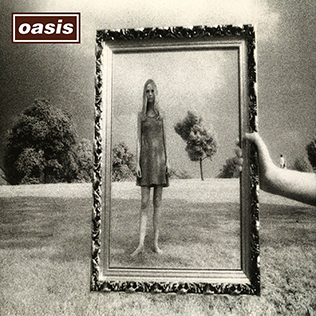
When first presented with his brother Noel’s composition “Wonderwall,” Oasis’ usual lead singer Liam Gallagher didn’t care for it. Of course, the song became a worldwide smash. Did Liam come around? In 2008 he told MTV News “I can’t fucking stand that fucking song! Every time I have to sing it I want to gag.” Guess not. What about Noel, the song’s writer? He must like it, right? Here is what he said: “Outside of England, it’s the one song we’re famous for all over the world, and it annoys the fuck out of me. It’s not a fucking rock’n’roll tune. There’s quite a vulnerable statement to it. When people come up to me and say it’s one of the greatest tunes ever written, I think, ‘fucking hell, have you heard “Live Forever”?’”
Oasis’ “Wonderwall” is one of the 1996 songs on today’s Throwback Thursday playlist.
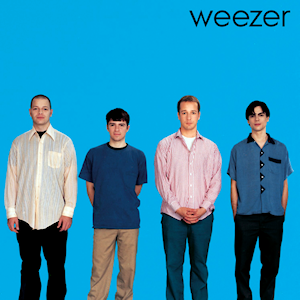
My favorite Weezer song is “Buddy Holly,” from their 1994 album titled Weezer, not to be confused with their 2001 album titled Weezer, their 2008 album titled Weezer, their 2016 album titled Weezer, or either of their 2019 albums titled Weezer. My second favorite Weezer song is “Hash Pipe,” from their 2001 album titled Weezer, not to be confused with their 1994 album titled Weezer, their 2008 album titled Weezer, their 2016 album titled Weezer, or either of their 2019 albums titled Weezer. In third place I’d probably put “Island in the Sun,” also from their 2001 album titled Weezer, not to be confused with their 1994 album titled Weezer, their 2008 album titled Weezer, their 2016 album titled Weezer, or either of their 2019 albums titled Weezer. Next for me would be “Beverly Hills,” from an album not titled Weezer, which I find confusing.
Weezer’s Rivers Cuomo was born on this date in 1950 and has never been the governor of New York. To celebrate a handful of Weezer songs are on today’s playlist. Oddly, I didn’t include any of the favorites I mentioned, which is the most confusing part of this post.
Inspired by the May 30 birthdays of The Clash‘s Topper Headon, The Marvelettes’ Gladys Horton, Cee Lo Green, Stephen Malkmus, Rage Against the Machine/Audioslave’s Tom Morello, the Charlatans’ Tim Burgess, of Montreal’s Kevin Barnes, Devendra Banhart, Donna A., Benny Goodman and Remy Ma.