Tunes Du Jour Celebrates International Drum Month

Welcome to a journey through rhythm. November is International Drum Month, and this collection honors the masters of the drum kit, the players whose feel, power, and ingenuity define the songs we love. From the tightest pockets to the most explosive solos, these are the heartbeats of modern music. Let’s give the drummers some.

Good Vibrations – The Beach Boys
The legendary session musician Hal Blaine provides the sharp, inventive percussion, using everything from sleigh bells to a detached kick drum to build the song’s complex and sunny atmosphere.

Cissy Strut – The Meters
Joseph “Zigaboo” Modeliste, the architect of New Orleans funk, creates a syncopated, greasy, and endlessly influential groove that has been the blueprint for funk drummers ever since.

Smells Like Teen Spirit – Nirvana
Dave Grohl’s performance is a masterclass in quiet-loud dynamics, with his simple, powerful groove in the verse exploding into a torrent of raw energy for the iconic chorus.

One – Metallica
Lars Ulrich’s machine-gun double bass drumming on the intro is one of metal’s most defining moments, perfectly mimicking the sound of battlefield artillery.

Superstition – Stevie Wonder
The irresistible funk pattern that drives this track was played by none other than Stevie Wonder himself, who laid down the clavinet, bass, and drum parts to create a perfect storm of groove.

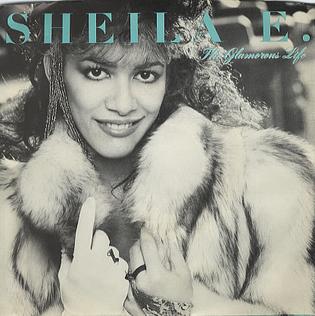
The Glamorous Life – Sheila E.
A tour de force from the legendary percussionist and drummer Sheila E., this track is a showcase of her technical virtuosity and incredible funk sensibilities.

In The Air Tonight – Phil Collins
For three minutes, Phil Collins builds unbearable tension before unleashing the most famous drum fill in history, a thunderous burst of gated reverb toms that everyone has air-drummed to.

Rosanna – Toto
The late, great Jeff Porcaro gives a masterclass in the half-time shuffle, creating a feel so iconic and difficult to replicate that it’s now simply known as the “Rosanna shuffle.”

Come Together – The Beatles
Ringo Starr’s signature swampy, tea-towel-dampened tom groove is the unmistakable foundation of this track, proving that feel and creativity are more important than flash.

Brick House – The Commodores
Walter “Clyde” Orange not only provides the lead vocals but also lays down a funk groove so solid and deep you could build a house on it, proving that sometimes the simplest beat is the most effective.

Rock With You – Michael Jackson
Session giant John “JR” Robinson creates a beat that is smooth, sophisticated, and impossibly deep in the pocket, providing the perfect shimmering pulse for dancing.

Sing, Sing, Sing (With A Swing) – Benny Goodman & His Orchestra
Gene Krupa became music’s first superstar drummer with this performance, his primal, floor-tom-driven solo setting the standard for all drum features to come.

Voodoo Child (Slight Return) – The Jimi Hendrix Experience
Mitch Mitchell’s jazz-influenced, wildly improvisational drumming is the perfect foil for Hendrix’s guitar, a chaotic and conversational force of nature.

When The Levee Breaks – Led Zeppelin
Recorded in a stairwell with two microphones, John Bonham’s colossal, booming groove is arguably the most recognizable and revered drum sound ever committed to tape.

Message in a Bottle – The Police
Showcasing his unique, reggae-infused style, Stewart Copeland’s intricate hi-hat work and signature use of the splash cymbal give this song its nervous, driving energy.

Funky Drummer – James Brown
Here, Clyde Stubblefield plays what is perhaps the most-sampled drum break in history, a 20-second piece of rhythmic perfection that became a cornerstone of hip-hop.

Gimme Shelter – The Rolling Stones
The picture of restraint and taste, Charlie Watts enters the song with a deceptively simple beat that carries all the dread and swing the track demands.

I’ve Seen All Good People – Yes
Bill Bruford’s crisp, creative, and complex drumming is on full display, navigating the song’s shifting sections with technical precision and musical grace.

50 Ways to Leave Your Lover – Paul Simon
Steve Gadd lays down one of the most recognizable and clever marching-band-inspired beats in popular music, a sophisticated and instantly memorable pattern.

Think (About It) – Lyn Collins
Another gift to hip-hop from the James Brown band, this track features John “Jabo” Starks’s impossibly tight groove and a legendary drum break that keeps on giving.

White Room – Cream
The inimitable Ginger Baker announces this psychedelic classic with a powerful 5/4 tom-tom intro, setting the stage with his heavy, melodic, and groundbreaking style.

Hot For Teacher – Van Halen
Alex Van Halen’s frantic, shuffling intro sounds like a barely-contained engine, kicking off one of the most exhilarating double-bass-fueled drum tracks in rock history.

Sunday Bloody Sunday – U2
Larry Mullen Jr.’s militaristic, unrelenting snare drum pattern, recorded in a reverberant stairwell, serves as the song’s defiant and unwavering backbone.

Schism – Tool
A master of complexity, Danny Carey navigates the song’s dizzying array of shifting time signatures with a tribal power and mathematical precision that is simply breathtaking.

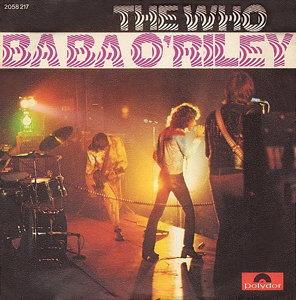
Baba O’Riley – The Who
The untamable Keith Moon crashes and tumbles through this rock anthem, playing with a frenetic energy that threatens to send the song flying off the rails at any moment.

Dig Me Out – Sleater-Kinney
Janet Weiss is the roaring engine of this track, playing with a ferocious power, impeccable timing, and creative fills that drive the song forward relentlessly.

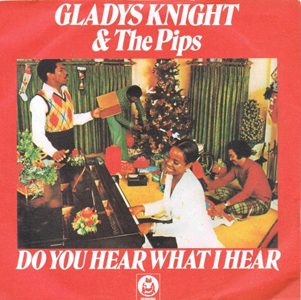
I Heard It Through the Grapevine – Gladys Knight & the Pips
Funk Brothers drummers Uriel Jones and the great Benny Benjamin create a powerhouse rhythm section, delivering a performance full of simmering tension and explosive release that punctuates the song’s raw emotion.

Dancin’ Fool – Frank Zappa
Terry Bozzio is the manic force behind this track, navigating Zappa’s absurd rhythmic twists and turns with an explosive combination of power, precision, and theatrical flair.

One Love/People Get Ready – Bob Marley & The Wailers
Carlton “Carly” Barrett, the originator of the “One Drop” rhythm, gives this song its iconic reggae heartbeat, where the accent is on the third beat of the measure.

Footprints – The Miles Davis Quintet
At just 20 years old, Tony Williams redefined jazz drumming with his explosive and interactive playing, shattering old conventions and pushing the entire band to new heights.

Follow Tunes Du Jour on Facebook

Follow me on Bluesky

Follow me on Instagram
Tunes Du Jour Presents 1984

It’s hard to overstate how culturally dominant pop music was in 1984—or how much the year reshaped the landscape. Many of the songs on this playlist weren’t just hits; they were defining moments, launching or solidifying the careers of artists whose names still carry weight today. The sheer number of songs from 1984 that are still instantly recognizable points to a moment when creativity, commerce, and cultural change aligned. The presence of “Thriller”—Michael Jackson’s seventh single from the album of the same name—reminds us that the music business had never seen anything quite like this before. And yet, he wasn’t the only artist making history.

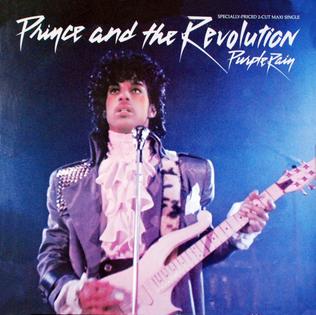
Prince’s “Purple Rain” marked not just a commercial breakthrough, but a creative one. It’s a song, an album, and a film—each enhancing the other’s mythology. Similarly, “Like a Virgin” signaled Madonna’s arrival as more than a pop star; she became a cultural force. Tina Turner, with “What’s Love Got to Do with It,” pulled off one of the most celebrated comebacks in music history. And Cyndi Lauper’s “Girls Just Want to Have Fun” brought an infectious blend of new wave and punky playfulness to the mainstream, reshaping ideas about femininity and pop performance.

Meanwhile, the rock world was hardly on pause. “Jump” became Van Halen’s biggest hit, thanks to its synth hook and anthemic chorus, while Bruce Springsteen’s “Dancing in the Dark” pushed his career into stadium territory. Across the Atlantic, U2’s “Pride (In the Name of Love)” began their transformation from college radio favorites to global headliners. The Replacements’ “I Will Dare,” from Let It Be, captured the heart of American indie rock—irreverent, emotionally raw, and just tuneful enough to hint at wider possibilities. And among the post-punk and alternative set, songs like “The Killing Moon” by Echo & the Bunnymen and “Heaven Knows I’m Miserable Now” by The Smiths gave moody introspection a lasting soundtrack.

What also stands out in 1984 is the range of genres that made a mainstream impact. Shannon’s “Let the Music Play” helped lay groundwork for freestyle, and Chaka Khan’s “I Feel for You” was a pivotal crossover moment, bringing together R&B, pop, and hip-hop. Run-D.M.C.’s “Rock Box” did something similar, blending rap and rock before it was fashionable. The Pointer Sisters’ “Automatic” was one of several hits that proved they could thrive in an electronic pop era without losing their vocal identity. Even novelty songs like “Ghostbusters” or the cheerful “Wake Me Up Before You Go-Go” helped shape the sound of the time.

Beyond chart success, 1984’s songs carried messages—sometimes playful, sometimes political. “Free Nelson Mandela” by The Special A.K.A. was a global anthem of protest. Depeche Mode’s “Blasphemous Rumours” examined faith and fate with a dark electronic edge. And “Somebody’s Watching Me,” a paranoid slice of synth-pop, foreshadowed a media culture on the verge of explosion. Whether on the dancefloor, in dorm rooms, or through the television set, 1984’s music didn’t just reflect its era—it helped define it.

Follow Tunes Du Jour on Facebook

Follow me on Bluesky

Follow me on Instagram
Tunes Du Jour Presents The Prince Songbook

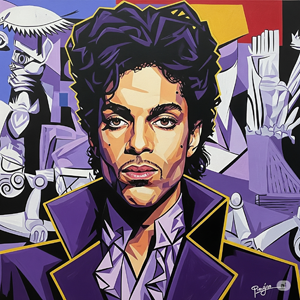
Prince’s genius as a performer is well-documented, but his legacy as a songwriter may be even more far-reaching. The songs he wrote—sometimes directly for others, sometimes borrowed or reimagined—traveled in unexpected directions, often landing in voices very different from his own. Sinéad O’Connor’s haunting version of “Nothing Compares 2 U” turned emotional restraint into a global anthem, while Chaka Khan’s take on “I Feel for You” transformed a tightly wound synth-funk track into a dancefloor juggernaut with help from Melle Mel and Stevie Wonder. The Bangles’ jangly “Manic Monday” showed his facility with classic pop forms.

Sometimes Prince gave away songs without credit. Stevie Nicks has said “Stand Back” wouldn’t exist without his impromptu help; he played the synth part that defined the track, and then slipped away, declining a formal writing credit. His fingerprints are on the Sheila E. hit “The Glamorous Life” and The Time’s “Jungle Love,” both written and produced by Prince but performed by his protégés. Even artists as distinct as Alicia Keys and Tom Jones found new depths and textures in his work, whether covering “How Come You Don’t Call Me” or reinterpreting “Kiss.” In many cases, he gave female artists some of their most complex and empowered material: see Sheena Easton’s risqué “Sugar Walls” or Martika’s spiritual “Love… Thy Will Be Done.”

What’s most remarkable is how well these songs hold up when refracted through other voices. Cyndi Lauper brought vulnerability to “When You Were Mine,” TLC made “If I Was Your Girlfriend” even more intimate, and even idiosyncratic takes like Sufjan Stevens on “Alphabet Street” or P.M. Dawn’s dreamlike “1999” as incorporated in “Fantasia’s Confidential Ghetto” show how flexible his songwriting was. Prince’s compositions had structure, hooks, and heart, but they were never rigid. That elasticity allowed other artists not just to sing his songs, but to inhabit them.

Follow Tunes Du Jour on Facebook

Follow me on Bluesky

Follow me on Instagram
Tunes Du Jour Presents Prince

Prince Rogers Nelson, known mononymously as Prince, was a musical innovator whose influence spanned across genres, decades, and generations. His work was characterized by a remarkable blend of funk, rock, R&B, and pop, with hits like “Purple Rain,” “When Doves Cry,” and “Kiss” showcasing his unparalleled ability to craft songs that were both commercially successful and artistically groundbreaking. With his enigmatic persona and prolific output, Prince left an indelible mark on the music industry, redefining the boundaries of popular music.

Prince’s contributions to music were not just about his hits; he was a consummate artist who played multiple instruments, wrote and produced his own songs, and constantly pushed the envelope with his sound and image. His album 1999 marked a significant moment in the early 1980s, with the title track and “Little Red Corvette” becoming anthems of the era. The follow-up, Purple Rain, not only solidified his status as a superstar but also won him an Academy Award for Best Original Song Score, demonstrating his versatility and broad appeal.

Throughout his career, Prince garnered numerous accolades, including seven Grammy Awards and induction into the Rock and Roll Hall of Fame in 2004. His work with the Revolution, the New Power Generation, and his solo projects consistently garnered critical and commercial success. Songs like “Raspberry Beret,” “Sign ‘‘ The Times,” and “Cream” highlighted his ability to evolve and adapt, continually reinventing his sound while maintaining his unique voice. His influence extended to other artists as well, with collaborations and productions that enriched the careers of musicians like Sheila E., whose hit “A Love Bizarre” was co-written by Prince.

Beyond his musical genius, Prince was also known for his philanthropic efforts. He was a quiet but significant supporter of various causes, often using his resources to help those in need without seeking the limelight. His contributions included support for initiatives focused on education, such as the Yes We Code project, which aimed to teach coding skills to young people from underrepresented backgrounds. Additionally, he donated to organizations like Harlem Children’s Zone and Green For All, reflecting his commitment to social justice and community empowerment.

Prince’s legacy is one of innovation, generosity, and an unwavering dedication to his art. His music continues to inspire and influence, a testament to his genius and the enduring power of his work. From the infectious grooves of “U Got the Look” and “Gett Off” to the messages in songs like “Sign ‘‘ The Times,” Prince’s catalog is a treasure trove that celebrates the complexity and beauty of human experience. His life and career remain a shining example of how one artist’s vision can transform the landscape of popular music.

Follow Tunes du Jour on Facebook

Follow Tunes du Jour on Twitter

Follow me on Instagram

Your (Almost) Daily Playlist: 12-11-22

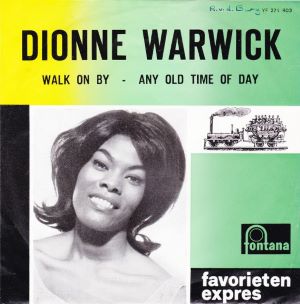
Today’s playlist celebrates the December 11 birthdays of Yasiin Bey (formerly known as Mos Def), Big Mama Thornton, Pérez Prado, Brenda Lee, Bread’s David Gates, Jermaine Jackson, J. Frank Wilson, Jon Brion, and Sister Double Happiness’s Gary Floyd; and the December 12 birthdays of Dionne Warwick, Frank Sinatra, MC5’s Rob Tyner, The Association’s Terry Kirkman, Manu Dibango, Sheila E., The Ruts’ Malcolm Owen, Grover Washington Jr., Georgia Satellites’ Dan Baird, Connie Francis, The Fixx’s Cy Curnin, and Bob Dorough.

Follow Tunes du Jour on Facebook

Follow Tunes du Jour on Twitter

Follow me on Instagram