Tunes Du Jour Celebrates Famous Dates In Pop Music

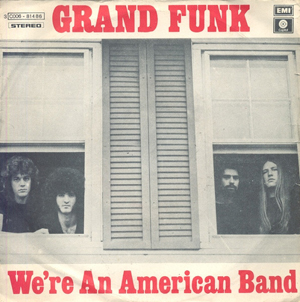
It was the third of September / That day I’ll always remember

It was the third of June, another sleepy, dusty Delta day

Early morning, April 4 / Shot rings out in the Memphis sky

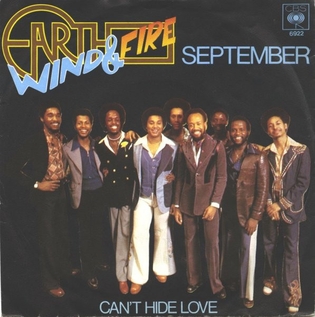
Do you remember the twenty-first night of September?

The theme of today’s playlist is dates referenced in song lyrics.

A date can do a lot of heavy lifting in a song. It can anchor a memory, mark a turning point, or drop us directly into a moment in history. Sometimes it’s deeply personal—Jay-Z naming his birthday in “December 4th”—and sometimes it’s collective, as in U2’s “Pride (In the Name of Love),” with its reference to April 4, 1968, the day Martin Luther King Jr. was assassinated.

Songwriters also use dates to heighten mystery. Bobbie Gentry’s “Ode to Billie Joe” begins on June 3, but instead of telling us what happened at the Tallahatchie Bridge, the lyric circles around it, making the day itself loom larger than the unexplained event. Similarly, the Temptations’ “Papa Was a Rolling Stone” ties the father’s death to September 3, a detail that sticks in the mind as much as the funk groove itself.

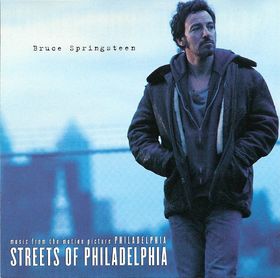
Not every date is somber. Earth, Wind & Fire turned September 21 into an annual celebration, and Chicago’s “Saturday in the Park” keeps the Fourth of July grounded in a snapshot of music, sunshine, and family fun. Bruce Springsteen’s “4th of July, Asbury Park (Sandy)” is more bittersweet, capturing the mix of romance and restlessness that defined his early work.

Dates can also mark social upheaval. Sublime’s “April 29, 1992 (Miami)” references the Los Angeles riots, while the Neville Brothers’ “Sister Rosa” pays tribute to Rosa Parks’ refusal to give up her bus seat on December 1, 1955. Songs like these remind us that a single day can ripple outward into history.

Taken together, this playlist shows the many ways a songwriter can spin meaning out of the calendar. A date can be the start of a story, a marker of joy or tragedy, or just a sly joke. What matters is how it sticks in your memory, long after the last chord fades.

Follow Tunes Du Jour on Facebook

Follow me on Bluesky

Follow me on Instagram
Tunes Du Jour Presents The Bob Dylan Songbook

One way to measure a songwriter’s reach is not by how often their work is covered, but how widely. The playlist below spans decades, genres, and sensibilities—from Adele to The Dead Weather, from Johnny Cash to the Neville Brothers—and all roads lead back to Bob Dylan. This is not just a reflection of his prominence; it’s a testament to the adaptability of his writing. Dylan’s lyrics aren’t locked into one style or moment—they hold up when filtered through gospel, punk, glam, folk, or soul. His songs invite reimagining because they’re grounded in strong narrative bones and emotional honesty, not ornamental frills.

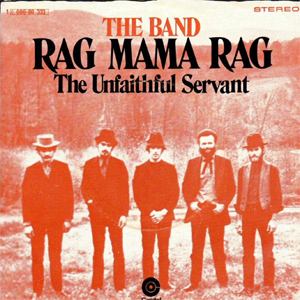
Consider the different shades of “All Along the Watchtower.” Dylan’s original version is stark and cryptic; Hendrix turned it into an electrified storm. Likewise, “I Shall Be Released,” rendered with hushed reverence by The Band, has the structure of a gospel hymn but the ambiguity of a fable. “Make You Feel My Love,” one of Dylan’s later compositions, found new life in Adele’s version—proof that his songwriting didn’t peak in the ’60s, but simply evolved. His voice as a writer has always been the constant: a blend of plainspoken wisdom, sly humor, and a deep sense of historical and emotional context.

It’s notable, too, how Dylan’s songs seem to absorb the character of the performer. When Elvis Presley sings “Tomorrow Is a Long Time,” it feels like a Southern ballad. When PJ Harvey takes on “Highway 61 Revisited,” it becomes something raw and jagged. Nina Simone’s version of “Just Like Tom Thumb’s Blues” brings out a haunted intensity not present in Dylan’s own delivery. That elasticity points to a rare kind of craftsmanship—songs written with enough specificity to be meaningful, but enough openness to be inhabited.

Even in unexpected settings, Dylan’s words linger. Tom Petty co-wrote the lyrics to “Jammin’ Me” with him, a pointed pop-rock critique of media saturation. Patti Smith’s “Changing of the Guards” channels the mystical imagery and layered storytelling that Dylan deployed throughout the ’70s. And when The Specials tear into “Maggie’s Farm,” it becomes a statement of punk-era defiance. These aren’t nostalgia pieces—they’re songs that meet each era on its own terms.

Dylan’s catalog isn’t just influential; it’s usable. His songs function as cultural currency, endlessly exchangeable yet retaining value. Whether you hear him through Joan Osborne’s gothic reading of “Man in the Long Black Coat” or the crystalline harmonies of Peter, Paul and Mary’s “Blowin’ in the Wind,” what’s most striking is not just who sings Dylan—but what his songs reveal when they do.

Follow Tunes Du Jour on Facebook

Follow me on Bluesky

Follow me on Instagram

Tunes Du Jour Presents 1969

The music of 1969 captures a unique crossroads in cultural history—a year teetering between optimism and cynicism, unity and rebellion. Looking at a playlist from this year reveals a blend of genres and voices, each reflecting a society in flux. The playlist’s tracks encompass themes of love, social change, disillusionment, and raw individualism, echoing the era’s contradictions and bold spirit.

On one end of the spectrum, songs like Elvis Presley’s “Suspicious Minds” and Tammy Wynette’s “Stand By Your Man” echo traditional themes of love, loyalty, and heartbreak, though with a hint of modern skepticism. Presley’s soulful performance marked his return to chart-topping success, while Wynette’s hit became a polarizing anthem, embraced by some for its devotion and questioned by others for its apparent passivity. Meanwhile, Glen Campbell’s “Wichita Lineman” captured a more introspective side of the decade, blending pop and country into a haunting portrayal of loneliness and perseverance.

But 1969 wasn’t all about introspection; it was also a year of unrestrained expression and pushing boundaries. Creedence Clearwater Revival’s “Bad Moon Rising” hinted at a sense of looming danger, with its ominous lyrics striking a nerve during a time of political upheaval. In contrast, “Honky Tonk Women” by The Rolling Stones embraced the gritty allure of rock and roll without aiming for a larger societal message. Jagger’s tales of chance encounters and gin-soaked nights represent the Stones’ unapologetic celebration of indulgence, sidestepping introspection in favor of pure hedonism.

Amidst the wild spirit of rock, 1969 also offered more uplifting messages with a hint of idealism. Sly & The Family Stone’s “Everyday People” and The Youngbloods’ “Get Together” conveyed calls for unity that resonated deeply in an era fraught with political and racial tensions. Sly Stone’s anthem became a rallying cry for acceptance, emphasizing individuality while embracing common ground. Similarly, “Aquarius/Let the Sunshine In” by The 5th Dimension captured the essence of the countercultural movement in all its utopian ambitions, even if the optimism was a bit idealistic in hindsight.

Then there was the music that addressed disillusionment head-on, perhaps best captured by Simon & Garfunkel’s “The Boxer” and Peggy Lee’s “Is That All There Is?” Both songs offer reflective, sometimes jaded perspectives on life’s struggles and the disappointments that can accompany maturity. Where “The Boxer” tells the story of a young man grappling with hardship and loss, Lee’s dry wit in “Is That All There Is?” confronts the emptiness that can lie beneath life’s surface pleasures.

Ultimately, this playlist from 1969 feels like a time capsule of an era balancing between hope and disillusionment. From the raw proto-punk of The Stooges to the tender balladry of Stevie Wonder’s “My Cherie Amour,” the year’s music speaks to a generation grappling with unprecedented social changes. Through these songs, 1969 continues to resonate, reminding us that music often reflects the spirit of its time while challenging listeners to consider where they stand.

Follow Tunes Du Jour on Facebook

Follow Tunes Du Jour on Twitter

Follow me on Instagram

Tunes Du Jour Presents Holland-Dozier-Holland

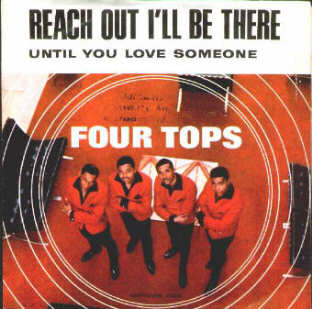
Brian Holland, Lamont Dozier, and Eddie Holland, collectively known as Holland-Dozier-Holland (H-D-H), are synonymous with the sound of Motown. Their string of hits in the 1960s and beyond fueled the success of the record label, shaping popular music and paving the way for R&B to dominate the airwaves. Each song on this playlist, from The Four Tops’ powerful “Reach Out (I’ll Be There)” to The Supremes’ iconic “Where Did Our Love Go,” credits one or more members of H-D-H. With a blend of melody, rhythm, and hooks that remain timeless, the team’s work redefined what hit songwriting could accomplish.

This songwriting trio didn’t merely write songs—they crafted narratives of love, heartbreak, and resilience that resonated with audiences across generations. Tracks like “This Old Heart of Mine (Is Weak for You)” by The Isley Brothers and Marvin Gaye’s “Can I Get a Witness” reveal the emotional depth in their compositions, supported by rhythms and production styles that have endured decades of cover versions. Their songs often feel instantly recognizable, whether it’s the infectious chorus of Chairmen of the Board’s “Give Me Just a Little More Time” or the stomping beat of Junior Walker & the All-Stars’ “(I’m A) Road Runner.”

The irony, however, is that Eddie Holland, despite being a key member of the team, had only one top 40 pop single as a solo artist, “Jamie”—and it wasn’t written by any member of Holland-Dozier-Holland. Instead, it was penned by Barrett Strong and William “Mickey” Stevenson, fellow Motown talents who contributed in their own right to the label’s powerhouse status. Though Eddie found his calling behind the scenes rather than as a performer, his experience as an artist gave him unique insight into the singer’s perspective, a quality that helped make H-D-H’s songs vocally compelling and relatable.

Beyond Motown, the trio’s influence stretched into rock, pop, and soul genres, as evident from covers and reinterpretations by artists like The Rolling Stones, Rod Stewart, and Bananarama. These renditions, like Linda Ronstadt’s cover of “Heat Wave” or James Taylor’s soulful take on “How Sweet It Is (To Be Loved by You),” show how their music transcended genre boundaries. Each version emphasizes the versatility of H-D-H’s songwriting, capable of adapting to various musical expressions while retaining its core appeal.

Ultimately, the legacy of Holland-Dozier-Holland isn’t just in their impressive catalog but in their contributions to the very essence of popular music. They captured the spirit of a generation through music that continues to find new audiences, sounding as fresh today as it did over half a century ago. Their work endures, a testament to their genius, and is rightly celebrated by the many artists who’ve covered and revived their timeless songs.

Follow Tunes Du Jour on Facebook

Follow Tunes Du Jour on Twitter

Follow me on Instagram


Tunes Du Jour Presents 1968

In the tumultuous year of 1968, the world was ablaze with social and political upheaval, and the music of the time resonated deeply with the spirit of change. As we reflect on the sounds that defined this pivotal era, it’s impossible not to be swept away by the eclectic mix of genres and emotions that filled the airwaves. From soulful ballads to psychedelic rock anthems, the music of 1968 was a reflection of the turbulent times in which it was created.

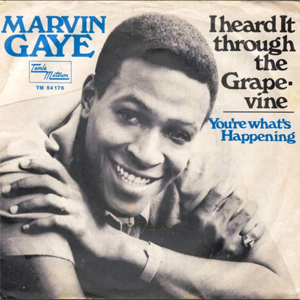
One cannot delve into the musical landscape of 1968 without acknowledging the timeless classics that continue to capture hearts and minds today. Marvin Gaye’s “I Heard It Through the Grapevine” remains a soulful testament to the power of love and betrayal, while The Beatles’ “Hey Jude” stands as an enduring anthem of hope and resilience. Meanwhile, Otis Redding’s “(Sittin’ On) The Dock of the Bay” evokes a sense of quiet contemplation amidst the chaos, its melancholic melody lingering long after the last note fades away.

The year also saw the rise of revolutionary artists who pushed the boundaries of conventional sound and style. Jimi Hendrix’s electrifying rendition of Bob Dylan’s “All Along The Watchtower” redefined the possibilities of guitar-driven rock, while Sly & the Family Stone’s “Dance To The Music” infused funk with a vibrant energy that transcended racial and cultural divides. Steppenwolf’s “Born To Be Wild” became the anthem of a generation, capturing the restless spirit of rebellion that coursed through the veins of youth around the world.

Each track on this playlist is a testament to the power of music to unite, inspire, and console, even in the darkest of times. Let us remember the year that was 1968 and the enduring legacy of the artists who helped shape it.

Follow Tunes du Jour on Facebook

Follow Tunes du Jour on Twitter

Follow me on Instagram