Many of us grow up assuming the hit version of a song is the original. This playlist celebrates those surprising musical genealogies: well-known songs that were originally recorded by someone else, often with little fanfare. Here are the stories behind the transformations—where they started, and how they became iconic.
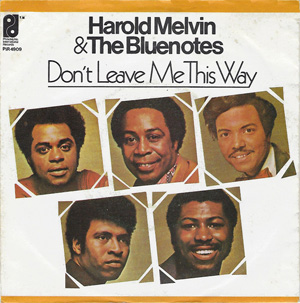
“Don’t Leave Me This Way” – Thelma Houston / Originally by Harold Melvin & the Blue Notes (1975)
Houston’s disco anthem actually began life as a Philly soul track sung by Teddy Pendergrass. Thelma took it to the dancefloor—and to #1.
“War” – Edwin Starr / Originally by The Temptations (1970)
This protest song started as an album cut by The Temptations. Starr’s rawer, angrier take made it a searing hit during the Vietnam era.
“Strawberry Letter 23” – The Brothers Johnson / Originally by Shuggie Otis (1971)
Otis’ dreamy, psychedelic original flew under the radar until producer Quincy Jones supercharged it with funk for The Brothers Johnson.
“I Feel for You” – Chaka Khan / Originally by Prince (1979)
Prince wrote it, recorded it, and released it on his 1979 self-titled album. Chaka Khan added Stevie Wonder’s harmonica and Melle Mel’s rap, creating a genre-blurring smash that gave the song a second life—and a much bigger audience.
“Louie Louie” – The Kingsmen / Originally by Richard Berry (1957)
Berry’s calypso-tinged rhythm & blues song became an unintelligible rock ‘n’ roll classic in the hands of teenage garage rockers.
“Pass The Koutchie” – Musical Youth as “Pass the Dutchie” / Originally by Mighty Diamonds (1981)
Musical Youth’s version cleaned up the ganja references but kept the groove. A British reggae hit born from a roots original.
“Tainted Love” – Soft Cell / Originally by Gloria Jones (1964)
This Northern Soul favorite was ignored in the U.S. until Soft Cell’s chilly synth-pop cover turned it into an international sensation.
“You Are So Beautiful” – Joe Cocker / Originally by Billy Preston (1974)
Preston’s gospel-inflected original was co-written with Dennis Wilson of the Beach Boys. Cocker slowed it down into a tearjerking ballad.
“The First Cut Is The Deepest” – Rod Stewart / Originally by P.P. Arnold (1967)
Before Cat Stevens, the song’s writer, sang it himself, P.P. Arnold delivered a powerful version. Stewart’s cover gave it global traction.
“Red, Red Wine” – UB40 / Originally by Neil Diamond (1967)
Diamond’s mournful original was a slow ballad. UB40’s reggae version confused even him—he didn’t recognize his own song on the radio.
“Brand New Cadillac” – The Clash / Originally by Vince Taylor and His Playboys (1959)
This rockabilly obscurity became a snarling punk track on London Calling. Vince Taylor later served as an inspiration for David Bowie’s Ziggy Stardust persona.
“Take Me To The River” – Talking Heads / Originally by Al Green (1974)
Green’s swampy soul gave way to Talking Heads’ jittery art-funk. An old-school spiritual reborn in new wave style.
“The Tide Is High” – Blondie / Originally by The Paragons (1967)
Jamaican rocksteady meets NYC cool. Blondie took this mellow gem and gave it a global pop sheen.
“Brandy” – Barry Manilow as “Mandy” / Originally by Scott English (1971)
English’s sad and simple original got a new name and new polish. Manilow’s grand version topped the charts.
“Don’t Let Me Be Misunderstood” – The Animals / Originally by Nina Simone (1964)
Simone’s pleading ballad became a snarling British Invasion hit. Her nuanced sorrow gave way to the raw edge of rock.
“Bette Davis Eyes” – Kim Carnes / Originally by Jackie DeShannon (1974)
The original was breezy and piano-driven. Carnes and her producer Val Garay turned it into new wave noir.
“Heaven Must Have Sent You” – Bonnie Pointer / Originally by The Elgins (1966)
Pointer’s disco version revived a Motown deep cut and put it back on the charts over a decade later.
“Love Buzz” – Nirvana / Originally by Shocking Blue (1969)
Nirvana turned this obscure Dutch psych-rock tune into a distorted grunge landmark. Their debut single.
“Piece Of My Heart” – Big Brother & The Holding Company / Originally by Erma Franklin (1967)
Aretha’s sister recorded it first, but Janis Joplin made it a fiery centerpiece of her legend.
“It’s Oh So Quiet” – Björk / Originally by Betty Hutton (1951)
A novelty big-band number revived by Björk into a theatrical showstopper. Old Hollywood meets Icelandic art-pop.
“China Girl” – David Bowie / Originally by Iggy Pop (1977)
Co-written with Bowie, Iggy’s version was skeletal and raw. Bowie’s version added synth gloss and MTV appeal.
“Good Lovin'” – The Young Rascals / Originally by The Olympics (1965)
The Olympics had the groove, but The Rascals turned it into a garage-rock rave-up and a #1 hit.
“Valerie” – Mark Ronson featuring Amy Winehouse / Originally by The Zutons (2006)
The Zutons wrote it as a bluesy rock song. Winehouse made it retro-soul perfection.
“Police On My Back” – The Clash / Originally by The Equals (1967)
A stomping, paranoid track from Eddy Grant’s first band. The Clash turned it into a punk fugitive anthem.
“After Midnight” – Eric Clapton / Originally by J.J. Cale (1966)
Cale’s laid-back shuffle was juiced up with guitar licks by Clapton, who kept the songwriter’s cool intact.
“On Broadway” – The Drifters / Originally by The Cookies (1962)
Songwriters Barry Mann & Cynthia Weil gave this to a girl group first, but The Drifters made it a city-slick R&B classic.
“Love Hurts” – Nazareth / Originally by The Everly Brothers (1960)
Gentle heartbreak became hard rock agony. Nazareth’s arena wail made the song a power ballad staple.
“I Love Rock ‘n’ Roll” – Joan Jett & the Blackhearts / Originally by The Arrows (1975)
Jett saw it on UK TV and recorded a fiercer, snarling version that girls (and boys) everywhere could scream along to.
“Without You” – Nilsson / Originally by Badfinger (1970)
Badfinger’s version was plaintive; Nilsson’s was operatic. He didn’t just sing it—he wailed it.
“Superman” – R.E.M. / Originally by The Clique (1969)
A psychedelic pop obscurity turned indie-rock cult classic. One of R.E.M.’s rare early tracks not written by the band.
These songs remind us that inspiration doesn’t always strike where the spotlight shines. Sometimes greatness is borrowed—and reinvented.
Follow Tunes Du Jour on Facebook
Follow me on Bluesky
Follow me on Instagram