Tunes Du Jour Presents 1958

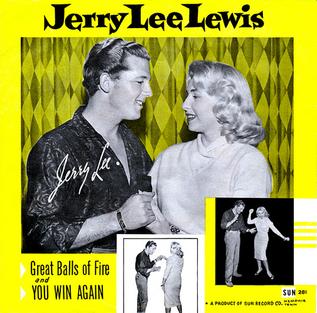
By 1958, rock and roll was no longer a brash newcomer fighting for legitimacy—it had become the dominant sound of American popular music. The charts that year captured a genre in full stride, blending raw energy with increasingly sophisticated production. Jerry Lee Lewis pounded out “Great Balls of Fire” with manic intensity while the Everly Brothers offered the dreamy harmonies of “All I Have to Do Is Dream,” proving that rock and roll could be both wild and tender. Chuck Berry’s “Sweet Little Sixteen” painted vivid pictures of teenage life, and Little Richard’s “Good Golly, Miss Molly” delivered pure, unfiltered excitement. These weren’t just songs—they were the soundtrack to a generation coming into its own.

The year also marked the rise of memorable instrumental tracks that showcased rock and roll’s expanding vocabulary. Link Wray’s “Rumble” pioneered the power chord with its menacing guitar distortion, while Duane Eddy’s “Rebel Rouser” introduced the twangy, reverb-heavy “twang” that would influence countless guitarists. The Champs’ “Tequila” proved that a single word and an infectious sax riff could dominate the airwaves. These instrumental hits demonstrated that rock and roll didn’t always need lyrics to communicate emotion or get people moving.

While rock and roll dominated, 1958 was hardly monolithic in its musical offerings. Tommy Edwards’ orchestral “It’s All In The Game” and Peggy Lee’s sultry “Fever” showed that traditional pop still had plenty of commercial power. Domenico Modugno’s “Nel blu, dipinto di blu (Volare)” became an international sensation, bringing Italian pop to American audiences. The Platters’ “Twilight Time” continued doo-wop’s evolution toward lush, romantic balladry. This variety revealed an industry still figuring out how different styles could coexist and cross-pollinate.

The playlist also captures the emergence of future stars and the refinement of group vocals. Cliff Richard’s “Move It” announced Britain’s first major rock and roll talent, foreshadowing the British Invasion that would come later. Meanwhile, doo-wop groups like The Chantels with “Maybe” and Jerry Butler & the Impressions with “For Your Precious Love” brought sophistication and emotional depth to their harmonies. Novelty hits like David Seville’s “Witch Doctor” and lighthearted fare like The Chordettes’ “Lollipop” added playful moments to the mix, reminding listeners that music could simply be fun without carrying cultural weight.

What’s striking about 1958 is how much ground the music covered while maintaining a coherent identity. Whether it was Eddie Cochran’s rebellious “Summertime Blues” or Conway Twitty’s heartbroken “It’s Only Make Believe,” these songs spoke directly to young people navigating the complexities of modern life. Rock and roll had proven it wasn’t a passing fad—it was a versatile, evolving force that could express the full range of teenage emotion, from joy to heartbreak, from rebellion to romance. The music of 1958 didn’t just entertain; it validated the experiences of an entire generation.

Follow Tunes Du Jour on Facebook

Follow me on Bluesky

Follow me on Instagram
Tunes Du Jour Presents 1965

Have you ever looked at a playlist from a single year and felt a sense of disbelief? It’s one thing for a year to produce a few memorable hits, but it’s another for it to feel like a highlight reel of music history. Looking at the charts from 1965 is exactly that kind of experience. It wasn’t just a year of good songs; it was a pivotal moment when popular music seemed to mature in several different directions at once, producing an astonishing collection of classics that still resonate today.

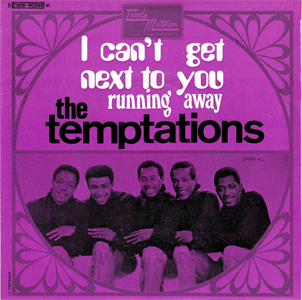
On one hand, 1965 saw the art of the immaculately produced pop song reach a new peak. The Motown machine was in full, glorious swing, giving us the suave romance of The Temptations’ “My Girl” and the intricate heartbreak of Smokey Robinson’s “The Tracks of My Tears.” The Supremes demanded attention with the dramatic plea of “Stop! In the Name of Love,” a perfect example of studio craftsmanship meeting raw emotion. Across the Atlantic, Petula Clark’s “Downtown” offered a sweeping, cinematic vision of city life. These weren’t just catchy tunes; they were impeccably arranged, powerfully sung, and emotionally direct pieces of art that defined a certain kind of pop perfection.

At the very same time, a grittier, more defiant sound was taking hold. The Rolling Stones’ “(I Can’t Get No) Satisfaction” wasn’t just a hit song; it was a statement of intent, built around a fuzzy, unforgettable guitar riff that sounded like pure frustration. This raw energy was a common thread. From the garage-rock howl of Them’s “Gloria” to the stuttering, youthful angst of The Who’s “I Can’t Explain,” rock music was shedding its cleaner-cut image. This wasn’t the polished sound of the studio; it was the restless sound of the rehearsal room, and it was connecting with an entire generation.

Beyond the evolving sounds, the lyrical substance of popular music was deepening profoundly. Bob Dylan completely rewrote the rules with “Like a Rolling Stone,” a six-minute epic of poetic scorn that proved a hit single could be complex, challenging, and literary. That same year, The Byrds took Dylan’s words and electrified them, creating a new genre overnight with their shimmering version of “Mr. Tambourine Man.” This new lyrical consciousness also carried immense social weight. Sam Cooke’s posthumously released “A Change Is Gonna Come” and The Impressions’ hopeful “People Get Ready” became enduring anthems of the Civil Rights Movement, demonstrating that music could be both a comfort and a powerful call for progress.

What makes 1965 so striking is that none of these developments happened in isolation. It was a year of convergence, where you could hear the sweet soul of Marvin Gaye’s “How Sweet It Is (To Be Loved By You)” on the radio right next to the birth of funk in James Brown’s “Papa’s Got a Brand New Bag.” The carefree optimism of The Beach Boys’ “California Girls” shared the airwaves with the deep, aching soul of Otis Redding’s “I’ve Been Loving You Too Long.” The sheer volume of landmark recordings from this single 12-month period is a testament to a unique moment in time—a year when the boundaries of pop music were expanding in every direction, leaving us with a collection of songs that feel less like relics and more like foundation stones.

Follow Tunes Du Jour on Facebook

Follow me on Bluesky

Follow me on Instagram
Your (Almost) Daily Playlist: 9-2-23

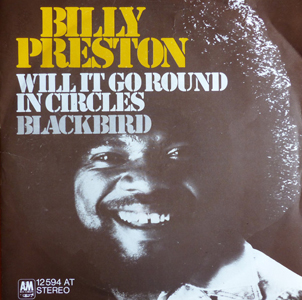
“Will It Go Round In Circles,” Billy Preston’s second US number one single, was borne from a comment Preston made to his songwriting partner, Bruce Fisher, about having a song but no melody. From there the pair came up with lyrics about having a dance with no steps and added to those words a very catchy melody. A session that included pre-stardom guitar and bass players The Brothers Johnson brought the groove and the funk.

Billy Preston’s first time having his name appear at the top spot of the Hot 100 was in 1969 with “Get Back,” credited to The Beatles With Billy Preston. Following The Beatles’ breakup, Preston continued working with its members, including playing with George Harrison at the Concert for Bangladesh. Preston was the first artist to record Harrison’s My Sweet Lord,” which Harrison co-produced and later recorded himself.

“Will It Go Round In Circles” entered the Hot 100 at number 99. It reached the top ten eleven weeks later, at which time the number one song was Paul McCartney and Wings’ “My Love.” “My Love” was knocked from the top spot by George Harrison’s “Give Me Love (Give Me Peace On Earth),” which was knocked from the top spot by “Will it Go Round In Circles.” The b-side of the Preston single was his cover of The Beatles’ song “Blackbird.”

The late Billy Preston was born on this date in 1946. A handful of his songs feature on today’s playlist.

Follow Tunes du Jour on Facebook

Follow Tunes du Jour on Twitter

Follow me on Instagram