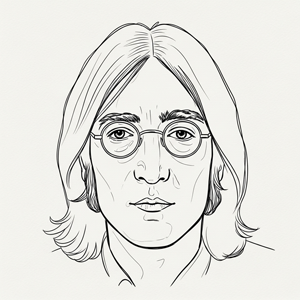
Tunes Du Jour Presents The John Lennon Songbook

It’s interesting to start a playlist of John Lennon songs with David Bowie’s “Fame.” It feels like an outlier at first, until you remember Lennon co-wrote the track, contributed guitar, and sang backup vocals. It’s one of just a handful of songs on this list that isn’t a straightforward cover, and its placement at the top serves as a great reminder: one of the best ways to understand a songwriter’s impact is to see how their work thrives in the hands of others. Listening to a collection like this isn’t just about nostalgia; it’s an active exploration of how durable and adaptable Lennon’s compositions truly are, revealing the deep-seated melodic and lyrical strengths that invite constant reinterpretation.

The sheer variety of artists drawn to his work speaks volumes about its fundamental structure. A Lennon song can be a sturdy vessel for almost any style. In its original form, “Help!” was a desperate plea disguised as an upbeat folk-rock hit. But when Tina Turner gets ahold of it, she strips away the disguise, transforming it into a full-throated, soulful cry for salvation. Similarly, Johnny Cash takes “In My Life,” a song of youthful reflection, and imbues it with the profound weight of a long life lived, making each line land with a different, more somber gravity. From the raw R&B groove Otis Redding finds in “Day Tripper” to the cool, atmospheric poise Roxy Music brings to “Jealous Guy,” these songs prove to be exceptionally resilient, their core emotions accessible to any genre.

Beyond musical versatility, the playlist highlights the different facets of Lennon’s lyrical persona. There’s the acerbic political commentator, whose pointed dissatisfaction is channeled perfectly by the punk sneer of Generation X on “Gimme Some Truth” and the world-weary defiance of Marianne Faithfull on “Working Class Hero.” Then there is the deeply vulnerable Lennon, the man wrangling with insecurity and fame. You can hear this in the anxious, propulsive energy The Feelies bring to “Everybody’s Got Something To Hide (Except Me And My Monkey)” or the stark, pleading quality Maxïmo Park finds in the solo track “Isolation.” He could be pointedly political or achingly personal, and both modes have continued to resonate with artists who have their own truths to tell.

Of course, no look at Lennon’s work would be complete without touching on his more surreal and experimental side. These are often the songs that seem most tied to a specific time, yet they possess a dreamlike logic that continues to inspire. Elton John, a friend and collaborator, treats “Lucy in the Sky with Diamonds” not as a museum piece but as a glam-rock epic. R.E.M. leans into the hypnotic, floating quality of “#9 Dream,” while Fiona Apple’s take on “Across the Universe” honors its ethereal nature while grounding it with her distinctive emotional intensity. These artists don’t just copy the psychedelia; they find new ways to access the spirit of imaginative freedom that fueled the original recordings.

Ultimately, listening through these interpretations feels less like a tribute and more like a conversation across decades. We hear Billy J. Kramer’s simple pop charm on “Bad to Me,” a song Lennon wrote for him in 1963, and then Glen Campbell’s posthumous, heart-rending version of “Grow Old With Me,” one of Lennon’s last compositions. The journey between those two points is remarkable. This collection of songs, re-shaped by everyone from The Breeders to Bettye LaVette, demonstrates that the power of Lennon’s work isn’t just in his own iconic recordings. It’s in the bones of the songs themselves—the unforgettable melodies, the honest lyrics, and the restless spirit that others can’t help but be drawn to, again and again.

Follow Tunes Du Jour on Facebook

Follow me on Bluesky

Follow me on Instagram
Tunes Du Jour Presents 1966

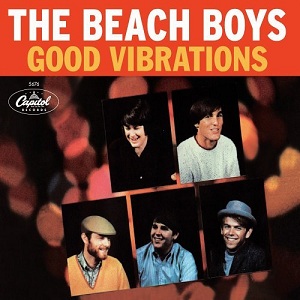
By 1966, rock and pop music had reached a critical turning point. The early, relatively simple sounds of rock and roll were giving way to a more experimental, ambitious approach, yet the airwaves were still filled with instantly memorable melodies. The year saw the release of songs that would go on to define entire careers—The Beach Boys’ “Good Vibrations” took pop production to new heights, The Four Tops’ “Reach Out (I’ll Be There)” solidified Motown’s dominance, and The Rolling Stones’ “Paint It Black” pushed rock into darker, more dramatic territory. Meanwhile, The Monkees burst onto the scene with “I’m a Believer,” adding a dose of manufactured but undeniably catchy charm to the mix.

Psychedelia was creeping into mainstream music, foreshadowing the sonic explorations that would fully take hold in the coming years. The Byrds’ “Eight Miles High” and The 13th Floor Elevators’ “You’re Gonna Miss Me” hinted at a new, mind-expanding direction for rock, while The Beatles’ “Paperback Writer” and its B-side, “Rain,” found the band toying with the limits of studio technology. The Who’s “My Generation,” released in late 1965 but peaking on the US charts in ’66, captured the rebellious energy of youth culture, while ? and the Mysterians’ “96 Tears” gave garage rock one of its most enduring anthems.

Soul music was also in full bloom, delivering some of its most powerful and enduring records. Percy Sledge’s “When a Man Loves a Woman” became an instant classic, dripping with raw emotion. Jimmy Ruffin’s “What Becomes of the Brokenhearted” and The Supremes’ “You Can’t Hurry Love” showcased Motown’s knack for blending heartache and joy in equal measure. Meanwhile, James Brown’s “It’s a Man’s Man’s Man’s World” was a testament to his singular ability to infuse deep soul with commentary. Over in the R&B realm, Ike & Tina Turner’s “River Deep – Mountain High”—though not a hit in the U.S. at the time—demonstrated producer Phil Spector’s bombastic “Wall of Sound” approach at its most overwhelming.

The year also had its share of songs that were simply too infectious to ignore. The Lovin’ Spoonful’s “Summer in the City” painted a sweltering urban landscape with its mix of laid-back verses and explosive choruses. Nancy Sinatra’s “These Boots Are Made for Walkin’” turned a simple, stomping beat into a statement of defiant cool. The Walker Brothers’ “The Sun Ain’t Gonna Shine Anymore” and The Left Banke’s “Walk Away Renée” delivered lush, baroque pop melancholy, while Eddie Floyd’s “Knock on Wood” became one of the defining records of Stax-style Southern soul.

Perhaps what’s most striking about 1966 in retrospect is just how many of these songs have endured. Whether through original recordings, countless covers, or their presence in film and television, these records still resonate. From the garage rock sneer of The Bobby Fuller Four’s “I Fought the Law” to the hypnotic stomp of The Troggs’ “Wild Thing,” the music of 1966 wasn’t just a snapshot of its time—it was the foundation for what was to come.

Follow Tunes Du Jour on Facebook

Follow me on Bluesky

Follow me on Instagram
Tunes Du Jour Presents 1967

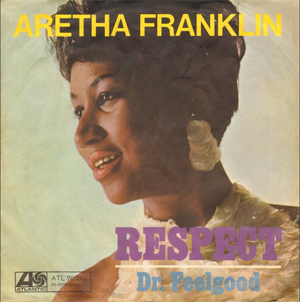
Nineteen sixty-seven stands as a pivotal moment in the evolution of popular music, a year when artistic boundaries expanded dramatically across multiple genres. The musical landscape was transformed by groundbreaking releases from established artists and remarkable debuts from newcomers who would become legends. From Aretha Franklin’s powerful rendition of “Respect” to Pink Floyd’s psychedelic “See Emily Play,” the year produced an extraordinary collection of songs that continue to resonate decades later.

Soul music experienced a remarkable surge, with Aretha Franklin’s definitive version of “Respect” establishing her as the genre’s preeminent female voice. The raw emotion of Otis Redding’s “Try a Little Tenderness,” the exuberance of Jackie Wilson’s “(Your Love Keeps Lifting Me) Higher and Higher,” and the groove-driven “Soul Man” by Sam & Dave showcased the genre’s diversity and emotional range. Motown continued its dominance with several more hits for Diana Ross & the Supremes, including “The Happening,” while Smokey Robinson & the Miracles added “I Second That Emotion” to their growing catalog of hits. Marvin Gaye enjoyed multiple chart successes in 1967, with “Your Precious Love” being just one of several duets with Tammi Terrell that would define this productive period.

Meanwhile, rock music underwent seismic shifts as experimentation became the norm. The Beatles had an astonishingly prolific year, releasing the landmark album Sgt. Pepper’s Lonely Hearts Club Band while also producing standalone singles of remarkable quality like “Strawberry Fields Forever” and “Penny Lane.” The Doors’ extended opus “Light My Fire” and The Jimi Hendrix Experience’s revolutionary “Purple Haze” redefined what electric guitars could accomplish. The Rolling Stones contributed the melancholic beauty of “Ruby Tuesday,” which ironically became the bigger hit after radio stations deemed its intended A-side, “Let’s Spend the Night Together,” too controversial for airplay. The Who’s powerhouse “I Can See for Miles” and Buffalo Springfield’s protest anthem “For What It’s Worth” reflected rock’s increasing social consciousness. Perhaps most radical was The Velvet Underground’s “Heroin,” which brought an unprecedented rawness to discussions of addiction.

The year’s diversity extended far beyond these genres. The Monkees transcended their manufactured origins with the wistful “Daydream Believer,” while Van Morrison crafted the timeless “Brown Eyed Girl.” Bobbie Gentry’s Southern Gothic narrative “Ode to Billie Joe” demonstrated songwriting’s storytelling potential, and Procol Harum’s “A Whiter Shade of Pale” merged classical influences with rock sensibilities. Jefferson Airplane’s “White Rabbit” and Pink Floyd’s “See Emily Play” pushed psychedelic music further into the mainstream, establishing both bands as significant forces in the burgeoning psychedelic scene.

What made 1967 truly remarkable was how these diverse sounds coexisted and influenced each other, creating a musical conversation that crossed genre lines. This was the year when album-oriented rock solidified, soul music reached new emotional depths, and psychedelia flowered into mainstream consciousness. The thirty songs listed here barely scratch the surface of a year that saw popular music mature into an art form capable of expressing the full spectrum of human experience. Many artists were at their creative peaks, producing multiple hit singles and groundbreaking albums within this single exceptional year. These recordings capture a moment when musical innovation accelerated at an unprecedented pace, leaving an enduring legacy that continues to inspire and influence musicians more than half a century later.

Follow Tunes Du Jour on Facebook

Follow me on Instagram

Follow me on Bluesky

Your (Almost) Daily Playlist: 2-3-24

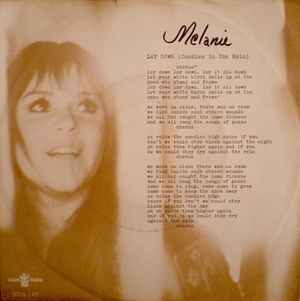
Melanie Safka wrote the song “Lay Down” after performing at Woodstock in 1969, where she was inspired by the sight of the audience lighting candles in the rain. It became her first US hit, peaking at number 6 on the Billboard Hot 100. 

Melanie was born on this date in 1947. She passed away just over a week ago. A few of her songs are on today’s playlist.

Follow Tunes du Jour on Facebook

Follow Tunes du Jour on Twitter

Follow me on Instagram

Your (Almost) Daily Playlist: 11-28-22

Today’s playlist celebrates the November 28 birthdays of Randy Newman, En Vogue/Lucy Pearl’s Dawn Robinson, The Fleetwoods’ Gary Troxel, The 5 Royales’ Johnny Tanner, The Foundations’ Clem Curtis, William DeVaughn, Chamillionaire, Bruce Channel, R.B. Greaves, and Motown Records founder Berry Gordy Jr.; and the November 29 birthdays of The Mamas and the Papas’ Denny Doherty, John Mayall, The Young Rascals’ Felix Cavaliere, The Game, Zapp’s Roger Troutman, Ronnie Montrose, New Kids on the Block’s Jonathan Knight, and Meco.

Follow Tunes du Jour on Facebook

Follow Tunes du Jour on Twitter

Follow me on Instagram