Tunes Du Jour Presents The Bob Dylan Songbook

One way to measure a songwriter’s reach is not by how often their work is covered, but how widely. The playlist below spans decades, genres, and sensibilities—from Adele to The Dead Weather, from Johnny Cash to the Neville Brothers—and all roads lead back to Bob Dylan. This is not just a reflection of his prominence; it’s a testament to the adaptability of his writing. Dylan’s lyrics aren’t locked into one style or moment—they hold up when filtered through gospel, punk, glam, folk, or soul. His songs invite reimagining because they’re grounded in strong narrative bones and emotional honesty, not ornamental frills.

Consider the different shades of “All Along the Watchtower.” Dylan’s original version is stark and cryptic; Hendrix turned it into an electrified storm. Likewise, “I Shall Be Released,” rendered with hushed reverence by The Band, has the structure of a gospel hymn but the ambiguity of a fable. “Make You Feel My Love,” one of Dylan’s later compositions, found new life in Adele’s version—proof that his songwriting didn’t peak in the ’60s, but simply evolved. His voice as a writer has always been the constant: a blend of plainspoken wisdom, sly humor, and a deep sense of historical and emotional context.

It’s notable, too, how Dylan’s songs seem to absorb the character of the performer. When Elvis Presley sings “Tomorrow Is a Long Time,” it feels like a Southern ballad. When PJ Harvey takes on “Highway 61 Revisited,” it becomes something raw and jagged. Nina Simone’s version of “Just Like Tom Thumb’s Blues” brings out a haunted intensity not present in Dylan’s own delivery. That elasticity points to a rare kind of craftsmanship—songs written with enough specificity to be meaningful, but enough openness to be inhabited.

Even in unexpected settings, Dylan’s words linger. Tom Petty co-wrote the lyrics to “Jammin’ Me” with him, a pointed pop-rock critique of media saturation. Patti Smith’s “Changing of the Guards” channels the mystical imagery and layered storytelling that Dylan deployed throughout the ’70s. And when The Specials tear into “Maggie’s Farm,” it becomes a statement of punk-era defiance. These aren’t nostalgia pieces—they’re songs that meet each era on its own terms.

Dylan’s catalog isn’t just influential; it’s usable. His songs function as cultural currency, endlessly exchangeable yet retaining value. Whether you hear him through Joan Osborne’s gothic reading of “Man in the Long Black Coat” or the crystalline harmonies of Peter, Paul and Mary’s “Blowin’ in the Wind,” what’s most striking is not just who sings Dylan—but what his songs reveal when they do.

Follow Tunes Du Jour on Facebook

Follow me on Bluesky

Follow me on Instagram
Your (Almost) Daily Playlist: 11-26-23

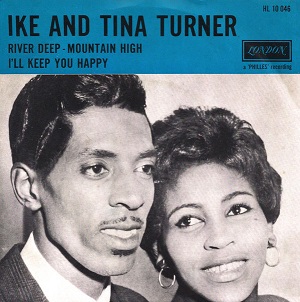
Superstar producer Phil Spector went to see Ike Turner. He told Ike that he wanted to record a song with Tina that would become a number one smash on the pop charts and break them bigger. However, Ike could have nothing to do with the recording. Ike agreed, provided his name was still on the record label, which led to the awkwardly phrased Ike & Tina Turner featuring Tina. The track, “River Deep—Mountain High,” was recorded over five sessions. At various times during the recordings, studio guests included Mick Jagger, Brian Wilson, and Dennis Hopper. After subjecting Tina to take after take, Spector finally got what he wanted. He knew he had a smash on his hands.

In the US, the single debuted on the Hot 100 at number 98. The following week it was up to number 94. The next week, number 93. Then number 88. And that was that. Its chart run was over. In the UK the record went to number 2, but that wasn’t enough to satisfy Spector, who retreated from music production for the next couple of years.  

The late great Tina Turner was born on this date in 1939. Lots of Tina on today’s playlist.

Follow Tunes du Jour on Facebook

Follow Tnes du Jour on Twitter

Follow me on Instagram

I auditioned for American Idol

In February 2002 my friend Sophie and I auditioned to be the hosts of a new US television series based on the successful UK show Pop Idol. On American Idol, amateur singers competed against each other and the public voted for the winner.

I’ve never seen American Idol. It’s not because I’m bitter I didn’t get the job. I have a different opinion than many of the show’s viewers as to what constitutes good singing. Being loud and hitting high notes do not necessarily make for great singing. A great singer is expressive, feeling the words they are singing. Aretha Franklin and Adele are two singers who can belt and hit a wide range of notes. They also know when to sing softly or when not to let vocal gymnastics get in the way of the song. They are great singers. Bob Dylan and Tom Waits are also great singers. They own their material. They feel their material. They live their material (more accurately, the personas they put forth for each song lives the material).

Dylan and Waits are also great songwriters. Dylan is the better-known of the two, but as today is Waits’ birthday, I’m going to focus on him. His songs have been recorded by a diverse group of artists, including Elvis Costello, Eagles, The Ramones, Johnny Cash, The Pogues, Solomon Burke, Steve Earle, Marianne Faithfull, The Neville Brothers, Screamin’ Jay Hawkins, Robert Plant and Alison Krauss, Norah Jones, Bette Midler, Bruce Springsteen and Neko Case, the latter two appearing on today’s playlist with Waits covers. His sole US top forty hit on the Billboard Hot 100 was not as an artist, but as the writer of “Downtown Train,” which Rod Stewart took to the top ten in 1990.

Today’s Tom Waits-inspired playlist kicks off with the singer-songwriter’s version of that one hit. Enjoy!