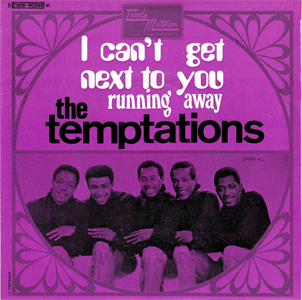
The late Eddie Kendricks of The Temptations was born on this date in 1939. A sampling of his finest is included on today’s playlist.
Follow Tunes Du Jour on Facebook
Follow me on Bluesky
Follow me on Instagram
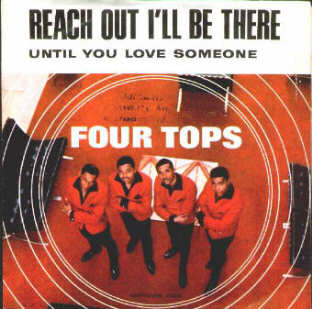
Brian Holland, Lamont Dozier, and Eddie Holland, collectively known as Holland-Dozier-Holland (H-D-H), are synonymous with the sound of Motown. Their string of hits in the 1960s and beyond fueled the success of the record label, shaping popular music and paving the way for R&B to dominate the airwaves. Each song on this playlist, from The Four Tops’ powerful “Reach Out (I’ll Be There)” to The Supremes’ iconic “Where Did Our Love Go,” credits one or more members of H-D-H. With a blend of melody, rhythm, and hooks that remain timeless, the team’s work redefined what hit songwriting could accomplish.
This songwriting trio didn’t merely write songs—they crafted narratives of love, heartbreak, and resilience that resonated with audiences across generations. Tracks like “This Old Heart of Mine (Is Weak for You)” by The Isley Brothers and Marvin Gaye’s “Can I Get a Witness” reveal the emotional depth in their compositions, supported by rhythms and production styles that have endured decades of cover versions. Their songs often feel instantly recognizable, whether it’s the infectious chorus of Chairmen of the Board’s “Give Me Just a Little More Time” or the stomping beat of Junior Walker & the All-Stars’ “(I’m A) Road Runner.”
The irony, however, is that Eddie Holland, despite being a key member of the team, had only one top 40 pop single as a solo artist, “Jamie”—and it wasn’t written by any member of Holland-Dozier-Holland. Instead, it was penned by Barrett Strong and William “Mickey” Stevenson, fellow Motown talents who contributed in their own right to the label’s powerhouse status. Though Eddie found his calling behind the scenes rather than as a performer, his experience as an artist gave him unique insight into the singer’s perspective, a quality that helped make H-D-H’s songs vocally compelling and relatable.
Beyond Motown, the trio’s influence stretched into rock, pop, and soul genres, as evident from covers and reinterpretations by artists like The Rolling Stones, Rod Stewart, and Bananarama. These renditions, like Linda Ronstadt’s cover of “Heat Wave” or James Taylor’s soulful take on “How Sweet It Is (To Be Loved by You),” show how their music transcended genre boundaries. Each version emphasizes the versatility of H-D-H’s songwriting, capable of adapting to various musical expressions while retaining its core appeal.
Ultimately, the legacy of Holland-Dozier-Holland isn’t just in their impressive catalog but in their contributions to the very essence of popular music. They captured the spirit of a generation through music that continues to find new audiences, sounding as fresh today as it did over half a century ago. Their work endures, a testament to their genius, and is rightly celebrated by the many artists who’ve covered and revived their timeless songs.
Follow Tunes Du Jour on Facebook
Follow Tunes Du Jour on Twitter
Follow me on Instagram
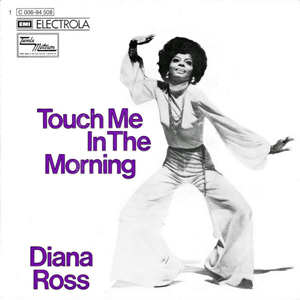
Diana Ross is a name synonymous with powerhouse vocals, unforgettable style, and a career that has spanned over six decades. But beyond the glitz and glamour, Ross’ impact on music is undeniable. As the lead singer of The Supremes, she shattered racial barriers and brought a new level of sophistication to pop music. Hits like “Baby Love,” “Where Did Our Love Go,” and “You Can’t Hurry Love” remain timeless classics, while tracks like “Love Child” subtly challenged societal norms.
Leaving The Supremes to forge a successful solo career, Ross continued to push boundaries. Songs like “Upside Down” and “Love Hangover” cemented her status as a disco queen, while the uplifting “Ain’t No Mountain High Enough” became a rallying cry for overcoming obstacles, “Theme from Mahogany (Do You Know Where You’re Going To?)” displayed her versatility as a dramatic performer, and “I’m Coming Out” became a cultural touchstone, an anthem for the LGBTQ+ community. Whether intentional or not, Ross’s music consistently resonated with those seeking empowerment and self-discovery. Ross’ music wasn’t just catchy; it spoke to the aspirations and heartaches of a generation.
While the spotlight often shines on her musical achievements, Ross’s philanthropic efforts deserve equal recognition. She has championed causes that touch the lives of many. Here are some highlights:
Listening to the playlist as a whole, it’s clear that Diana Ross’s legacy goes beyond just chart-topping hits. She was a pioneer for Black artists in the music industry, an artist whose music continues to inspire and uplift. By paving the way for future generations of artists, she helped diversify the soundscape of popular music. So crank up the volume, hit play, and let yourself be swept away by the timeless sounds of Diana Ross.
Follow Tunes du Jour on Facebook
Follow Tunes du Jour on Twitter
Follow me on Instagram
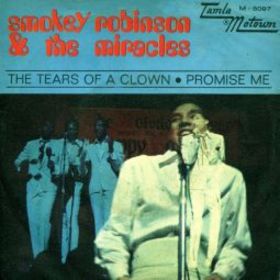
Smokey Robinson is one of the most influential and beloved figures in the history of American music. He is not only a legendary singer, songwriter, and producer, but also a humanitarian who has used his fame and fortune to support various causes.
William “Smokey” Robinson was born in Detroit, Michigan, in 1940. He grew up in a musical environment, listening to the likes of Nolan Strong, Hank Ballard, and Jackie Wilson. He formed his first vocal group, the Five Chimes, while in high school, and later changed their name to the Miracles. He met Berry Gordy Jr., the founder of Motown Records, in 1957, and became one of his first artists and collaborators. He also suggested the name Motown, in honor of the Motor City.
The Miracles gave Motown its first number one hit with “Shop Around” in 1960, and went on to score many more classics, such as “You’ve Really Got a Hold on Me,” “The Tracks of My Tears,” “I Second That Emotion,” and “The Tears of a Clown.” Smokey Robinson was the lead singer and the main songwriter of the group, as well as a prolific producer for other Motown acts, such as Mary Wells, the Temptations, the Supremes, and the Marvelettes. He wrote and produced some of the most iconic songs of the Motown era, such as “My Guy,” “My Girl,” “The Way You Do the Things You Do,” and “The Hunter Gets Captured by the Game.”
Smokey Robinson left the Miracles in 1972 to pursue a solo career, and continued to create hits, such as “Quiet Storm,” “Cruisin’”, “Being with You,” and “One Heartbeat.” He also became the vice president of Motown, and helped to nurture the careers of new artists, such as Lionel Richie, Rick James, and Teena Marie. He was inducted into the Rock and Roll Hall of Fame twice, as a solo artist and as a member of the Miracles. He also received a Grammy Lifetime Achievement Award, a Kennedy Center Honor, and a Library of Congress Gershwin Prize for his contributions to popular music.
Smokey Robinson has written and sung some of the most romantic songs ever. He has also shown his love for humanity by supporting various charities and causes, such as the Barbara Davis Center for Childhood Diabetes, the Boys & Girls Clubs of America, the Elton John AIDS Foundation, the Gabrielle’s Angel Foundation, the Miami Children’s Hospital Foundation, UNICEF, and the United Negro College Fund. He has also invested in his hometown of Detroit by donating to the Motown Museum and supporting arts and music programs for young people.
Smokey Robinson is a living legend who has enriched our lives with his music and his love. He is a role model for aspiring artists and a source of inspiration for generations of fans. He is a treasure of American culture and a gift to the world. Let us celebrate his legacy by listening to thirty of his best songs as a vocalist, which are featured in the playlist below. Enjoy!
Follow Tunes du Jour on Facebook
Follow Tunes du Jour on Twitter
Follow me on Instagram