The music of 1962 wasn’t so much at a crossroads as it was following several lively paths at once. What captivated the public ranged from soul ballads to novelty records to stirrings of folk activism. Instrumentals, dance crazes, and heartfelt pop all found room on the charts. It’s this eclecticism — rather than any one dominant trend — that best characterizes the year. Yet in small ways, a few songs hinted at larger shifts to come. For example, The Tornados’ “Telstar,” the first U.S. number one by a British group, captured a sense of futuristic possibility that would soon manifest more dramatically with the Beatles and the British Invasion.
Instrumentals found their way into the spotlight in very different forms. While “Telstar” beamed into space with its shimmering, otherworldly sound, Booker T. & the MG’s grounded listeners with the earthy groove of “Green Onions.” Meanwhile, Stan Getz and Charlie Byrd’s “Desafinado” introduced many American listeners to the smoother, jazz-inflected rhythms of bossa nova — a style that would quietly influence pop and jazz recordings throughout the decade. Taken together, these instrumentals showed how musical expression could take new forms without abandoning broad popular appeal, and how lyrics weren’t always necessary to convey strong emotion.
Soul music also solidified its foundation. Sam Cooke’s “Bring It on Home to Me” and Solomon Burke’s “Cry to Me” mixed gospel roots with secular longing in ways that would help define soul music itself. Girl groups and doo-wop continued to resonate, with The Crystals’ “He’s a Rebel” and The Shirelles’ “Soldier Boy” offering different takes on devotion and defiance. Dion’s “The Wanderer” carried forward some of doo-wop’s spirit, while Gene Chandler’s “Duke of Earl” stood proudly as a bridge from doo-wop’s earlier heyday into a new era of soul and R&B. Even novelty records had staying power — Bobby “Boris” Pickett’s “Monster Mash” reached number one and, thanks to perennial Hallowe’en airplay, remains a cultural touchstone.
Folk music, too, gained traction. Peter, Paul & Mary’s debut album, featuring “If I Had a Hammer,” became one of the year’s bestsellers, spending over a month at number one. Its clean harmonies and calls for justice would help set the stage for the socially conscious folk boom led by artists like Bob Dylan, whose own debut — mostly overlooked in 1962 — was just the beginning of a rapid ascent. Meanwhile, outside the U.S., Françoise Hardy’s “Tous Les Garçons Et Les Filles” offered a moody, introspective style that would come to influence the understated emotionality of later French pop and, indirectly, certain strands of indie pop decades later.
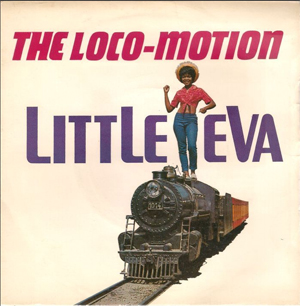
Some of 1962’s biggest hits have proven remarkably enduring. Elvis Presley’s “Can’t Help Falling in Love,” originally from the Blue Hawaii soundtrack, has since become one of his most covered and beloved songs. The Contours’ raucous “Do You Love Me” found new life decades later with Dirty Dancing, while Carole King, years before Tapestry, scored her first chart hit as a performer with “It Might as Well Rain Until September” — even as she continued to dominate as a songwriter, co-writing Little Eva’s infectious “The Loco-Motion.” These songs from 1962 don’t just capture a moment in time; they reveal a popular music scene that was broadening and diversifying while quietly laying the groundwork for upcoming revolutions, capturing both the fleeting spirit of its moment and the lasting power of pop at its best in a year where no single trend reigned supreme.
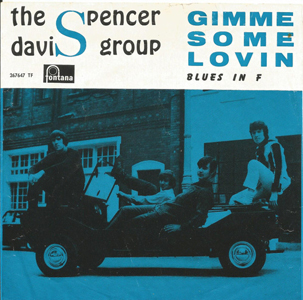
The Spencer Davis Group were under pressure from their manager, Chris Blackwell, to come up with a hit single. He put them in a studio. By around 11:30 AM they had a riff. By noon the song was written and the band headed to a café down the road for lunch. Blackwell was livid when he found them eating rather than working on their new record. His anger subsided when the song, “Gimme Some Lovin,” recorded in just one or two takes, became a worldwide smash. It is now considered a rock n roll classic.
The late Spencer Davis was born on this date in 1939. A couple of the Group’s tracks are included on today’s playlist.
Happy 2021 Pride! Though LGBTQ+ Pride should be celebrated every month, June is the month officially designated to celebrating one’s identity, orientation and possible otherness.
To celebrate Pride this year I’m going to create thirty-song playlists broken out by decade, kicking off today with two decades combined – the 1950s and the 1960s. I’ll post these lists sporadically throughout the month.
Here is what you’ll hear on today’s playlist and what makes it queer:
“Cry” – Johnnie Ray
Poor old Johnnie Ray, as he was referred in Dexy’s Midnight Runners’ “Come On Eileen,” was a closeted gay man, arrested for soliciting male undercover officers on more than one occasion. “Cry” was a humongous hit, spending more than two months at #1.
“Hound Dog” – Big Mama Thornton
Chances are you’re familiar with Elvis Presley’s hugely successful version of this song from 1956. Three years earlier, Willie Mae “Big Mama” Thornton, who preferred to dress in what would be considered men’s clothing, sold a half million copies of her version, from which she made $500.
“Too Much” – Bernard Hardison
Another song covered by Elvis, Bernard Hardison released his version two years prior to The King. The song was played on the web radio series Queer Music Heritage, though I cannot find any other indication anywhere about Hardison’s sexual orientation.
“Don’t You Want a Man Like Me” – Billy Wright
As a youth, Billy Wright sang the gospel in church and worked as a female impersonator. The openly gay Wright was an influence on young Little Richard, suggesting he wear his hair in the pompadour style. Speaking of…
“Tutti Frutti” – Little Richard
No matter that the hit version altered the original lyrics “Tutti frutti, good booty / If it don’t fit, don’t force it / You can grease it, make it easy,” the song and the performer are oh so queer.
“Rockin’ Pneumonia and the Boogie Woogie Flu” – Huey “Piano” Smith and the Clowns
As his nickname might indicate, Huey Smith was a piano player. The singer in his band was an openly gay man named Bobby Marchan.
“Chances Are” – Johnny Mathis
Johnny Mathis never covered up his sexual orientation, though he didn’t come out as gay until 1982, when a reporter printed his off the record acknowledgment.
“Jailhouse Rock” – Elvis Presley
“Number 47 said to number 3, ‘You’re the cutest jailbird I ever did see. I sure would be delighted with your company. Come on and do the jailhouse rock with me.” Nothing queer about that, right?
“Secretly” – Jimmie Rodgers
“Wish we didn’t have to meet, secretly / Wish we didn’t have to kiss, secretly / Wish we didn’t have to be afraid to show the world that we’re in love / ‘Til we have the right to meet openly / ‘Til we have the right to kiss openly / We’ll just have to be content to be in love secretly.” Make of those lyrics what you will.
“Rockin’ the Joint” – Esquerita
Though Little Richard released records prior to Esquerita, it was Black flamboyant Esquerita who taught Little Richard his style of piano playing and perhaps introduced the high-pitched “whoo”s in his singing.
“Frances and Her Friends” – Frances Faye
Frances Faye was openly embracing of bisexuality in her stage shows, as the lyrics of this tune will attest. In the late 1950s she met a woman named Teri Shepherd who became her life partner.
“My Baby Likes Western Guys” – Brenda Lee
Oh, does he now?
“He Don’t Care About Me” – The Miracles
Yes, those Miracles. Written by Smokey Robinson with lead vocals by his wife Claudette, you wonder why he don’t care about her. When she sings “Don’t he know that I could make him gay?,” you just have to respond “Girrrrrrrl!”
“Up on the Roof” – The Drifters
Rudy Lewis, who sang lead on this Drifters hit as well as “On Broadway” and others, was a closeted gay man who sadly died of a drug overdose when he was just 27 years old.
“Any Other Way” – Jackie Shane
Though she didn’t call herself trans, Jackie Shane presented and sang in a way typically associated with women. She considered herself to be a gay man, and my use of pronouns here is not intended to disrespect that.
“You Don’t Own Me” – Lesley Gore
Lesley Gore came out as a lesbian in 2005, revealing that she knew she was attracted to women since age 20 and never sought to hide out, though didn’t announce it before then.
“You’ve Got To Hide Your Love Away” – The Beatles
Many believe that The Beatles’ John Lennon wrote this song about the group’s gay manager, Brian Epstein. It wasn’t until 1967, two years after this song’s release, that England decriminalized sex between two men over the age of 21, and Epstein would no longer have to hide his love away. Sadly, he died in August of that year.
“See My Friends” – The Kinks
The Kinks’ Ray Davies wrote this song about a young man who is unsure of his sexual orientation, a feeling Davies said he experienced.
“To Try for the Sun” – Donovan
The song’s teenage narrator and his “gypsy boy” friend have an obvious affection for each other. “And who’s going to be the one to say it was no good what we done?”
“You Don’t Have to Say You Love Me” – Dusty Springfield
“I know that I’m as perfectly capable of being swayed by a girl as by a boy. More and more people feel that way and I don’t see why I shouldn’t. There was someone on television the other night who admitted that he swings either way. I suppose he could afford to say it, but I, being a pop singer, shouldn’t even admit that I might think that way. But if the occasion arose I don’t see why I shouldn’t.” – Dusty Springfield, 1970, in an interview with The Evening Standard
“Do You Come Here Often?” – The Tornados
Produced by legendary gay producer Joe Meek, “Do You Come Here Often?” has to be heard to be believed. The song was the b-side of a forgotten 45, released on a major record label.
“I’m a Boy” – The Who
The story of a boy whose parents wanted a girl, so his mother raises him as a girl.
“Willkommen” – Joel Grey
From the Tony Award winning musical Cabaret, written by openly gay lyricist Fred Ebb and openly gay composer John Kander, based on a book by openly gay writer Christopher Isherwood, comes this number, performed by Joel Grey, who publicly came out in 2015 at age 82.
“Sweet Soul Music” – Arthur Conley
Arthur Conley was living as a closeted gay man in the United States when “Sweet Soul Music” became a smash. He later moved to the Netherlands, changed his name to Lee Roberts, met a man who became his life partner, and then lived as an openly gay man.
“Arnold Layne” – Pink Floyd
“Arnold Layne” became Pink Floyd’s first hit single, despite Radio London eventually banning it from airplay as its subject matter of a transvestite stealing women’s clothing off clothes lines was considered by them to be too distasteful for “normal” society.
“Let the Heartaches Begin” – Long John Baldry
Reginald Dwight changed his name to Elton John after Elton Dean, a fellow musician in the backing band of Long John Baldry, the gay vocalist from where the John comes.
“Save the Country” – Laura Nyro
The late Laura Nyro was bisexual, enjoying romantic relationships with men and women, the longest one being with painter Maria Desiderio.
“Triad” – The Byrds
Written by The Byrds’ David Crosby, this 1967 recording of a song about a throuple went unreleased until 1987.
“Candy Says” – The Velvet Underground
Inspired by Candy Darling, a transgender actress in Andy Warhol films, “Candy Says” tells of a trans woman who has “come to hate her body.”
“That’s the Way God Planned It” – Billy Preston
A brilliant musician whose friends and collaborators knew he was gay, Billy Preston didn’t publicly come out until shortly before his passing in 2006.
Inspired by Black Music Month, LGBTQ Pride Month, and the June 14 birthdays of Culture Club’s Boy George, the xx’s Oliver Sim, The Zombies’ Rod Argent, Jr. Walker, Faithless’ Maxi Jazz, Linda Clifford, Deer Tick’s John J. McCauley, Gunna, and Broadway composer Cy Coleman.
June is LGBTQ+ Pride Month. Tune du Jour celebrates with this playlist consisting of two hundred songs by and/or about Ls, Gs, Bs, Ts and Qs. Happy Pride!