Tunes Du Jour Presents 1965

Have you ever looked at a playlist from a single year and felt a sense of disbelief? It’s one thing for a year to produce a few memorable hits, but it’s another for it to feel like a highlight reel of music history. Looking at the charts from 1965 is exactly that kind of experience. It wasn’t just a year of good songs; it was a pivotal moment when popular music seemed to mature in several different directions at once, producing an astonishing collection of classics that still resonate today.

On one hand, 1965 saw the art of the immaculately produced pop song reach a new peak. The Motown machine was in full, glorious swing, giving us the suave romance of The Temptations’ “My Girl” and the intricate heartbreak of Smokey Robinson’s “The Tracks of My Tears.” The Supremes demanded attention with the dramatic plea of “Stop! In the Name of Love,” a perfect example of studio craftsmanship meeting raw emotion. Across the Atlantic, Petula Clark’s “Downtown” offered a sweeping, cinematic vision of city life. These weren’t just catchy tunes; they were impeccably arranged, powerfully sung, and emotionally direct pieces of art that defined a certain kind of pop perfection.

At the very same time, a grittier, more defiant sound was taking hold. The Rolling Stones’ “(I Can’t Get No) Satisfaction” wasn’t just a hit song; it was a statement of intent, built around a fuzzy, unforgettable guitar riff that sounded like pure frustration. This raw energy was a common thread. From the garage-rock howl of Them’s “Gloria” to the stuttering, youthful angst of The Who’s “I Can’t Explain,” rock music was shedding its cleaner-cut image. This wasn’t the polished sound of the studio; it was the restless sound of the rehearsal room, and it was connecting with an entire generation.

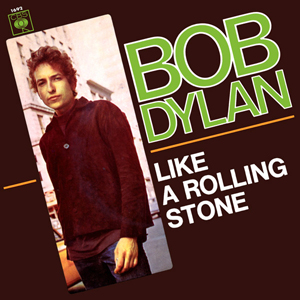
Beyond the evolving sounds, the lyrical substance of popular music was deepening profoundly. Bob Dylan completely rewrote the rules with “Like a Rolling Stone,” a six-minute epic of poetic scorn that proved a hit single could be complex, challenging, and literary. That same year, The Byrds took Dylan’s words and electrified them, creating a new genre overnight with their shimmering version of “Mr. Tambourine Man.” This new lyrical consciousness also carried immense social weight. Sam Cooke’s posthumously released “A Change Is Gonna Come” and The Impressions’ hopeful “People Get Ready” became enduring anthems of the Civil Rights Movement, demonstrating that music could be both a comfort and a powerful call for progress.

What makes 1965 so striking is that none of these developments happened in isolation. It was a year of convergence, where you could hear the sweet soul of Marvin Gaye’s “How Sweet It Is (To Be Loved By You)” on the radio right next to the birth of funk in James Brown’s “Papa’s Got a Brand New Bag.” The carefree optimism of The Beach Boys’ “California Girls” shared the airwaves with the deep, aching soul of Otis Redding’s “I’ve Been Loving You Too Long.” The sheer volume of landmark recordings from this single 12-month period is a testament to a unique moment in time—a year when the boundaries of pop music were expanding in every direction, leaving us with a collection of songs that feel less like relics and more like foundation stones.

Follow Tunes Du Jour on Facebook

Follow me on Bluesky

Follow me on Instagram
Tunes Du Jour Presents The Bob Dylan Songbook

One way to measure a songwriter’s reach is not by how often their work is covered, but how widely. The playlist below spans decades, genres, and sensibilities—from Adele to The Dead Weather, from Johnny Cash to the Neville Brothers—and all roads lead back to Bob Dylan. This is not just a reflection of his prominence; it’s a testament to the adaptability of his writing. Dylan’s lyrics aren’t locked into one style or moment—they hold up when filtered through gospel, punk, glam, folk, or soul. His songs invite reimagining because they’re grounded in strong narrative bones and emotional honesty, not ornamental frills.

Consider the different shades of “All Along the Watchtower.” Dylan’s original version is stark and cryptic; Hendrix turned it into an electrified storm. Likewise, “I Shall Be Released,” rendered with hushed reverence by The Band, has the structure of a gospel hymn but the ambiguity of a fable. “Make You Feel My Love,” one of Dylan’s later compositions, found new life in Adele’s version—proof that his songwriting didn’t peak in the ’60s, but simply evolved. His voice as a writer has always been the constant: a blend of plainspoken wisdom, sly humor, and a deep sense of historical and emotional context.

It’s notable, too, how Dylan’s songs seem to absorb the character of the performer. When Elvis Presley sings “Tomorrow Is a Long Time,” it feels like a Southern ballad. When PJ Harvey takes on “Highway 61 Revisited,” it becomes something raw and jagged. Nina Simone’s version of “Just Like Tom Thumb’s Blues” brings out a haunted intensity not present in Dylan’s own delivery. That elasticity points to a rare kind of craftsmanship—songs written with enough specificity to be meaningful, but enough openness to be inhabited.

Even in unexpected settings, Dylan’s words linger. Tom Petty co-wrote the lyrics to “Jammin’ Me” with him, a pointed pop-rock critique of media saturation. Patti Smith’s “Changing of the Guards” channels the mystical imagery and layered storytelling that Dylan deployed throughout the ’70s. And when The Specials tear into “Maggie’s Farm,” it becomes a statement of punk-era defiance. These aren’t nostalgia pieces—they’re songs that meet each era on its own terms.

Dylan’s catalog isn’t just influential; it’s usable. His songs function as cultural currency, endlessly exchangeable yet retaining value. Whether you hear him through Joan Osborne’s gothic reading of “Man in the Long Black Coat” or the crystalline harmonies of Peter, Paul and Mary’s “Blowin’ in the Wind,” what’s most striking is not just who sings Dylan—but what his songs reveal when they do.

Follow Tunes Du Jour on Facebook

Follow me on Bluesky

Follow me on Instagram
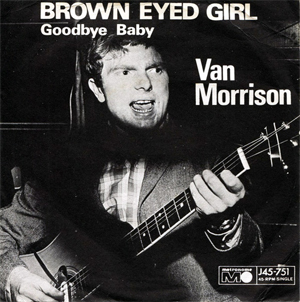
Tunes Du Jour Presents Van Morrison

Van Morrison’s musical journey is a testament to his ability to blend poetic lyricism with a distinct musical style that is both soulful and introspective. Emerging from the gritty streets of Belfast with the band Them, Morrison quickly made his mark with raw, energetic tracks like “Gloria” and “Baby, Please Don’t Go.” These early recordings, characterized by their driving rhythms and Morrison’s unmistakable vocal delivery, hinted at the artistic depth that would later define his solo career.

When Morrison struck out on his own, he embraced a more nuanced sound, blending jazz, blues, and folk into a style that defied easy categorization. “Moondance” and “Into the Mystic” are prime examples, showcasing his ability to create atmospheres that are both intimate and expansive. These songs, marked by lush arrangements and Morrison’s soulful voice, invite listeners into a world where the lines between the spiritual and the earthly blur, a recurring theme in his work.

Albums like Astral Weeks and Tupelo Honey solidified Morrison’s reputation as a master of mood and narrative. Tracks like “Sweet Thing” and “Cyprus Avenue” weave vivid, almost cinematic imagery with deeply personal reflections. Morrison’s songwriting during this period is marked by a keen sense of place, with frequent references to the streets of Belfast and the rural landscapes of Ireland, grounding his often ethereal music in real-world experiences.

Morrison’s work is also notable for its celebration of love and spirituality. Songs like “Have I Told You Lately?” and “Crazy Love” are heartfelt tributes to the power of human connection, while “Listen to the Lion” and “In the Garden” delve into more mystical themes. His ability to convey deep emotion without veering into sentimentality is one of the hallmarks of his songwriting, making these tracks resonate on a profound level.

Even as Morrison explored different genres and themes throughout his career, his music has remained rooted in a sense of authenticity. Whether it’s the upbeat groove of “Wild Night” or the reflective tone of “Coney Island,” his work continues to captivate listeners with its honesty and depth. Van Morrison’s legacy is one of artistic integrity, a rare quality that has kept his music relevant and influential across generations.

Your (Almost) Daily Playlist: 8-29-22

Today’s playlist celebrates the August 29 birthday of The Jackson ‘s Michael Jackson, Charlie Parker, Cocteau Twins’ Elizabeth Fraser, Dinah Washington, Johnny & the Hurricanes’ Johnny Paris, Pebbles, Fairground Attraction’s Eddi Reader, MeShell NdegeOcello, Kevie Kev, and Galantis’s Style of Eye; the August 30 birthdays of The Mamas & The Papas’ John Phillips, Kitty Wells, Hurts’s Theo Huthcraft, Paul Oakenfold, and D:Ream’s Peter Cunnah; and the August 31 birthdays of Van Morrison, Battles’ Ian Williams, Squeeze’s Glenn Tillbrook, The Vines’ Craig Nichols, Tony DeFranco, Bobby Parker, Debbie Gibson, Ivan, Bob Welch, Broadway lyricist Alan Jay Lerner, Richard Gere, and Julie Brown.

Follow Tunes du Jour on Facebook

Follow Tunes du Jour on Twitter

Follow me on Instagram

Your (Almost) Daily Playlist (2-18-20)

I’m experimenting here at Tunes du Jour. Yesterday I started including multiple songs by the birthday performers who inspired that day’s playlist. As of today I’m not limiting myself to twenty songs. My thinking is that by removing that restriction I can posts playlists (almost) dailier and you get a deeper dive into some of the artists. I’m living on the edge!

Today’s playlist is inspired by the February 18 birthdays of Regina Spektor, Yoko Ono, Styx’s Dennis DeYoung, John Travolta, Randy Crawford, Juelz Santana, Irma Thomas, Juice Newton, and Space’s Tommy Scott.