The year 2000 arrived with a collective sigh of relief. The much-hyped Y2K bug turned out to be a non-event, and the new millennium stretched out before us, feeling both futuristic and strangely familiar. Looking back at the music from that year, you can hear a similar dynamic at play. It wasn’t a time of radical genre fusion or crossover; instead, it felt like several distinct musical movements were all cresting at the exact same time, each one confident and fully-formed. It was a year where you could switch the radio station and feel like you were jumping between entirely different worlds—from the polished pop of Britney Spears to the raw energy of DMX.
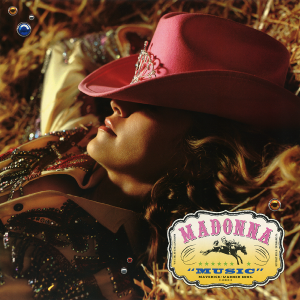
On one hand, pop and R&B were operating at peak performance, dominating the charts with precision-engineered hits. This was the era of the blockbuster music video, and artists delivered. Madonna reinvented herself yet again with the electro-thump of “Music,” while Britney Spears’s “Oops!…I Did It Again” perfected the formula she had established just a year prior. At the same time, R&B was in a period of remarkable innovation. You had the staccato, futuristic production of Timbaland on Aaliyah’s “Try Again,” the iconic, conversational flow of Destiny’s Child on “Say My Name,” and the deep, simmering soul of D’Angelo’s “Untitled (How Does It Feel).” These weren’t just great songs; they were statements of intent from artists at the top of their game.
Meanwhile, rock music was pulling in several different directions at once. Pop-punk had fully broken through to the mainstream, and blink-182’s “All the Small Things” was its endlessly catchy, stadium-sized anthem. More established acts like Foo Fighters and Red Hot Chili Peppers were delivering some of their most memorable melodic rock with “Learn to Fly” and “Californication,” respectively. Yet, on the fringes, things were getting much stranger and more interesting. Radiohead completely abandoned guitar-rock expectations with the anxious, electronic pulse of “Idioteque,” while Queens of the Stone Age offered a taste of heavy, hypnotic desert rock with “Feel Good Hit Of The Summer.” There was no single, unified “sound of rock” in 2000; there were several.
Hip-hop was arguably the most creatively vibrant and commercially powerful force of the year. The genre’s expansion was on full display, from the confrontational wit of Eminem’s “The Real Slim Shady” to the pure, unbridled velocity of OutKast’s “B.O.B.” which still sounds like it was beamed in from the future. The clubs were fueled by the aggression of DMX’s “Party Up (Up in Here)” and M.O.P.’s “Ante Up,” while Jay-Z’s “Big Pimpin’” projected an image of untouchable cool. And of course, you can’t talk about 2000 without acknowledging the songs that were simply inescapable. The unabashedly goofy charm of Sisqó’s “Thong Song” and the perhaps baffling, universal appeal of “Who Let the Dogs Out” added a unique and memorable flavor to the year’s sonic identity.
Listening back to this collection of songs now, what’s most striking is how separate but equal everything feels. This was one of the last moments before the digital revolution would completely flatten the music landscape, encouraging artists to borrow from everywhere at once. The year 2000 wasn’t about blending; it was a snapshot of distinct scenes, each with its own definitive soundtrack. From the raw scream of Kelis on “Caught Out There” to the quiet contemplation of Moby’s “Porcelain,” it was a year of powerful, parallel streams, a final, confident roar from the 20th-century music industry before everything changed.
Follow Tunes Du Jour on Facebook
Follow me on Bluesky
Follow me on Instagram