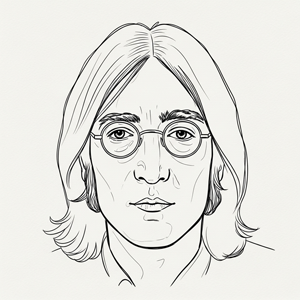
Tunes Du Jour Presents The John Lennon Songbook

It’s interesting to start a playlist of John Lennon songs with David Bowie’s “Fame.” It feels like an outlier at first, until you remember Lennon co-wrote the track, contributed guitar, and sang backup vocals. It’s one of just a handful of songs on this list that isn’t a straightforward cover, and its placement at the top serves as a great reminder: one of the best ways to understand a songwriter’s impact is to see how their work thrives in the hands of others. Listening to a collection like this isn’t just about nostalgia; it’s an active exploration of how durable and adaptable Lennon’s compositions truly are, revealing the deep-seated melodic and lyrical strengths that invite constant reinterpretation.

The sheer variety of artists drawn to his work speaks volumes about its fundamental structure. A Lennon song can be a sturdy vessel for almost any style. In its original form, “Help!” was a desperate plea disguised as an upbeat folk-rock hit. But when Tina Turner gets ahold of it, she strips away the disguise, transforming it into a full-throated, soulful cry for salvation. Similarly, Johnny Cash takes “In My Life,” a song of youthful reflection, and imbues it with the profound weight of a long life lived, making each line land with a different, more somber gravity. From the raw R&B groove Otis Redding finds in “Day Tripper” to the cool, atmospheric poise Roxy Music brings to “Jealous Guy,” these songs prove to be exceptionally resilient, their core emotions accessible to any genre.

Beyond musical versatility, the playlist highlights the different facets of Lennon’s lyrical persona. There’s the acerbic political commentator, whose pointed dissatisfaction is channeled perfectly by the punk sneer of Generation X on “Gimme Some Truth” and the world-weary defiance of Marianne Faithfull on “Working Class Hero.” Then there is the deeply vulnerable Lennon, the man wrangling with insecurity and fame. You can hear this in the anxious, propulsive energy The Feelies bring to “Everybody’s Got Something To Hide (Except Me And My Monkey)” or the stark, pleading quality Maxïmo Park finds in the solo track “Isolation.” He could be pointedly political or achingly personal, and both modes have continued to resonate with artists who have their own truths to tell.

Of course, no look at Lennon’s work would be complete without touching on his more surreal and experimental side. These are often the songs that seem most tied to a specific time, yet they possess a dreamlike logic that continues to inspire. Elton John, a friend and collaborator, treats “Lucy in the Sky with Diamonds” not as a museum piece but as a glam-rock epic. R.E.M. leans into the hypnotic, floating quality of “#9 Dream,” while Fiona Apple’s take on “Across the Universe” honors its ethereal nature while grounding it with her distinctive emotional intensity. These artists don’t just copy the psychedelia; they find new ways to access the spirit of imaginative freedom that fueled the original recordings.

Ultimately, listening through these interpretations feels less like a tribute and more like a conversation across decades. We hear Billy J. Kramer’s simple pop charm on “Bad to Me,” a song Lennon wrote for him in 1963, and then Glen Campbell’s posthumous, heart-rending version of “Grow Old With Me,” one of Lennon’s last compositions. The journey between those two points is remarkable. This collection of songs, re-shaped by everyone from The Breeders to Bettye LaVette, demonstrates that the power of Lennon’s work isn’t just in his own iconic recordings. It’s in the bones of the songs themselves—the unforgettable melodies, the honest lyrics, and the restless spirit that others can’t help but be drawn to, again and again.

Follow Tunes Du Jour on Facebook

Follow me on Bluesky

Follow me on Instagram
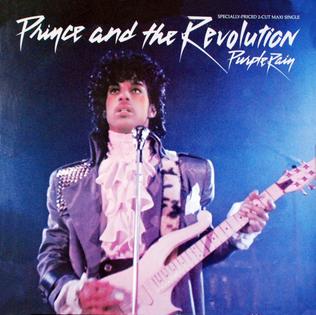
Tunes Du Jour Presents 1984

It’s hard to overstate how culturally dominant pop music was in 1984—or how much the year reshaped the landscape. Many of the songs on this playlist weren’t just hits; they were defining moments, launching or solidifying the careers of artists whose names still carry weight today. The sheer number of songs from 1984 that are still instantly recognizable points to a moment when creativity, commerce, and cultural change aligned. The presence of “Thriller”—Michael Jackson’s seventh single from the album of the same name—reminds us that the music business had never seen anything quite like this before. And yet, he wasn’t the only artist making history.

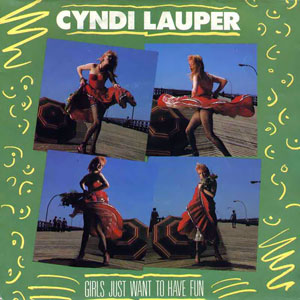
Prince’s “Purple Rain” marked not just a commercial breakthrough, but a creative one. It’s a song, an album, and a film—each enhancing the other’s mythology. Similarly, “Like a Virgin” signaled Madonna’s arrival as more than a pop star; she became a cultural force. Tina Turner, with “What’s Love Got to Do with It,” pulled off one of the most celebrated comebacks in music history. And Cyndi Lauper’s “Girls Just Want to Have Fun” brought an infectious blend of new wave and punky playfulness to the mainstream, reshaping ideas about femininity and pop performance.

Meanwhile, the rock world was hardly on pause. “Jump” became Van Halen’s biggest hit, thanks to its synth hook and anthemic chorus, while Bruce Springsteen’s “Dancing in the Dark” pushed his career into stadium territory. Across the Atlantic, U2’s “Pride (In the Name of Love)” began their transformation from college radio favorites to global headliners. The Replacements’ “I Will Dare,” from Let It Be, captured the heart of American indie rock—irreverent, emotionally raw, and just tuneful enough to hint at wider possibilities. And among the post-punk and alternative set, songs like “The Killing Moon” by Echo & the Bunnymen and “Heaven Knows I’m Miserable Now” by The Smiths gave moody introspection a lasting soundtrack.

What also stands out in 1984 is the range of genres that made a mainstream impact. Shannon’s “Let the Music Play” helped lay groundwork for freestyle, and Chaka Khan’s “I Feel for You” was a pivotal crossover moment, bringing together R&B, pop, and hip-hop. Run-D.M.C.’s “Rock Box” did something similar, blending rap and rock before it was fashionable. The Pointer Sisters’ “Automatic” was one of several hits that proved they could thrive in an electronic pop era without losing their vocal identity. Even novelty songs like “Ghostbusters” or the cheerful “Wake Me Up Before You Go-Go” helped shape the sound of the time.

Beyond chart success, 1984’s songs carried messages—sometimes playful, sometimes political. “Free Nelson Mandela” by The Special A.K.A. was a global anthem of protest. Depeche Mode’s “Blasphemous Rumours” examined faith and fate with a dark electronic edge. And “Somebody’s Watching Me,” a paranoid slice of synth-pop, foreshadowed a media culture on the verge of explosion. Whether on the dancefloor, in dorm rooms, or through the television set, 1984’s music didn’t just reflect its era—it helped define it.

Follow Tunes Du Jour on Facebook

Follow me on Bluesky

Follow me on Instagram
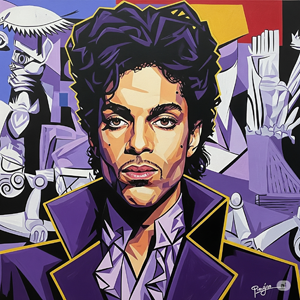
Tunes Du Jour Presents The Prince Songbook

Prince’s genius as a performer is well-documented, but his legacy as a songwriter may be even more far-reaching. The songs he wrote—sometimes directly for others, sometimes borrowed or reimagined—traveled in unexpected directions, often landing in voices very different from his own. Sinéad O’Connor’s haunting version of “Nothing Compares 2 U” turned emotional restraint into a global anthem, while Chaka Khan’s take on “I Feel for You” transformed a tightly wound synth-funk track into a dancefloor juggernaut with help from Melle Mel and Stevie Wonder. The Bangles’ jangly “Manic Monday” showed his facility with classic pop forms.

Sometimes Prince gave away songs without credit. Stevie Nicks has said “Stand Back” wouldn’t exist without his impromptu help; he played the synth part that defined the track, and then slipped away, declining a formal writing credit. His fingerprints are on the Sheila E. hit “The Glamorous Life” and The Time’s “Jungle Love,” both written and produced by Prince but performed by his protégés. Even artists as distinct as Alicia Keys and Tom Jones found new depths and textures in his work, whether covering “How Come You Don’t Call Me” or reinterpreting “Kiss.” In many cases, he gave female artists some of their most complex and empowered material: see Sheena Easton’s risqué “Sugar Walls” or Martika’s spiritual “Love… Thy Will Be Done.”

What’s most remarkable is how well these songs hold up when refracted through other voices. Cyndi Lauper brought vulnerability to “When You Were Mine,” TLC made “If I Was Your Girlfriend” even more intimate, and even idiosyncratic takes like Sufjan Stevens on “Alphabet Street” or P.M. Dawn’s dreamlike “1999” as incorporated in “Fantasia’s Confidential Ghetto” show how flexible his songwriting was. Prince’s compositions had structure, hooks, and heart, but they were never rigid. That elasticity allowed other artists not just to sing his songs, but to inhabit them.

Follow Tunes Du Jour on Facebook

Follow me on Bluesky

Follow me on Instagram
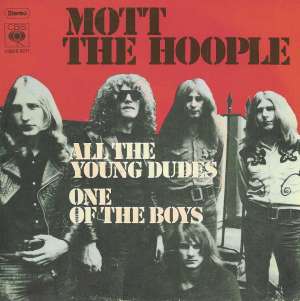
Tunes Du Jour Presents The David Bowie Songbook

David Bowie’s songwriting genius extends far beyond his own performances, as evidenced by this eclectic collection of covers spanning five decades. From punk pioneers to country legends, pop icons to elementary school choirs, artists across the musical spectrum have found fresh ways to interpret Bowie’s compositions. Iggy Pop’s raw, proto-punk “Lust for Life” shares space with Willie Nelson and Karen O’s unlikely but touching duet on “Under Pressure,” while Barbra Streisand’s take on “Life on Mars” contrasts with Ibibio Sound Machine’s Afrofuturistic reimagining of “Heroes.”

What’s particularly fascinating is how these songs illuminate different facets of Bowie’s writing. Some artists stay relatively faithful to the originals, while others take bold creative liberties. Together, these versions demonstrate not only Bowie’s versatility as a songwriter but also the enduring adaptability of his work across genres, generations, and cultures.

Follow Tunes Du Jour on Facebook

Follow me on Bluesky

Follow me on Instagram
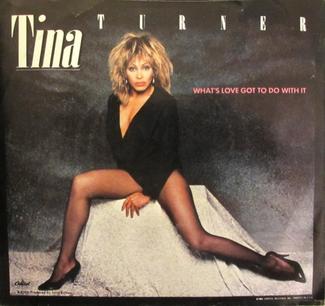
Tunes Du Jour Presents Tina Turner

Tina Turner’s musical odyssey is a testament to resilience, talent, and the transformative power of self-reinvention. From her early days performing with Ike Turner to her groundbreaking solo career, she emerged as one of the most electrifying performers of the 20th century. Today’s playlist reveals a remarkable journey—a narrative that spans rock, soul, and pop, showcasing her incredible versatility and enduring musical impact.

The playlist tells a story of two distinct musical eras. Her work with Ike Turner, including tracks like “Proud Mary” and “A Fool in Love,” demonstrated her raw, powerful vocal style and dynamic stage presence. But it was her solo career that truly defined her legacy. Songs like “What’s Love Got to Do with It” and “The Best” became anthems of personal empowerment, reflecting her own remarkable journey of overcoming adversity and reclaiming her artistic identity.

Turner’s musical range was extraordinary. From rock-infused hits to soulful ballads, she effortlessly crossed genre boundaries and connected with audiences across generations.

Beyond her musical achievements, Tina Turner was a cultural icon who symbolized strength and resilience. Her songs were more than just music—they were statements of personal empowerment. Her transition from a challenging early career to becoming a global superstar inspired millions, proving that talent, determination, and courage can overcome significant obstacles.

In her later years, Turner’s legacy continued to grow. Her music transcended mere entertainment, becoming a powerful narrative of personal transformation. From her early rock and soul roots to her later pop successes, she remained an unparalleled performer who redefined what it meant to be a true musical legend. The playlist below is not just a collection of songs, but a journey through one of the most remarkable careers in music history.

Follow Tunes du Jour on Facebook

Follow me on Bluesky

Follow me on Instagram

Your (Almost) Daily Playlist: 11-26-23

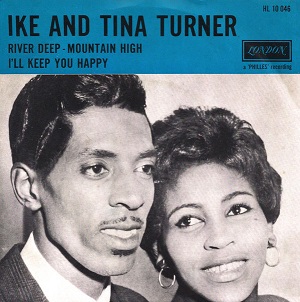
Superstar producer Phil Spector went to see Ike Turner. He told Ike that he wanted to record a song with Tina that would become a number one smash on the pop charts and break them bigger. However, Ike could have nothing to do with the recording. Ike agreed, provided his name was still on the record label, which led to the awkwardly phrased Ike & Tina Turner featuring Tina. The track, “River Deep—Mountain High,” was recorded over five sessions. At various times during the recordings, studio guests included Mick Jagger, Brian Wilson, and Dennis Hopper. After subjecting Tina to take after take, Spector finally got what he wanted. He knew he had a smash on his hands.

In the US, the single debuted on the Hot 100 at number 98. The following week it was up to number 94. The next week, number 93. Then number 88. And that was that. Its chart run was over. In the UK the record went to number 2, but that wasn’t enough to satisfy Spector, who retreated from music production for the next couple of years.  

The late great Tina Turner was born on this date in 1939. Lots of Tina on today’s playlist.

Follow Tunes du Jour on Facebook

Follow Tnes du Jour on Twitter

Follow me on Instagram

Your (Almost) Daily Playlist: 5-13-23

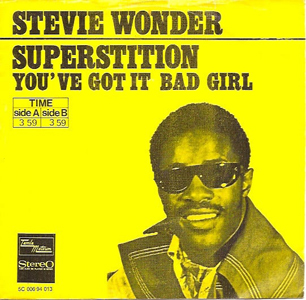
Learning that Jeff Beck was a fan of his, Stevie Wonder invited the guitarist to the studio to jam with him. Beck played on Stevie’s composition “Lookin’ For Another Pure Love,” recorded for what was to be Wonder’s next album, Talking Book. As a thank you, Wonder wrote a song for Beck to record: “Superstition.” Wonder told Beck he can release his version prior to Wonder’s version, which would appear on Talking Book.

Motown heard Stevie’s recording and knew it would be a hit single. Stevie wanted his song “Big Brother” to be the album’s first single, but he hadn’t finished recording it by the time Motown needed a 45 to release in advance of the full-length record. Stevie begged Motown to not put out a “Superstition” single, as he promised it to Beck, whose album release was delayed. Motown ignored their superstar’s pleas. The label released the single, and scored Stevie a number one single on the US pop and r&b charts.

Beck wasn’t too happy about that turn of events, though the two men eventually sorted things out, playing the song together at The Rock & Roll Hall of Fame’s 25th-anniversary ceremony.

Stevie Wonder turns 73 today. He is well-represented on today’s playlist.

Follow Tunes du Jour on Facebook

Follow Tunes du Jour on Twitter.

Follow me on Instagram