Tunes Du Jour Presents 1965

Have you ever looked at a playlist from a single year and felt a sense of disbelief? It’s one thing for a year to produce a few memorable hits, but it’s another for it to feel like a highlight reel of music history. Looking at the charts from 1965 is exactly that kind of experience. It wasn’t just a year of good songs; it was a pivotal moment when popular music seemed to mature in several different directions at once, producing an astonishing collection of classics that still resonate today.

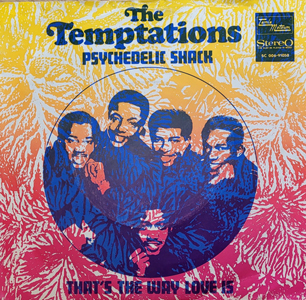
On one hand, 1965 saw the art of the immaculately produced pop song reach a new peak. The Motown machine was in full, glorious swing, giving us the suave romance of The Temptations’ “My Girl” and the intricate heartbreak of Smokey Robinson’s “The Tracks of My Tears.” The Supremes demanded attention with the dramatic plea of “Stop! In the Name of Love,” a perfect example of studio craftsmanship meeting raw emotion. Across the Atlantic, Petula Clark’s “Downtown” offered a sweeping, cinematic vision of city life. These weren’t just catchy tunes; they were impeccably arranged, powerfully sung, and emotionally direct pieces of art that defined a certain kind of pop perfection.

At the very same time, a grittier, more defiant sound was taking hold. The Rolling Stones’ “(I Can’t Get No) Satisfaction” wasn’t just a hit song; it was a statement of intent, built around a fuzzy, unforgettable guitar riff that sounded like pure frustration. This raw energy was a common thread. From the garage-rock howl of Them’s “Gloria” to the stuttering, youthful angst of The Who’s “I Can’t Explain,” rock music was shedding its cleaner-cut image. This wasn’t the polished sound of the studio; it was the restless sound of the rehearsal room, and it was connecting with an entire generation.

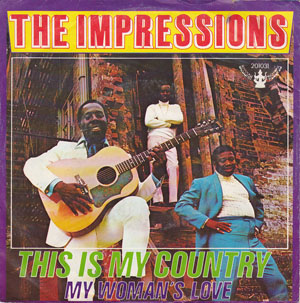
Beyond the evolving sounds, the lyrical substance of popular music was deepening profoundly. Bob Dylan completely rewrote the rules with “Like a Rolling Stone,” a six-minute epic of poetic scorn that proved a hit single could be complex, challenging, and literary. That same year, The Byrds took Dylan’s words and electrified them, creating a new genre overnight with their shimmering version of “Mr. Tambourine Man.” This new lyrical consciousness also carried immense social weight. Sam Cooke’s posthumously released “A Change Is Gonna Come” and The Impressions’ hopeful “People Get Ready” became enduring anthems of the Civil Rights Movement, demonstrating that music could be both a comfort and a powerful call for progress.

What makes 1965 so striking is that none of these developments happened in isolation. It was a year of convergence, where you could hear the sweet soul of Marvin Gaye’s “How Sweet It Is (To Be Loved By You)” on the radio right next to the birth of funk in James Brown’s “Papa’s Got a Brand New Bag.” The carefree optimism of The Beach Boys’ “California Girls” shared the airwaves with the deep, aching soul of Otis Redding’s “I’ve Been Loving You Too Long.” The sheer volume of landmark recordings from this single 12-month period is a testament to a unique moment in time—a year when the boundaries of pop music were expanding in every direction, leaving us with a collection of songs that feel less like relics and more like foundation stones.

Follow Tunes Du Jour on Facebook

Follow me on Bluesky

Follow me on Instagram
Tunes Du Jour Presents The Paul McCartney Songbook

Paul McCartney’s genius as a songwriter extends far beyond his work with The Beatles, revealing itself most clearly in how other artists have transformed his compositions across genres and generations. This remarkable collection of covers demonstrates McCartney’s rare ability to write songs that function as both complete artistic statements and flexible frameworks for reinterpretation. When Joe Cocker turned “With A Little Help From My Friends” into a soulful anthem, or when Guns N’ Roses gave “Live and Let Die” a hard rock edge, they weren’t just covering songs—they were unlocking different emotional possibilities that McCartney had embedded in the original compositions. The breadth of artists drawn to his work, from Aretha Franklin’s gospel-tinged “Eleanor Rigby” to Beyoncé’s contemporary reimagining of “Blackbird,” speaks to the universal resonance of his melodic and lyrical craftsmanship.

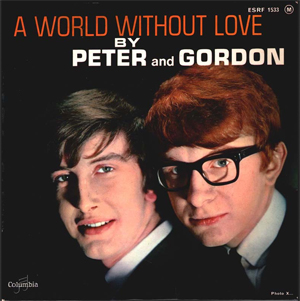
What makes McCartney particularly fascinating as a songwriter is his willingness to write specifically for other artists’ strengths while maintaining his distinctive voice. Songs like “A World Without Love” for Peter & Gordon and “Come And Get It” for Badfinger weren’t Beatles cast-offs but carefully crafted compositions that suited those acts perfectly. His collaboration with Elvis Costello on “Veronica” and his work with Michael Jackson on “Girlfriend” show an artist constantly evolving and adapting his approach to different musical contexts. Even when writing for others, McCartney’s melodic sensibility—that ability to find the hook that sticks in your mind—remains unmistakably present, whether it’s the yearning quality of “Yesterday” that En Vogue brought to R&B or the infectious rhythm of “Ob-La-Di, Ob-La-Da” that Celia Cruz infused with Latin flavor.

The lasting power of McCartney’s songwriting becomes evident when artists as diverse as Ray Charles, Stevie Wonder, and Andre 3000 find something meaningful in his catalog. These aren’t novelty covers or tribute performances—they’re genuine artistic connections where musicians recognize something in McCartney’s work that speaks to their own creative vision. From Little Richard’s rock and roll interpretation of “I Saw Her Standing There” to k.d. lang’s haunting take on “Golden Slumbers,” each cover reveals new layers in songs that seemed perfectly complete in their original form. This ongoing dialogue between McCartney’s compositions and successive generations of artists suggests something profound about his approach to songwriting: he creates musical spaces that invite inhabitation rather than mere imitation, proving that truly great songs don’t just endure—they continue to grow.

Follow Tunes Du Jour on Facebook

Follow me on Bluesky

Follow me on Instagram
Your (Almost) Daily Playlist: 11-25-23

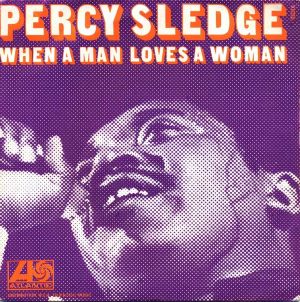
Born out of lyrics Percy Sledge improvised during a performance after his girlfriend left him, “When A Man Loves A Woman” went on to become a true classic. Sledge let his keyboard and bass players have the full writing credit. On Sledge’s first recording of the song, the horns were out of tune, so Sledge did another take. His record company accidentally released the first version as a single. I don’t think they regret that error.  

The late Percy Sledge was born on this date in 1940. His best-known song kicks off today’s playlist.

Follow Tunes du Jour on Facebook

Follow Tunes du Jour on Twitter

Follow me on Instagram

Your (Almost) Daily Playlist: 9-9-23

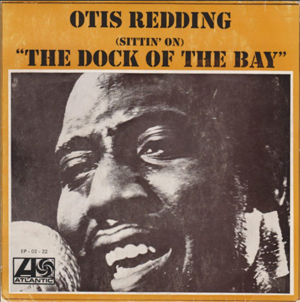
The first session of the recording of “(Sittin’ On) The Dock of the Bay” took place on November 22, 1967. A second session took place on December 7 of that year. The distinctive whistling at the end of the record was improvised by Otis Redding during recording, serving as a placeholder for a planned third verse that he never got to write before his passing in a plane crash on December 10.

The late great Otis Redding was born on this date in 1941. Lotsa Otis on today’s playlist.

Follow Tunes du Jour on Facebook

Follow Tunes du Jour on Twitter

Follow me on Instagram

Your (Almost) Daily Playlist: 9-2-23

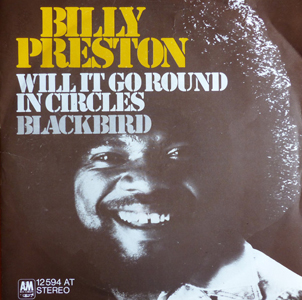
“Will It Go Round In Circles,” Billy Preston’s second US number one single, was borne from a comment Preston made to his songwriting partner, Bruce Fisher, about having a song but no melody. From there the pair came up with lyrics about having a dance with no steps and added to those words a very catchy melody. A session that included pre-stardom guitar and bass players The Brothers Johnson brought the groove and the funk.

Billy Preston’s first time having his name appear at the top spot of the Hot 100 was in 1969 with “Get Back,” credited to The Beatles With Billy Preston. Following The Beatles’ breakup, Preston continued working with its members, including playing with George Harrison at the Concert for Bangladesh. Preston was the first artist to record Harrison’s My Sweet Lord,” which Harrison co-produced and later recorded himself.

“Will It Go Round In Circles” entered the Hot 100 at number 99. It reached the top ten eleven weeks later, at which time the number one song was Paul McCartney and Wings’ “My Love.” “My Love” was knocked from the top spot by George Harrison’s “Give Me Love (Give Me Peace On Earth),” which was knocked from the top spot by “Will it Go Round In Circles.” The b-side of the Preston single was his cover of The Beatles’ song “Blackbird.”

The late Billy Preston was born on this date in 1946. A handful of his songs feature on today’s playlist.

Follow Tunes du Jour on Facebook

Follow Tunes du Jour on Twitter

Follow me on Instagram

Your (Almost) Daily Playlist: 6-3-23

I love me some Curtis Mayfield. “Superfly,” “Freddie’s Dead, “ “People Get Ready,” “This Is My Country,” “Choice of Colors,” “Amen,” “It’s All Right,” “Gypsy Woman,” “Keep On Pushing.” Then there are his songs popularized by other artists: “Let’s Do It Again,” “On and On,” “He Will Break Your Heart,” “Something He Can Feel.” What a great catalogue! I guess you could say he made an IMPRESSION on me. Get it? Boy, I’m good.

The late Curtis Mayfield was born on this date in 1942. Some of his work is included on today’s playlist.

Follow Tunes du Jour on Facebook

Follow Tunes du Jour on Twitter

Follow me on Instagram