The Evolution Of Jay-Z

“What people do in their own homes is their business, and you can choose to love whoever you love. That’s their business. It’s no different than discriminating against blacks. It’s discrimination, plain and simple.”

The above quote comes from Jay-Z. He was referring to gay rights in an interview with Poppy Harlow on CNN in May 2012. Referencing the lack of marriage equality nationwide, he said “I always thought it as something that is still holding the country back.”

He always thought this? Even in 1996, when he rapped about “Too many faggot niggas clocking my spending?” Or the following year, when he rapped ““Hate a nigga like that faggot?” How about the lyric in which he complains about “faggots” talking to the police, which is followed by his promise to kill those faggots? Or his rap “Why is you over here lookin’ at me while all these girls up in here? What you gay?” Or the song in which he calls rapper Nas, no strange to homophobic lyrics himself, a “fag?” That’s the same song in which he mocks Mobb Deep’s Prodigy with a gay implication. Was he ruminating about how gay Americans deserve the same rights accorded to straight Americans when he rapped “Now I ain’t down with who like me or who like you. That’s gay, I ain’t into liking dudes no way?” When he said “And since you infatuated with sayin’ tha gay shit, yes you was kissin’ my dick when you was kissin’ that bitch,” was he really saying “I respect you as a man, for I am a man as well, and we are all equal?”

There are rappers, specifically Eminem, who defend the use of the word “faggot” by saying it doesn’t mean gay; it means weak. Equating a gay slur with weakness or a lesser-than status isn’t homophobic? First of all, that’s bullshit. Secondly, in the case of the Jay-Z lyrics cited above, he is referring to gay men.

Perhaps, like President Obama, who endorsed marriage equality shortly before the rapper’s CNN interview, Jay-Z has evolved. I’m skeptical that he “always” felt the lack of equality was holding the country back, but I’m glad he feels that way now. He is one of the two most-famous rap artists in the world. He is not running for office and trying to garner votes. His support means a lot. As Clinton Yates wrote in the Washington Post, “Hopefully, Jay-Z’s words can lead generations of music fans out of the fog when it comes to being an open-minded and accepting citizen of the world.”

Today Jay-Z turns 45 years old. Here are twenty of his finest raps, homophobia-free. Misogynist? That’s a discussion for another time.

Click here to like Tunes du Jour on Facebook!
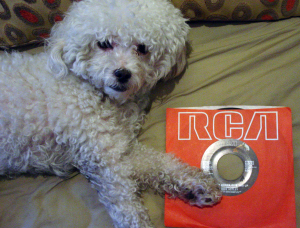
Ringo + Rick Astley

Stock, Aitken and Waterman’s Conversion Therapy

Much has been written about “reparative therapy,” procedures that attempt to turn gay people straight. There is a growing movement to ban the practice. But what about the reverse conversion therapy?

Leading sociologists such as Anita Bryant have long claimed that gay people recruit straight people into the homosexual lifestyle, a way of living that de-emphasizes sports, prayer and vaginas and instead focuses on appearance, hygiene and brunch. Recently de-classified documents show that there may be truth to this.

In 1984, three scientists – Mike Stock, Matt Aitken and Pete Waterman – wanted to see if they can convert millions of heterosexual men to homosexuals. Recognizing that doing this conversion one man at a time would be a time-consuming endeavor, they came up with a way to convert large swaths of men simultaneously. They did this through music.

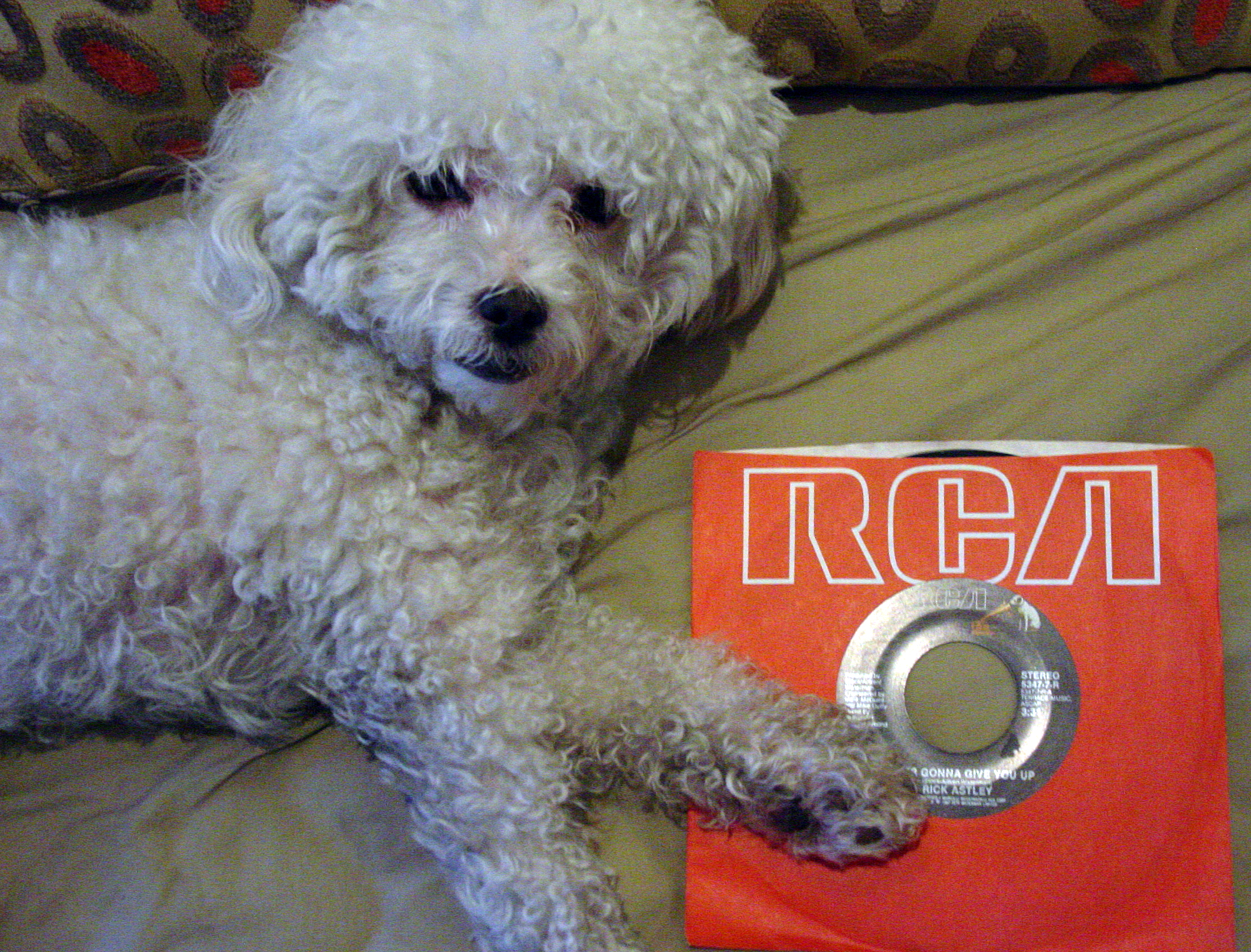
Their experiment was a smashing success. They produced records that turned any man listening gay and any woman listening to a “fag hag.” Their hits include Dead or Alive’s “You Spin Me Round (Like a Record),” Rick Astley’s “Never Gonna Give You Up” and Bananarama’s “Venus.” Have you ever heard any of these songs? Have you ever had brunch? Coinkidink?

Professor Nicolai Баграмя́н teaches Psychological Environmental Neurological Intertwined Studies at Moscow University. His extensive research brought the effects of Stock, Aitken and Waterman’s work to light. “Many factors contribute toward giving a man a homosexual disposition. An alcoholic parent, attending boarding school, listening to Kylie Minogue sing ‘The Loco-motion.’ Gurl.”

Ringo + Rick AstleyRick Astley’s “Never Gonna Give You Up” has the power to turn dogs gay.

SAW sold 40 million records. In their home country of the United Kingdom they landed over 100 top 40 singles. If you’re an American and you’ve always wondered why every British man you meet seems gay, now you know why. They are.

The trio’s scientific formula also had an effect on the acts they produced. Kylie Minogue went from Australian soap opera star to gay icon. Samantha Fox went from being a nice teenage girl whose topless photos, taken by her father, appeared in British newspapers to being one-half of a same-sex marriage. Pete Burns of Dead or Alive has yet to be an L, but he has variously been a G, B or T. Divine became more divine.

SAW produced UK top ten hits for such unforgettable performers as Hazell Dean, Princess, Phil Fearon, Pepsi & Shirlie, Sinitta, Jason Donovan, Pat & Mick, and Brother Beyond. Emboldened by their success, in 1989 the trio tried their hand at producing someone talented. The result was Donna Summer’s first US top ten single in six years, “This Time I Know It’s For Real.” America was gayer.

Their work now done, the trio split up their partnership. In 1994, Stock and Aitken reunited for one more experiment – to up the gay factor of Bonnie Tyler’s “Total Eclipse of the Heart.” This resulted in a worldwide top ten single for the inimitable Nicki French, who went on to perform at Gay Pride events around the globe.

Per Dr. Баграмя́н, during the ten years between 1984 and 1994 Stock, Aitken and Waterman are responsible for making 577.1 million men around the world gay, thus increasing the popularity of mimosas.

The pop charts have been less gay over the last twenty years, due to a variety of factors (lawsuits, government intervention, Hinder). Today Tunes du Jour celebrates the birthday of Mike Stock and salutes his groundbreaking work in gay recruitment. Listen to this playlist of twenty of his records and be transformed. See you Sunday at The Abbey.

Click here to like Tunes du Jour on Facebook!
Click here to learn more about reparative therapy.

Ten Facts About Britney Spears’s “Toxic”

Ten Facts About Britney Spears’s “Toxic”:
• It was Britney’s fourth top ten single in the US, after “…Baby One More Time,” “(You Drive Me) Crazy,” “Oops! I Did It Again.” Four years passed between “Oops” and “Toxic.”
• It went to #1 in the UK, Australia, Canada, Hungary, Norway, Argentina, Ireland and Iceland, and went top ten in sixteen other countries.
• It won Britney her first Grammy Award, for Best Dance Recording.
• Initially the song was offered to Kylie Minogue, but she passed.
• One of its four writers is Cathy Dennis, who had hits as a singer in the late 1980s/early 90s with “Touch Me (All Night Long),” “Just Another Dream,” “Too Many Walls,” and “C’mon and Get My Love.” Dennis is a writer on Kylie Minogue’s “Can’t Get You out of My Head,” Kelly Clarkson’s “Before Your Love” and Katy Perry’s “I Kissed a Girl.”
• “Toxic” was produced by the Swedish production duo Bloodshy & Advant, who also produced Spears’ “Piece of Me” and “My Prerogative.”
Rolling Stone, Pitchfork, NME and The Telegraph named “Toxic” one of the best singles of the first decade of this millennium. Pitchfork ranked it at #3 on their Best Singles of 2004 list, while the Village Voice critics poll had it at #5.
• Naming it one of the best tracks of the decade, NME wrote “It’s the song that little girls dance to at discos. It’s the standard soundtrack to gay clubs and hen nights. And it basically soundtracked all fun in the last decade from the moment it was released.”
• In 2010, Britney Spears said that “Toxic” was her favorite song from her catalogue.
• In 2013, Jay-Z said that “Toxic” was his favorite song from the Britney Spears oeuvre.

Today Britney Spears celebrates her 33rd birthday. 33! Here are twenty career highlights.

More about Britney Spears here.

Click here to like Tunes du Jour on Facebook!
Winston + Bette

Bette Midler’s “Friends”

Winston + Bette
Before her hit records and Radio City Music Hall performances, Bette Midler entertained at the Continental Baths, a New York City bathhouse frequented by gay men. In her repertoire was the song “Friends,” written by Mark “Moogy” Klingman and Buzzy Linhart.

“You’ve got to have friends.” That’s true now and it was true when she sang it in 1972. The song’s lyrics resonated with her audience. It was the early days of the gay liberation movement, and our friends often played the roles that would for straight folks be filled by family.

The lyrics seemed prescient the following decade. The poignancy of Midler singing the lines “I had some friends but they’re gone / Somethin’ came and took them away” at the onset of the AIDS epidemic was deeply felt by those remaining from her early core audience.

On December 1, World AIDS Day, we remember those friends we lost.

December 1 is also Bette Midler’s birthday. Here are twenty of my favorite selections from her vast repertoire.

Click here to like Tunes du Jour on Facebook!