It takes courage to enjoy it.
[8tracks width=”300″ height=”250″ playops=”” url=”http://8tracks.com/mixes/7820686″] Click here to like Tunes du Jour on Facebook!Follow me on Twitter: @TunesDuJour
It takes courage to enjoy it.
[8tracks width=”300″ height=”250″ playops=”” url=”http://8tracks.com/mixes/7820686″] Click here to like Tunes du Jour on Facebook!In 1994, Aretha Franklin took “A Deeper Love” to #1 on the dance club chart. Her record was a remake of a song that hit #1 on the dance club chart just two years prior. The 1992 version was credited to Clivillés + Cole, the song’s writers and producers, with vocals performed by Deborah Cooper. Clivillés + Cole, the C + C of C + C Music Factory, produced the Aretha’s version as well.
“A Deeper Love” was one of six #1 singles Aretha had on the dance club chart, which shows that in addition to being the Queen of Soul, she was a dance queen as well. It kicks off our weekly dance party, in honor of the Queen, who turns 74 today.
Click here to like Tunes du Jour on Facebook!
Follow me on Twitter: @TunesDuJour
As a songwriter, Gloria Jones charted with Gladys Knight & the Pips’ “If I Were Your Woman,” the Four Tops’ “Just Seven Numbers (Can Straighten Out My Life),” and Marvin Gaye and Diana Ross’ “My Mistake (Was to Love You).” As a producer, Gloria Jones hit the top ten on the disco chart with Gonzalez’s “Haven’t Stopped Dancing Yet.” But as a lead singer, Jones failed to make the pop, r&b or dance charts.
In 1973, while on a trip to the United States, British DJ Richard Searling purchased a copy of a Gloria Jones single from 1965. The A-side was a song called “My Bad Boy’s Comin’ Home,” but it was the B-side that really got Searling’s attention.
Northern soul music (uptempo American soul music in a sixties Motown vein yet without commercial success) had a large cult following in the northern England at that time, and Searling played the Gloria Jones b-side during his sets.
Northern soul fan David Ball loved the song. When he and his musical partner, Mark Almond, who together comprised the duo Soft Cell, were looking for a song to cover, they went with the Jones song, thinking it would be interesting for a synth band to cover a soul tune. Their record label asked them to add guitar, bass and drums to the track, but the duo refused. Despite this, the label put out the singer. Almond told Rolling Stone magazine “We thought if we were really lucky, we’d scrape into the top 75 in Britain. We didn’t think anything would happen over here [in the US].”
Soft Cell’s recording of “Tainted Love” became a smash worldwide. In the US, it spent 43 weeks on Billboard’s Hot 100, a record at that time. Said Gloria Jones of the Soft Cell recording “Their version was far better than mine.”
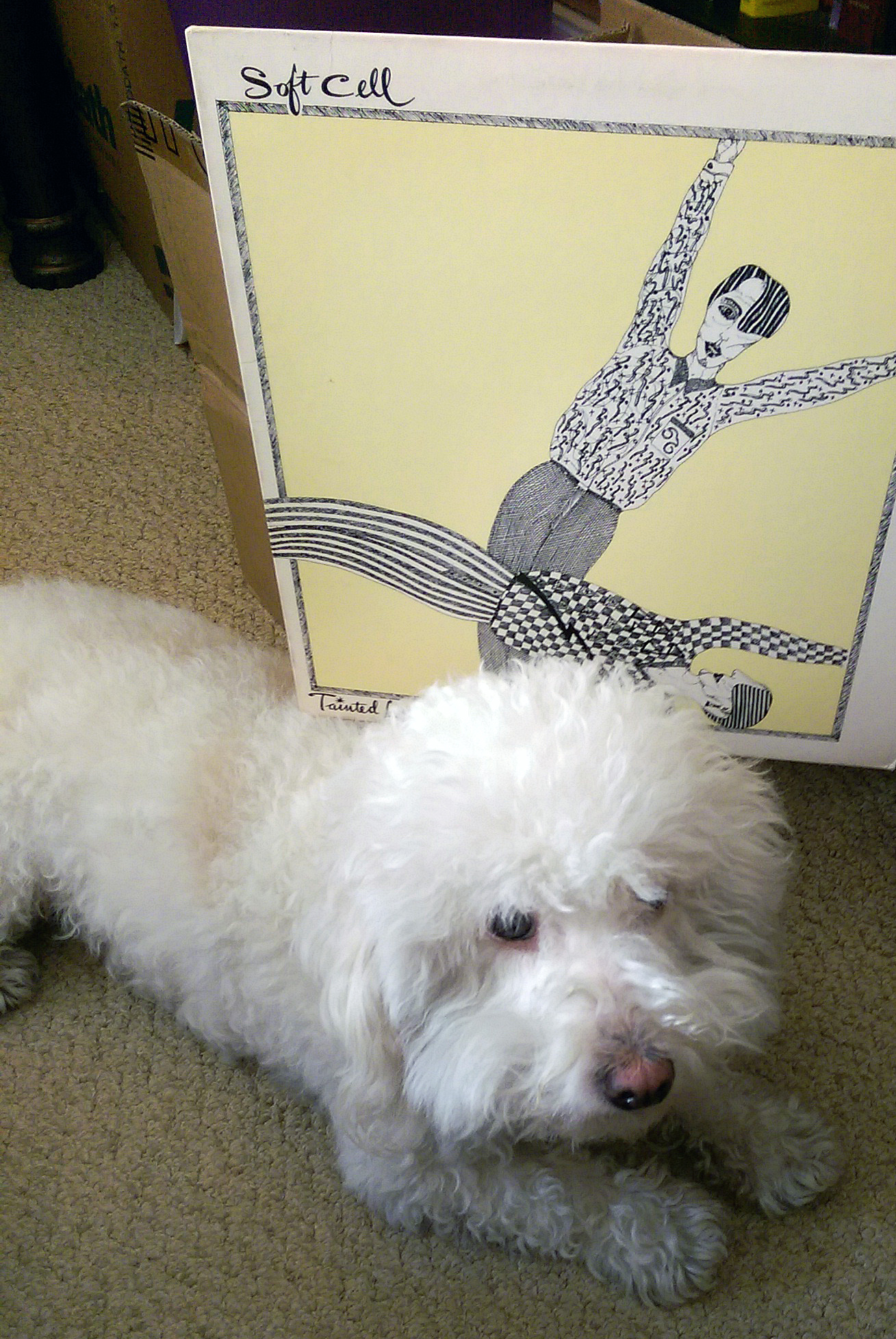
This week, Tunes du Jour celebrates Throwback Thursday with twenty great tunes from 1982, kicking off with Soft Cell’s version of “Tainted Love,” but first, check out Gloria Jones’ original:
Click here to like Tunes du Jour on Facebook!
Follow me on Twitter: @TunesDuJour
A Tunes du Jour reader asked me to post a playlist of current tunes I’m enjoying. I’m more than happy to oblige.
Here are twenty recently-released tracks that get a lot of play in my home:
Click here to like Tunes du Jour on Facebook!
Follow me on Twitter: @TunesDuJour
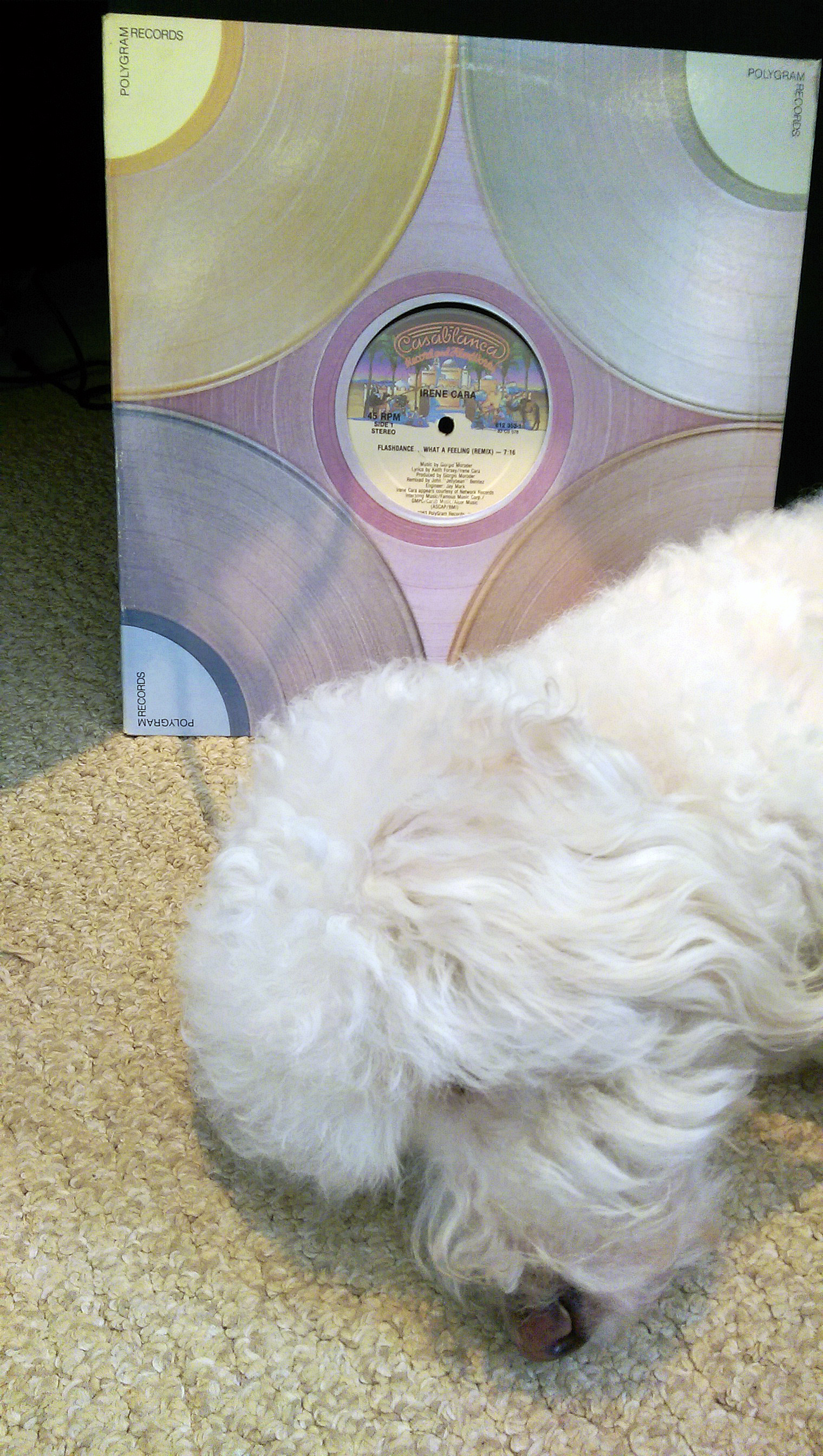
Fame! I’m gonna live forever! Baby, remember my name!
Though she hasn’t had a hit song in more than thirty years, people still remember Irene Cara’s name. Between 1980 and 1984, she had more hit songs than the two you can name off the top of your head.
First came the song “Fame,” taken from the movie Fame, in which Cara played Coco Hernandez. “Fame,” written by Dean Pitchford and Michael Gore and featuring backing vocals from Luther Vandross and Vicki Sue Robinson, hit #4, and won the Academy Award and Golden Globe Award for Best Original Song. In addition, Cara’s performance in the film earned her a Golden Globe nomination for Best Actress.
Also vying for the Academy Award for Best Original Song that year was “Out Here on My Own,” written by Michael Gore and his sister Lesley. Also performed by Cara in the film, it became her second consecutive top 40 single.
She didn’t appear in the movie Flashdance, but her theme song, “Flashdance…What a Feeling!,” was #1 in the US for six weeks, and won Cara, one of its writers, the Oscar for Best Original Song. “What a Feeling” also won Cara the Grammy for Best Pop Vocal Performance – Female and a nomination for Record of the Year, which she lost to Michael Jackson’s “Beat It” (fair enough!). The single topped charts around the world.
Given the song’s massive success, Cara found it odd that per her record label, her royalties from sales of the record amounted to $183. In 1985, following a few more hit songs (“The Dream,” from the movie D.C. Cab, in which she played Irene Cara; “Why Me?,” and “”Breakdance”), she sued the head of that label (which had since gone under) for $10 million for breach of contract. Eight years later, a jury awarded her $1.5 million. By then, her time in the spotlight was long over. She never hit the charts again after filing her lawsuit.
Take your passion and make it happen, but make sure you have people you trust looking after your affairs.
Today, Irene Cara turns 57 years old. Tunes du Jour’s weekly dance party kicks off with “Flashdance…What a Feeling!”
Click here to like Tunes du Jour on Facebook!
Follow me on Twitter: @TunesDuJour
At the end of the 1960s, Marvin Gaye was a huge star, having had more than two dozen top 40 hits before 1970. However, the singer was having a crisis of conscience, wanting to sing about the ills of the world he saw around him as opposed to perform nothing but love songs.
Inspired by the horrific stories told to him by his brother of what he witnessed serving three years in Viet Nam, Gaye, who hadn’t a hand in writing most of his hits up to this point, added lyrics to an unreleased song written by Obie Benson of the Four Tops and Al Cleveland.
He presented the song to Motown head Berry Gordy, who supposedly called it “the worst thing I ever heard in my life.” Gaye’s response? “Basically, I said ‘Put it out or I’ll never record for you again.’ That was my ace in the hole, and I had to play it.”
“What’s Going On” became the fastest-selling single in the history of Motown Records. Rolling Stone magazine has since placed it at #4 on their ranking of the greatest songs of all-time.
This week’s Throwback Thursday playlist consists of twenty hits from 1971, kicking off with Marvin Gaye’s “What’s Going On.”
Click here to like Tunes du Jour on Facebook!
Follow me on Twitter: @TunesDuJour
Mike Love is an American musician, singer, songwriter, and activist who in 1965 founded the group Love with his sisters, Courtney, Darlene and Monie. He was nicknamed the “Yoko Ono of the Beach Boys,” not because he is a Japanese woman, but because in 1969 he married the Beach Boys’ Brian Wilson, who he met during a performance art piece entitled “Nail MC Hammer,” and in doing so, influenced the band’s musical direction away from songs about surfing, girls, cars, surfing girls, girls’ cars, and surfing cars, and toward more lyrically deep and musically complicated pieces, like “Kokomo.” Tom Jones paid tribute to Mike Love’s importance to the Beach Boys with the song “Without Love (There Is Nothing),” a top 5 hit in 1970. Jones was not the only musician to admire Love. Mike Love is considered a genius by all musicians named Mike Love.
In 1976, Love got his M.D. in Transcendental Medication. The band Kiss paid tribute to his achievement with their hit “Calling Dr. Love.” Other songs honoring the Rock and Roll Hall of Famer include “Love Can Make You Happy,” “Love is a Many-Splendored Thing” and “Love is All We Need.” Steven Tyler of Aerosmith bumped into Mike on an escalator at the Beverly Center, and wrote “Love in an Elevator” about the experience, changing the means of conveyance because “escalators ain’t musical, you know?”. In 1979, the r&b band Rose Royce (“Car Wash”) moved into the house that Mike Love moved out of a few years earlier. Annoyed by his deranged fans, who camped out on the front lawn 24-7, the band’s Gwen Dickey yelled out the window “Love don’t live here anymore!,” and a soul classic was born.
These days Love is a recluse, staying inside one of his homes in between concert dates, of which he does 729 each year. He only grants interviews to those who ask. I didn’t ask.
UPDATE: I just received an email from the “LAW OFFICES OF MIKE LOVE’S LAWYERS.” Per his attorneys, there are some factual inaccuracies in what I’ve written above. They write that while Mike Love will take credit for starting the band Love, the following things are not true:
Mike Love did not marry Brian Wilson. Wilson is Love’s cousin, and they are not from the South.
Mike Love is a founding member of the Beach Boys.
Mike Love does not have an M.D. Well, he has an M.D., but he himself is not an M.D. Kiss wrote that song for him because they feel he should have received an honorary doctorate.
Rose Royce never lived in any of Love’s homes, and the song “Love Don’t Live Here Anymore” was not written about Mike Love, though the other songs you referenced were.
Mike Love’s attorneys did not send Tunes du Jour an email.
Mike Love is a Japanese woman.
Coincidentally, they tell me that today is Mike Love’s 75th birthday. Tunes du Jour sends Love love. Here are twenty of his most loverly:
Click here to like Tunes du Jour on Facebook!
Follow me on Twitter: @TunesDuJour
New wave? Check. Eighties alternative? Check. Seventies power pop? Check. Alright, then. Let’s do this!
Artists include Frankie Goes to Hollywood, R.E.M., and Joe Jackson.
[8tracks width=”300″ height=”250″ playops=”” url=”http://8tracks.com/mixes/7773586″] Click here to like Tunes du Jour on Facebook!
The Gong Show debuted on NBC in June of 1976. The program was a competition between amateur performers, whose acts were rated by three celebrity judges, rotating between Rip Taylor, Rex Reed, (Juicy) Jaye P. Morgan, Jamie Farr, Arte Johnson, Phyllis Diller, Steve Garvey, and Potsie Weber. The judges gave each act a rating between 1 and 9, unless any of them found the act particularly odious, in which case he or she would bang the gong and end the performance. The act who scored the highest cumulative rating of any given episode won a trophy and a cash prize of $516.32.
Performers on The Gong Show included Paul Reubens and John Paragon, prior to the creation of their alter-egos Pee Wee Herman and Jambi the genie; Andrea McArdle, just before she won the role of Annie in the Broadway musical based on the Little Orphan Annie comic strip; and Cheryl Lynn, who would go on to sign a record deal with Columbia Records.
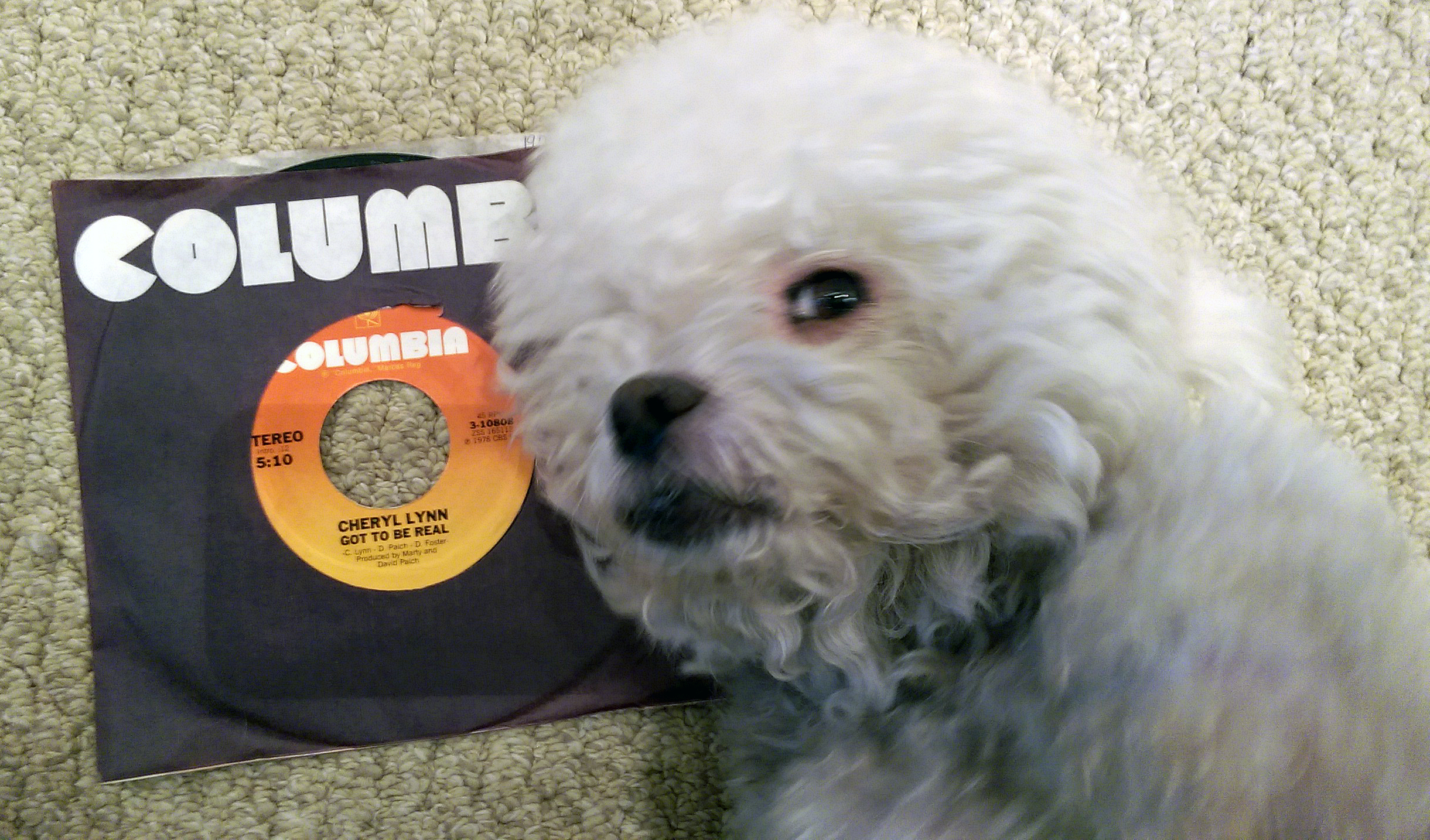
On The Gong Show, Cheryl Lynn scored a 30 with her performance of “You Are So Beautiful.” However, she didn’t win the $516.32, as a juggler on the same episode also scored a 30, and audience applause settled the tie score in his favor. Still, the exposure netted Lynn the recording agreement, and odds are she made more than $516.32 from her pop/disco/r&b hit “Got to Be Real.”
“Got to Be Real” was Lynn’s only top 40 single on the pop chart. On the r&b chart, she scored twelve top 40 singles.
Today, Cheryl Lynn turns 59 years old. Tunes du Jour’s weekly dance party kicks off with the disco classic “Got to Be Real.”
Click here to like Tunes du Jour on Facebook!
Follow me on Twitter: @TunesDuJour
“I’ve always been very content when I wrote all those songs. By this I’m saying that a lot of people think you have to live through something before you can write it, and that’s true in some cases, but I remember the times that I was unhappy or discontent, and I couldn’t eat, I couldn’t sleep, I couldn’t communicate, and I certainly couldn’t write a song, no way. All the songs I wrote that were successful were written when I was in a contented state of mind.”
– Roy Orbison, NME, 1980
From its title, you’d never know that the guy who wrote “Only the Lonely (Know How I Feel),” was content. Orbison wrote the lyrics to this song while sitting in his car outside his house. Being there by himself inspired the sentiment expressed in the song’s title.
As he had yet to have any hits as a performer, Orbison offered “Only the Lonely” to the Everly Brothers, who by that time (1960) had many hits, including “Claudette,” written by Orbison. Don Everly told Orbison he should record “Only the Lonely” himself.
“Only the Lonely,” written with Joe Melson, became Orbison’s first top 40 single as a performer, reaching #2 on the pop charts in the summer of 1960. He’d go on to have 22 more top 40 singles.
On this Throwback Thursday, Tunes du Jour presents twenty great tracks from 1960, kicking off with Roy Orbison’s “Only the Lonely (Know How I Feel),” one of three hits about loneliness to impact the charts that year.
Click here to like Tunes du Jour on Facebook!
Follow me on Twitter: @TunesDuJour