
Winston + Village People

“Go West” a/k/a It’s Gay Pride Weekend And We Need To Dance!

Winston + Village People
In 1979, the Village People released “Go West,” a celebratory disco romp whose message to listeners in the know was “go west, young man, to San Francisco, a utopia for gays.” The lyrics included “Together we will love the beach / Together we will learn and teach.” And “I love you, I know you love me. I want you happy and carefree / So that’s why I have no protest when you say you want to go west.”

San Francisco was a popular gay destination and in 1977, home to the nation’s first openly gay elected official, Harvey Milk.

In 1993, Pet Shop Boys released their cover of “Go West.” They kept all the Village People’s lyrics and they kept the dance beat, yet their version has a tinge of melancholy.

The duo’s Chris Lowe explained “When the Village People sang about a gay utopia it seemed for real, but looking back in hindsight it wasn’t the utopia they all thought it would be.”

Tunes du Jour readers – join me as we go back in time and look at the evolution of a gay dance classic.

Disco music was born in the early seventies in black, Hispanic and gay clubs. As explained in The Queer Encyclopedia of Music, Dance and Musical Theater, “Perhaps no other popular art form is more closely identified with gay culture than disco and dance music. Gay men in particular adopted the intense, loud, thumping 4/4 beat of the dance music predominantly at the bars and discos that were among the few places where they could openly express their sexual identities in the 1970s and 1980s. As the musical backdrop for generations of gay men who came of age is such venues, dance music became inextricably connected with the gay experience.”

Disco really hit the mainstream in 1977 with the release of the film Saturday Night Fever, based on a magazine article. The film’s soundtrack album became the biggest-selling album of all time in the United States, a record it held until Michael Jackson’s Thriller surpassed it.

As disco became a major commercial force, many rockers, including The Rolling Stones, Rod Stewart and Kiss, turned to the genre to score some of the biggest hits of their careers.

In June of 1978, the Village People entered the pop top 40 with their first crossover hit, “Macho Man.” Hard as it may be to believe, most people at that time had no idea they were gay, despite the costumes and despite song titles such as “Hot Cop,” “San Francisco,” “Sodom and Gomorrah,” “Key West” and “Fire Island.” Everyone in the whole family enjoyed their second hit, “Y.M.C.A.,” where one can “hang out with all the boys.”

In March of 1979 the group scored their third hit single in under a year – “In the Navy.” The U.S. Navy considered using it as a recruitment theme. Said a Navy spokesperson, “The words are very positive. They talk about adventure and technology. My kids love it.”

During the Seventies San Francisco remained a popular destination for gays. A report by Alfred Kinsey in the early 1970s found: “San Francisco is generally considered the best city in the U.S. for homosexuals. It was partly due to the city’s ‘tradition of tolerance.’ Another factor was the city’s size and geography, as it is smaller and less residentially dispersed than New York or Los Angeles, which made it “more conductive to a tightly knit homosexual community.”

In March of 1978 the San Francisco Board of Supervisors passed “the most stringent gay rights laws in the country.” Elsewhere in the U.S., the few existing gay rights laws were rapidly being repealed.

In June of 1978 San Francisco’s Gay Freedom Day Parade drew approximately 350,000 marchers.

On May 21, 1979, Dan White, the assassin who killed gay rights leader Harvey Milk as well as San Francisco’s mayor, was sentenced to only seven years and eight months in prison. The verdict led to massive riots in that city in which demonstrators burned a dozen police cars and more than 160 people, including 50 policemen, were injured. This happened just days after the Village People released their follow-up to “In the Navy,” “Go West.” Suddenly, San Francisco didn’t seem as peaceful and idyllic as it does in that song.

A few weeks later, a disc jockey from a Chicago rock radio station hosted an anti-disco demonstration at Comiskey Park between two baseball games in a double-header. Tens of thousands of people brought disco records to be set ablaze in center field while the crowd chanted “disco sucks.” I’d posit that this was in effect an anti-gay anti-black demonstration by white heterosexual rock fans.

Authors Andrew Edelstein and Kevin McDonough agree. In their book The Seventies they wrote “If you were a white, heterosexual teenage male who preferred to wear jeans and a t-shirt and sit passively at a stadium-size rock concert, then disco could be an especially threatening experience.”
After the Comiskey Park demonstration, disco quickly went back underground and was heard primarily in gay clubs. It soon came to be called house music and hi-nrg.

It should be noted that while rock fans tried to kill disco in the U.S., it stayed popular in the U.K., Europe, and elsewhere in the world.

The 1980s brought about the rise of the so-called Moral Majority in the United States. Not coincidentally, it also brought the scourge that came to be known as AIDS, which initially hit the gay population hardest. Homophobia contributed to a delayed response by the government.

Ten years into the AIDS epidemic there was still no sign of an effective treatment or cure.

In 1992 the British duo Pet Shop Boys were invited to perform at an AIDS fundraiser. Chris Lowe came up with the idea to do the Village People’s “Go West.” He played the record for his singing partner, Neil Tennant, who called it “ghastly” and “awful.” He got more into it when he thought about what he and his partner could bring to it, including the addition of “a big choir of butch men.”

A year later, the Boys released their studio recording of the song, complete with the big choir of butch men. In the context of the AIDS pandemic and the devastation it caused, particularly to the gay population, the song “Go West” takes on a different meaning than it did in 1979. As the website Shmoop puts it, “The sunny utopia the Village People had once sung of was literally full of sick and dying people; hospital beds in San Francisco were full of dying patients and there seemed to be no end in sight.”

The spread of AIDS led to a rise in gay activism, which is acknowledged in a verse the Pet Shop Boys added to their version: “There, where the air is free, we’ll be what we want to be / Now, if we take a stand, we’ll find our promised land.”

Of this record, Wayne Studer, in his book Rock on the Wild Side, a collection of songs by or about gay males, wrote “As the Boys do it, ‘Go West’ becomes an eerily uplifting disco dirge, both happy and sad at the same time. Extraordinary.”

Both the Village People’s and Pet Shop Boys’ “Go West” failed to cross over to the Top 40 of the U.S. pop charts; however, both were hits in the dance clubs, with the Pet Shop Boys version going to #1 on the U.S. Dance Club chart. The Pet Shop Boys version did make the top ten pop charts in the U.K., Germany, France, Austria, Sweden, Switzerland, the Netherlands, Norway, Ireland, Italy, Japan and Australia.

It was around this time that Neil Tennant, the duo’s usual vocalist and lyricist, came out, to the surprise of nobody.

“Go West” was the second single released from the group’s fifth album, Very, an album that is included in the book 1001 Albums You Must Hear Before You Die. The opening line of the book’s write-up is “Though the Pet Shop Boys had always been really gay, Very was their first really, really gay album – and their first U.K. number 1.”

Very produced four top ten club hits in the U.S., including two #1’s – “Go West” and “Can You Forgive Her?”

In 2008 Australian web-site SameSame polled their listeners to find the “gayest songs of all-time.” Pet Shop Boys’ “Go West” came in at #6. The Village People’s “In the Navy” was #18, their “Macho Man” was #16, and their “Y.M.C.A.” was named the second gayest song of all-time, kept from the top spot by ABBA’s “Dancing Queen.”

Pet Shop Boys’ album Very made Out magazine’s list of the Gayest Albums of All-Time. It also made British music magazine Q’s list of the 100 Greatest British Albums Ever. It has sold over five million copies worldwide.

Where has “gay music” come since the release of Very? Here are two interesting facts: the very first openly gay artist to have a #1 album in the U.S. was Adam Lambert, and that happened just two years ago. One year earlier, a song went to #1 on the U.S. pop charts and stayed there for six weeks – a song that explicitly called on gays, lesbians, bisexuals and transgenders to love who they are, ‘cause baby we were born this way.

As for the key players in my story, Pet Shop Boys have sold over 50 million records worldwide, had twenty-two top ten hits in the U.K. thus far, and won Outstanding Contribution to Music at the 2009 BRIT Awards, England’s equivalent to the Grammys. Their most recent album, 2013’s Electric, hit #3 on the UK album chart. It included the single “Vocal,” a top three club hit stateside.

The Village People still tour with three of their original members. They have sold over 100 million records.

Despite the efforts of some folks, disco, while suffering some setbacks, didn’t die. As a matter of fact, one of last year’s most popular hits was Daft Punk’s “Get Lucky,” a disco-influenced record featuring guitar work by Nile Rodgers of the seventies disco band Chic.

Similarly, despite the efforts of some folks, the LGBT populations, while suffering some setbacks, continues to make great strides toward equality and respect.

Should you attend this Sunday’s Gay Pride Parade in West Hollywood, or any Gay Pride Parade this season, you will hear coming from many floats disco and house music, for that is the soundtrack of our movement.

I wish all my readers a very happy Pride. Dance!
Ringo + Curtis 004

Keeping The Music Of Curtis Mayfield Alive

Ringo + Curtis 004
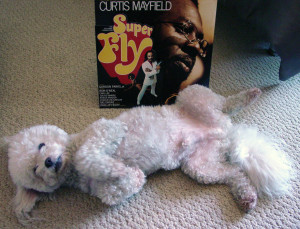
In my role as the Vice President of Licensing at Warner Music Group I oversaw the licensing of “samples.” A sample is when a newer song uses a portion of an existing recording. A prominent example is Puff Daddy’s sample of The Police’s “Every Breath You Take” in his “I’ll Be Missing You.”

One of the most popular catalogues for sample licensing is that of Curtis Mayfield. Elements of his records have been used by many well-known and respected rap acts, including Kanye West and Beastie Boys. I’d run the requests by Curtis’ son Kirk, who was always a pleasure to work with.

Many complain of hip hop’s dependence on samples, and while often times samples are used in a lazy and uninspired way, there are many examples where the samples complement the new song perfectly. It can also be argued that samples keep the music of great acts of the past alive and introduce this music to younger generations. Where else might a teenager hear Curtis Mayfield or James Brown other than via a new Kanye jam?

Today, the third day of Black Music Month, we celebrate the birthday of the late, great Curtis Mayfield with some of the classics he had a hand in – as a solo artist, as a member of The Impressions, as a writer/producer, or via a sample. Click here for the playlist.

LGBT Pride And Black Music Month

June is LGBT Pride Month. June is Black Music Month. June is Audiobook Month. June is busting out all over.

For eleven months out of the year I stay in the closet and listen to Mantovani while reading actual books, but in June I am Marvin with a capital Gay.

Tunes du Jour will celebrate LGBT Pride and Black Music all month long (you’re on your own for Audiobooks). Here is a sampler to kick off the celebrations.

<iframe src=”https://embed.spotify.com/?uri=spotify:user:tunesdujour:playlist:7k4gfohaIt1IeiCz0SswPC” width=”300″ height=”380″ frameborder=”0″ allowtransparency=”true”></iframe>


Stevie

In Which I Try To Look Like Stevie Nicks

Back in the good old days, Rhino Entertainment celebrated Halloween by ending the work day at 3 o’clock, at which time we would go to a karaoke bar for costume and singing contests. I aced both the year I went as Britney Spears. I think the snake I pulled out during “I’m a Slave 4 U” clinched it for me.

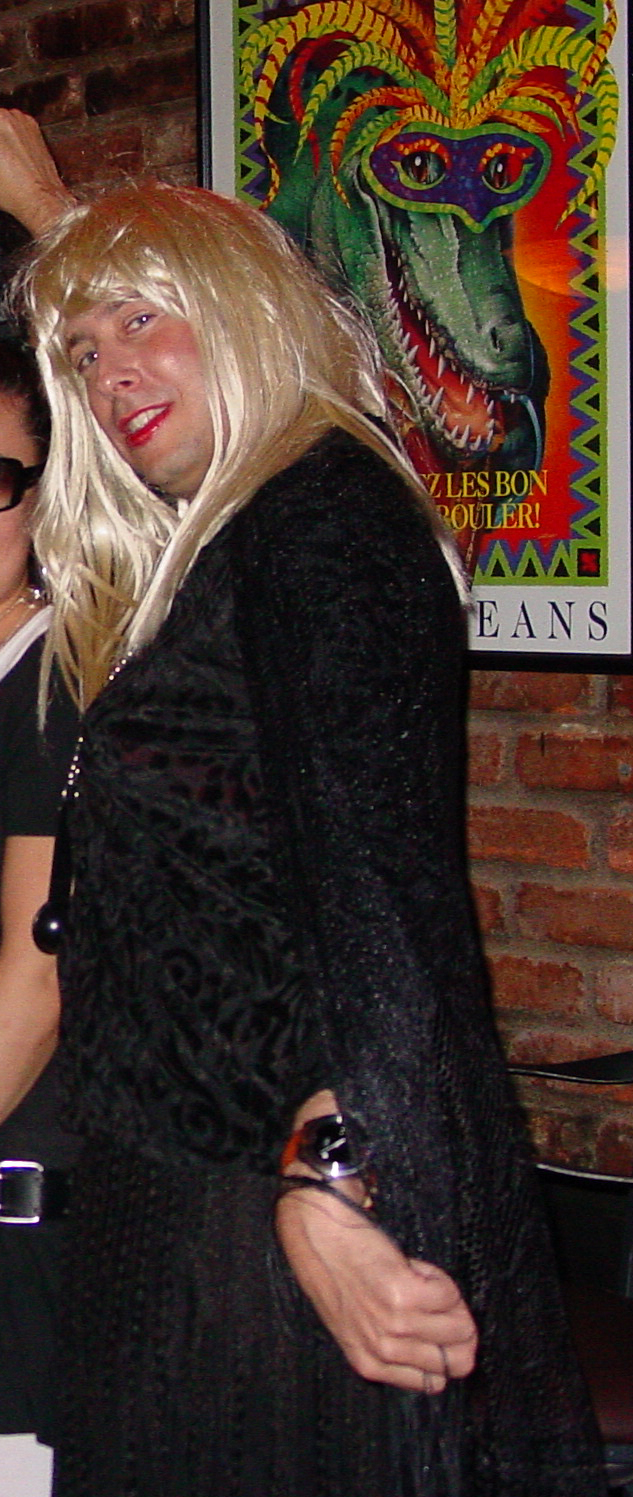
I reused the wig I bought for my Britney costume the following Halloween when I dressed up as Stevie Nicks. I found an inexpensive black lace skirt at the thrift shop near my home. I wore a large measuring spoon around my neck and applied some lipstick and called it a costume.

Not being a professional crossdresser (these were my only two times in drag; I can’t explain the other photos of my doing karaoke with wigs on), I paid no attention to things like makeup. I didn’t look in the mirror until hours after I got dressed. It was disappointing to see I looked nothing like Stevie Nicks. Nobody could figure out who I was supposed to be or if in fact I was in costume until we got to the karaoke portion of our day, when I killed “Gypsy” and “Stand Back.”

Nancy is upset because she looks like Stevie Nicks…

StevieI’m upset because I don’t.

Today the inspiring Stevie Nicks turns 66. Here is some of her best.

Dylan shelfie 002

In Which Bob Dylan Helps Me With A Wedding Gift

Dylan shelfie 002
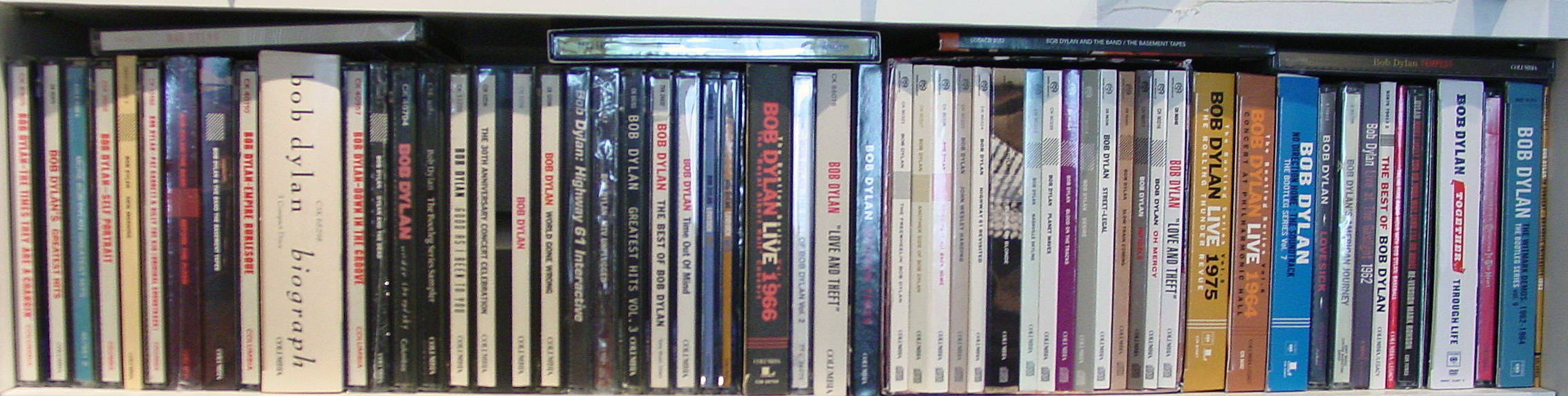
In 1997 my sister and her boyfriend got engaged. For their wedding song, I suggested a cut from the then-new Bob Dylan album Time out of Mind, “Make You Feel My Love.” My sister and her fiancé were big Dylan fans but they did not yet have that album. I was working at Sony Music at the time, so I picked up a copy at work and gave it to them. They fell in love with the song and went with my suggestion.

Back then I worked with Dylan’s manager on a regular basis. I told him the above story and, trying to come up with a great wedding gift, asked if Bob could sign something that I can frame and present to them. He said I should send him something for Bob to sign, and the next time Bob was in the office he’ll ask him. No promises, no guarantees.

I bought the sheet music for the song and mailed it to Bob’s manager. I waited. And waited. And waited.

My sister and her fiancé got married. I learned that proper etiquette allows for a wedding gift to be bestowed upon the newlyweds for up to a year following the wedding day. So I waited. And waited. And waited.

While in the car with my sister one day she asked me “Where’s our wedding gift?” I told it had not yet arrived. She said “You tell whoever you ordered it from you’ll never do business with them again.” Sure. Will do. Then she asked, “Can you get us tickets to the Bob Dylan concert next month?” I’ll try.

I changed jobs, leaving Sony to head up the licensing department at Zomba Recording Corporation. My friend Laura remarked “You’re going from Bob Dylan to Britney Spears?” That was a great move on my part (not because of any problems with Dylan), but that’s the subject for a different blog entry. I called Dylan’s manager to let him know of my new role and that I was still hopeful Bob would sign the sheet music.

A few weeks later, I got a call. “Glenn, what is your new work address? I have something for you.”

The next day, I received a FedEx envelope. I opened it up and removed the sheet music that was inside. Across the first two pages of the song was written “To Debbie and Brett – Best wishes on your wedding! – Bob Dylan.” Holy fuck!

I brought it to a frame shop, hoping with every fiber in my being that nobody there would steal it or ruin it. They did a great job making a custom frame for the music.

I called my sister to tell her I have her gift and to schedule when I could take a bus out to Bronxville and give it to her. She said “I figured out what it is! BOB DYLAN’S COMING TO DINNER!!!” Yeah, Bob Dylan will wait with me at the Port Authority to board a bus to Bronxville. Won’t she be disappointed that all I got was sheet music for her wedding song personally-autographed by the song’s composer, a legendary singer-songwriter of whom she and her husband are big fans.

She may have been disappointed when Bob didn’t get off of the bus with me, but she loved the gift. I don’t know if I’ll ever top that one.

Today Bob Dylan turns 73. Encapsulating an extensive career with so many high points into a brief playlist is a challenge. I decided to stick with twenty songs, limiting myself to only one song per album selected and not sticking with the most obvious choices. He’s a great artist and a cool gifting aide.

Ringo + The Smiths 003

The #22 Album Of All-Time

Ringo + The Smiths 003
If memory serves, some time in late 1984 Glenn O’Brien, in his music column in Interview magazine, mentioned a band that was all the rage among music critics in England. “Thus far the only people in the United States who have heard of The Smiths are some pretentious yuppies at Brandies University,” he wrote. I don’t know if I’d call us yuppies – we were college students – but my friends and I had discovered The Smiths.

Kathy discovered them when she studied in London for a semester. While there she made me a mix tape that included The Smiths’ “This Charming Man.” Its catchy melody and distinctive vocals hit me immediately.

Around the time O’Brien wrote the above-referenced item The Smiths released “How Soon Is Now?” The lyrics included “’There’s a club, would you like to go? You could meet somebody who really loves you / So you go and you stand on your own and you leave on your own and you go home and you cry and you want to die.” It’s like Morrissey, the band’s lead singer/lyricist, was reading my diary! The record went to #1 in Glenn’s Ten, though failed to chart nationally.

Morrissey’s over-the-top lyrics (and I mean that description in the most flattering way) coupled with Johnny Marr’s jangly guitar riffs separated The Smiths from other bands of that era or any other era. Songs such as “Heaven Knows I’m Miserable Now” and “Girlfriend in a Coma” were not the minor-key dirges their titles suggest. They were uptempo, in major keys, and melodic.

The group’s artistic pinnacle was their 1986 album The Queen Is Dead, #22 on my Top Albums of All-Time list. The lyrics are Morrissey at his most Morrissey-esque. “If a double-decker bus crashes into us – to die by your side is such a heavenly way to die” and “Sweetness, I was only joking when I said I’d like to smash every tooth in your head.” Marr juxtaposes these words with music that invites the listener to sing along.

Morrissey, who turns 55 today, releases his new album, World Peace Is None of Your Business, this July. Here are a few of my favorite moments from his career. (The Spotify embed tool still is not working.)

doggies + John Waters 003

Serial Mom And Cher

doggies + John Waters 003

Several years ago I had the pleasure of speaking with movie director/screenwriter John Waters. He was putting together a CD compilation entitled A Date With John Waters and was looking to license a couple of songs from Warner Music, where I was Vice-President of Licensing. Our discussion of the deal points for the licenses evolved into a general discussion about licensing. I found it interesting that John Waters, a famous filmmaker who used a lot of music (and used it very effectively) in the dozen features he directed, had no idea how the licensing fees were determined. I’m not putting him down for not knowing; why would he? His role was on the creative side, not the business side.

John told me that the most expensive license fee he ever had to pay was for the use of the song “Tomorrow” from Annie in his film Serial Mom. He thought the licensor charged him as much as they did because they were secretly hoping he would say it’s too expensive and not use their song, thereby avoiding associating an innocent children’s song with one of his subversive films. I remember so clearly the scene in which the song is used. Mrs. Jensen sits in her easy chair to enjoy the videotape of the movie Annie. As she watches and sings along with the famous show-stopping number, Beverly Sutphin (Kathleen Turner), the titular serial killer, breaks into Jensen’s house and beats her to death with a leg of lamb. It’s the perfect song to be played during this murder scene, making the scene that much more memorable. Whoever negotiated that deal on behalf of the copyright holder knew the value that song brought to the scene/film and charged accordingly. It was worth the money.

Which brings us to Cher.

I’m not saying listening to Cher’s records is akin to being bludgeoned to death by a leg of lamb, her 80s output notwithstanding. The part of me that is tickled by the ridiculousness of a woman bludgeoned by meat while singing along to “Tomorrow” is the same part of me that enjoys Cher’s late 60s/early 70s music. “Bang Bang (My Baby Shot Me Down),” with the lyric “Music played, the people sang / Just for me the church bells rang” and the bizarre bridge, during which Cher yells “Hey” like she’s shooing her dog off the newspaper she is trying to read. “Gypsies, Tramps & Thieves,” in which Cher, who is part of a traveling show in which her mother dances for money thrown at her and her father sells something called Dr. Good, gets knocked up at 16 by a 21-year-old. She sings “Papa would have shot him if he knew what he’d done.” The baby she had should have been a clue. “The Way of Love,” which so eloquently describes an unrequited love with this Buttheaded lyric: “When you meet a boy that you like a lot / And you fall in love but he loves you not.” “Half-Breed,” in which Cher blames her mixed heritage on her being a trollop. “My life since then has been from man to man / But I can’t run away from what I am,” she sings. And the crème de la crème, “Dark Lady,” in which her man and the fortune teller with whom he was having an affair are killed by Cher, alas not with a leg of lamb.

Today Cher, whose vocals can be heard on an upcoming Wu-Tang Clan album, turns 68. Here are some of my favorites from her catalogue. (The Spotify playlist embed tool isn’t working; hopefully that link does!)

doggies + Janet 004

It’s Janet Jackson’s Birthday And I Need To Dance!

Do you ever feel like you merely exist as opposed to being alive? Does it feel like too much of your time is given to answering to what others want from you, be them your boss or your family, and too little time is given to doing what you want to do the way you want to do it? Do you know that changes are needed but don’t know where to begin?

You need to ask yourself WWJJD? What would Janet Jackson do?

Picture this – Los Angeles. 1982. You’re a 16-year-old girl from a famous family. You release your debut album, cleverly entitled Janet Jackson, with production overseen by your manager/father, Joseph Jackson. It peaks at #63 and goes on to sell fewer than 150,000 units over the next quarter-century. You follow up that album with 1984’s Dream Street. It peaks at #147 and sells fewer than half as many copies as the first album. You didn’t want to do either album but you did them for your father.

You come to a realization – you want to be the one who’s in control of your destiny. You fire your father as your manager. You have your marriage annulled. You work with new producers, Jimmy Jam and Terry Lewis, who collaborate with you on new songs about your newfound independence, from your father, from your ex-husband, and from nasty guys who objectify you and call you Baby when your first name ain’t Baby; it’s Janet.

Your father demands you record your third album in Los Angeles. You record it in Minneapolis. Your father tells a reporter “If Janet listens to me, she’ll be as big as Michael,” referring to Janet’s brother Michael Jackson, not Michael Schoeffling, who portrayed Jake Ryans in the movie Sixteen Candles, and who, with all due respect, isn’t that big. You ignore him. Your father listens to a pre-release copy of the new album and claims it will never sell. You demand it be released.

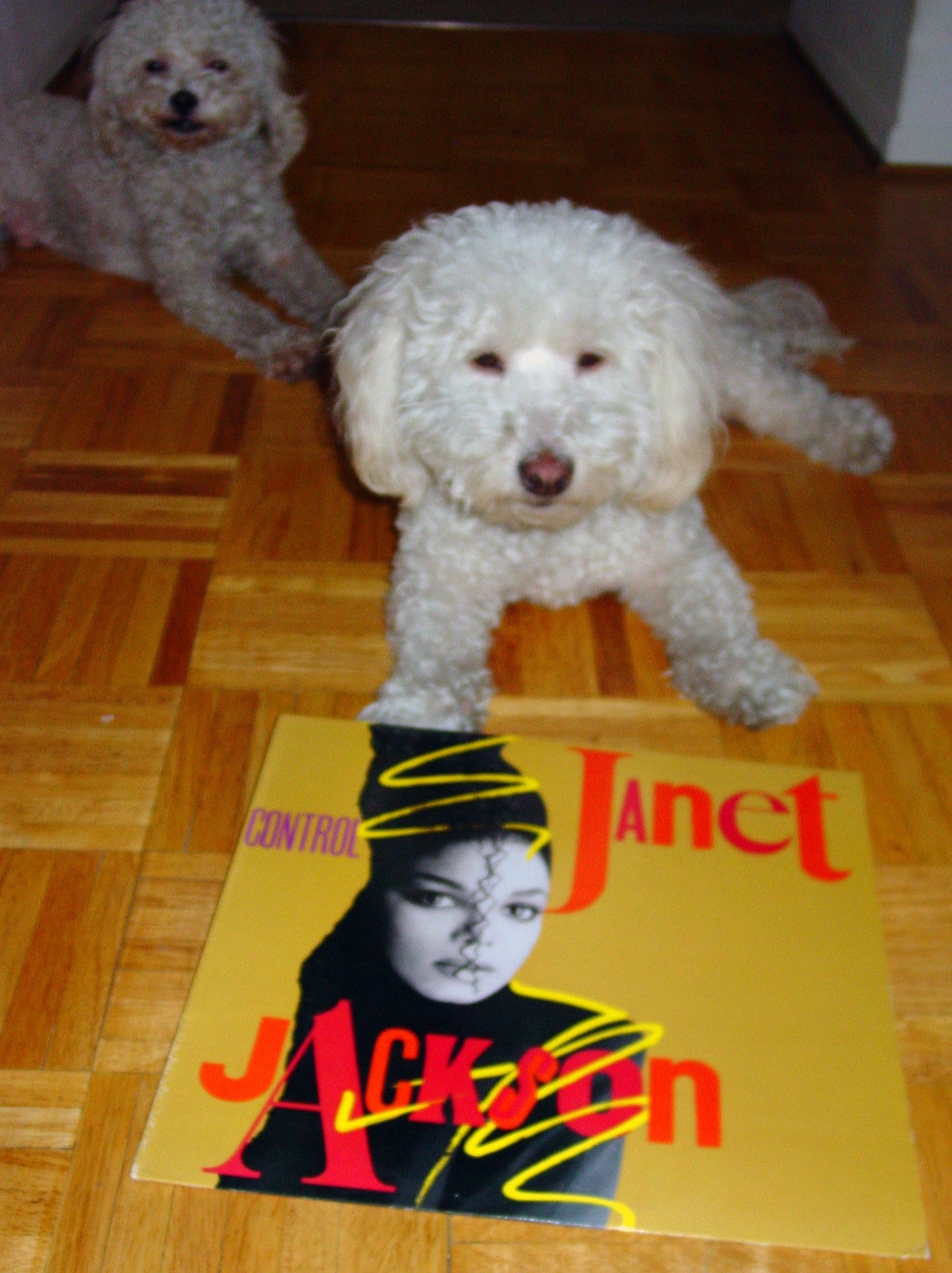
That album, 1986’s Control, sells over fourteen million copies. It goes to #1 and is nominated for a Grammy Award for Album of the Year.

doggies + Janet 004
Be more like Janet. Take control of your life. Today is Janet Jackson’s 48th birthday. Buy yourself some cake. You deserve it. And enjoy today’s dance playlist, inspired by Miss Jackson.

Talking Heads 002

A Talking Heads Playlist

One of the best things about my job as Vice President of Licensing at Warner Music was working with one of the greatest catalogues in the business. I negotiated deals for many of my favorite artists under the Warner umbrella, including R.E.M., Aretha Franklin, Otis Redding, Joni Mitchell, Madonna, Ray Charles, the Ramones and Fleetwood Mac, to name just a few.

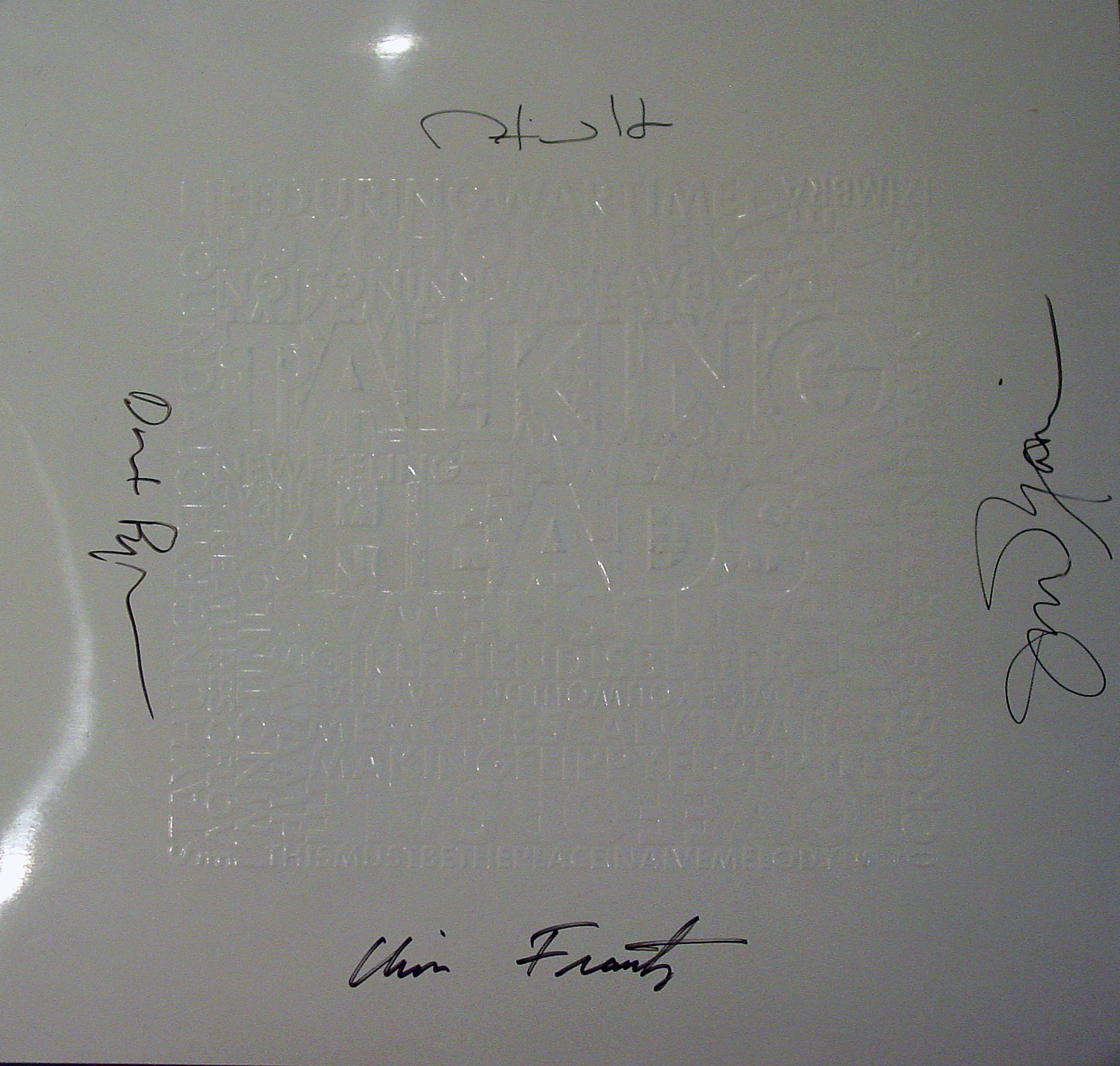
Another of my favorite acts whose music I got to license was Talking Heads. Just last year I did a deal for the band’s live version of “Slippery People” to be included on the soundtrack to the Academy Award-winning documentary 20 Feet From Stardom. Marrying great music to great projects makes for the most rewarding parts of my career.

Talking Heads 002
Today Talking Heads lead singer David Byrne celebrates his 62nd birthday. Here are twenty of my favorite tracks from this band.

Winston + Stevie W 002

The #3 Album Of All-Time

In 1973, 23-year-old Stevie Wonder, who had been having hit records for a decade, released Innervisions. He wrote the lyrics, all of which carry meaning and are substantive. He composed the music, with catchy melodies making the messages that much more accessible. He played almost all of the instruments on each track. He arranged and produced the album. He did all of those things superbly. That is why I rank Innervisions as my #3 album of all-time.

Winston + Stevie W 002
Musically, one gets a blend of funk, ballads, soul, and jazz fusion.

Vocally, one hears a singer at the top of his game, taking chances in how he uses his voice and ad-libbing in ways that impress and delight the listener.

Lyrically, the album covers a wide range of subjects in its nine songs. Drug abuse, social anger, politics, love and false religion are covered in ways that don’t come across as overly-preachy or haranguing.

More than forty years after its release, the messages of Innervisions are still relevant. “Living for the City” tells the story of a young man who moves from his home in Mississippi, where his family struggles to make ends meet, to New York City, where his hopes of a prosperous new life are immediately dashed when he is taken advantage of and unjustly convicted on a drug charge, sentenced to ten years in jail. This story could be set in any year since the album’s release and still ring true. The racism and the struggle to escape poverty, and the anger and hurt that accompany these things, remain prevalent.

Three days after the album’s August 3, 1973 release, Wonder was involved in an accident. On his way to a benefit concert, the car in which he was a passenger collided with a truck carrying logs. A log went through the car’s windshield and smashed Wonder in the head, ultimately putting him in a coma for four days.

Reflecting on his coma, Wonder said “For a few days I was definitely in a much better spiritual place that made me aware of a lot of things that concern my life and my future and what I have to do to reach another higher ground. This is like my second chance for life, to do something or to do more and to face the fact that I am alive.” How prescient that Innervisions included the song “Higher Ground,” with its message of transcendence and a second chance.

You may know “Don’t You Worry ‘Bout a Thing” from the movie Silver Linings Playbook. The song is about maintaining a positive outlook, with Wonder portraying a fast-talking guy hitting on a girl in the song’s opening, telling her “Todo está bien chévere.” Everything’s going to be alright.

The album closes with “He’s Misstra Know-It-All,” about “a man with a plan” who has an answer for all criticisms lobbed at him. Many believe the song was about then President Richard Nixon. Nixon was obviously the subject of the first single from Wonder’s follow-up album, Fulfillingness’ First Finale’s not-subtly-titled “You Haven’t Done Nothin’.” That’s a terrific album as well, but we’ll save that discussion for another day.

Today is Stevie Wonder’s 64th birthday. Let his masterful Innervisions inspire you to create your own great work of art. Here are twenty of my favorite Stevie Wonder tracks.