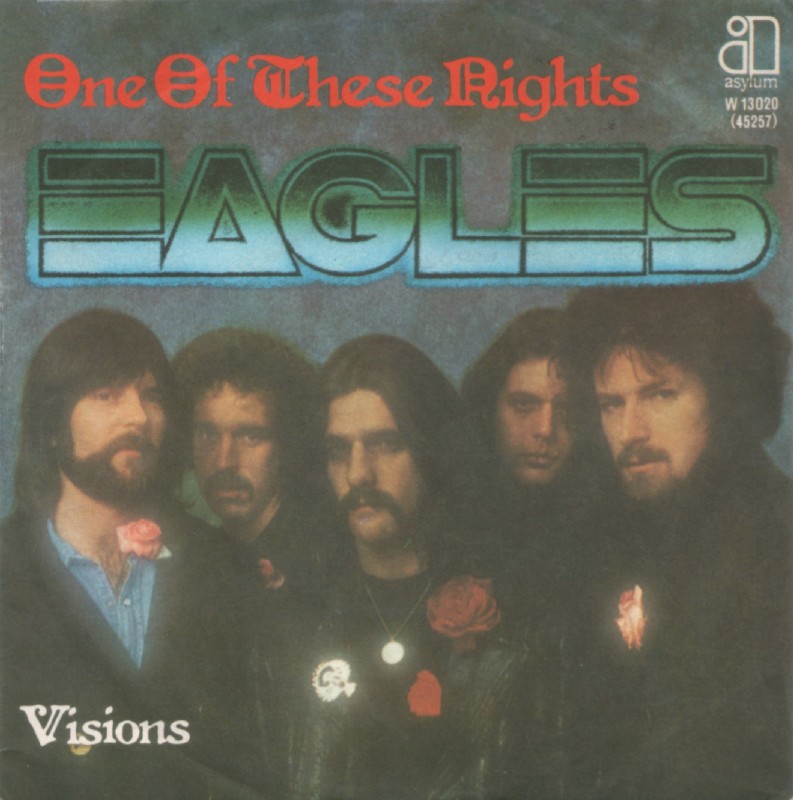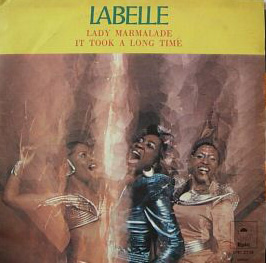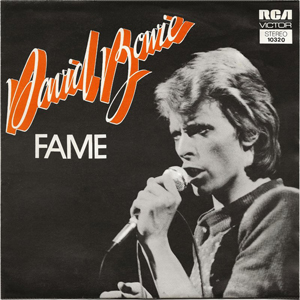
Tunes Du Jour Presents 1975

Fifty years ago, radio dials and turntables were spinning an uncommonly diverse mix of sounds. The charts of 1975 didn’t follow a single storyline—instead, they captured a moment when multiple musical currents were flowing with equal strength. Disco was gaining momentum but hadn’t yet dominated everything in its path. Rock was simultaneously reaching for arena-sized ambition and stripping down to raw emotion. Soul and funk were evolving into more sophisticated forms, while pop continued doing what it does best: making people hum along whether they meant to or not.

The year belonged, in many ways, to artists who understood that hooks and ambition weren’t mutually exclusive. Bruce Springsteen’s “Born to Run” arrived like a desperate prayer wrapped in Phil Spector production, while Queen’s “Killer Queen” proved that flamboyance and precision could coexist in three minutes of glam-rock perfection. Led Zeppelin stretched “Kashmir” across nearly nine minutes of Eastern-influenced grandeur, and Pink Floyd’s “Wish You Were Here” turned melancholy into an art form. Even Bob Dylan, never one to stand still, was crafting the narrative complexity of “Tangled Up in Blue.” These weren’t just songs—they were statements about how far popular music could reach while still connecting with listeners.

Meanwhile, dance floors were becoming cultural epicenters. KC and the Sunshine Band’s “That’s the Way (I Like It)” and Gloria Gaynor’s “Never Can Say Goodbye” helped establish disco as something more than a passing trend. The Bee Gees’ “Jive Talkin'” showed that the brothers Gibb could pivot from balladeers to funk-influenced hitmakers. Labelle’s “Lady Marmalade” brought New Orleans sass and unapologetic sexuality to the mainstream, while Earth, Wind & Fire’s “Shining Star” blended funk, soul, and jazz into something that felt both cosmic and grounded. The groove wasn’t just a rhythm—it was becoming a philosophy.

What’s striking about 1975 is how much sonic territory gets covered without any single approach dominating. 10cc’s “I’m Not in Love” used studio technology to create something hauntingly atmospheric, while Kraftwerk’s “Autobahn” was quietly suggesting what electronic music might become. Barry White continued orchestrating romantic opulence, Minnie Riperton’s five-octave range soared through “Lovin’ You,” and Linda Ronstadt’s “You’re No Good” proved that straightforward rock could still pack a punch. David Bowie’s “Fame,” co-written with John Lennon, showed him already moving past glam into funk-inflected territory. Glen Campbell brought “Rhinestone Cowboy” to country-pop crossover success, while Average White Band demonstrated that Scottish musicians could master American funk with “Pick Up the Pieces.”

Listening to these songs now, what emerges isn’t just nostalgia but a reminder of a particular kind of creative confidence. These artists weren’t afraid to be big or vulnerable, funky or introspective, polished or raw—sometimes all within the same track. The year didn’t belong to any single movement or sound, and that might be exactly what made it memorable. It was a time when the radio could take you from the Staple Singers’ gospel-infused soul to Sweet’s glitter-rock crunch to ABBA’s pristine pop architecture without anyone thinking twice about the journey. That kind of range feels worth celebrating.

Follow Tunes Du Jour on Facebook

Follow me on Bluesky

Follow me on Instagram
Your (Almost) Daily Playlist: 12-10-23

“Nightshift” was Commodores’ biggest hit following the departure of usual lead singer Lionel Richie. The group’s Walter Orange, a co-writer of the song, sings lead on verse one. Orange also sang lead on Commodores’ hits “Brick House” and “Too Hot Ta Trot.” So there. 

Commodores’ Walter Orange was born on this date (or maybe yesterday’s date) in 1946. Two of the group’s songs on which he sang lead are included on today’s playlist.

Follow Tunes du Jour on Facebook

Follow Tunes du Jour on Twitter

Follow me on Instagram

Your (Almost) Daily Playlist: 6-16-23

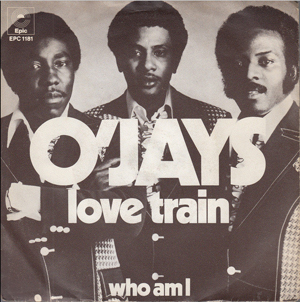
Back in 2016, when Donald Trump was a candidate for president of the United States of America without impeachments and indictments on his resume, the classic song “Love Train” was played at the Republican National Convention. The O’Jays were not supportive of this use of their hit. Group member Walter Williams said “Our music, and most especially ‘Love Train,’ is about bringing people together, not building walls. I don’t appreciate being associated with Mr. Trump and his usage of our music without permission.” Added group member Eddie Levert, “I don’t agree, whatsoever, with Trump’s politics to the point where I think he just may be the anti-Christ.”

The O’Jays’ Eddie Levert turns 81 today. A few of his group’s hits are included on today’s playlist.

Follow Tunes du Jour on Facebook

Follow Tunes du Jour on Twitter

Follow me on Instagram

Your (Almost) Daily Playlist: 10-8-22

Today’s playlist celebrates the October 8 birthdays of Ramones’ Johnny Ramone and C.J. Ramone, Kool & the Gang’s Robert “Kool” Bell, The Stylistics’ Airrion Love, Average White Band’s Hamish Stuart, BLACKstreet’s Teddy Riley, C.L. Smooth, Bruno Mars, Pigbag’s James Johnstone, and Saturday Night Live‘s Chevy Chase; and the October 9 birthdays of The Beatles’ John Lennon, The Who’s John Entwistle, PJ Harvey, Jackson Browne, Labelle’s Nona Hendryx, Men Without Hats’s Ivan Doroschuk, Heatwave’s Rod Temperton, Ini Kamoze, and Phantom Planet’s Alex Greenwald.

Follow Tunes du Jour on Facebook

Follow Tunes du Jour on Twitter

Follow me on Instagram

Throwback Thursday: 1975

Today’s Throwback Thursday playlist revisits the music of 1975. Each of the 30 songs below made the pop top 40. I miss the days before radio became so segmented and one could hear Eagles rubbing up against Minnie Riperton next to Bob Dylan followed by Labelle with Bruce Springsteen’s first hit playing with The Captain & Tennille’s first hit on deck. It satisfies the musical omnivore that I am.

Disco 1975

If you see Patti LaBelle today, wish her a happy birthday.

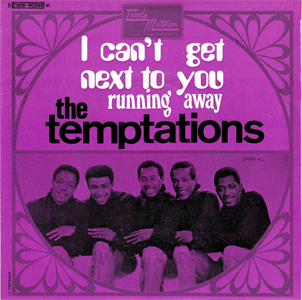
Nineteen seventy-five was a pivotal year for disco music. The genre was still very young; the name “disco” as a reference to the music genre was coined just two years earlier by journalist Vince Aletti. Disco music crossed over into the mainstream with more frequency, yet was not as ubiquitous a presence on the pop charts as it would become in the ensuing years of that decade. Artists who had their first top 40 singles in 1975 include Gloria Gaynor and KC and the Sunshine Band. In December of 1975, Donna Summer made her first appearance on the Hot 100 when “Love to Love You Baby” made its debut, having already been a smash in the clubs. The Bee Gees updated their sound in 1975 with “Jive Talkin’,” which became their first top ten single since 1971. Ben E. King, who had hits in the early 1960s as a solo artist and as the lead singer of The Drifters scored his first top ten pop hit since 1961’s “Stand By Me” with the funky “Supernatural Thing.” As the lead singer of the trio named after her, Patti LaBelle scored her first top ten hit in over a decade with “Lady Marmalade.” Veteran acts such as Frankie Valli, The Temptations, The Miracles, The Isley Brothers and Esther Phillips filled the dance floors. And it was in 1975 that the world was doing the hustle.

Today’s playlist is made up of forty disco gems from 1975.

Click here to like Tunes du Jour on Facebook!

Follow Tunes du Jour on Twitter.

Follow me on Instagram.