Tunes Du Jour Presents The John Lennon Songbook

It’s interesting to start a playlist of John Lennon songs with David Bowie’s “Fame.” It feels like an outlier at first, until you remember Lennon co-wrote the track, contributed guitar, and sang backup vocals. It’s one of just a handful of songs on this list that isn’t a straightforward cover, and its placement at the top serves as a great reminder: one of the best ways to understand a songwriter’s impact is to see how their work thrives in the hands of others. Listening to a collection like this isn’t just about nostalgia; it’s an active exploration of how durable and adaptable Lennon’s compositions truly are, revealing the deep-seated melodic and lyrical strengths that invite constant reinterpretation.

The sheer variety of artists drawn to his work speaks volumes about its fundamental structure. A Lennon song can be a sturdy vessel for almost any style. In its original form, “Help!” was a desperate plea disguised as an upbeat folk-rock hit. But when Tina Turner gets ahold of it, she strips away the disguise, transforming it into a full-throated, soulful cry for salvation. Similarly, Johnny Cash takes “In My Life,” a song of youthful reflection, and imbues it with the profound weight of a long life lived, making each line land with a different, more somber gravity. From the raw R&B groove Otis Redding finds in “Day Tripper” to the cool, atmospheric poise Roxy Music brings to “Jealous Guy,” these songs prove to be exceptionally resilient, their core emotions accessible to any genre.

Beyond musical versatility, the playlist highlights the different facets of Lennon’s lyrical persona. There’s the acerbic political commentator, whose pointed dissatisfaction is channeled perfectly by the punk sneer of Generation X on “Gimme Some Truth” and the world-weary defiance of Marianne Faithfull on “Working Class Hero.” Then there is the deeply vulnerable Lennon, the man wrangling with insecurity and fame. You can hear this in the anxious, propulsive energy The Feelies bring to “Everybody’s Got Something To Hide (Except Me And My Monkey)” or the stark, pleading quality Maxïmo Park finds in the solo track “Isolation.” He could be pointedly political or achingly personal, and both modes have continued to resonate with artists who have their own truths to tell.

Of course, no look at Lennon’s work would be complete without touching on his more surreal and experimental side. These are often the songs that seem most tied to a specific time, yet they possess a dreamlike logic that continues to inspire. Elton John, a friend and collaborator, treats “Lucy in the Sky with Diamonds” not as a museum piece but as a glam-rock epic. R.E.M. leans into the hypnotic, floating quality of “#9 Dream,” while Fiona Apple’s take on “Across the Universe” honors its ethereal nature while grounding it with her distinctive emotional intensity. These artists don’t just copy the psychedelia; they find new ways to access the spirit of imaginative freedom that fueled the original recordings.

Ultimately, listening through these interpretations feels less like a tribute and more like a conversation across decades. We hear Billy J. Kramer’s simple pop charm on “Bad to Me,” a song Lennon wrote for him in 1963, and then Glen Campbell’s posthumous, heart-rending version of “Grow Old With Me,” one of Lennon’s last compositions. The journey between those two points is remarkable. This collection of songs, re-shaped by everyone from The Breeders to Bettye LaVette, demonstrates that the power of Lennon’s work isn’t just in his own iconic recordings. It’s in the bones of the songs themselves—the unforgettable melodies, the honest lyrics, and the restless spirit that others can’t help but be drawn to, again and again.

Follow Tunes Du Jour on Facebook

Follow me on Bluesky

Follow me on Instagram
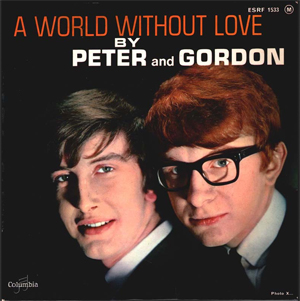
Tunes Du Jour Presents The Paul McCartney Songbook

Paul McCartney’s genius as a songwriter extends far beyond his work with The Beatles, revealing itself most clearly in how other artists have transformed his compositions across genres and generations. This remarkable collection of covers demonstrates McCartney’s rare ability to write songs that function as both complete artistic statements and flexible frameworks for reinterpretation. When Joe Cocker turned “With A Little Help From My Friends” into a soulful anthem, or when Guns N’ Roses gave “Live and Let Die” a hard rock edge, they weren’t just covering songs—they were unlocking different emotional possibilities that McCartney had embedded in the original compositions. The breadth of artists drawn to his work, from Aretha Franklin’s gospel-tinged “Eleanor Rigby” to Beyoncé’s contemporary reimagining of “Blackbird,” speaks to the universal resonance of his melodic and lyrical craftsmanship.

What makes McCartney particularly fascinating as a songwriter is his willingness to write specifically for other artists’ strengths while maintaining his distinctive voice. Songs like “A World Without Love” for Peter & Gordon and “Come And Get It” for Badfinger weren’t Beatles cast-offs but carefully crafted compositions that suited those acts perfectly. His collaboration with Elvis Costello on “Veronica” and his work with Michael Jackson on “Girlfriend” show an artist constantly evolving and adapting his approach to different musical contexts. Even when writing for others, McCartney’s melodic sensibility—that ability to find the hook that sticks in your mind—remains unmistakably present, whether it’s the yearning quality of “Yesterday” that En Vogue brought to R&B or the infectious rhythm of “Ob-La-Di, Ob-La-Da” that Celia Cruz infused with Latin flavor.

The lasting power of McCartney’s songwriting becomes evident when artists as diverse as Ray Charles, Stevie Wonder, and Andre 3000 find something meaningful in his catalog. These aren’t novelty covers or tribute performances—they’re genuine artistic connections where musicians recognize something in McCartney’s work that speaks to their own creative vision. From Little Richard’s rock and roll interpretation of “I Saw Her Standing There” to k.d. lang’s haunting take on “Golden Slumbers,” each cover reveals new layers in songs that seemed perfectly complete in their original form. This ongoing dialogue between McCartney’s compositions and successive generations of artists suggests something profound about his approach to songwriting: he creates musical spaces that invite inhabitation rather than mere imitation, proving that truly great songs don’t just endure—they continue to grow.

Follow Tunes Du Jour on Facebook

Follow me on Bluesky

Follow me on Instagram

Your (Almost) Daily Playlist: 10-21-24

I have to give Manfred Mann credit. If while walking my dogs I encountered someone snapping their fingers, shuffling their feet, and singing “Do wah diddy diddy dum diddy do,” I wouldn’t see wedding bells in our future.

Manfred Mann was born Manfred Lubowitz on this date in 1940. A few of his tracks are included on today’s playlist.

Follow Tunes du Jour on Facebook

Follow Tunes du Jour on Twitter

Follow me on Instagram

Your (Almost) Daily Playlist: 5-11-24

Eric Burdon rose to fame as the lead vocalist of the rock band The Animals, which was part of the British Invasion that took the music world by storm in the 1960s. With his powerful and distinctive vocals, Burdon helped the band achieve international success with hits like “House of the Rising Sun” and “Don’t Let Me Be Misunderstood.”

In the late 1960s, with a new set of Animals, Burdon embraced the psychedelic sound that was popular during that era. This incarnation of the band showcased Burdon’s ability to evolve with the changing times, as they incorporated elements of funk, soul, and psychedelic rock into their music.

In 1970, Burdon introduced the world to the band War. Their collaboration resulted in the hit song “Spill the Wine,” which fused elements of rock, funk, and Latin music. I’m impressed by Burdon’s versatility and willingness to explore new musical territories.

Eric Burdon was born on this date in 1941. A few songs from him are included on today’s playlist.

Follow Tunes Du Jour on Facebook

Follow Tunes Du Jour on Twitter

Follow me on Instagram

Your (Almost) Daily Playlist: 9-24-23

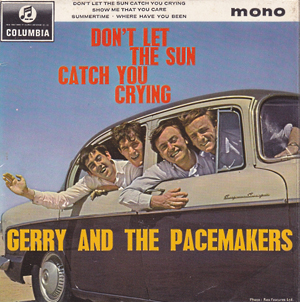
I say let the sun catch you crying. You have control over your own life. As long as you’re not impinging on someone else’s rights or happiness, do it. Cry.

The late Gerard Marsden of Gerry and The Pacemakers was born on this date in 1942. A couple of his group’s tunes are on this week’s playlist.

Follow Tunes du Jour on Facebook

Follow Tunes du Jour on Twitter

Follow me on Instagram

Producer Spotlight: Sir George Martin

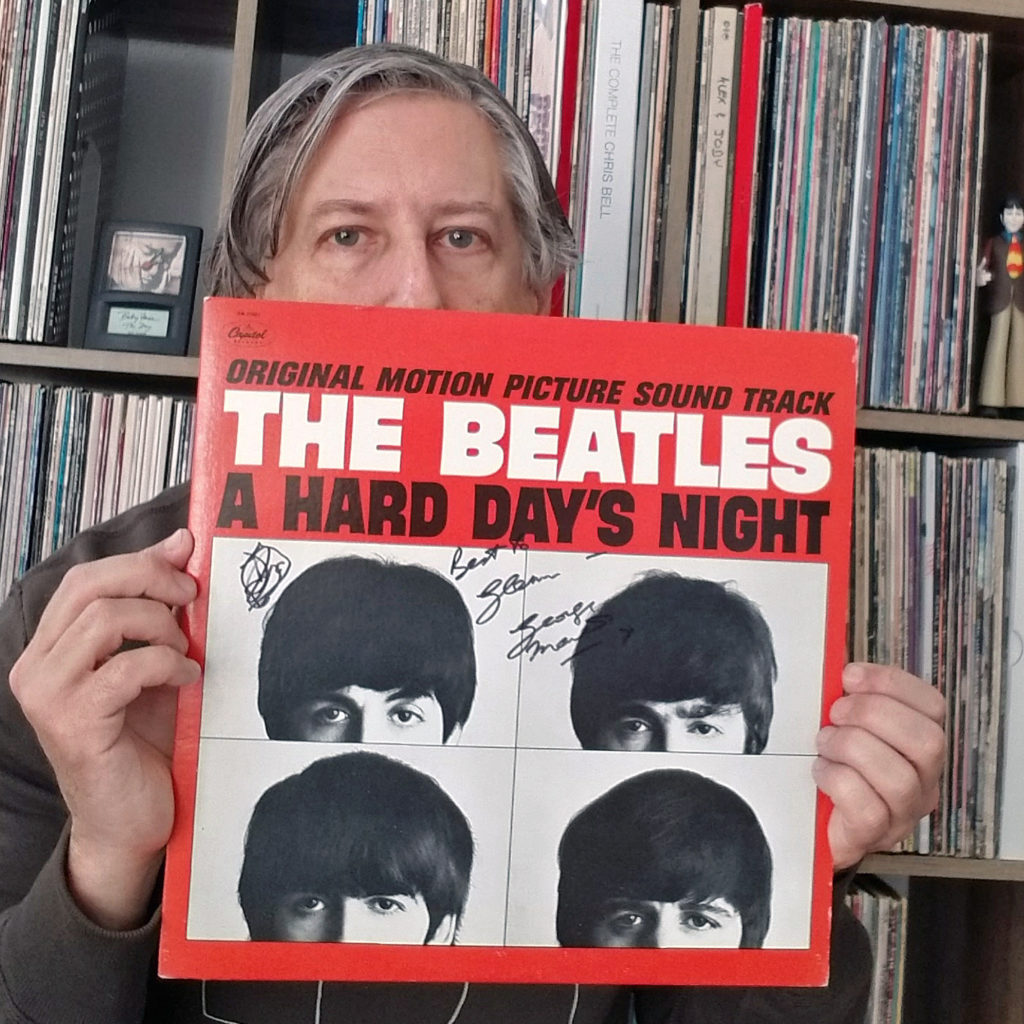
Sir George Martin autographed my copy of The Beatles’ A Hard Day’s Night album, a record he produced. He was about to set to work on a docuseries and I was asked to help with the music licensing.

A movie director takes words on a page, a script, and brings them to life, guiding actors to deliver the best performances possible and deciding on the best ways to convey the story. A music producer plays the same roles in the creation of a record, taking words on a page, a song, and brings them to life, guiding singers and musicians to deliver the best performances possible and providing input as to how the recorded song should sound.

Sir George Martin, born on January 3, 1926, is recognized as one of the most influential producers in the history of pop music. He is best known for producing all of the albums by The Beatles except for Let It Be. It was Martin who suggested the string quartet on “Yesterday.” It was Martin, with recording engineer Geoff Emerick, who combined two distinct recordings of “Strawberry Fields Forever,” played in different keys and at different tempos, into the one with which you’re familiar. Martin suggested speeding up a ballad Paul McCartney and John Lennon wrote, which resulted in the #1 hit “Please Please Me.” His production of “I Feel Fine” includes one of the earliest uses of guitar feedback. Martin conduction the string section on “Eleanor Rigby.” He brought in a 40-piece orchestra for “A Day in the Life.” On “Tomorrow Never Knows,” Martin’s use of tape loops, reversing a recording of a guitar solo in playback, and having Lennon’s vocals go through an organ’s speaker, helped Lennon achieve his desire of a recording to sound like his mind on LSD. He played piano on “In My Life,” and sped up his recording of the piano part to match the song’s tempo. He suggested the group replace original drummer Pete Best.

Sir George, who died in 2016, also produced artists other than The Beatles. Here are thirty of his finest productions.