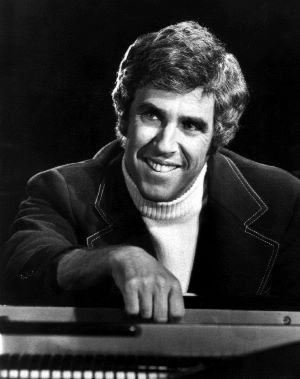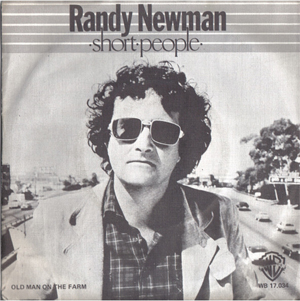
If your primary exposure to Randy Newman is the warm reassurance of “You’ve Got A Friend In Me,” you’d be forgiven for missing the bigger picture. If you only know him from the radio controversy surrounding “Short People,” you might have the wrong picture entirely. Listening to a broad selection of his work reveals something far more complex and interesting. Newman is one of America’s most distinct songwriters, a master of inhabiting characters, often to expose their deepest flaws. He doesn’t just write songs about people; he writes songs from their point of view, and he rarely picks the hero of the story to be his narrator.
His most famous method is satire, but it’s a specific kind that requires you to listen closely. The playlist gives us plenty of evidence. He isn’t actually advocating for dropping a bomb in “Political Science” or celebrating unthinking consumerism in “It’s Money That Matters.” He’s putting on a mask, adopting the voice of a jingoistic hawk or a cynical materialist to show how absurd their worldview is. The same goes for the layered, uncomfortable commentary of “Rednecks,” a song that indicts Northern hypocrisy as much as it does Southern prejudice. It’s a high-wire act that relies on the listener understanding that the singer and the songwriter are two different people, a distinction that has sometimes been lost but is central to appreciating his genius.
But to paint Newman as only a satirist is to ignore the profound empathy that runs through his catalog. This is the same writer who can craft a song as devastatingly beautiful as “Louisiana 1927,” a historical account of a flood that feels immediate and heartbreaking. He can capture a deep sense of alienation in “I Think It’s Going To Rain Today” or the quiet despair of “Guilty.” Perhaps the most powerful example of this duality is “God’s Song (That’s Why I Love Mankind),” where a gorgeous, hymn-like melody carries some of the most cynical lyrics ever put to paper. It’s this ability to pair musical beauty with lyrical discomfort that makes his work so compelling and emotionally resonant.
It’s also crucial to remember that Newman began his career as a songwriter for other artists, and his compositions have a sturdiness that allows them to be interpreted in many ways. You can hear this in the playlist. Three Dog Night took the nervous energy of “Mama Told Me (Not To Come)” and turned it into a massive, swaggering rock anthem. In the decade before, singers like Dusty Springfield and Cilla Black were delivering his early, lovelorn ballads (“I Don’t Want To Hear It Anymore,” “I’ve Been Wrong Before”) with the full force of 1960s pop production. More recently, the legendary Mavis Staples found the deep, soulful core of “Losing You,” proving the timelessness of his emotional writing.
Ultimately, exploring Randy Newman’s work is an exercise in listening with an open mind. It’s a collection of American stories told through a unique lens, from the lonely celebrity in “Lonely At The Top” to the romantic simpleton in “Love Story (You And Me).” He uses his signature piano style, a sharp wit, and an unflinching eye for human folly to create a world of songs that are by turns funny, tragic, uncomfortable, and deeply moving. He doesn’t offer easy answers, but he provides a singular and enduring commentary on the strange ways we all get by.
Follow Tunes Du Jour on Facebook
Follow me on Bluesky
Follow me on Instagram