Tunes Du Jour Presents 1958

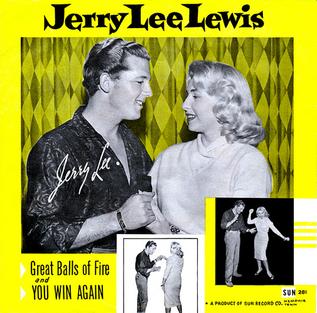
By 1958, rock and roll was no longer a brash newcomer fighting for legitimacy—it had become the dominant sound of American popular music. The charts that year captured a genre in full stride, blending raw energy with increasingly sophisticated production. Jerry Lee Lewis pounded out “Great Balls of Fire” with manic intensity while the Everly Brothers offered the dreamy harmonies of “All I Have to Do Is Dream,” proving that rock and roll could be both wild and tender. Chuck Berry’s “Sweet Little Sixteen” painted vivid pictures of teenage life, and Little Richard’s “Good Golly, Miss Molly” delivered pure, unfiltered excitement. These weren’t just songs—they were the soundtrack to a generation coming into its own.

The year also marked the rise of memorable instrumental tracks that showcased rock and roll’s expanding vocabulary. Link Wray’s “Rumble” pioneered the power chord with its menacing guitar distortion, while Duane Eddy’s “Rebel Rouser” introduced the twangy, reverb-heavy “twang” that would influence countless guitarists. The Champs’ “Tequila” proved that a single word and an infectious sax riff could dominate the airwaves. These instrumental hits demonstrated that rock and roll didn’t always need lyrics to communicate emotion or get people moving.

While rock and roll dominated, 1958 was hardly monolithic in its musical offerings. Tommy Edwards’ orchestral “It’s All In The Game” and Peggy Lee’s sultry “Fever” showed that traditional pop still had plenty of commercial power. Domenico Modugno’s “Nel blu, dipinto di blu (Volare)” became an international sensation, bringing Italian pop to American audiences. The Platters’ “Twilight Time” continued doo-wop’s evolution toward lush, romantic balladry. This variety revealed an industry still figuring out how different styles could coexist and cross-pollinate.

The playlist also captures the emergence of future stars and the refinement of group vocals. Cliff Richard’s “Move It” announced Britain’s first major rock and roll talent, foreshadowing the British Invasion that would come later. Meanwhile, doo-wop groups like The Chantels with “Maybe” and Jerry Butler & the Impressions with “For Your Precious Love” brought sophistication and emotional depth to their harmonies. Novelty hits like David Seville’s “Witch Doctor” and lighthearted fare like The Chordettes’ “Lollipop” added playful moments to the mix, reminding listeners that music could simply be fun without carrying cultural weight.

What’s striking about 1958 is how much ground the music covered while maintaining a coherent identity. Whether it was Eddie Cochran’s rebellious “Summertime Blues” or Conway Twitty’s heartbroken “It’s Only Make Believe,” these songs spoke directly to young people navigating the complexities of modern life. Rock and roll had proven it wasn’t a passing fad—it was a versatile, evolving force that could express the full range of teenage emotion, from joy to heartbreak, from rebellion to romance. The music of 1958 didn’t just entertain; it validated the experiences of an entire generation.

Follow Tunes Du Jour on Facebook

Follow me on Bluesky

Follow me on Instagram
Tunes Du Jour Presents Olivia Newton-John

When you think of Olivia Newton-John, what’s the first image that comes to mind? For millions, it’s the transformation at the end of Grease—the leather jacket, the confident stride, the electrifying duet with John Travolta. But as a quick journey through her song catalog reveals, that iconic moment is just one chapter in a much broader and more fascinating story. Her career wasn’t a single note, but a series of distinct, evolving sounds, all held together by one of the most recognizable and endearing voices in pop music.

Listening to her early work, you can hear an artist with a clear, gentle sensibility rooted in the folk and country music of the era. Songs like her cover of Bob Dylan’s “If Not For You” and the narrative-driven “Banks of the Ohio” established her as a gifted interpreter. This was soon followed by a wave of soft-rock hits that defined the sound of mid-70s radio. With the earnest plea of “If You Love Me (Let Me Know)” and the gentle reassurance of “Have You Never Been Mellow,” she carved out a niche as a vocalist of immense warmth and sincerity. This period culminated in her signature ballad, “I Honestly Love You,” a masterclass in quiet vulnerability that became her first number-one hit in the U.S.

Then, of course, came Grease. The 1978 film wasn’t just a career boost; it was a global phenomenon that showcased her versatility. She effortlessly handled the sock-hop fun of “Summer Nights” and the plaintive, heart-on-her-sleeve performance of “Hopelessly Devoted to You.” But it was the film’s finale, with “You’re the One That I Want” and “We Go Together,” that signaled a change. The energy was bigger, the attitude was bolder, and it set the stage for a musical pivot that would redefine her image for a new decade.

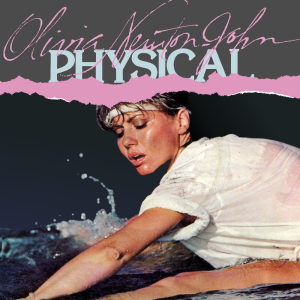
She didn’t wait long to capitalize on that new energy. Her very next album, 1978’s Totally Hot, continued the transformation, trading in the gentle ballads for a tougher, more pop-rock sensibility. A track like “A Little More Love,” with its driving guitar riff and assertive vocal, made it clear that the leather-clad Sandy was here to stay. This embrace of a more contemporary pop sound continued into projects like the soundtrack for Xanadu, which gave us the dreamy, roller-rink-ready perfection of “Magic.” Her most definitive transformation, however, arrived with the 1981 album Physical. The title track, with its pulsing beat and cheeky lyrics, was a world away from her past, and this era gave us energetic, synth-driven tracks like “Make a Move On Me” and “Heart Attack.”

What’s remarkable, looking back at this collection of songs, is not just the stylistic shifts but how natural each one felt. The common thread through the country-folk beginnings, the blockbuster duets, and the slick pop productions is the voice itself—pure, emotive, and instantly recognizable. Whether she was collaborating with Andy Gibb on “I Can’t Help It” or delivering the confident, rhythmic pulse of “A Little More Love,” Olivia Newton-John possessed a rare ability to connect. This playlist isn’t just a random assortment of hits; it’s a document of an artist’s graceful evolution and a reminder of the enduring appeal of a truly great singer.

Follow Tunes Du Jour on Facebook

Follow me on Bluesky

Follow me on Instagram
Your (Almost) Daily Playlist: 10-25-23

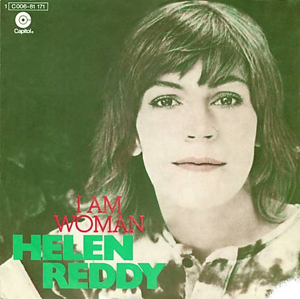
Released as a single in 1971, Helen Reddy’s “I Am Woman” tanked. She rerecorded the song. The new version was released as a single the following year, debuting on the Hot 100 at number 99. Two weeks later it was number 97. Then it fell off the chart. Lots of television appearances and many phone calls from Reddy’s husband to radio stations across the US led to the song re-entering the Hot 100, eventually becoming the first of three US number one singles for Reddy and winning her the very first American Music Award for Favorite Pop/Rock Female Vocalist.

The late Helen Reddy was born on this date in 1941. Several of her recordings are included on today’s playlist.

Follow Tunes du Jour on Facebook

Follow Tunes du Jour on Twitter

Follow me on Instagram

Your (Almost) Daily Playlist: 10-21-23

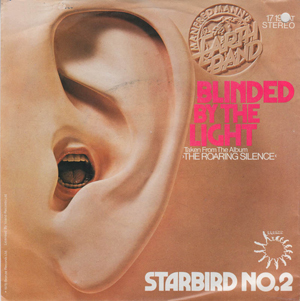
“This is a song I wrote for my first album. It was the only song I ever wrote that was a Top 10 hit. It wasn’t for me, it was for a group called Manfred Mann’s Earth Band. They were a great band, but they changed the lyrics. And it pissed me off. Because I have a big ego. And I wanted to hear my words coming out of the radio. But they had a hit, so I was happy about that. But what they did was, they took out one of my lines and they put in one of their own. And their line became one of the most misunderstood lines of all time. In my version, the line went: ‘Cut loose like a deuce, another runner in the night.’ A deuce is a 1932 Ford Coupe, a very hot car back in the day. But they changed it to: ‘Blinded by the light, revved up like a deuce, you know the runner in the night.’ Now that makes no sense. But that’s OK, because it rhymed. But then people started to mishear that line. And they misheard it as: ‘Blinded by the light, wrapped up like a douche, another rumor in the night.’ A douche is not a car. It’s a feminine hygiene product. And it doesn’t even rhyme! So I don’t know how they got that. But that’s what people heard. And that’s what they’ve been singing for 40 years.” – Bruce Springsteen

Manfred Mann was born Manfred Lubowitz on this date in 1940. A few of his hits are on today’s playlist.

Follow Tunes du Jour on Facebook

Follow Tunes du Jour on Twitter

Follow me on Instagram

Your (Almost) Daily Playlist: 9-24-23

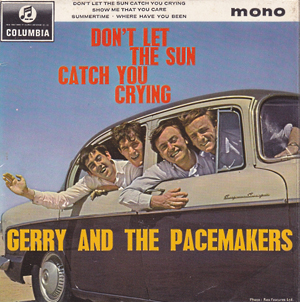
I say let the sun catch you crying. You have control over your own life. As long as you’re not impinging on someone else’s rights or happiness, do it. Cry.

The late Gerard Marsden of Gerry and The Pacemakers was born on this date in 1942. A couple of his group’s tunes are on this week’s playlist.

Follow Tunes du Jour on Facebook

Follow Tunes du Jour on Twitter

Follow me on Instagram

Your (Almost) Daily Playlist: 10-14-22

Today’s playlist celebrates the October 14 birthdays of The Moody Blues’ Justin Hayward, Usher, Cliff Richard, The Chicks’ Natalie Maines, All Saints’ Shaznay Lewis, Nazareth’s Dan McCafferty, Bill Justis, Thomas Dolby, Robert Parker, Karyn White, and Omar; and the October 15 birthdays of The Jacksons’ Tito Jackson, The Orb’s Alex Paterson, Carpenters’ Richard Carpenter, Jessie Ware, Barry McGuire, The Bad Plus’s Reid Anderson, Ginuwine, The Dead Milkmen’s Joe Genaro, Marv Johnson, and Chris DeBurgh.

Follow Tunes du Jour on Facebook

Follow Tunes du Jour on Twitter

Follow me on Instagram