Tunes Du Jour Presents The Bruce Springsteen Songbook

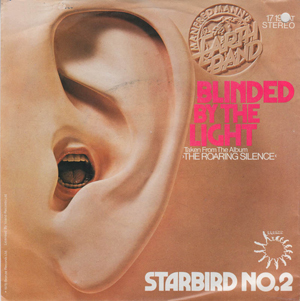
Bruce Springsteen’s name immediately conjures images of epic live performances and anthemic rock, but beneath the stadium lights and E Street Band’s prowess lies the bedrock of truly exceptional songwriting. While his own interpretations are iconic, a fascinating way to understand the depth and versatility of his craft is to listen to his songs as performed by other artists. This collection of interpretations isn’t just a testament to his popularity; it’s a deep dive into the resilient structure and universal appeal of his compositions. From Manfred Mann’s Earth Band giving “Blinded By The Light” a prog-rock makeover to Patti Smith taking his musical sketch for “Because the Night” and transforming it with her own powerful lyrics, these early releases demonstrated how his musical ideas could flourish in different hands.

What becomes clear through these varied renditions is the enduring power of Springsteen’s narratives. His ability to distill complex human experiences – the struggles of working life, the ache of forgotten dreams, the defiance of the underdog – resonates across genres and generations. Lucinda Williams’ sparse, melancholic “Factory” strips the song to its empathetic core, highlighting the quiet dignity in its depiction of labor. Johnny Cash’s gravelly voice lends a somber weight to the poignant tale of brotherhood and duty in “Highway Patrolman,” while Billy Bragg’s acoustic “Mansion on the Hill” underscores the song’s sharp social commentary on class division. Even a frequently misunderstood anthem like “Born in the U.S.A.” finds its original critical intent amplified in the raw, acoustic performance by Jason Isbell and Amanda Shires, revealing the layered complexities always present in the lyrics.

Beyond the lyrical prowess, this playlist also illuminates the structural and melodic robustness of Springsteen’s music. His compositions possess an inherent strength that allows them to be re-imagined without losing their essence. Take Hot Chip’s electronic reinterpretation of “Dancing In The Dark,” which transforms its mainstream rock energy into an indie-dance anthem, proving how adaptable the song’s core rhythm and melody truly are. Similarly, the minimalist beauty of Kevin Breit and Harry Manx’s “I’m On Fire” distills the song’s longing into a haunting, intimate whisper, while Crooked Fingers’ “The River” captures the stark emotional landscape of its narrative with a raw, almost trembling fragility. Even a track like Donna Summer’s “Protection,” originally given to her by Springsteen, showcases how his knack for catchy hooks and dynamic arrangements could easily translate into a different pop sensibility, illustrating a versatile craft beneath the surface.

This extensive array of interpretations also showcases the broad emotional spectrum Springsteen explores in his writing. His songs aren’t confined to a single mood; they capture the full range of human feeling, from youthful exuberance to weary resignation, from hopeful yearning to quiet despair. The Hollies’ rendition of “4th of July, Asbury Park (Sandy)” evokes a wistful, nostalgic glow, while Southside Johnny & The Asbury Jukes’ raucous “Hearts of Stone” pulsates with a more defiant rock and soul energy. Natalie Cole injects a playful, sassy spirit into “Pink Cadillac,” revealing the sheer fun and swagger that can inhabit his lyrics. And when Bettye LaVette takes on “Streets of Philadelphia,” she strips it down to its raw, aching vulnerability, reminding us of the profound empathy and social conscience that often underlies his work. These varied voices unlock different emotional doors, each revealing another facet of the original composition’s emotional potential.

Ultimately, a journey through these numerous cover versions offers a compelling argument for Bruce Springsteen’s enduring legacy as a songwriter. Stripped of his iconic delivery or re-clothed in entirely new musical garments, his compositions consistently stand tall. They speak to universal truths, craft unforgettable characters, and resonate with melodies that are both immediate and deeply rooted. This diverse collection of interpretations isn’t just a tribute; it’s an educational deep dive into the core strength of his writing, demonstrating that long before they became rock anthems or stadium singalongs, they were simply great songs – versatile, profound, and built to last, capable of inspiring countless artists to make them their own.

Follow Tunes Du Jour on Facebook

Follow me on Bluesky

Follow me on Instagram
Tunes Du Jour Presents 1961

The year 1961 didn’t roar in with a musical revolution—but in hindsight, that’s part of its charm. Instead, it offered a series of small but significant steps toward what would become a much louder, wilder, and more politically charged musical landscape. If the ’50s laid the foundation for rock and R&B, then ’61 felt like a transitional hallway: not quite out of the doo-wop era, but inching toward soul, girl groups, and the unmistakable rise of youth-driven pop. Listen closely, and you can hear a generation beginning to test its voice.

The playlist for this year paints a picture of variety and crossover. Ben E. King’s “Stand by Me” combines gospel roots with a pop sensibility, creating a timeless anthem of emotional resilience. Meanwhile, The Marcels inject a doo-wop jolt into “Blue Moon,” turning a Rodgers and Hart chestnut into something utterly of the moment. And “Shop Around” by The Miracles helps define the early Motown sound—polished, melodic, and unmistakably urban—hinting at the empire Berry Gordy was quietly building in Detroit.

Pop and R&B weren’t the only sounds of 1961. The jazz world was still vibrant, and John Coltrane’s take on “My Favorite Things” stretched the familiar into something exploratory and modal, giving the Broadway tune a hypnotic new dimension. Similarly, Art Blakey’s “A Night in Tunisia” offered a fiery reminder that hard bop was far from finished. This year wasn’t just about three-minute singles on AM radio; it also made room for longer-form musical statements that spoke to listeners seeking complexity.

And then there were the voices—so many distinct, unforgettable voices. Roy Orbison’s near-operatic Crying and Patsy Cline’s aching “Crazy” each showed that vulnerability could be commercially viable. The same went for Etta James, whose rendition of “At Last” remains one of the most iconic vocal performances ever recorded. Elsewhere, the lighter side of pop was thriving with Neil Sedaka’s “Calendar Girl” and Bobby Vee’s “Take Good Care of My Baby,” songs built for teenagers who were beginning to see themselves as a cultural force.

Taken together, the music of 1961 reflects a moment in flux: the last glimmers of the 1950s still lingered, but the seeds of what would define the 1960s were clearly being planted. Whether it was Ray Charles fusing gospel and R&B on “Hit the Road Jack,” or the early stirrings of girl-group grandeur from The Marvelettes and The Shirelles, this was a year where nothing yet dominated—but everything seemed possible.

Follow Tunes Du Jour on Facebook

Follow me on Bluesky

Follow me on Instagram
Your (Almost) Daily Playlist: 4-29-24

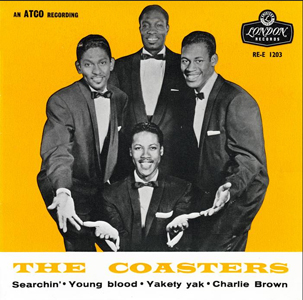
In their autobiography Hound Dog, songwriters Jerry Leiber and Mike Stoller tell of one time when they were at Jerry’s apartment. Jerry was in the kitchen while Mike was trying out ideas on the piano. Jerry called out to him “Take out the papers and the trash!” Immediately, Mike responded “Or you don’t get no spending cash.” Ten minutes later, the duo finished writing a rock and roll classic. The Coasters took the song, “Yakety Yak,” to number one.

The late Carl Gardner of The Coasters and The Robins was born on this date in 1928. A few of those groups’ songs with Gardner on lead are featured on today’s playlist.

Follow Tunes du Jour on Facebook

Follow Tunes du Jour on Twitter

Follow me on Instagram

Throwback Thursday: 1961

The years between 1958 and 1963 are often thought of as a sleepy time for rock and roll, a quiet time between the genre’s initial burst onto the charts and the onslaught of the British Invasion. However, lots of great records were charting during those years. Check out this playlist of thirty hits from 1961 for proof.

Follow Tunes du Jour on Facebook.

Follow Tunes du Jour on Twitter.

Follow me on Instagram.

Throwback Thursday – 1961

From 1958 to 1960, Ben E. King was the lead singer of The Drifters, scoring hits with “There Goes My Baby,” “Save the Last Dance for Me,” “This Magic Moment” and “I Count the Tears.” He suggested to the group’s manager, George Treadwell, that they record the spiritual tune “Stand by Me Father,” but Treadwell turned him down. King also asked Treadwell for a greater share of the group’s royalties. Again, Treadwell turned him down. King said goodbye.

King left the group after recording just thirteen songs with them. He soon made the top ten as a solo act with 1961’s “Spanish Harlem.”

Around that time, King was working on a song based on “Stand by Me Father.” He had some lyrics and a melody. He finished the lyrics with his producer, Jerry Leiber. Leiber’s songwriting/production partner, Mike Stoller, added some chords behind the melody, as well as a bass line.

Per Leiber, it’s that last addition that makes Ben E. King’s “Stand By Me” a classic. “The lyrics are good, King’s vocal is great. But Mike’s bass line pushed the song into the land of immortality. Believe me – it’s the bass line.”

“Stand By Me” kicks off this week’s Throwback Thursday playlist, spotlighting hits from 1961.


Click here to like Tunes du Jour on Facebook!
Follow me on Twitter: @TunesDuJour

Ringo + Chubby

Let’s Twist!

Ringo + Chubby
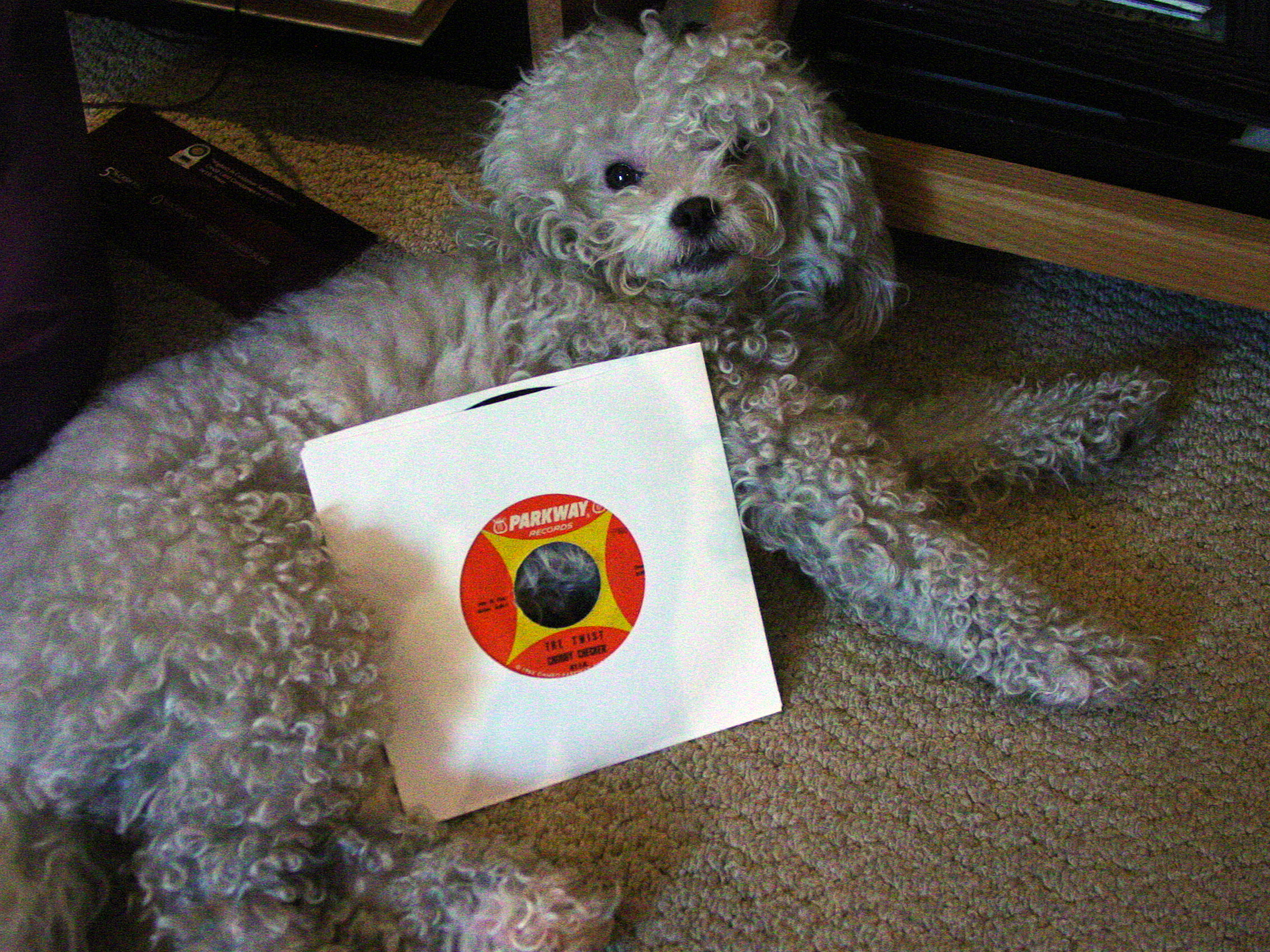
On January 13, 1962, Chubby Checker returned to #1 with “The Twist,” a record he previously took to #1 in September of 1960, making it the only record to hit #1 in two separate chart runs.

The song was originally recorded and released in 1959 by its writer, Hank Ballard, and his band, The Midnighters, as the b-side to their single “Teardrops on Your Letter.” A Baltimore DJ named Buddy Deane played “The Twist” on his television dance party program and got a good response. He told Dick Clark, host of American Bandstand about the tune.

Depending on what account you read, Ballard was unavailable to appear on American Bandstand or Clark was wary of Ballard, who previously hit with such lascivious songs as “Work with Me, Annie” and “Sexy Ways.” Either way, Clark had Chubby Checker (born Earnest Evans; his stage name was a take-off on popular singer Fats Domino) record “The Twist.”

Checker’s version is an extremely faithful cover of the Ballard recording. It is difficult to tell them apart; even Ballard thought the Checker recording was his!

In its 1960 release, Chubby Checker’s record launched a national dance craze. On the second release of the Chubby Checker version, “The Twist” became a worldwide phenomenon. Other twist hits included “Slow Twistin’,” “Dear Lady Twist,” “Twist, Twist Señora,” “Twistin’ the Night Away,” “Percolator (Twist),” “Soul Twist,” “Twist and Shout,” “Hey, Let’s Twist,” “Twistin’ Matilda (and the Channel),” “Twist-Her,” “Bristol Twistin’ Annie,” “Twistin’ Postman” and The Chipmunks’ “The Alvin Twist” – and that was just in 1962!

Chubby Checker’s “The Twist” spent one week at #1 in 1960 and two more weeks at #1 in 1962 before it was knocked from the top by…”The Peppermint Twist,” by Joey Dee & the Starlighters.

Here are twenty twistin’ favorites.

Click here to like Tunes du Jour on Facebook!