Tunes Du Jour Presents 1958

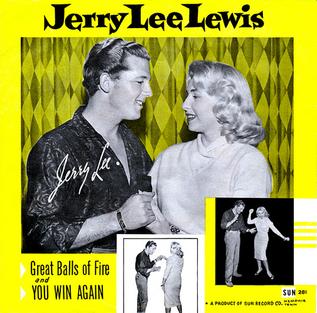
By 1958, rock and roll was no longer a brash newcomer fighting for legitimacy—it had become the dominant sound of American popular music. The charts that year captured a genre in full stride, blending raw energy with increasingly sophisticated production. Jerry Lee Lewis pounded out “Great Balls of Fire” with manic intensity while the Everly Brothers offered the dreamy harmonies of “All I Have to Do Is Dream,” proving that rock and roll could be both wild and tender. Chuck Berry’s “Sweet Little Sixteen” painted vivid pictures of teenage life, and Little Richard’s “Good Golly, Miss Molly” delivered pure, unfiltered excitement. These weren’t just songs—they were the soundtrack to a generation coming into its own.

The year also marked the rise of memorable instrumental tracks that showcased rock and roll’s expanding vocabulary. Link Wray’s “Rumble” pioneered the power chord with its menacing guitar distortion, while Duane Eddy’s “Rebel Rouser” introduced the twangy, reverb-heavy “twang” that would influence countless guitarists. The Champs’ “Tequila” proved that a single word and an infectious sax riff could dominate the airwaves. These instrumental hits demonstrated that rock and roll didn’t always need lyrics to communicate emotion or get people moving.

While rock and roll dominated, 1958 was hardly monolithic in its musical offerings. Tommy Edwards’ orchestral “It’s All In The Game” and Peggy Lee’s sultry “Fever” showed that traditional pop still had plenty of commercial power. Domenico Modugno’s “Nel blu, dipinto di blu (Volare)” became an international sensation, bringing Italian pop to American audiences. The Platters’ “Twilight Time” continued doo-wop’s evolution toward lush, romantic balladry. This variety revealed an industry still figuring out how different styles could coexist and cross-pollinate.

The playlist also captures the emergence of future stars and the refinement of group vocals. Cliff Richard’s “Move It” announced Britain’s first major rock and roll talent, foreshadowing the British Invasion that would come later. Meanwhile, doo-wop groups like The Chantels with “Maybe” and Jerry Butler & the Impressions with “For Your Precious Love” brought sophistication and emotional depth to their harmonies. Novelty hits like David Seville’s “Witch Doctor” and lighthearted fare like The Chordettes’ “Lollipop” added playful moments to the mix, reminding listeners that music could simply be fun without carrying cultural weight.

What’s striking about 1958 is how much ground the music covered while maintaining a coherent identity. Whether it was Eddie Cochran’s rebellious “Summertime Blues” or Conway Twitty’s heartbroken “It’s Only Make Believe,” these songs spoke directly to young people navigating the complexities of modern life. Rock and roll had proven it wasn’t a passing fad—it was a versatile, evolving force that could express the full range of teenage emotion, from joy to heartbreak, from rebellion to romance. The music of 1958 didn’t just entertain; it validated the experiences of an entire generation.

Follow Tunes Du Jour on Facebook

Follow me on Bluesky

Follow me on Instagram
Your (Almost) Daily Playlist: 12-26-22

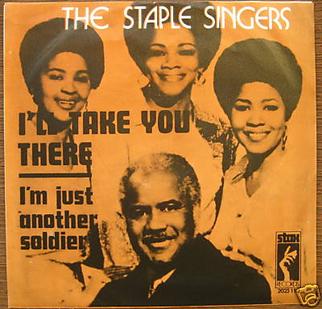
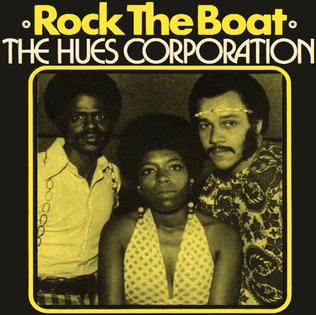
Today’s playlist celebrates the December 26 birthdays of The Hues Corporation’s Fleming Williams, Metallica’s Lars Ulrich, The Shins’ James Mercer, producer Phil Spector, and Uncle Tupelo/Son Volt’s Jay Farrar; the December 27 birthdays of The Incredible String Band’s Mike Heron, Foreigner’s Mick Jones, and Paramore’s Hayley Williams; and the December 28 birthdays of Big Star’s Alex Chilton, The Staple Singers’ Pops Staples, Johnny Otis, Edgar Winter, Black Box guest vocalist Martha Wash, John Legend, Lonnie Liston Smith, Kym Sims, 2 Unlimited’s Anita Doth, and Terrace Martin.

Follow Tunes du Jour on Facebook

Follow Tunes du Jour on Twitter

Follow me on Instagram

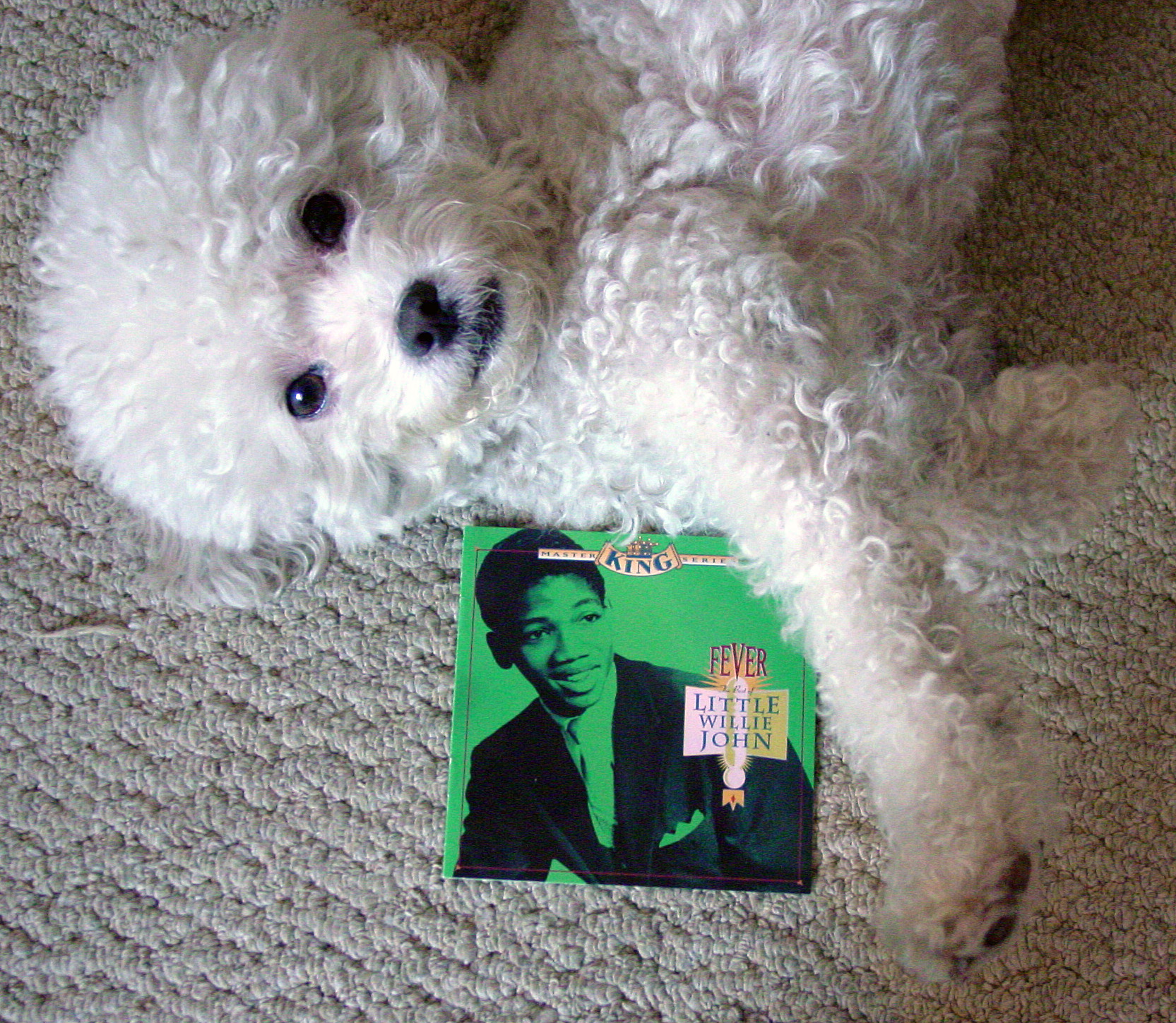
Ringo + Little Willie John

Who Is Little Willie John?

“If any one person invented soul singing it was Little Willie John.”
– Peter Shapiro, The Rough Guide to Soul and R&B

Ringo + Little Willie John

William Edward John was born on this day in 1937. As a child he sang with his family in a gospel quintet. At age 13 he hooked up with Johnny Otis’ band and for the next few years he performed with various bands, his misbehaving resulting in his getting kicked out.

In 1955, at age 17, he was signed by King Records. Said label head Henry Glover “I heard Little Willie John at 5 o’clock and I was so impressed with him that at 8 o’clock I had musicians in the studio and I recorded him.”

Though he had considerable insecurity about his height, his records were released under the name Little Willie John. His first single, “All Around the World,” was a top five r&b hit in 1955.

The following year John released the original version of “Fever.” While it became a bigger pop hit for Peggy Lee in 1958, John’s version hit #24 on the pop chart and spent five weeks at #1 on r&b chart. Following its success John went on tour as a headliner. His opening act was the up-and-coming James Brown & His Famous Flames.

For a few years the hits kept coming, but in the early sixties, as his records became more pop-oriented and drenched in strings, sales declined. The lack of sales coupled with John’s alcoholism led to his being dropped by King in 1963.

In August 1964, John was arrested for attacking a man with a broken bottle. Two months later, at a house party, Little Willie got into a fight with a 200 lb. six-foot-tall ex-convict named Kevin Roundtree. Roundtree punched John in the face. John got up from the floor and stabbed Roundtree, killing him. Following a trial and appeals, John was sentenced to eight to twenty years for manslaughter. He entered prison in the summer of 1966.

While in prison John fell ill and was confined to a wheelchair. On May 26, 1958, while in jail, he died of a heart attack at age 30.

His singing influenced James Brown and Prince, among others. His recordings have been covered by The Beatles, Fleetwood Mac, Madonna, Jack White and the Allman Brothers. He was referenced by Robbie Robertson on his 1987 song “”Somewhere Down the Crazy River.”

In 1966 Little Willie John was inducted into the Rock and Roll Hall of Fame.

Now that you know a little about the man, check out today’s playlist.

Click here to like Tunes du Jour on Facebook!