me July 25 2014 at IM

It’s Friday And I Need To Dance!

Last week I regaled an audience with the story of the time I accidentally hired a prostitute to show me around Prague. These things happen. To me, anyway.

Half-glass-full guy that I am, once I realized what I did, I looked at the positive – I hired a prostitute to show me around Prague! Complications arose when the police got involved and I had to explain to my bank why they needed to credit that charge.

Though I ended up sightseeing that spectacular city on my own, I got a great story out of the trip. Sometimes things don’t go according to plan, but you make the best of the situation and try to turn it into a positive.

me July 25 2014 at IMSomeday I’ll talk about the time I boarded a bus in Mexico to go on what I thought was a nature trip to the hot springs. Let’s just say I don’t think the springs got any hotter than they did that night.

In 1987, two bands, both interested in making a dance record, got together in the studio at the suggestion of the head of their record label, 4AD. Colourbox and A R Kane didn’t hit it off, so each worked on their own track, which they then turned over to the other group to embellish.

Colourbox came up with “Pump up the Volume,” its title line sampled from Eric B & Rakim’s “I Know You Got Soul.” A R Kane added some guitar to the track, and DJs CJ Macintosh and Dave Dorrell added a bunch of samples.

The record was released under the name M|A|R|R|S. “Pump up the Volume” became a worldwide smash and was groundbreaking in its use of samples on a British house track.

Though the idea of a true collaboration between the two bands didn’t come to fruition, and the acts didn’t get along and never worked together again, they did produce a dance classic. “Pump up the Volume” kicks off today’s dance playlist. Have a great weekend and before you buy anything, make sure you know exactly what it is you are paying for.

Like Tunes du Jour on Facebook! Click here.

doggies + Gwen 2014-07-18 11.34

It’s Friday And I Need To Dance!

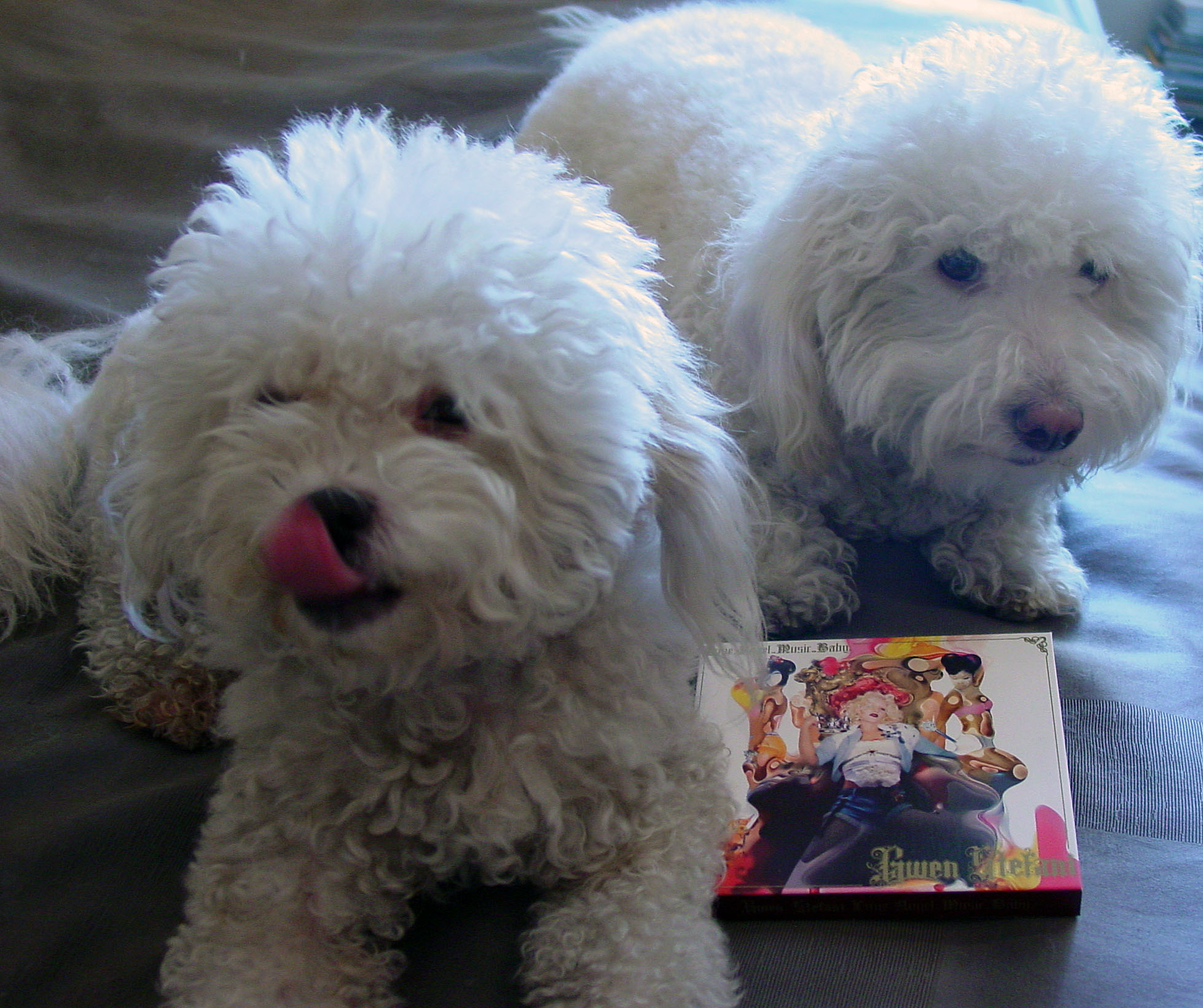
Gwen Stefani, the lead singer and lyricist of the band No Doubt, wanted to do a dance-oriented solo album, but when the band finished its Rock Steady tour in November 2002, all she wanted to do was sleep. “I wanted to take a break and was really burned out, but the record company were ready to go.” Her label, Interscope, wanted her to work on her solo album with singer-songwriter Linda Perry, who was available for only five days.

Without the time to recharge, Stefani’s anxieties about doing the record rose to the surface and she spent a lot of time crying in bed. She’d been with the guys in No Doubt for seventeen years at that point; could she do a record without them?

On their second day in the studio together, Perry presented Stefani with the music of a song she stayed up the previous night to write. Stefani was to come up with lyrics, and she took the speed with which Perry came up with the song as a dare, as if to ask her “What are you waiting for?”

That was the inspiration Stefani needed. She wrote the lyrics to “What You Waiting For?,” addressing her fears about doing the record, her lack of inspiration, and the pressure the felt her label was putting on her. The song opens with Stefani referencing her bandmates and their years together – “What an amazing time / What a family/ How did the years go by?/ Now it’s only me.” Then the repeated background vocals of “tick tock” suggest the clock is ticking and she needs to get to work on this solo venture. Her nervous side sings “I’m worried if I go it alone,” to which her confident persona responds “You never know, it could be great” and “Take a chance, you might grow.”

“What You Waiting For?” was the first single released from Stefani’s first solo venture, Love, Angel, Music, Baby. The album sold seven million copies worldwide and was nominated for a Grammy Award for Album of the Year. Hit singles from the album were “Hollaback Girl,” “Rich Girl,” “Cool” and “Luxurious.”

Of the experience making the record, Stefani said “I think it’s very important to put yourself in a situation that’s uncomfortable to be able to grow.”

Is there something you wish to do but have not yet started to tackle? What you waiting for?
doggies + Gwen 2014-07-18 11.34

Friday is dance day at Tunes du Jour. We kick off this week’s party with Gwen Stefani’s “What You Waiting For?”

doggies + Beck 2014-07-08 14.43

Bonding Over Beck

I met Michael at Nobody Beats the Wiz, a CD/Electronics store in Union Square in Manhattan, in 1996. We bonded immediately over a love of music. A lot of people love music, but Michael was the only other person I’d met who, like me, maintained a weekly listing of his favorite current songs. Like me, Michael had an imaginary radio station. (Now is a good time to mention that neither of us were children when we met – Michael was 23 and I was 33.) Though both of us shared the same intense passion for music, the music for which we shared a passion differed.

I listened to a lot of what Michael dismissed as “college rock,” while Michael enjoyed much of what I called “cheesy dance pop.” There were a few acts we both liked – Pet Shop Boys, Erasure and Beck.

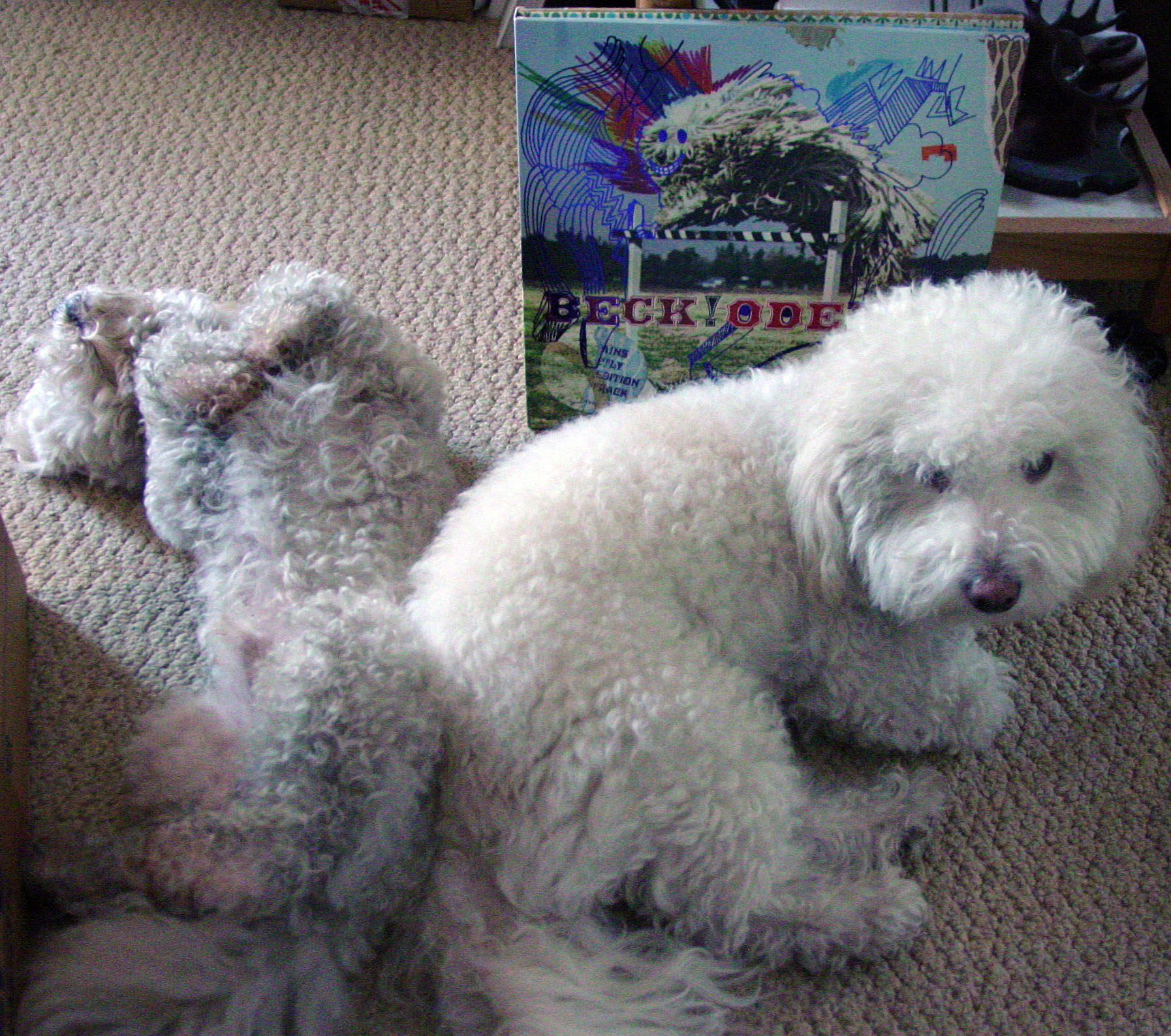
Beck’s Odelay album was only a couple of months old when we met. Its intelligence, originality, sense of melody, adventure and fun appealed the both of us.

doggies + Beck 2014-07-08 14.43
Much like Madonna, Beck has worn many personas within pop music – the funky white guy, the folkie, the faux-folkie, the somber singer-songwriter and the comic songster among them. Impressively, he has succeeded at each, with albums ranging from good to great.

Today, Tunes du Jour pays homage to the man born Bek Campbell on his 44th birthday. I’m severely limited by Spotify’s spotty Beck selections, so I’m going to focus on Odelay, because it’s great and it’s there.

doggies + James Brown 2014-07-04 10.41

It’s Friday The Fourth Of July And I Need To Dance!

On July 4, 1982, I went with my then-friend Robin to see Diana Ross in concert at Giants Stadium. I hadn’t been to the stadium before, but I figured on a typical day it was about a half hour drive from my home in New Jersey. As this was a holiday, I assumed there would be a lot of traffic, so I allowed for extra travel time. I didn’t want to be late.

We got to Giants Stadium five hours before show time. We parked right by the stadium entrance, went in, and found our seats. It was a beautiful sunny day, so we tanned as we waited for others to join us.

After a few hours other people showed up. The stadium was mostly full when the first opening act took to the stage. The band’s lead singer introduced them. “We’re Frankie Beverly and Maze for all you white people who don’t know who we are because you don’t listen to black music.” He sure knew how to charm an audience and win over new fans! I was momentarily ashamed that I spent my money to see and hear the white music of Diana Ross.

After Maze, Miles Davis performed. Would it have killed him to finish writing the songs before he came out? And hello, the audience is over here, not behind the curtain.

While Davis was playing, the couple sitting next to my then-friend Robin and me snorted cocaine. I’d never seen anyone do that before. They left after Davis finished, skipping the Diana Ross show altogether. That’s all I needed to see to keep me from ever doing coke. I don’t ever want to get to a point where I lose control over my thoughts and whereabouts and miss Miss Ross.

Finally, the main event. Diana Ross. Live. She performed all her big solo hits, except “Love Hangover,” and 30+ years later that still irks me. She did a medley of Supremes hits. She changed her clothes a few times. It was great!

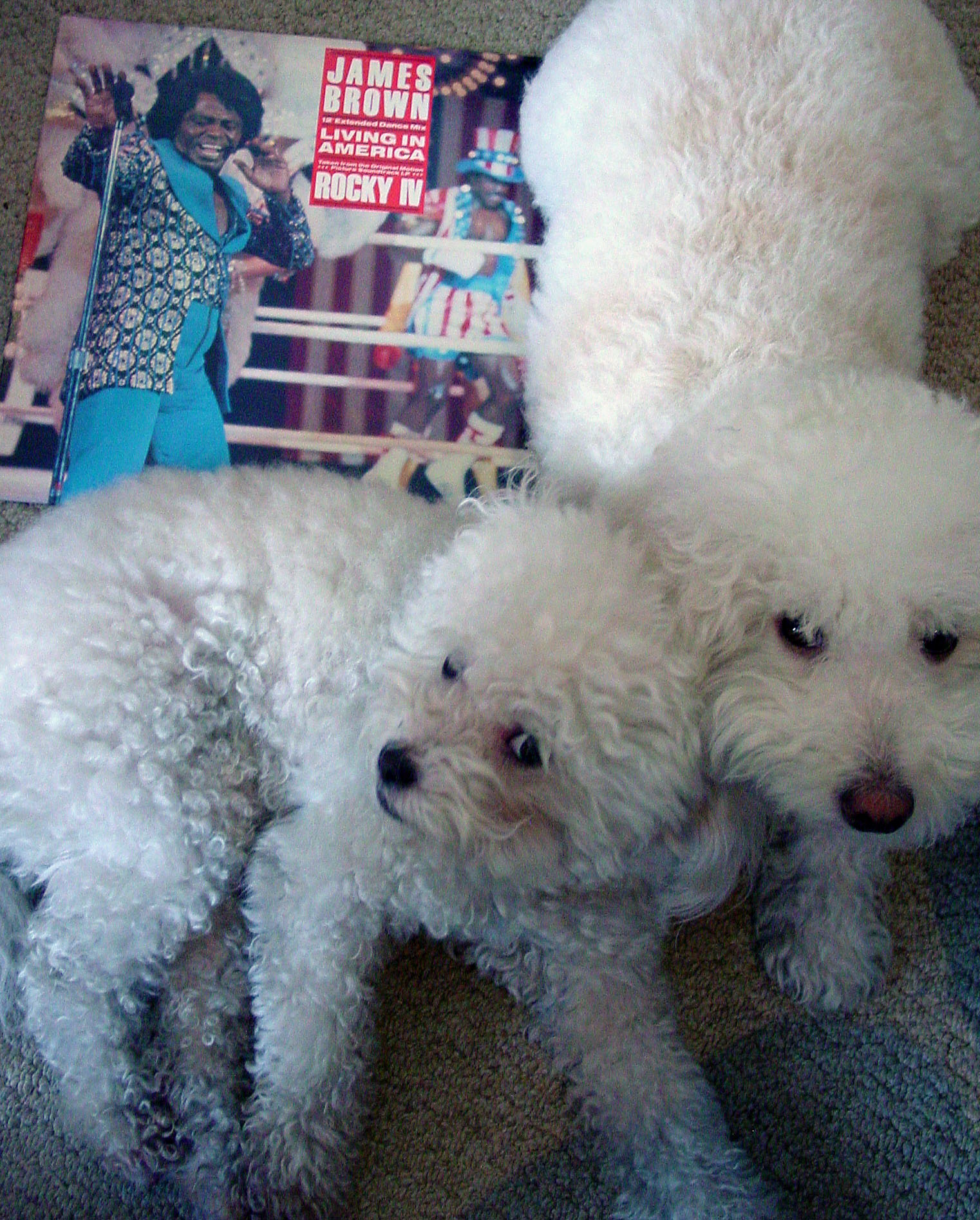
doggies + James Brown 2014-07-04 10.41
Friday is dance day at Tunes du Jour, and while I could open today’s playlist with “Love Hangover” (Why, Miss Ross, why didn’t you preform that song???), I’m going to go with a more traditional 4th of July choice, James Brown’s “Living in America,” one of the very few Brown hits that the man neither wrote nor produced. Happy holiday!

Winston + Pride 2014-06-27 15.13

It’s Friday And I Need To Dance!

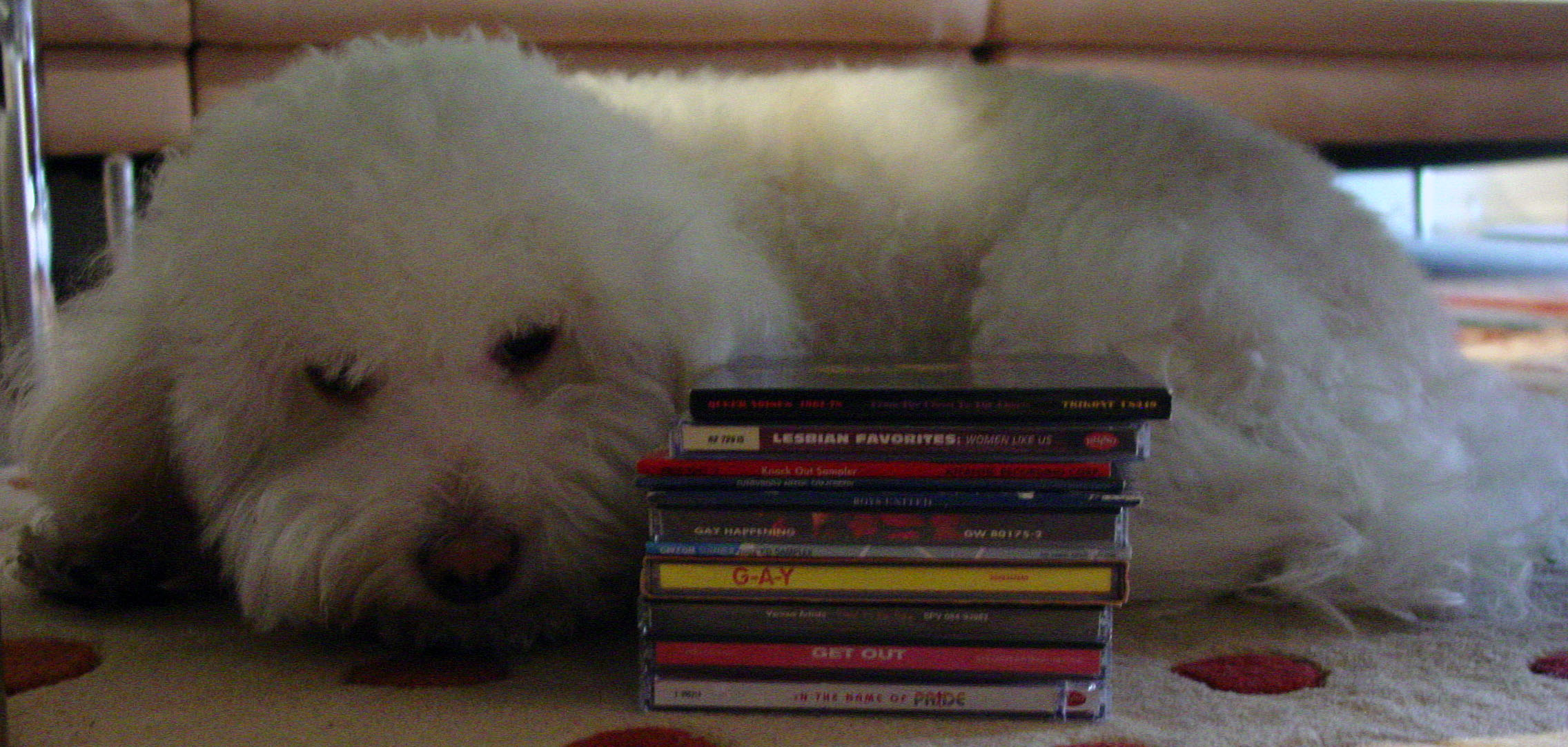
Today is the 27th of June. Only three more days of Gay Pride month and then I can go back to my self-loathing. Phew!

New York has their big Pride celebration this weekend. While I enjoy Pride here in West Hollywood, it’s nothing compared to the revelry in my former home of Manhattan.

The Los Angeles Pride parade here in WeHo goes for around two miles and lasts a couple of hours. If memory serves, New York’s parade is five or so miles long and lasts for around 168 hours. WeHo’s parade consists of a handful of politicians, floats for clubs I never heard of, some folks who are legends in their own minds, and a lot of lesbians on motorcycles. NYC’s parade consists of many political groups, many religious organizations, important social clubs such as Lesbians for Patsy Cline and Queens Against Brunch, and a hell of a lot of lesbians on motorcycles.

The list of Grand Marshals of NYC’s parade over the past ten years includes Dustin Lance Black, screenwriter of the Academy Award-wining film Milk; Lt. Dan Choi, a member of the US Army who served in Iraq, came out a gay, and challenged the Don’t Ask Don’t Tell policy; Dan Savage, creator of the It Gets Better Project, designed to dissuade LGBT youth from suicide as the answer to school bullying; Edie Windsor, the plaintiff in the United States v Windsor Supreme Court case which led to part of the anti-gay Defense of Marriage Act being struck down as unconstitutional, paving the way for the legalization of same-sex nuptials; Cleve Jones, the LGBT and AIDS activist who, among other things, conceived of the Names Project AIDS Memorial Quilt and co-founded the San Francisco AIDS Foundation in 1983; Constance McMillen, the high school student who sued her school in Mississippi when they refused to allow her to bring her girlfriend to the school prom; and Judy Shepard, the mother of Matthew Shepard, whose murder for being gay led to expanded hate crimes legislation to cover sexual orientation.

The list of LA’s Grand Marshals over the past ten years includes Paris Hilton, who is very wealthy and said “Gay guys are the horniest people in the world. Most of them probably have AIDS … I would be so scared if I was a gay guy … you’ll like die of AIDS;” Sharon Osbourne, who is very wealthy; Chelsea Handler, the television personality who dated 50 Cent, the grammatically-challenged former superstar who tweeted “If you a man and your over 25 and you don’t eat pussy just kill your self damn it. The world will be a better place. Lol;” and Demi Lovato, who had a gay grandfather. In 2007 we found an actual gay to be our Grand Marshall – John Amaechi, the first openly-gay former professional basketball player. In 2011 we found another one – Johnny Weir, the celebrated figure skater who smashed all the macho stereotypes of that profession. To be fair, I know how difficult it is to select the appropriate person to be our Grand Marshal. It’s not easy to find an openly gay person in Los Angeles; that’s why I’m still single.

Winston + Pride 2014-06-27 15.13

As the organizers of LA’s Pride Parade begin their search for next year’s Grand Marshal (may I suggest Vladimir Putin?), lock the doors, lower the blinds, fire up the smoke machine and put on your heels, because we’re gonna have a kiki. Dive, turn, werk.

It’s Friday And I Need To Dance!

In 2003, Rhino Entertainment moved me from New York City to Los Angeles to head up their Licensing department. I miss Manhattan’s energy and fashion sense and anything-at-any-hour way of life, but most of all, I miss my friends. And I miss our Bad Movie Days.

Not only do I love a good bad song; I also enjoy a good bad movie, as do a core group of my friends. We would meet at either my place or Kathy’s place every few Sundays and stay in, even if it was beautiful outside, and enjoy Glitter or Staying Alive or Body of Evidence, followed by a second feature, usually Showgirls.

Unlike a bad song, which I can enjoy in my solitude, a bad movie usually is more enjoyable with company. I’m not sure I would be able to sit through Skyscaper, in which Anna Nicole Smith starred as a hostage negotiator, if I didn’t have my friends with me to razz the screen, particularly during the scenes where Anna Nicole walked past an office and the film would dissolve to a flashback sequence of the time she had sex on that office’s desk.

I can enjoy a bad musical on my own. While my friends enjoyed Grease 2, with its extended production number about bowling, they were not as enamored as I am of Sgt. Pepper’s Lonely Hearts Club Band. Still, when I watched Mamma Mia on HBO alone in my Los Angeles condo, I knew my friends would share my joy at this amazing cinematic feat, particularly when Pierce Brosnan sang “S.O.S.”

One of my favorite bad movies is Can’t Stop the Music. It stars the Village People. I’ll let that sink in before I go on. Ready? It also stars Bruce Jenner, in a cropped t-shirt and Daisy Dukes. And Steve Guttenberg and Valerie Perrine, with “special guests” (as they are billed in the credits) The Ritchie Family. The Ritchie Family, whose hits were “Best Disco in Town” and “Brazil,” get “special guest” billing. That’s how amazing this movie is. But wait, there’s more! The film was directed by Nancy Walker. Ida Morgenstern. Rosie, the Bounty Paper Towel shill. That Nancy Walker. Now you know you’re in for a treat.

Before I get into the movie, let me make clear that I LOVE The Village People, and not in a I love bad music way. I unabashedly enjoy their music. Not just the hits singles; there are Village People album cuts that have five stars in my iTunes library. I love this movie’s theme song.

As for the rest of the movie, well…. It’s sort of about the formation of the Village People, though 90 minutes into it you may ask “Will there be a plot anytime soon?” Then you’ll ask “Why is a Village People movie more than 90 minutes long?” We see the group’s auditions. I would have hired the guy in the blue jumpsuit who sang “Macho Man.” That said, I can’t deny the leatherman, whose profession we learn is toll collector at the Brooklyn Battery Tunnel (talk about a macho man!), sings a mean “Danny Boy.” We see the guys shoot a commercial for milk. We see..I’m going to lift a line from this movie’s Wikipedia entry – “Initially reluctant, Helen seduces Steve with her kreplach and before long they’re negotiating the T-shirt merchandising for the Japanese market.” We see them perform for an ecstatic crowd in San Francisco (oh, um, spoiler alert. That’s how it ends.) Best of all, we see a “Y.M.C.A.” production number as envisioned by Busby Berkeley and Esther Williams while vacationing on Fire Island.

Every Friday is dance music day on Tunes du Jour. Today we kick off the playlist with the timeless “Y.M.C.A.” Because it is still LGBT Pride Month, I made our dance party extra gay. Twirl!

It’s Friday The 13th And I Need To Dance!

In many Western countries, Friday the 13th is considered a day of bad luck by those who believe in such silliness.

In Spanish-speaking countries, Tuesday the 13th is unlucky.

In Italy, Friday the 17th is considered unlucky and 13 is a lucky number.

In Finland, many organizations promote National Accident Day, which always falls on Friday the 13th.

A study in the Netherlands found fewer car accidents occur on Friday the 13th as compared to other Fridays.

The Stress Management Center and Phobia Institute in Asheville, North Carolina estimates that somewhere between 17 and 21 million people in the United States are afraid of Friday the 13th.

At Tunes du Jour we dance every Friday, and we ain’t afraid of no 13th! Let’s kick off this week’s party with “Bad Luck,” by Harold Melvin and the Blue Notes.

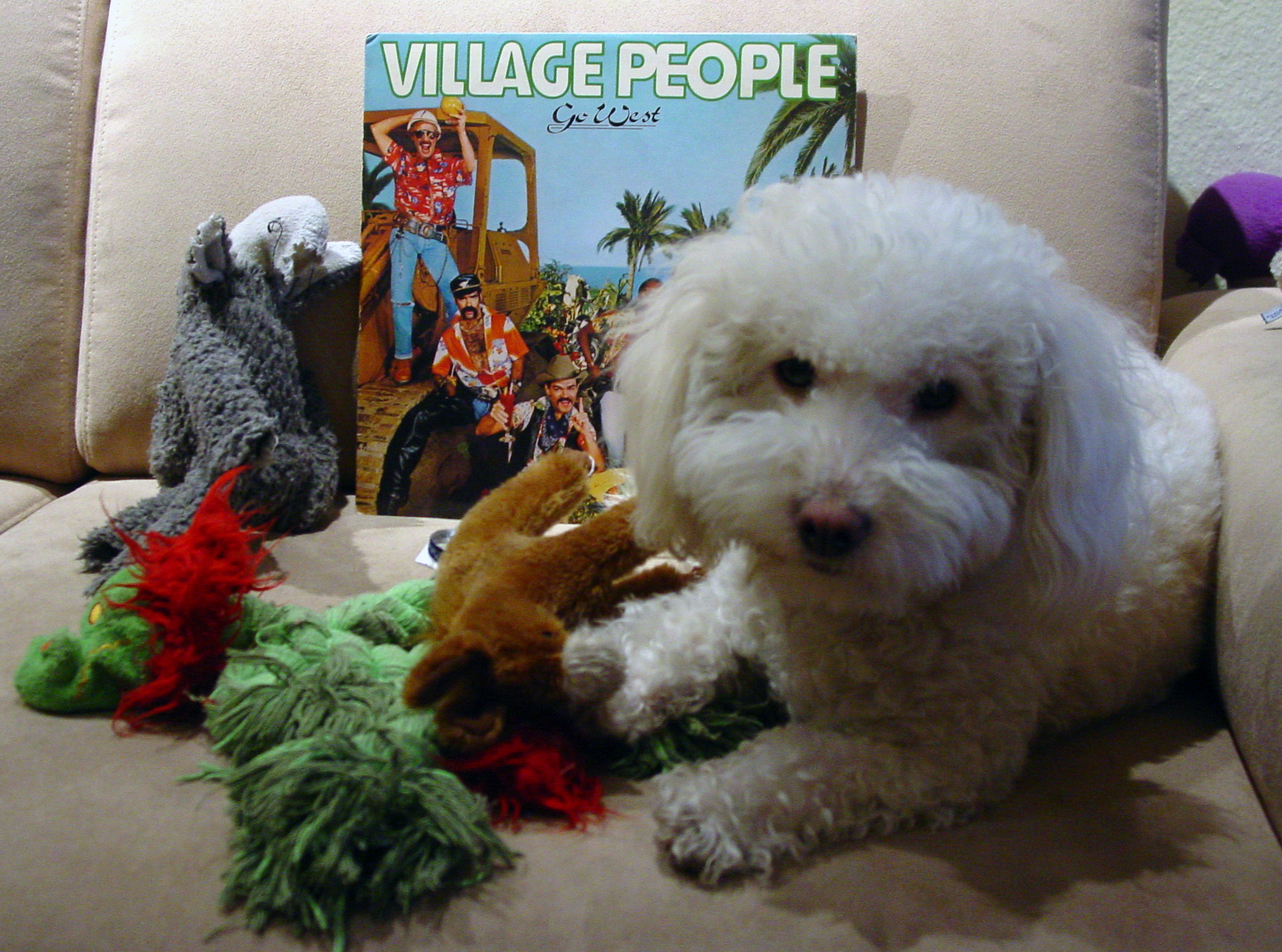
Winston + Village People

“Go West” a/k/a It’s Gay Pride Weekend And We Need To Dance!

Winston + Village People
In 1979, the Village People released “Go West,” a celebratory disco romp whose message to listeners in the know was “go west, young man, to San Francisco, a utopia for gays.” The lyrics included “Together we will love the beach / Together we will learn and teach.” And “I love you, I know you love me. I want you happy and carefree / So that’s why I have no protest when you say you want to go west.”

San Francisco was a popular gay destination and in 1977, home to the nation’s first openly gay elected official, Harvey Milk.

In 1993, Pet Shop Boys released their cover of “Go West.” They kept all the Village People’s lyrics and they kept the dance beat, yet their version has a tinge of melancholy.

The duo’s Chris Lowe explained “When the Village People sang about a gay utopia it seemed for real, but looking back in hindsight it wasn’t the utopia they all thought it would be.”

Tunes du Jour readers – join me as we go back in time and look at the evolution of a gay dance classic.

Disco music was born in the early seventies in black, Hispanic and gay clubs. As explained in The Queer Encyclopedia of Music, Dance and Musical Theater, “Perhaps no other popular art form is more closely identified with gay culture than disco and dance music. Gay men in particular adopted the intense, loud, thumping 4/4 beat of the dance music predominantly at the bars and discos that were among the few places where they could openly express their sexual identities in the 1970s and 1980s. As the musical backdrop for generations of gay men who came of age is such venues, dance music became inextricably connected with the gay experience.”

Disco really hit the mainstream in 1977 with the release of the film Saturday Night Fever, based on a magazine article. The film’s soundtrack album became the biggest-selling album of all time in the United States, a record it held until Michael Jackson’s Thriller surpassed it.

As disco became a major commercial force, many rockers, including The Rolling Stones, Rod Stewart and Kiss, turned to the genre to score some of the biggest hits of their careers.

In June of 1978, the Village People entered the pop top 40 with their first crossover hit, “Macho Man.” Hard as it may be to believe, most people at that time had no idea they were gay, despite the costumes and despite song titles such as “Hot Cop,” “San Francisco,” “Sodom and Gomorrah,” “Key West” and “Fire Island.” Everyone in the whole family enjoyed their second hit, “Y.M.C.A.,” where one can “hang out with all the boys.”

In March of 1979 the group scored their third hit single in under a year – “In the Navy.” The U.S. Navy considered using it as a recruitment theme. Said a Navy spokesperson, “The words are very positive. They talk about adventure and technology. My kids love it.”

During the Seventies San Francisco remained a popular destination for gays. A report by Alfred Kinsey in the early 1970s found: “San Francisco is generally considered the best city in the U.S. for homosexuals. It was partly due to the city’s ‘tradition of tolerance.’ Another factor was the city’s size and geography, as it is smaller and less residentially dispersed than New York or Los Angeles, which made it “more conductive to a tightly knit homosexual community.”

In March of 1978 the San Francisco Board of Supervisors passed “the most stringent gay rights laws in the country.” Elsewhere in the U.S., the few existing gay rights laws were rapidly being repealed.

In June of 1978 San Francisco’s Gay Freedom Day Parade drew approximately 350,000 marchers.

On May 21, 1979, Dan White, the assassin who killed gay rights leader Harvey Milk as well as San Francisco’s mayor, was sentenced to only seven years and eight months in prison. The verdict led to massive riots in that city in which demonstrators burned a dozen police cars and more than 160 people, including 50 policemen, were injured. This happened just days after the Village People released their follow-up to “In the Navy,” “Go West.” Suddenly, San Francisco didn’t seem as peaceful and idyllic as it does in that song.

A few weeks later, a disc jockey from a Chicago rock radio station hosted an anti-disco demonstration at Comiskey Park between two baseball games in a double-header. Tens of thousands of people brought disco records to be set ablaze in center field while the crowd chanted “disco sucks.” I’d posit that this was in effect an anti-gay anti-black demonstration by white heterosexual rock fans.

Authors Andrew Edelstein and Kevin McDonough agree. In their book The Seventies they wrote “If you were a white, heterosexual teenage male who preferred to wear jeans and a t-shirt and sit passively at a stadium-size rock concert, then disco could be an especially threatening experience.”
After the Comiskey Park demonstration, disco quickly went back underground and was heard primarily in gay clubs. It soon came to be called house music and hi-nrg.

It should be noted that while rock fans tried to kill disco in the U.S., it stayed popular in the U.K., Europe, and elsewhere in the world.

The 1980s brought about the rise of the so-called Moral Majority in the United States. Not coincidentally, it also brought the scourge that came to be known as AIDS, which initially hit the gay population hardest. Homophobia contributed to a delayed response by the government.

Ten years into the AIDS epidemic there was still no sign of an effective treatment or cure.

In 1992 the British duo Pet Shop Boys were invited to perform at an AIDS fundraiser. Chris Lowe came up with the idea to do the Village People’s “Go West.” He played the record for his singing partner, Neil Tennant, who called it “ghastly” and “awful.” He got more into it when he thought about what he and his partner could bring to it, including the addition of “a big choir of butch men.”

A year later, the Boys released their studio recording of the song, complete with the big choir of butch men. In the context of the AIDS pandemic and the devastation it caused, particularly to the gay population, the song “Go West” takes on a different meaning than it did in 1979. As the website Shmoop puts it, “The sunny utopia the Village People had once sung of was literally full of sick and dying people; hospital beds in San Francisco were full of dying patients and there seemed to be no end in sight.”

The spread of AIDS led to a rise in gay activism, which is acknowledged in a verse the Pet Shop Boys added to their version: “There, where the air is free, we’ll be what we want to be / Now, if we take a stand, we’ll find our promised land.”

Of this record, Wayne Studer, in his book Rock on the Wild Side, a collection of songs by or about gay males, wrote “As the Boys do it, ‘Go West’ becomes an eerily uplifting disco dirge, both happy and sad at the same time. Extraordinary.”

Both the Village People’s and Pet Shop Boys’ “Go West” failed to cross over to the Top 40 of the U.S. pop charts; however, both were hits in the dance clubs, with the Pet Shop Boys version going to #1 on the U.S. Dance Club chart. The Pet Shop Boys version did make the top ten pop charts in the U.K., Germany, France, Austria, Sweden, Switzerland, the Netherlands, Norway, Ireland, Italy, Japan and Australia.

It was around this time that Neil Tennant, the duo’s usual vocalist and lyricist, came out, to the surprise of nobody.

“Go West” was the second single released from the group’s fifth album, Very, an album that is included in the book 1001 Albums You Must Hear Before You Die. The opening line of the book’s write-up is “Though the Pet Shop Boys had always been really gay, Very was their first really, really gay album – and their first U.K. number 1.”

Very produced four top ten club hits in the U.S., including two #1’s – “Go West” and “Can You Forgive Her?”

In 2008 Australian web-site SameSame polled their listeners to find the “gayest songs of all-time.” Pet Shop Boys’ “Go West” came in at #6. The Village People’s “In the Navy” was #18, their “Macho Man” was #16, and their “Y.M.C.A.” was named the second gayest song of all-time, kept from the top spot by ABBA’s “Dancing Queen.”

Pet Shop Boys’ album Very made Out magazine’s list of the Gayest Albums of All-Time. It also made British music magazine Q’s list of the 100 Greatest British Albums Ever. It has sold over five million copies worldwide.

Where has “gay music” come since the release of Very? Here are two interesting facts: the very first openly gay artist to have a #1 album in the U.S. was Adam Lambert, and that happened just two years ago. One year earlier, a song went to #1 on the U.S. pop charts and stayed there for six weeks – a song that explicitly called on gays, lesbians, bisexuals and transgenders to love who they are, ‘cause baby we were born this way.

As for the key players in my story, Pet Shop Boys have sold over 50 million records worldwide, had twenty-two top ten hits in the U.K. thus far, and won Outstanding Contribution to Music at the 2009 BRIT Awards, England’s equivalent to the Grammys. Their most recent album, 2013’s Electric, hit #3 on the UK album chart. It included the single “Vocal,” a top three club hit stateside.

The Village People still tour with three of their original members. They have sold over 100 million records.

Despite the efforts of some folks, disco, while suffering some setbacks, didn’t die. As a matter of fact, one of last year’s most popular hits was Daft Punk’s “Get Lucky,” a disco-influenced record featuring guitar work by Nile Rodgers of the seventies disco band Chic.

Similarly, despite the efforts of some folks, the LGBT populations, while suffering some setbacks, continues to make great strides toward equality and respect.

Should you attend this Sunday’s Gay Pride Parade in West Hollywood, or any Gay Pride Parade this season, you will hear coming from many floats disco and house music, for that is the soundtrack of our movement.

I wish all my readers a very happy Pride. Dance!
Ringo + DM 002

It’s Dave Gahan’s Birthday And I Need To Dance!

In the late 1980s the members of Depeche Mode were recording their seventh studio album, Violator. One of its songs began life as a slow ballad with the only instrumental accompaniment being from an organ played by the song’s writer, band member Martin Gore.

The group’s then-keyboardist Alan Wilder suggested speeding up the track and adding a beat. He and the album’s producer, Flood, then suggested Gore add a guitar riff. DM lead singer Dave Gahan, in an interview with Q magazine, recalls Gore being upset with what was happening to his song, though Gore told Mojo magazine that once he came up with the guitar part, “I think that’s the only time in our history when we all looked at each other and said, ‘I think this might be a hit.'”

Their instincts were spot on. The song went on to become the band’s first (and to date, only) top ten pop single in the US. The Violator album became their first top ten album stateside and their highest-charting album up to that time in the UK, where it peaked at #2. Said Gahan about the track, “It really made the album cross over into another cosmos. It had been a constant climb over the previous 10 years, but I don’t think we were prepared for what was about to come. The album was a worldwide success and suddenly these huge royalty checks started coming in and you were able to do whatever you wanted, whenever you wanted – the velvet rope was always open.”

If you’re working on something, keep tinkering with it. Approach it in varied ways. Experimentation may lead you to be able to do whatever you want, whenever you want.

Ringo + DM 002
Dave Gahan of Depeche Mode turns 52 today. Our Friday dance playlist kicks off with this ballad-turned-crossover dance smash, “Enjoy the Silence.”

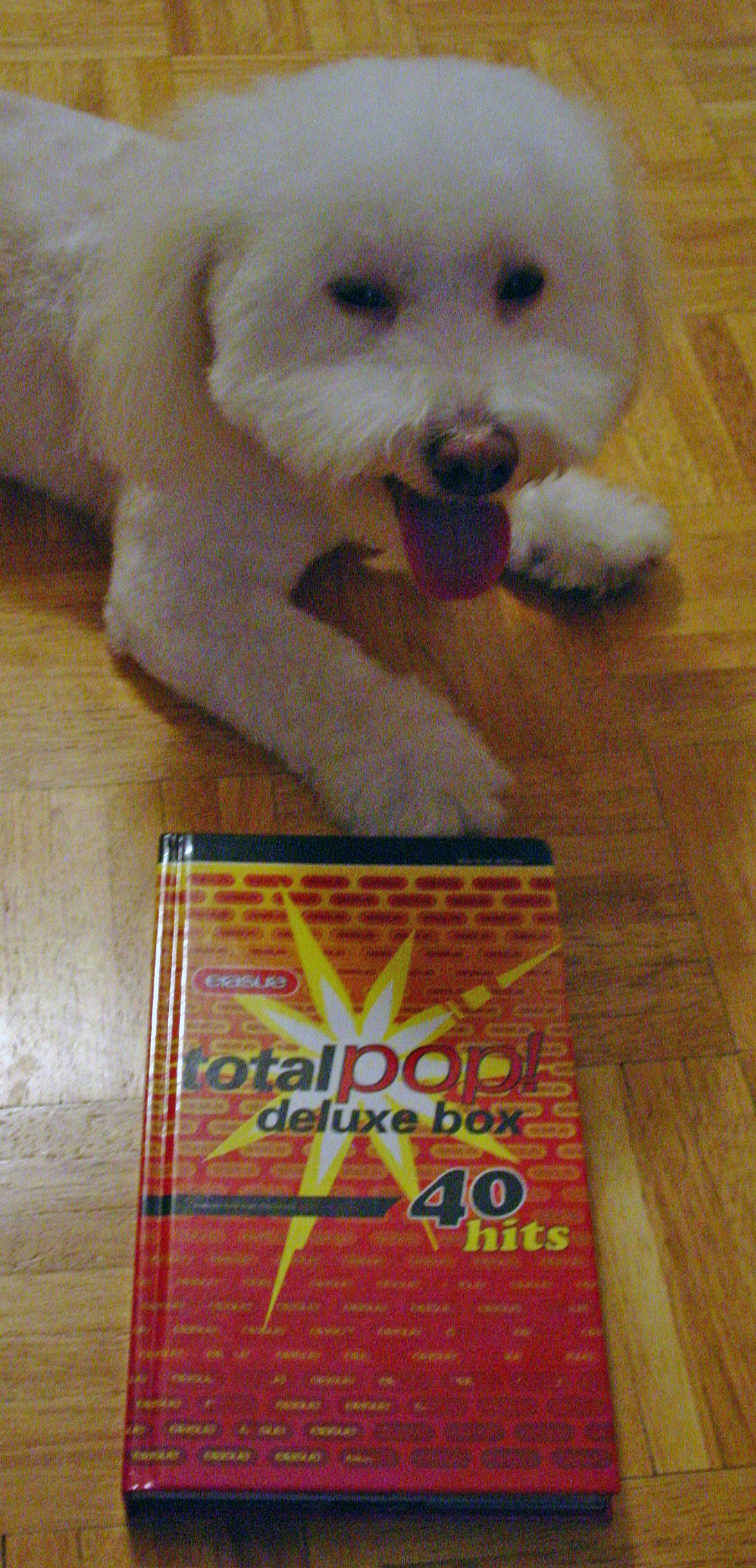
Winston + Erasure 003

It’s Andy Bell’s Birthday And I Need To Dance!

Winston + Erasure 003
I want to go back to 1984. Not the year. The party.

In 1993 I spent Friday nights at Crowbar, a tiny venue at 339 E. 10th Street in New York City. The weekly party was called 1984. Admission was $3. The music was new wave and pop, primarily from the 80s. Crowbar was about the size of my studio apartment, but that didn’t stop the proprietors from squeezing in a couple hundred folks who wanted to dance to Madonna and New Order and Culture Club.

Because the place was jam-packed, dancing consisted of nodding your head. There was no room to move your legs or arms. There was no air circulation, so one worked up a sweat just standing still. It was great fun, getting lost in the music. Even songs I don’t like were fun at Crowbar. When they played the rare song I couldn’t get into, I would think “If there’s a fire, we’re all going to die. There’s no way for most of us to get out.” Good thing I liked most of the songs!

Mayor Giuliani had the same thought. Not about how great Pet Shop Boys are, but that the place was a fire hazard. He had Crowbar shut down. The party didn’t stop, though. 1984 moved to the more spacious Pyramid Club on Avenue A and was just as much fun, maybe even more so being now one can actually move to the music.

One band that got a lot of play at the party was Erasure. The duo’s singer, Andy Bell, was one of the very few openly gay pop stars in the eighties. 1984 was a gay party (though non-gays were welcome), and the guys who went to Crowbar and then The Pyramid on Friday nights hailed Andy as one of their heroes, in an era when few celebrities were out.

Erasure had two crossover hits in the US. The first was “Chains of Love.” To the general public it was a catchy ditty. To the gay population it was an anthem. In an era when many media outlets portrayed gay and AIDS as automatically connected, fear was rampant. Bell advised listeners to not let who you love shackle you into holding back your love, your compassion, your pursuit of happiness. “Come to me, cover me, hold me. Together we’ll break these chains of love. Don’t give up.” The joy in that club when that song played, hands in the air and patrons singing along, is something I miss.

Andy Bell turns 50 today. Our Friday dance playlist is in honor of him and everyone who made 1984 the party so special.