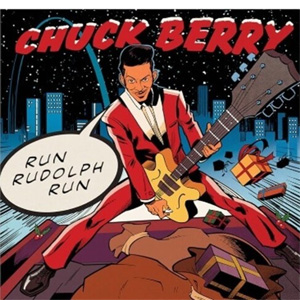
More goodies from my holiday music collection
Follow Tunes Du Jour on Facebook
Follow me on Bluesky
Follow me on Instagram
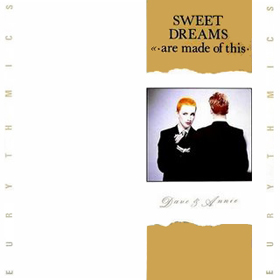
Today I’m celebrating World Dream Day, which, per its official website, “serves as a powerful reminder of the potential within each person to contribute positively to the world by advancing their personal and collective aspirations.”
Follow Tunes Du Jour on Facebook
Follow me on Bluesky
Follow me on Instagram
If you could travel back in time and turn on a car radio in 1963, what would you hear? It was a year poised on the brink of profound change, both culturally and musically. Listening to the pop charts from that year is like opening a time capsule of a specific American moment, one just before the British Invasion, led by The Beatles, would arrive on our shores in January 1964 and rearrange the entire landscape. Using a playlist of the year’s biggest hits, we can get a clear picture of the sounds that defined the last year of this particular pop era.
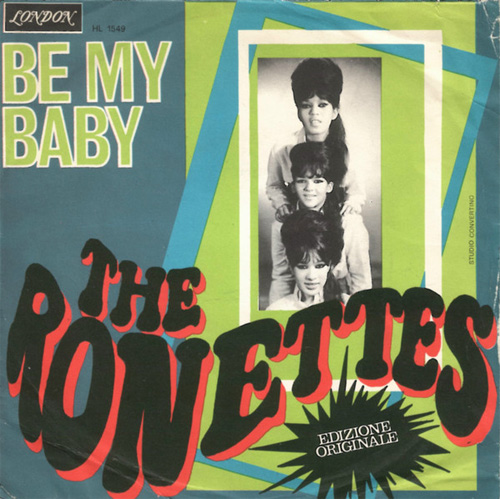
Two major sounds seemed to rule the airwaves, both born from a distinctly American, youthful energy. From the West Coast came the sun-drenched anthems of surf rock. The Beach Boys offered a national invitation with “Surfin’ U.S.A.,” while their friendly rivals Jan & Dean created the idyllic “Surf City.” This wasn’t just a vocal trend; the raw, driving energy of instrumental hits like The Surfaris’ “Wipe Out” and The Chantays’ “Pipeline” provided a visceral, drum-and-guitar-heavy soundtrack for a generation. Complementing this was the sound of the girl groups, often channeling teenage drama through the ambitious production of Phil Spector’s “Wall of Sound” on tracks like The Ronettes’ “Be My Baby” and The Crystals’ “Da Doo Ron Ron.” From the defiant fun of Lesley Gore’s “It’s My Party” to the tough-girl stance of The Angels’ “My Boyfriend’s Back,” these songs were miniature soap operas set to a 4/4 beat.
At the same time, a different kind of sound was solidifying its place at the heart of American music, broadcasting from Detroit and other soul music hubs. Motown was hitting its stride, producing hits that were both commercially successful and artistically sophisticated. You could feel the undeniable energy of Martha Reeves & The Vandellas on “(Love Is Like A) Heat Wave” or get lost in the smooth, clever plea of Smokey Robinson & the Miracles’ “You’ve Really Got a Hold on Me.” A teenage prodigy named Stevie Wonder even captured the explosive energy of his live performances on “Fingertips, Pts. 1 & 2.” It wasn’t just Motown, either. The soulful storytelling of groups like The Drifters on “Up on the Roof” and the raw, emotional performance of Garnet Mimms on “Cry Baby” showed the depth and variety within R&B and soul music.
Beyond these dominant movements, the Top 40 of 1963 was remarkably eclectic. The folk revival crashed onto the pop charts with Peter, Paul and Mary’s earnest version of Bob Dylan’s “Blowin’ In The Wind,” introducing a new layer of social consciousness to mainstream radio. Unclassifiable artists with singular visions also found massive success. Roy Orbison’s haunting, operatic ballad “In Dreams” and Johnny Cash’s iconic, mariachi-inflected “Ring of Fire” were worlds unto themselves. The charts even made room for the wonderfully unexpected: Kyu Sakamoto’s “Sukiyaki,” a beautiful Japanese-language ballad that became a number-one hit, and “Dominique” by The Singing Nun, also a number-one hit, proved that a great melody could transcend any language barrier. And in a class all its own was the wonderfully raw and raucous “Louie, Louie” by The Kingsmen, a garage-rock precursor that parents hated and kids loved.
Looking back, the collection of hits from 1963 represents a high point for a certain kind of American-made pop music. It was a world of surf guitars, dramatic girl-group harmonies, sophisticated soul, and a surprising number of unique one-offs. Every song on the radio, from Andy Williams’ smooth crooning to the gritty simplicity of “Louie, Louie,” was part of the same popular conversation. It was a vibrant and diverse scene, but one operating on its own terms. It had no idea that four young men from Liverpool were about to board a plane, bringing with them a sound that would change the rules for everyone.
Follow Tunes Du Jour on Facebook
Follow me on Bluesky
Follow me on Instagram
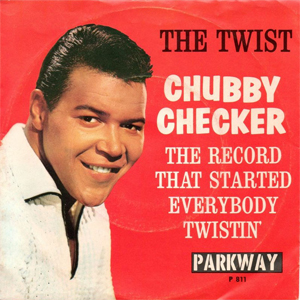
The year 1960 often gets passed over in rock history—a transitional time between the first burst of rock and roll and the cultural and musical revolutions just a few years away. But to call it sleepy is to miss the point. In fact, many of the year’s hits still reverberate today, not just as nostalgic touchstones but as enduring standards. “The Twist” by Chubby Checker launched a dance phenomenon that would ripple through pop culture for years. And “Save the Last Dance for Me” by the Drifters remains a masterclass in balancing heartbreak and sweetness—still played at weddings and in soundtracks, still finding new generations of listeners.
Ballads carried a lot of weight in 1960, and few did it better than Elvis Presley’s aching “Are You Lonesome Tonight?” or Roy Orbison’s “Only the Lonely,” which showcased his operatic vulnerability. Country narratives crossed into the mainstream with Marty Robbins’ “El Paso,” a story song that unspooled like a Western in miniature. At the other end of the spectrum, Maurice Williams & the Zodiacs’ “Stay” packed teenage yearning into a lean, irresistible one minute thirty-five seconds. And “Wonderful World” by Sam Cooke, though modest in ambition compared to some of his later work, remains a model of warmth and accessibility—a song that’s managed to feel timeless for more than six decades.
The sense of genre boundaries being tested is another hallmark of the year. Ray Charles brought gospel, blues, and pop together on his definitive reading of “Georgia on My Mind,” while Barrett Strong’s “Money (That’s What I Want)” helped lay the foundation for Motown’s impending ascent. Fats Domino’s “Walking to New Orleans” fused New Orleans rhythm with a subtle orchestral flourish, and Bobby Darin’s “Beyond the Sea” added a cosmopolitan swagger to the charts. These weren’t experiments for their own sake—they were evolutions of form, often rooted in deep tradition.
Rock’s wilder edges were still alive, though not always in the spotlight. Ike and Tina Turner’s “A Fool in Love” marked Tina’s explosive debut on the national stage—raw, commanding, and impossible to ignore. Instrumentals also carved out real estate, from the cinematic calm of Percy Faith’s “Theme From ‘A Summer Place’” to the proto-surf energy of The Ventures’ “Walk Don’t Run.” And in the novelty corner, “Itsy Bitsy Teeny Weeny Yellow Polka Dot Bikini” and “Alley Oop” proved that humor and absurdity had a place in the pop ecosystem.
So while 1960 may not have produced a defining movement, it certainly produced defining songs. These weren’t just placeholders between rock and roll’s rise and the British Invasion—they were records that resonated, sometimes quietly at first, but with a staying power that’s hard to deny. Whether filtered through covers, samples, soundtracks, or simple endurance, many of these tracks are still with us. It wasn’t a year of reinvention—but it was a year of remarkable staying power.
Follow Tunes Du Jour on Facebook
Follow me on Bluesky
Follow me on Instagram
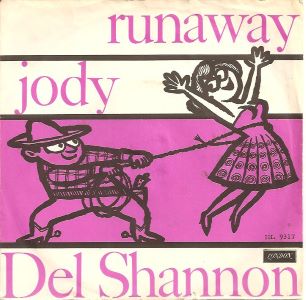
The year 1961 didn’t roar in with a musical revolution—but in hindsight, that’s part of its charm. Instead, it offered a series of small but significant steps toward what would become a much louder, wilder, and more politically charged musical landscape. If the ’50s laid the foundation for rock and R&B, then ’61 felt like a transitional hallway: not quite out of the doo-wop era, but inching toward soul, girl groups, and the unmistakable rise of youth-driven pop. Listen closely, and you can hear a generation beginning to test its voice.
The playlist for this year paints a picture of variety and crossover. Ben E. King’s “Stand by Me” combines gospel roots with a pop sensibility, creating a timeless anthem of emotional resilience. Meanwhile, The Marcels inject a doo-wop jolt into “Blue Moon,” turning a Rodgers and Hart chestnut into something utterly of the moment. And “Shop Around” by The Miracles helps define the early Motown sound—polished, melodic, and unmistakably urban—hinting at the empire Berry Gordy was quietly building in Detroit.
Pop and R&B weren’t the only sounds of 1961. The jazz world was still vibrant, and John Coltrane’s take on “My Favorite Things” stretched the familiar into something exploratory and modal, giving the Broadway tune a hypnotic new dimension. Similarly, Art Blakey’s “A Night in Tunisia” offered a fiery reminder that hard bop was far from finished. This year wasn’t just about three-minute singles on AM radio; it also made room for longer-form musical statements that spoke to listeners seeking complexity.
And then there were the voices—so many distinct, unforgettable voices. Roy Orbison’s near-operatic Crying and Patsy Cline’s aching “Crazy” each showed that vulnerability could be commercially viable. The same went for Etta James, whose rendition of “At Last” remains one of the most iconic vocal performances ever recorded. Elsewhere, the lighter side of pop was thriving with Neil Sedaka’s “Calendar Girl” and Bobby Vee’s “Take Good Care of My Baby,” songs built for teenagers who were beginning to see themselves as a cultural force.
Taken together, the music of 1961 reflects a moment in flux: the last glimmers of the 1950s still lingered, but the seeds of what would define the 1960s were clearly being planted. Whether it was Ray Charles fusing gospel and R&B on “Hit the Road Jack,” or the early stirrings of girl-group grandeur from The Marvelettes and The Shirelles, this was a year where nothing yet dominated—but everything seemed possible.
Follow Tunes Du Jour on Facebook
Follow me on Bluesky
Follow me on Instagram
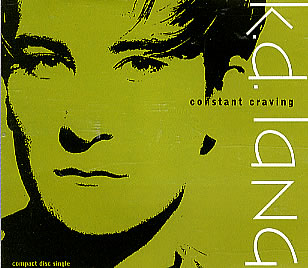
Few artists have carved out a career as distinctive and genre-defying as k.d. lang. From her early days performing alternative country music to her evolution into a sophisticated pop vocalist, lang has consistently demonstrated both remarkable vocal prowess and a fearless approach to artistic expression. Her signature song “Constant Craving” serves as just one highlight in a career spanning multiple decades and musical styles.
The versatility in lang’s artistry is evident throughout her discography. Her collaborations range from a memorable duet with Roy Orbison on “Crying” to more recent work with indie darlings Neko Case and Laura Veirs on “Atomic Number.” Her ability to move effortlessly between country classics like “Rose Garden” with The Reclines and sophisticated pop numbers like “Miss Chatelaine” showcases an artist who refuses to be confined by genre expectations.
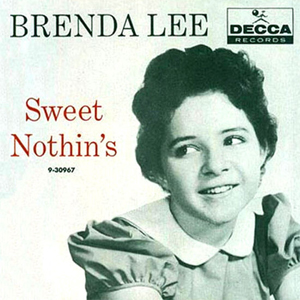
What sets lang apart is not just her four-octave vocal range, but her ability to infuse every performance with genuine emotional depth. This is particularly evident in her interpretations of classics, including Leonard Cohen’s “Hallelujah” and Cole Porter’s “So in Love.” Her country roots shine through in collaborations like the “Honky Tonk Angels’ Medley” with legends Brenda Lee, Loretta Lynn, and Kitty Wells, while tracks like “Summerfling” and “Sexuality” demonstrate her comfort with more contemporary pop arrangements.
Throughout her career, lang has maintained an unwavering commitment to artistic authenticity. From early country numbers like “Big Boned Gal” and “Trail of Broken Hearts” to more experimental works like “Just Keep Me Moving” and “Lifted By Love,” she has consistently pushed musical boundaries while staying true to her artistic vision. Her cover of The Beatles’ “Golden Slumbers/The End” further illustrates her talent for reinterpreting familiar material through her unique lens.
In examining lang’s body of work, what emerges is a portrait of an artist who has consistently prioritized musical excellence over commercial trends. Whether performing torch songs, country classics, or contemporary pop, she brings a level of sophistication and emotional authenticity that has earned her both critical acclaim and a devoted following. Her influence extends beyond any single genre, cementing her legacy as one of the most versatile and compelling vocalists of her generation.
Follow Tunes du Jour on Facebook
Follow Tunes du Jour on Twitter
Follow me on Instagram
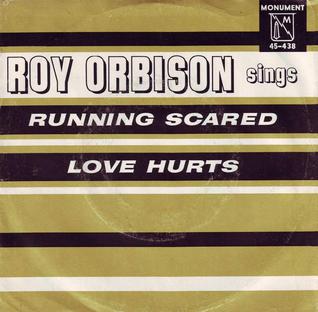
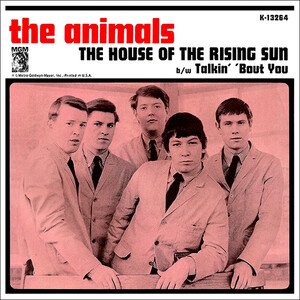
In 1964, the musical landscape was undergoing a seismic shift. From the electrifying British Invasion to the soulful sounds of Motown, 1964 was a year that truly had something for everyone.
One cannot discuss the music of 1964 without acknowledging the unparalleled influence of The Beatles. With their chart-topping hit “I Want To Hold Your Hand,” the Fab Four ignited a phenomenon that would forever alter the course of popular music. Their harmonious blend of catchy melodies and innovative arrangements captivated audiences worldwide, laying the groundwork for the British Invasion that would dominate the airwaves in the years to come.
The UK also brought us The Animals, whose “House Of The Rising Sun” captivated audiences with its electrifying intensity, while The Kinks offered a more garage-band, raw sound with “You Really Got Me.”
But 1964 was not just about the British Invasion; it was also a time of soulful sounds and Motown magic. Artists like Martha & The Vandellas, The Supremes, and The Four Tops delivered soul-stirring performances on classic hits.
The surf rock craze was in full swing, with The Beach Boys’ “I Get Around” capturing the carefree California lifestyle. And for those who preferred a more melancholic sound, there were ballads like Dionne Warwick’s “Walk On By.”
Beyond the well-known names associated with 1964, this playlist unearths other soundtracks of the year, like “My Boy Lollipop” by Millie Small, a ska track that became a surprise summer hit, and “The Girl From Ipanema” by Stan Getz & Astrud Gilberto, a bossa nova masterpiece that brought a touch of Brazilian cool to the airwaves.
This playlist is just a taste of the incredible music that 1964 had to offer, though even a brief exploration of 1964’s music reveals a year brimming with creativity and cultural impact. From the infectious melodies of pop anthems to the raw energy of rock and roll, these songs continue to resonate with listeners today, reminding us of the enduring power of music to capture a moment in time and transport us back. It was a year that changed the landscape of popular music forever, leaving behind a legacy that continues to inspire and entertain generations of listeners.
Follow Tunes Du Jour on Facebook
Follow Tunes Du Jour on Twitter
Follow me on Instagram