A Hint Of Mint – Volume 78: LGBTQ Music From 1984 To 1985

In this installment, we finally wrap up 1984 and move into 1985, welcoming Bronski Beat into the fold. There are songs to dance to, songs to rock out to, and some to chill out to.

This playlist consists of twenty songs, most performed by artists who fall somewhere under the LGBTQ umbrella, a couple with queer lyrical content.

[8tracks width=”300″ height=”250″ playops=”” url=”http://8tracks.com/mixes/8477901″] Click here to like Tunes du Jour on Facebook!
Follow me on Twitter: @TunesDuJour
Follow me on Instagram: @GlennSchwartz

A Hint Of Mint – Volume 75: LGBTQ Music From 1982 To 1983

The British invasion of the early 80s continues! Welcome Boy George! Welcome George Michael! Welcome Morrissey (I’m claiming him as one of us; I don’t care what he has to say about it)!

This playlist consists of twenty songs, some performed by artists who fall somewhere under the LGBTQ umbrella, others with queer lyrical content. Some of the acts are American.

[8tracks width=”300″ height=”250″ playops=”” url=”http://8tracks.com/mixes/8433479″] Click here to like Tunes du Jour on Facebook!
Follow me on Twitter: @TunesDuJour
Follow me on Instagram: @GlennSchwartz

Throwback Thursday – 1987 (Part II)

One of 1987’s most popular and critically-acclaimed hits began its life as a demo recording named after the duo who sang “It’s Raining Men.”

It’s by the band U2, who referred to the track as “The Weather Girls” or “Under the Weather.” Their guitarist, The Edge, told Rolling Stone magazine that the song sounded like a reggae band’s version of Survivor’s “Eye of the Tiger.” Over time they developed the song. Instruments were added to the initial drum pattern. When it came time to come up with lyrics, The Edge gave singer Bono a piece of paper on which he had written a phrase that came to him earlier that day – “I Still Haven’t Found What I’m Looking For.”

That became the song’s title, with lyrics inspired by the gospel music Bono was listening to at the time. “I Still Haven’t Found What I’m Looking For” was U2’s second consecutive #1 single, following “With or Without You,” which was included on part 1 of Tunes du Jour’s Throwback Thursday – 1987 playlist.

Here are twenty of 1987’s best, kicking off not with The Weather Girls, but with U2.


Click here to like Tunes du Jour on Facebook!
Follow me on Twitter: @TunesDuJour
Follow me on Instagram: @GlennSchwartz

Throwback Thursday – 1986

By 1986, Aerosmith appeared to have had their best years behind them. Sales of their releases that decade lagged significantly behind their hits in the 1970s, and the group’s members were struggling with drug addictions.

They did have fans, though. One was music producer Rick Rubin. He was working with rap group Run-D.M.C., who were known in hip hop circles and with music critics for incorporating rock guitars and beats in their boastful raps, such as “Rock Box” and “King of Rock.”

Rubin suggested Run-D.M.C. do a remake of Aerosmith’s 1977 hit “Walk This Way,” but the rappers had no interest in doing a cover. However, the group’s DJ, Jam Master Jay, was open to the idea, and Rubin called Aerosmith’s Steven Tyler and Joe Perry to come into the studio. Perry was familiar with the rappers, as his stepson was a fan. Jam Master Jay convinced Run and D.M.C. to give the remake a shot, seeing as Tyler and Perry were in the studio with Rubin.

The Run-D.M.C./Aerosmith version of “Walk This Way” was not only massively successful, but highly influential as well. It became Run-D.M.C.’s first crossover hit, and the first rap track to make the top ten of Billboard’s Hit 100, peaking at #4, six notches higher than Aerosmith’s original peaked. It opened the door to future song/rap collaborations, something that continues to dominate the charts to this day, not to mention bringing “rock rap” to a wide audience.

Steven Tyler went to rehab in 1986, and the other members of Aerosmith also sought treatment for their drug addictions. On the heels of the success of the “Walk This Way” remake, Aerosmith released the Permanent Vacation album in the late summer of 1987. Its first single, “Dude (Looks Like a Lady),” became the group’s first hit single outside the Run-D.M.C. collaboration since 1978’s “Come Together.” They followed that single with a string of big hits over the next few years, including “Love in an Elevator,” “Cryin’,” “Janie’s Got a Gun,” “I Don’t Want to Miss a Thing,” “Livin’ on the Edge,” and “Jaded.”

This week’s Throwback Thursday playlist spotlights the best of 1986, kicking off with the groundbreaking “Walk This Way,” performed by Run-D.M.C. and featuring Aerosmith’s “Steven Tyler and Joe Perry.


Click here to like Tunes du Jour on Facebook!
Follow me on Twitter: @TunesDuJour
Follow me on Instagram: @GlennSchwartz

A Hint Of Mint – Volume 58: A Total Blam-Blam

I’d love to tell you what’s on this playlist, but I’m late for an appointment and the words aren’t coming to me. I can tell you it includes The Smiths, Queen and Bronski Beat, that it’s a rocking affair, and that the oldest song on it is from 1966 and the most recent from 2002. Now if you’ll excuse me….

[8tracks width=”300″ height=”250″ playops=”” url=”http://8tracks.com/mixes/8081205″] Click here to like Tunes Du Jour on Facebook!
Follow me on Twitter: @TunesDuJour
Follow me on Instagram: @GlennSchwartz

Ringo + Madonna

Throwback Thursday – 1985

Ringo + Madonna

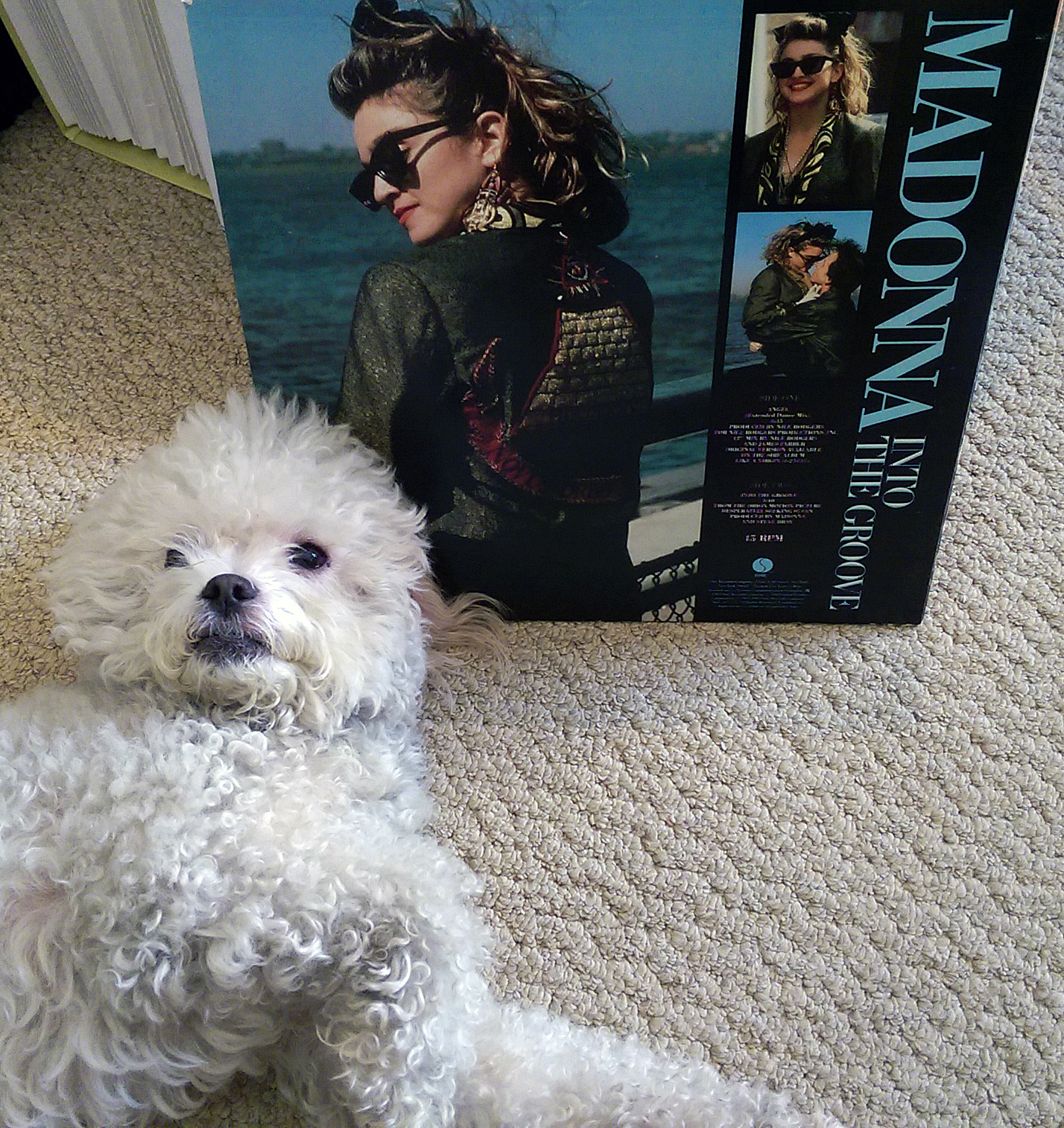
In 1984, Madonna peaked at #18 on the Billboard Hot 100 with her first charting single, “Holiday.” By the following year, she had established herself as the Queen of the Pop Charts. She followed “Holiday” with three singles that hit the top ten in 1984: “Borderline,” “Lucky Star” and “Like a Virgin,” the latter hitting #1 and remaining there for six weeks. She opened 1985 with the #2 hit “Material Girl,” followed closely by the #1 “Crazy for You.” “Crazy” is from the film Vision Quest, in which Madonna had a small part as a nightclub singer.

Madonna had a much larger role in the film Desperately Seeking Susan. Released in April 1985, the smash film featured a new track from Madonna, “Into the Groove.” As one might expect when a new superstar has a new song, and a great song at that, the track received lots of radio airplay. “Groove” hit #1 on the Dance Club chart, and the only record on which it appeared, a 12-inch single where it was the b-side of “Angel,” went gold, selling over a million units in the US.

Though it was a big seller with a ton of airplay and club play, “Into the Groove” never hit Billboard’s Hot 100. Though that chart is supposed to accurately reflect a song’s popularity in the US, Billboard imposes rules that hang around longer than they should, throwing off historians looking into a song’s popularity. One of the arcane rules in 1985 was that a song had to be available on a commercial 7-inch vinyl single to be eligible to chart. Commercial availability solely on a 12-inch vinyl single, even one that sold over a million copies, is not enough. Widespread radio play on a variety of formats (the song hit the top twenty on the r&b chart, which for reasons that made sense to Billboard’s chart editors, allowed 12-inch singles to chart) is not enough.

Eventually, Billboard got around to revising these rules. The advent of cassingles (cassette tape singles) and CD singles expanded the formats eligible. The music industry’s decision to hold back the release of singles in any format to force consumers to shell out big bucks for a full-length album to get the one song they liked forced Billboard to make radio airplay without a commercial single good enough for a Hot 100 chart placement, but that change didn’t come into being until December of 1998, thirteen years too late for Madonna and historians.

This week’s Throwback Thursday kicks off with one of the best-known songs to have never charted on Billboard’s Hot 100, Madonna’s “Into the Groove.” It is followed by other music highlights of 1985.


Click here to like Tunes du Jour on Facebook!
Follow me on Twitter: @TunesDuJour
Follow me on Instagram: Glenn.Schwartz99

Winston + MJ

Throwback Thursday – 1983

Winston + MJ
MTV debuted on August 1, 1981. Back then it was a music video network. It positioned itself as a rock station. Most of the videos shown were of songs made by Caucasian performers, though rock-leaning black acts such as Joan Armatrading and the Bus Boys got some play.

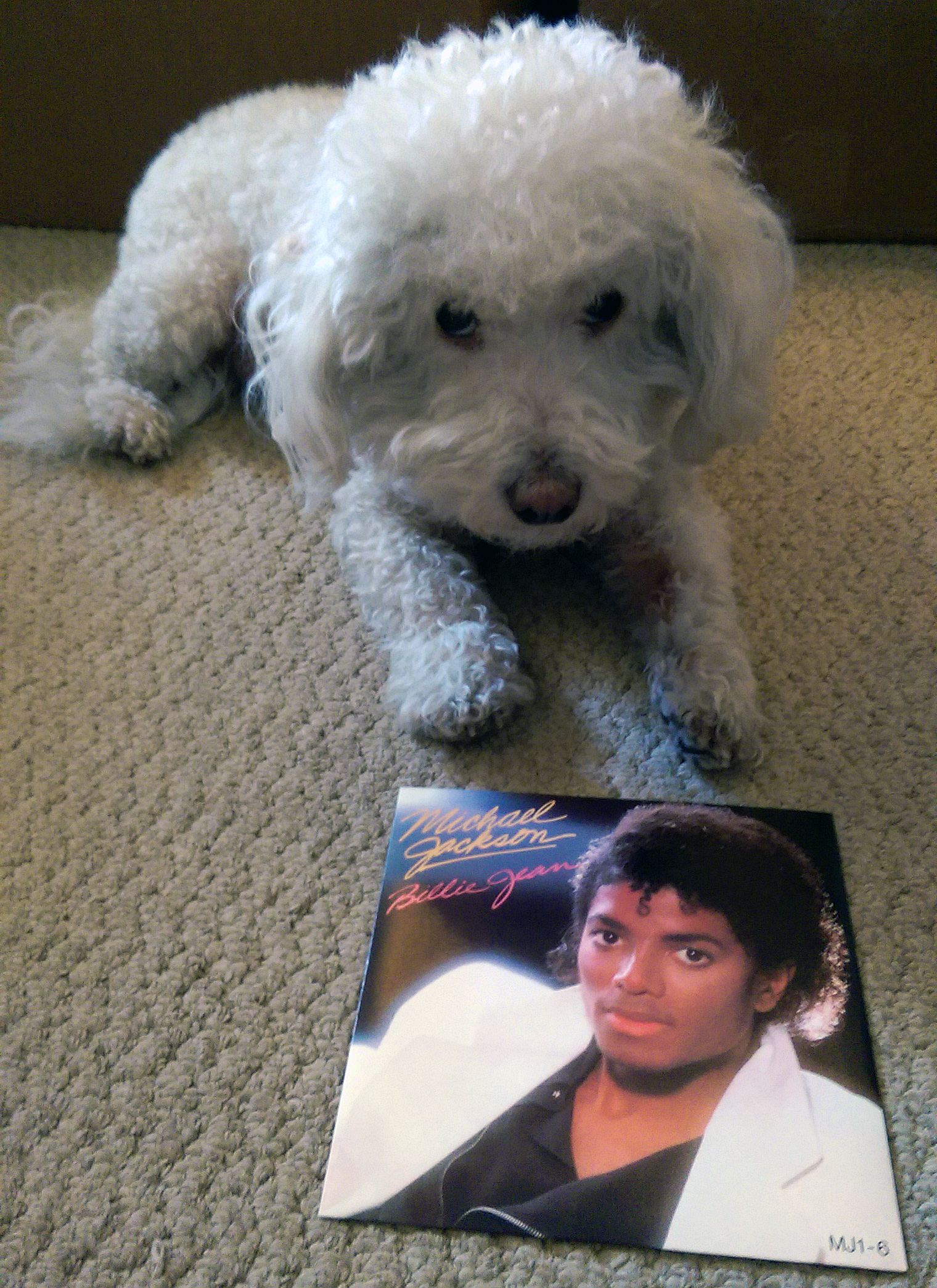
Then came “Billie Jean.” The second single from Michael Jackson’s Thriller, “Billie Jean” was accompanied by a stylish video featuring a mesmerizing performance from Jackson. However, it wasn’t a rock song. It didn’t fit the format of rock radio stations, and it didn’t fit the format of MTV either.

But there is a big difference between radio and music television. There were plenty of radio stations and many different formats. You may not hear “Billie Jean” on the rock stations, but you could hear it on r&b stations and pop stations and dance-leaning stations. However, there was only one music television – MTV.

In his autobiography, Howling at the Moon, Walter Yetnikoff, head of CBS Records, for whom Jackson recorded (and where I worked in my first music business job), wrote “I screamed bloody murder when MTV refused to air [Jackson’s] videos. They argued that their format, white rock, excluded Michael’s music. I argued they were racist assholes – and I’d trumpet it to the world if they didn’t relent. I’ve never been more forceful or obnoxious. I’ve also never been as effective, threatening to pull all our videos. With added pressure from [Thriller producer] Quincy Jones, they caved in, and in doing so the MTV color line came crashing down.”

Jackson’s video for “Billie Jean” aired on MTV, followed just weeks later by his video for “Beat It,” a song whose guitar solo from Eddie Van Halen helped make it a hit on rock radio. These two videos made Jackson, already a superstar, a worldwide phenomenon with a humongous fan base that transcended race, age and location in a way never seen before. These two videos made MTV, a year and a half old and fairly popular in white suburban areas, a cultural institution. These two videos made the music video, then not something done for many singles, particularly those performed by artists of color, an art form and a necessary marketing tool.

Some people tuned in to MTV to see the Michael Jackson videos, and while watching the channel, discovered other acts. Some people tuned in to MTV to watch “white rock” videos, and while watching the channel, discovered Michael Jackson.

MTV went to showcase more “non-rock” videos. In 1988, they launched their hugely popular program Yo! MTV Raps, something that would have been completely unexpected just five years earlier, pre-“Billie Jean.”

While MTV deserves credit for making “Billie Jean” and Thriller successful, the person most responsible is Jackson himself. He wrote the song. He sang the song. He danced the song. Quincy Jones did not want “Billie Jean” to appear on Thriller. He didn’t like the title. He didn’t like the bassline. He felt the song’s introduction was too long. Jackson argued “But that’s the jelly!…That’s what makes me want to dance.” Jones wasn’t ready for this jelly, but Jackson stood his ground.

In May of 1983, NBC aired a tribute to Motown Records. Motown: Yesterday, Today, Forever featuring many legends who recorded for the storied label performing their classics. We saw Diana Ross, the Temptations, Marvin Gaye, Smokey Robinson and the Miracles, Stevie Wonder, the Four Tops, Martha Reeves, Lionel Richie and the Commodores, Mary Wells, Junior Walker and then some. It was a terrific show, but the talk of the town following its airing was the performance of a song not from the Motown catalogue – Michael Jackson’s “Billie Jean.” The iconic performance, during which Jackson brought the famous moonwalk to the world at large, pushed him that much more ahead of any other performer working in music back then.

Following “Beat It,” CBS Records released four more singles from Thriller. All seven of the singles released (the album had only nine songs!) went top ten, breaking the record of most top ten hits from a single-artist album that was set a few years earlier by…Michael Jackson, whose Off the Wall gave us four. Before Thriller, four singles for one album was considered a lot. Thriller raised the bar for blockbuster albums, and subsequent releases such as Bruce Springsteen’s Born in the U.S.A., Prince’s Purple Rain, Def Leppard’s Hysteria and Janet Jackson’s Control each produced more than four hits.

“Billie Jean” changed everything.

On this week’s Throwback Thursday playlist, Tunes du Jour spotlights 1983, kicking off with Michael Jackson’s classic “Billie Jean.”


Click here to like Tunes du Jour on Facebook!
Follow me on Twitter: @TunesDuJour

100 Greatest Artists

Last week my close friend Laura forward to me a link to Rolling Stone magazine’s “100 Greatest Artists” and asked for my impression.

My 100 Greatest Artists list includes many of the same acts as Rolling Stone’s list; however, there is a large handful of acts on my roll that are not on that publication’s slate.

I won’t disparage their choices (but seriously, Aerosmith at #59?). Instead, I will share with you music from twenty artists that made my roster but are not among Rolling Stone’s top 100.

Feel free to share your choice acts in the Comments section.


Click here to like Tunes du Jour on Facebook!
Follow me on Twitter: @TunesDuJour

A Hint Of Mint – Volume 15: British Music Of The Eighties

Many gay, lesbian and bisexual artists emerged from the British pop music scene in the eighties. Some were out from the beginnings of their career and sang about gay lives; some created great songs and came out later on. Most of the artists on this playlist are L,G or B, while some are allies.

[8tracks width=”300″ height=”250″ playops=”” url=”http://8tracks.com/mixes/6756363″] Click here to like Tunes du Jour on Facebook!
Follow me on Twitter: @TunesDuJour

Sam + Ringo

It Really Shoulda…

Sam + Ringo
It’s that time of year when music geeks such as I think about the I.R.S. I.R.S. as in It Really Shoulda, as in it really should been a top ten hit.

Eight years ago, a colleague from my Sony Music days, Rich Appel, created the I.R.S. countdown. Music fans submitted a list of songs that didn’t make the top ten on Billboard magazine’s Hot 100 but should have, in their opinion. Rich compiled the tallies to create the overall I.R.S. top 104. He’s been compiling this survey each year since.

As for why a song should have been a top ten hit, that’s left entirely up to the list-maker. On my list, I included records that are perfect or near-perfect melodically, lyrically and/or production-wise. I included songs that have withstood the test of time and are still part of the public consciousness years later. I included records that everybody thinks were top ten hits. I included tracks that would have been top ten hits except they didn’t conform to Billboard’s rules for chart placement at their time of release (e.g. they weren’t available on commercial 7-inch singles or viral video play didn’t count in metric measurements). I included singles by artists who hit the top ten with lesser songs. I focused on tracks that have pop appeal, leaving out fantastic recordings from some of my favorite acts, such as The Replacements and The Smiths – they were called “alternative” because they weren’t pop.

My list for 2015 is below, followed by a Spotify playlist of those songs. Rich asks people submitting lists to put them in order, with #1 being the record one feels should have, more than any other, been a top ten hit. Ask me to do so tomorrow and my list will likely be in a different order.

For today, here is my I.R.S. 104. After the artist name I listed how high the song charted during its initial release. If the single hit the Hot 100 at a later date, I included that information as well.

You can hear the official I.R.S. 104 tally for 2015 on Rich Appel’s radio show, That Thing, this coming weekend on RewoundRadio.com. Friday at 6PM Eastern he’ll go from #104 to around #53 and Sunday starting at 6PM Eastern he’ll pick up from where he left off and go to #1.

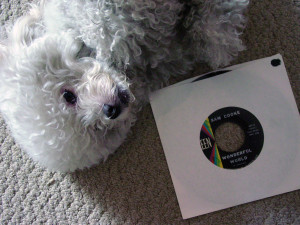
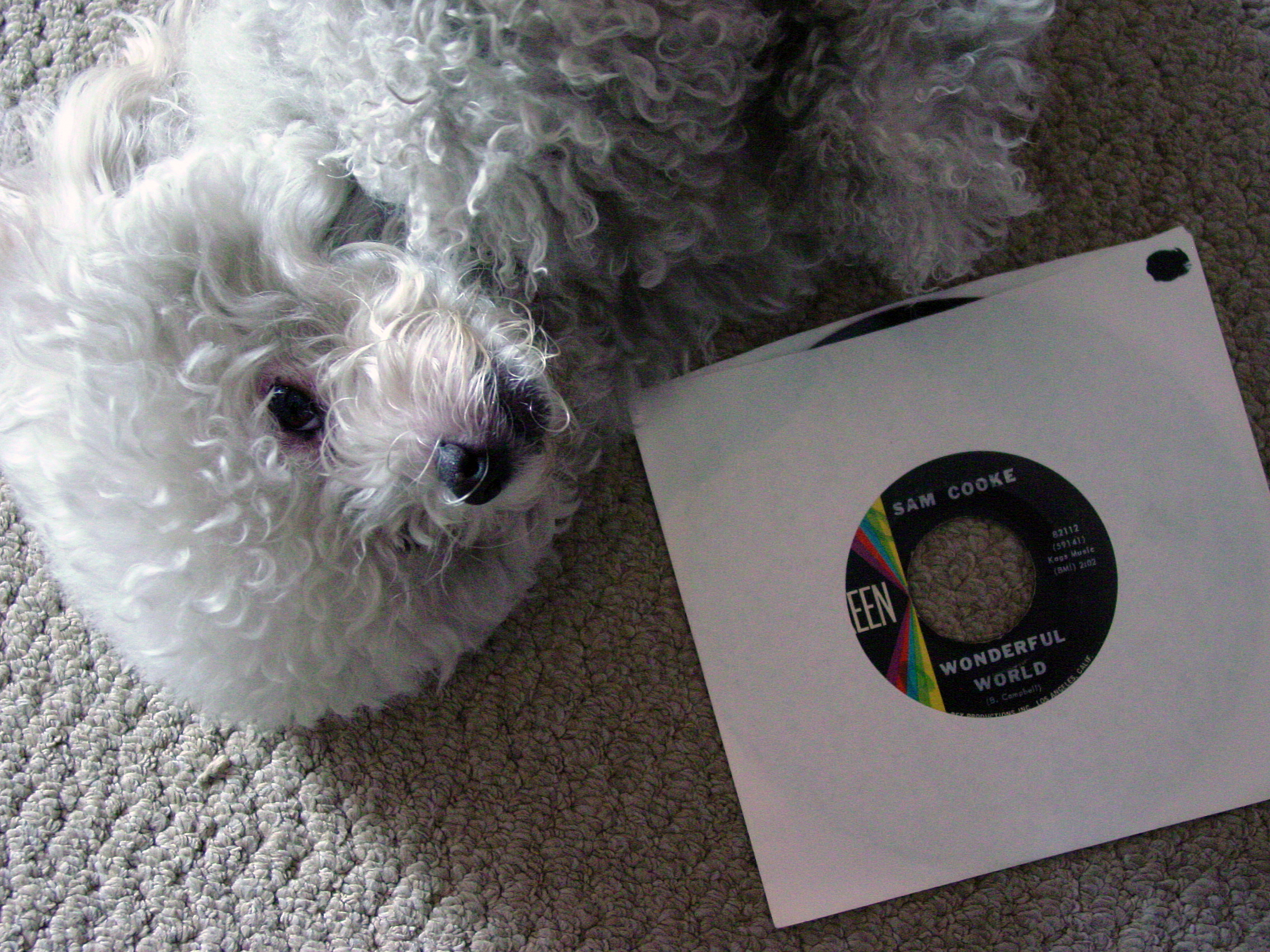
1. Wonderful World – Sam Cooke (#12, 1960)
2. Ain’t No Mountain High Enough – Marvin Gaye and Tammi Terrell (#19, 1967)
3. River Deep, Mountain High – Ike and Tina Turner (#88, 1966)
4. I Only Want to Be with You – Dusty Springfield (#12, 1964)
5. Fortunate Son – Creedence Clearwater Revival (#14, 1969)
6. Cupid – Sam Cooke (#17, 1961)
7. Holiday – Madonna (#16, 1984)
8. Isn’t She Lovely – Stevie Wonder (did not chart, 1977)
9. 1999 – Prince (#44, 1982; #12, 1983; #40, 1999)
10. Born to Run – Bruce Springsteen (#23, 1975)
11. It Takes Two – Marvin Gaye and Kim Weston (#14, 1967)
12. Little Egypt (Ying Yang) – The Coasters (#23, 1961)
13. I Want to Take You Higher – Sly & the Family Stone (#60, 1969; #38, 1970)
14. Into the Groove – Madonna (did not chart, 1985)
15. We Will Rock You – Queen (did not chart, 1978; #52, 1992)
16. S.O.S. – Abba (#15, 1975)
17. You’ve Got a Friend – Carole King (did not chart, 1971)
18. Hold On! I’m Comin’ – Sam & Dave (#21, 1966)
19. Try a Little Tenderness – Otis Redding (#25, 1967)
20. The Way You Do the Things You Do – The Temptations (#11, 1964)
21. It’s a Shame – Spinners (#14, 1970)
22. It’s Gonna Work Out Fine – Ike & Tina Turner (#14, 1961)
23. Under My Thumb – the Rolling Stones (did not chart, 1966)
24. Opus 17 (Don’t You Worry ‘Bout Me) – Four Seasons (#13, 1966)
25. Me and Julio down by the School Yard – Paul Simon (#22, 1972)
26. Happy Xmas (War Is Over) – John & Yoko & the Plastic Ono Band with the Harlem Community Choir (did not chart, 1971)
27. I’m Every Woman – Chaka Khan (#21, 1978)
28. Viva Las Vegas – Elvis Presley (#29, 1964)
29. Do They Know It’s Christmas? – Band Aid (#13, 1984)
30. Super Freak – Rick James (#16, 1981)
31. Mighty Love – Spinners (#20, 1974)
32. Stan – Eminem featuring Dido (#51, 2000)
33. So Far Away – Carole King (#14, 1971)
34. Christmas (Baby Please Come Home) – Darlene Love (did not chart, 1963)
35. Because the Night – Patti Smith Group (#13, 1978)
36. Big Yellow Taxi – Joni Mitchell (#67, 1970)
37. Candy Girl – New Edition (#46, 1983)
38. Brass in Pocket (I’m Special) – Pretenders (#14, 1980)
39. Everybody Hurts – R.E.M. (#29, 1993)
40. It Takes Two – Rob Base & DJ E-Z Rock (#36, 1988)
41. Heartbreak Hotel – the Jacksons (#22, 1981)
42. Young Hearts Run Free – Candi Staton (#20, 1976)
43. Valerie – Mark Ronson featuring Amy Winehouse (did not chart, 2007)
44. Rock and Roll All Nite (live) – Kiss (#12, 1976)
45. You Make Me Feel (Mighty Real) – Sylvester (#36, 1979)
46. L-O-V-E (Love) – Al Green (#13, 1975)
47. It’s Raining Men – the Weather Girls (#46, 1983)
48. I’m a Slave 4 U – Britney Spears (#27, 2001)
49. You Shook Me All Night Long – AC/DC (#35, 1980)
50. Wake Up Everybody – Harold Melvin and the Blue Notes (#12, 1976)
51. Walk on the Wild Side – Lou Reed (#16, 1973)
52. Bring It on Home to Me – Sam Cooke (#13, 1962)
53. Pride (In the Name of Love) – U2 (#33, 1984)
54. Ain’t No Stoppin’ Us Now – McFadden & Whitehead (#13, 1979)
55. Move Your Feet – Junior Senior (did not chart, 2003)
56. Heroes – David Bowie (did not chart, 1977)
57. Werewolves of London – Warren Zevon (#21, 1978)
58. One Way or Another – Blondie (#24, 1979)
59. You Get What You Give – New Radicals (#36, 1999)
60. Heaven Must Be Missing an Angel – Tavares (#15, 1976)
61. Ain’t Nobody – Rufus featuring Chaka Khan (#22, 1983)
62. You Can Call Me Al – Paul Simon (#44, 1986, #23, 1987)
63. I Can’t Make You Love Me – Bonnie Raitt (#18, 1992)
64. Young Americans – David Bowie (#28, 1975)
65. A Change Is Gonna Come – Sam Cooke (#31, 1965)
66. Respect Yourself – the Staple Singers (#12, 1971)
67. Moondance – Van Morrison (did not chart, 1970; #92, 1977)
68. Where’s the Love – Hanson (did not chart, 1997)
69. Don’t You Worry ‘Bout a Thing – Stevie Wonder (#16, 1974)
70. I Want Candy – Bow Wow Wow (#62, 1982)
71. Genius of Love – Tom Tom Club (#31, 1982)
72. Beautiful Stranger – Madonna (#19, 1999)
73. Shame, Shame, Shame – Shirley (& Company) (#12, 1975)
74. The Way I Am – Eminem (#58, 2000)
75. Jungle Love – The Time (#20, 1985)
76. Gypsy – Fleetwood Mac (#12, 1982)
77. Smile – Lily Allen (#49, 2007)
78. Tear the Roof off the Sucker (Give up the Funk) – Parliament (#15, 1976)
79. Same Love – Macklemore & Ryan Lewis featuring Mary Lambert (#11, 2013)
80. Solid – Ashford & Simpson (#12, 1985)
81. Rapper’s Delight – The Sugarhill Gang (#36, 1980)
82. The Cup of Life – Ricky Martin (#60, 1998; #45, 1999)
83. Me, Myself and I – De La Soul (#34, 1989)
84. Bad Luck – Harold Melvin & the Blue Notes (#15, 1975)
85. Once in a Lifetime – Talking Heads (did not chart, 1981)
86. Fuck You – Lily Allen (#68, 2009)
87. Such Great Heights – The Postal Service (did not chart, 2003)
88. Can’t Take My Eyes Off You (movie version) – Lauryn Hill (did not chart, 1998)
89. Dedication to My Ex (Miss That) – Lloyd featuring Andre 3000 (#79, 2011)
90. Jump To It – Aretha Franklin (#24, 1982)
91. Mamma Mia – Abba (#32, 1976)
92. Space Oddity – David Bowie (did not chart, 1969; #15, 1973)
93. P Control – O{+> (Prince) (did not chart, 1995)
94. Got Your Money – Ol’ Dirty Bastard featuring Kelis (#33, 1999)
95. LDN – Lily Allen (did not chart, 2007)
96. It Doesn’t Matter Anymore – Buddy Holly (#13, 1959)
97. Does Your Mother Know – Abba (#19, 1979)
98. Up in a Puff of Smoke – Polly Brown (#16, 1975)
99. Blue Limousine – Apollonia 6 (did not chart, 1984)
100. All the Young Dudes – Mott the Hoople (#37, 1972)
101. Fight the Power – Public Enemy (did not chart, 1989)
102. Pass That Dutch – Missy Elliott (#27, 2003)
103. Stacy’s Mom – Fountains of Wayne (#21, 2003)
104. You Know I’m No Good – Amy Winehouse (#78, 2007; #77, 2008)


Click here to like Tunes du Jour on Facebook!
Follow me on Twitter: @TunesDuJour