Elton John’s Derivative Rock

British-born Reginald Kenneth Dwight, better known by his stage name, Elton John, hit #1 on the singles and album charts in the U.S. prior to doing so in his home country.

His first #1 album stateside was Honky Château, which topped the chart in 1972, thanks to hit singles “Rocket Man” (#6) and “Honky Cat” (#8).

The first single off his follow-up album was inspired by a song Elton discovered while touring Australia the year Château was released. A local band named Daddy Cool had a million-selling smash in that country called “Eagle Rock,” which remained at #1 on their singles chart for ten weeks. The song told of a popular American dance from the 1920s.

Bernie Taupin, Elton’s lyricist in those days, wrote of a fictional American dance from the early days of rock and roll. Taking Bill Haley & His Comets’ “See You Later Alligator” as inspiration for this dance, Taupin called it the “Crocodile Rock.” Another Haley classic is referenced in the song, as Elton sings “while the other kids were rockin’ ‘round the clock.”

Other early rock-and-roll tunes inspired the writers (Elton composed the music) as well. Buddy Kaye, writer of “Speedy Gonzales,” a 1962 hit for homophobic shitbag Pat Boone, accused Elton of copying that tune for “Crocodile Rock”’s “la la la la la” refrain. Elton’s response to Kaye’s claim was that “Crocodile Rock” was “a really blatant homage to ‘Speedy Gonzales’ and all the great ’50s and ’60s records that we used to love.” So there!

“Crocodile Rock,” which, by the way, contains eighty “la’s,” was released as a single in the U.S. in November of 1972, the first single released by MCA Records. It became the first of eight #1 singles for Elton John. In the U.K. the single peaked at #3. The long-player from which it was taken, Don’t Shoot Me I’m Only the Piano Player, became the second of seven #1 Elton John albums in the U.S. and his first #1 album in the U.K.

(Elton’s first solo single to top the charts in the U.K. was 1990’s “Sacrifice.” He previously topped the U.K. chart with “Don’t Go Breaking My Heart,” a duet with Kiki Dee, in 1976.)

Of Elton’s first U.S. #1, Bernie Taupin said “I don’t want people to remember me for ‘Crocodile Rock.’ … But there are things like ‘Crocodile Rock’ which was fun at the time, but it was pop fluff. It was like, ‘Okay, that was fun for now, throw it away, and here’s the next one’” and called the song “a strange dichotomy because I don’t mind having created it, but it’s not something I would listen to.”

Elton’s retort to critics who called the song derivative was “it’s derivative in every sense of the word.”

Today Elton John turns 68 years old. Here are twenty tracks from when he and his rock were young.

Click here to like Tunes du Jour on Facebook!
Follow me on Twitter: @TunesDuJour
chaka + Ringo

In Which I Make A Fool Of Myself To Chaka Khan

chaka + Ringo
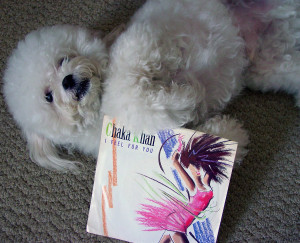
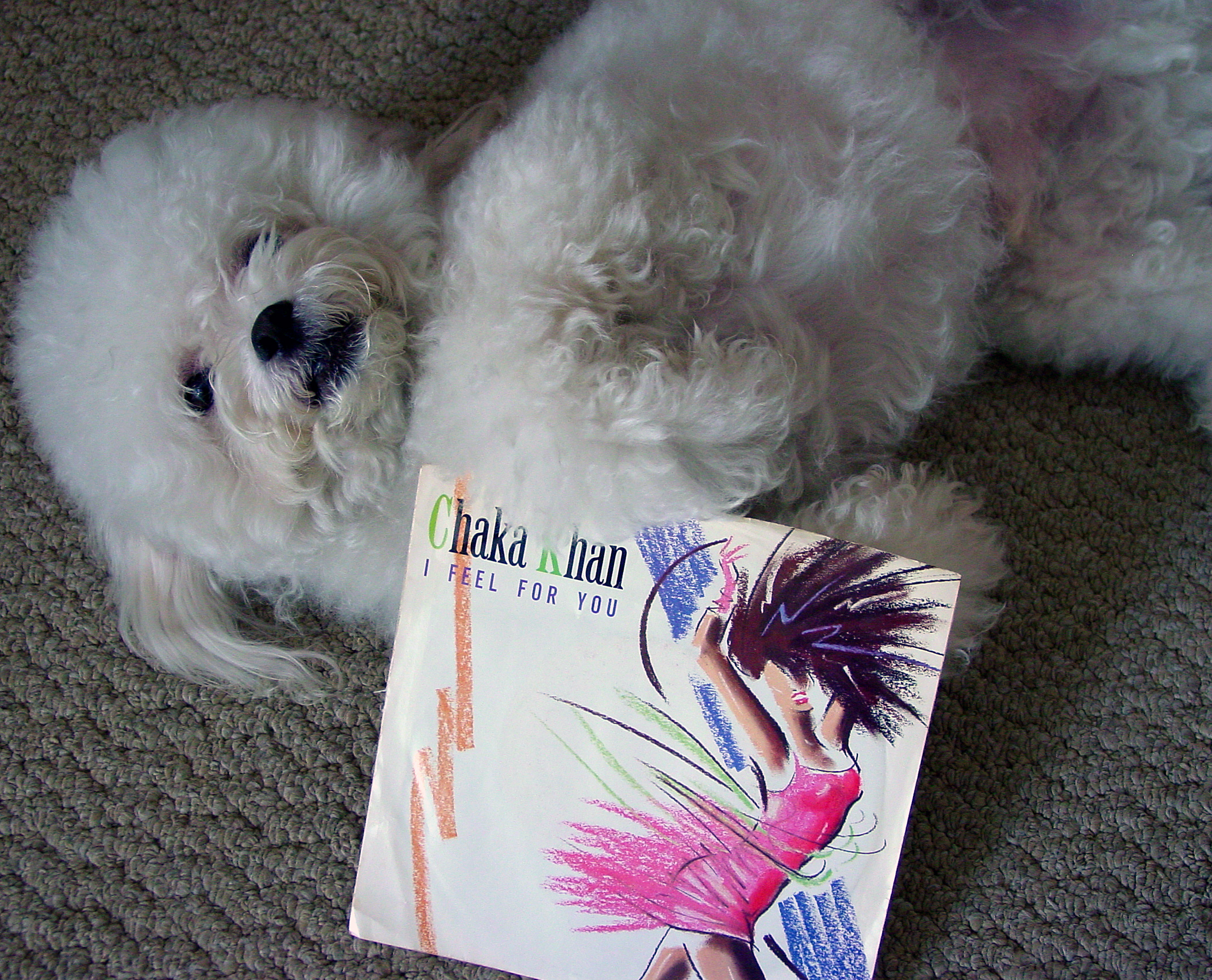
The first time I saw Chaka Khan in person was in concert in the mid-1980s at the Westbury Music Fair, which was not a music fair but the name of a theater. Her career was at its commercial height, with her cover of Prince’s “I Feel For You” becoming her twelfth top 40 pop hit in 1984. Like her 1974 single with Rufus, the Stevie Wonder-penned “Tell Me Something Good,” it peaked at #3. “I Feel for You” stayed on the Hot 100 for a full six months, longer than any of her prior singles.

Chaka + Winston
The second time I saw Chaka Khan in person was in the early 1990s. I was working in the Accounting department at Sony Music. I took the elevator down from my 11th floor office to the building sky lobby, headed out for I don’t know what. As I turned the corner of the elevator bank I saw that hair. Chaka Khan was a few feet in front of me. I’m not often star struck, but CHAKA KHAN!!! I didn’t see with whom she was speaking until he said “Glenn, come over.” It was the Vice President of Urban Music for Epic Records, one of Sony’s labels. I was friendly with him through working on his expense account.

“Glenn, Chaka Khan. Chaka Khan, Glenn Schwartz.”

“Hi,” said Chaka Khan.

“You are the ultimate sex goddess of life,” I replied. Inappropriate? Perhaps, but true. This was CHAKA KHAN, a woman on whom I’ve had a crush since “Tell Me Something Good” was a hit.

“Thanks,” she said, which was code for “I need to leave now.”

chaka + doggies
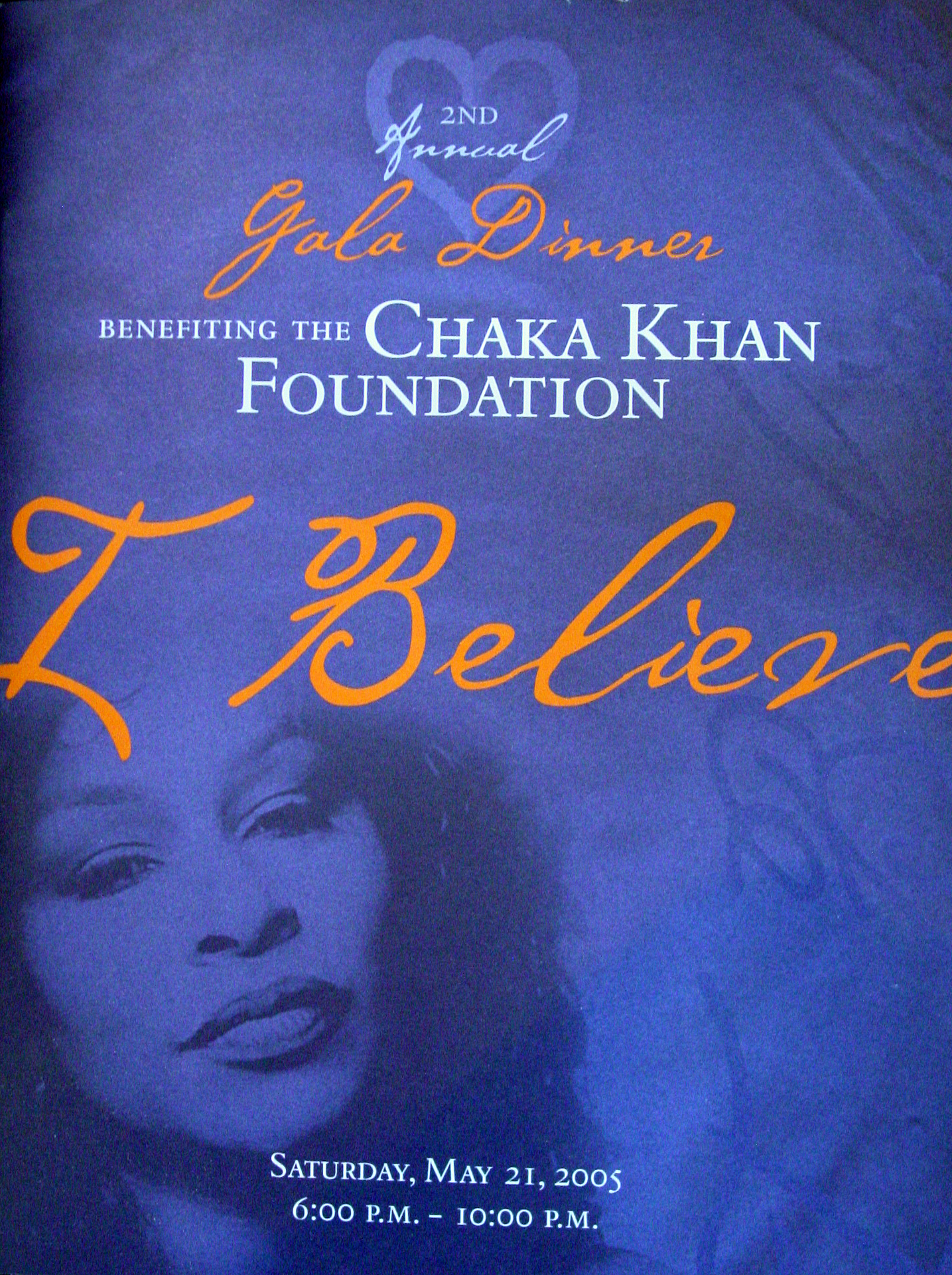
In 2005 I was the Vice President of Licensing at Warner Music, the record company that controls most of Chaka’s solo work. I attended a benefit for The Chaka Khan Foundation, a charity the singer founded that through grants, scholarships and educational outreach programs assists women and children at risk. It was held in the backyard of someone’s Beverly Hills residence. As we got hors d’oeuvres and mingled, Kenny G walked around tooting his horn (literally). We were seated for dinner and then treated to a mini concert from Chaka. “I’m Every Woman,” “Ain’t Nobody” and a few others, all in the intimate setting of a backyard. Wow. CHAKA KHAN!!! This time I didn’t approach her – what if she remembered me and what I said the last time we met? Quelle embarrassment!

chaka program
Today the woman born Yvette Marie Stevens turns 62 years old. She’s more than the ultimate sex goddess of life, as this playlist will attest.


Click here to like Tunes du Jour on Facebook.
Follow me on Twitter: @TunesDuJour

It’s Friday And I Need To Dance!

Who was the first woman to be on ten #1 singles in the UK? Was it Madonna? No. Was it Dusty Springfield? No. Was it Paris Hilton? Fuck no.

The first woman to have ten #1 singles in the UK was Geri Halliwell. The Artist Formerly Known As Ginger Spice first hit #1 in 1996 with “Wannabe,” which she performed as part of her fellow proponents of Girl Power, the Spice Girls. The quintet was the first act in the UK to see their first six singles go to #1, which is why they are better than The Beatles. After “Wannabe,” they topped the UK singles chart with “Say You’ll Be There,” “2 Become 1,” the double-sided hits “Mama” and “Who Do You Think You Are,” “Spice up Your Life,” “Too Much” and “Viva Forever.” 1998 single “Stop” er, stopped at #2. Halliwell left the group in 1998. The then quartet said goodbye to Ginger with “Goodbye,” another #1 single, and the double-sided hits “Holler” and “Let Love Lead the Way,” their final #1 single to date, in 2000.

While the quartet continued to make hits, Halliwell wasn’t just sitting around in her Union Jack leotard. Her debut solo single, “Look at Me,” peaked at #2, but then came four consecutive chart-toppers: “Mi Chico Latino,” “Lift Me Up,” “Bag It Up,” and a cover of “It’s Raining Men.” Hallelujah! She is the only act in the UK to have had at least four #1s as part of a group and as a solo artist.

Some additional trivia:
– Madonna’s tenth UK #1 single,”Music,” peaked a few months after Halliwell’s tenth UK #1 single, which was #1 on this day in 2000.
– Dusty Springfield had twenty-five top 40 hits on the UK singles chart. Only one, “You Don’t Have to Say You Love Me,” went all the way to the top.
– Paris Hilton has topped the UK singles chart zero times thus far.
– The Spice Girls have their moments, but they are not better than The Beatles. C’mon!
– In the US, Halliwell has had ten fewer #1s than she had in the UK. We kick off our weekly dance party with her only US #1, Spice Girls’ “Wannabe.”

Click here to like Tunes du Jour on Facebook!
Follow me on Twitter: @TunesDuJour
Ringo + Quincy 001

Twenty Facts About And Thirty Songs Produced By Quincy Jones

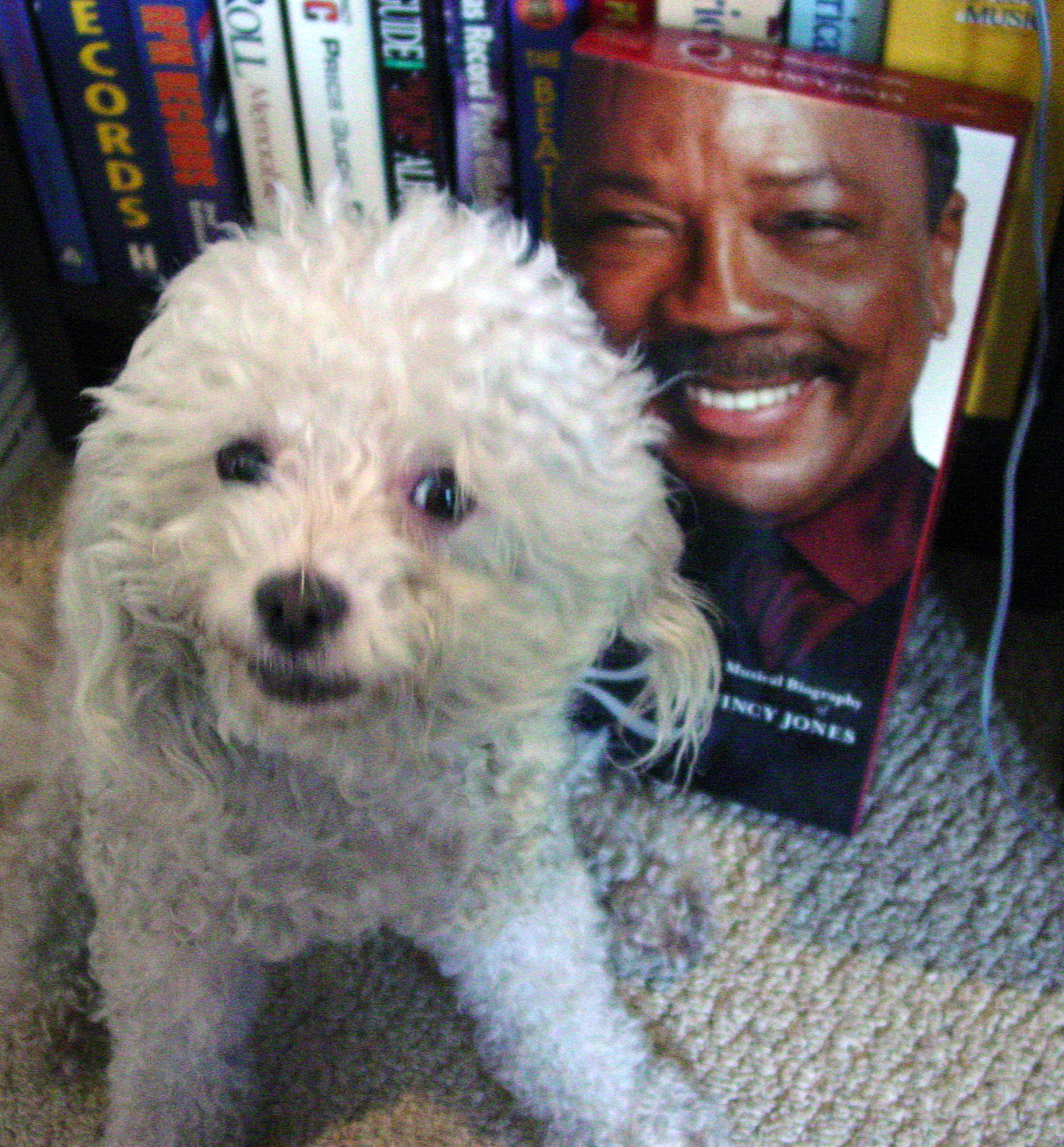
Ringo + Quincy 001

1) He’s had a record 79 Grammy Award nominations. He’s won 27.
2) He arranged the Frank Sinatra/Count Basie version of “Fly Me to the Moon,” which astronaut Neil Armstrong played when he first landed on the moon.
3) Jones produced the soundtrack of the motion picture The Wiz. He later said he hated working on it, as he didn’t like most of the songs nor did he like the film’s script. However, on the set on The Wiz he got to know the singer who played the scarecrow, Michael Jackson. Jackson asked him to recommend a producer for his next album. Jones threw out a few names and also offered to produce it himself. Jackson took him up on his offer, though his record label thought it was a bad idea. The album, 1979’s Off the Wall, went on to sell 20 million copies and won Jackson his first Grammy Award.
4) While widely known as the producer of Michael Jackson’s Thriller, Bad and Off the Wall albums, Jones is also the producer of the hit records “We Are the World” by USA for Africa; “It’s My Party,” “You Don’t Own Me” and “Judy’s Turn to Cry” by Lesley Gore; “Angel” by Aretha Franklin; “I’ll By Good to You,” “Stomp” and “Strawberry Letter 23” by The Brothers Johnson; “One Mint Julep” by Ray Charles; and “Love is in Control (Finger on the Trigger)” by Donna Summer, among others. He also worked with Bono, Stevie Wonder, Miles Davis, Little Richard, Paul Simon, Duke Ellington, Ella Fitzgerald, Herbie Hancock, Billie Holiday, B.B. King, Louis Armstrong, Dizzie Gillespie, Sarah Vaughan, Diana Ross, Dinah Washington, Peggy Lee, Chaka Khan, Tony Bennett, George Benson, Luther Vandross, Sammy Davis Jr., Johnny Mathis, James Ingram and Patti Austin, plus plenty more.
5) “Quincy Jones is one of the most versatile and potent figures of popular culture….When you listen to his impressive and monumental body of work, it’s easy to understand how and why he’s touched such a broad audience of music lovers. He’s done it all.” – Michael Jackson
6) Time magazine named him one of the most influential jazz musicians of the 20th century.
7) In the early 1960s he became the Vice President of Mercury Records, the first African-American at a major record company to reach that executive level.
8) His middle name is Delight.
9) Along with Bob Russell, he became the first African-American to be nominated for an Oscar for Best Original Song for “The Eyes of Love” from Banning.
10) With seven Oscar nominations, he is tied with sound designer Willie Burton as the African-American with the most Oscar nominations.
11) Jones produced the film The Color Purple, his first foray into film production. He asked Steven Spielberg to direct it, which he did. It was nominated for eleven Academy Awards.
12) Among his 33 movie scores are the ones for The Color Purple, In the Heat of the Night, In Cold Blood, and Bob & Carol & Ted & Alice.
13) He has a daughter with actress Nastassja Kinski as well as six other children.
14) He’s the father of actress Rashida Jones. She’s pretty.
15) In 1988 he formed Quincy Jones Entertainment, who produced the television program The Fresh Prince of Bel-Air.
16) He never learned how to drive.
17) Among the charities Jones supports are American Foundation for AIDS Research (AmfAR), Global Down Syndrome Foundation, Gay and Lesbian Alliance Against Defamation (GLAAD), MusiCares, Elton John AIDS Foundation, Rape Foundation, UNICEF, NAACP, Nelson Mandela Centre of Memory, and Barbara Davis Center for Childhood Diabetes.
18) In 1974 Jones suffered a brain aneurysm. He was given a 1 in 100 chance of surviving. Family and friends, including Richard Pryor, Marvin Gaye and Sidney Poitier, planned a memorial service for him, which he got to attend.
19) Today he turns 82 years old.
20) “The thing is to find your lightning – and ride your lightning.” – Quincy Jones

Click here to like Tunes du Jour on Facebook!
Follow me on Twitter: @TunesDuJour
It’s Friday And I Need To Dance!

In the early 1990s a demo of a song written by four men circulated through Warner Bros. Records. Though people at the label appreciated the song’s chorus, nobody wanted to record it.

Thinking that with some work the song may be good for Cher, whose last top ten pop hit was 1989’s “Just Like Jesse James,” Warner sent the demo to London’s Metro Studio, where two additional songwriters took a stab at improving the composition. Producers Mark Taylor and Brian Rawling created a dance track for the revised song, which they presented to Cher. She liked it.

She recorded the song. She and her producers played with a new technology called Auto-Tune, which added a robotic sound effect to her voice. When Warner heard that, they asked that it be removed, but Cher was adamant it stay.

In October of 1998, more than a half-decade after the composition’s original incarnation, Warner released Cher’s recording of “Believe.” On March 13, 1999, the song, the first pop tune to feature Auto-Tune, became Cher’s fifth #1 single in the United States, making her, then age 52, the oldest woman to top the US charts. It was her first #1 single since “Dark Lady” in 1974, the longest span ever between #1 records. It was the biggest-selling single stateside of 1999.

The record hit #1 in the UK, where it became the best-selling single of all-time by a female artist. It also topped the charts in Germany, Canada, The Netherlands, Australia, France, Sweden, Italy, Spain, Belgium, Norway, Denmark, Switzerland, New Zealand and Ireland.

Friday is dance day at Tunes du Jour. We kick off this week’s party with Cher’s “Believe.” Have a superb weekend!

Click here to like Tunes du Jour on Facebook!
Follow me on Twitter: @TunesDuJour.

How Empire Changed Timbaland

After Empire creator Lee Daniels hired music producer Timbaland to be the television program’s Executive Music Producer, the Grammy Award winner sent the Academy Award nominee music to be used in the pilot episode.

As he recounted to Out.com, Daniels brought a copy of that first episode to Timbaland to show him how his music was used. Daniels was out of the room during the scene where Jamal and his boyfriend kiss. Said Daniels “I knew he was fascinated by seeing his music in the work, but he said, ‘Those guys kissing, man. Wow.’” When the music producer showed his family the pilot, he made his children leave the room during that kissing scene.

That shouldn’t surprise anyone. This was the man who said “Some people listen to a song like ‘SexyBack’ and think, am I queer? Am I funny? If you are that way, you’re just that way. But if you’re a masculine man, embrace it. Have a glass of wine, put the record on and invite your girl over to get sexy.”

He has a point. When I listen to “SexyBack,” I ask “Am I queer?” That’s because Justin Timberlake doesn’t do anything for me. If I were a masculine man who drank, I’d have a girl over and get sexy for the song’s four minutes and three seconds. But I’m funny.

Per Daniels, who is openly-gay, Timbaland is singing a new tune. “[Working on this show has] changed his opinion on how he feels about gays. He said it. And I remember hanging up the phone and being very emotional after talking to him, and after him telling me that. And how he really had this epiphany. It was beautiful, and it deepened our friendship.”

That must have been some conversation. “Hi, Lee? It’s Timbaland. I’ve worked with many gay people in my twenty-five years producing music, and every one of them disgusted me with their talent and work ethic. But after seeing a fictional gay character recite scripted lines and give his, uh, male friend a quick kiss, I’ve had a change of heart. I can handle a gay person for a few scenes one hour a week, provided my kids aren’t in the room. Let’s have dinner soon. Feel free to not bring your boyfriend. Love ya (in a platonic way)!”

Today the man born Timothy Mosley turns 43 years old. There’s still time for him to continue evolving. Here are twenty tracks he produced or co-produced. WARNING: This playlist includes “SexyBack.” Be sure you’re masculine enough to listen! (Before anyone asks, his stellar work with Aaliyah is not available on Spotify.)

Click here to like Tunes du Jour on Facebook!
Follow me on Twitter: @TunesDuJour

Brandeis ID

It’s Friday And I Need To Dance! – College Reunion Edition

Brandeis ID
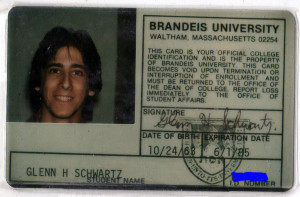
On the Facebook page for my thirty-year college reunion, which is coming up this June, someone brought up the music that reminds them of our college days. Many posts followed, naming songs that remind us of shared experiences at Brandeis University in the first half of the 1980s.

That post inspired today’s playlist. Friday is dance day at Tunes du Jour, and today I present 50 songs we danced to in the Usdan Ballroom at Brandeis University between the fall of 1981 and the spring of 1985. It was a great time for popular music. These songs have stood the test of time.

Have a great weekend!

Click here to like Tunes du Jour on Facebook.
Follow me on Twitter: @TunesDuJour
I Hate Verizon Wireless But I Like The Lemonheads

Now that I no longer have health insurance via Anthem Blue Cross, there is a new company at the top of my Worst Customer Service With Whom I Have To Deal list. Congratulations, Verizon Wireless!

Unlike Anthem Blue Cross, Verizon Wireless used to have excellent customer service. When I signed on with them around ten years ago I was consistently amazed at how on it they were, even calling me to check on my service and offer money-saving options.

At some point around three or four years ago they decided to take a different approach – screw over their customers as much as possible. They decided training their staff was a waste of time and money. “If someone calls to say their phone isn’t working, just tell them to do a factory reset.” The factory resets never work.

I hate poor customer service. If I’m paying money, beaucoup money at that, I expect to be treated better by the recipient of that money. I dropped Anthem Blue Cross and I’m in the process of leaving Verizon Wireless.

It isn’t that easy, though. I’ve dealt with AT&T and T-Mobile in the past, and their customer service departments are no great shakes. Forget Sprint – I hear their service is awful on all counts. I’m seeking to go with a smaller company.

I read about Ting, who use either Sprint or T-Mobile’s towers to…here’s where I get lost. I called Ting Customer Service to guide me through choosing a new phone that works with their service. They were very friendly, explaining to me how it works and even helping me find a smartphone compatible with them.

I ordered a new phone. It cost a few hundred bucks, but in the end it’ll be worth it as I’m not tied to a two-year service contract and Ting’s monthly bills are far lower than the major carriers.

My phone arrived. I called Ting to set it up. Turns out the phone they advised me to buy doesn’t run on their 4G network, only 2G.

I hate Ting. I hate all cell phone service providers.

That reminds me…I need to sort out my health coverage. Thus far in 2015 I have received nine letters from California’s health care offices, each one contradicting the information in the one before it. It’s enough to give a man an ulcer. Hopefully that man has health insurance.

On a brighter note, today is the birthday of Evan Dando, leader of The Lemonheads. Enjoy this twenty-song playlist.

Click here to like Tunes du Jour on Facebook.
Follow me on Twitter: @TunesDuJour
Lou Reed – “Walk on the Wild Side”

Haroldo Santiago Franceschi Rodriguez Danhakl was born in Puerto Rico in 1946. He grew up in New York and Miami Beach. At a very early age he recognized his attraction to men. Not fitting in and getting beaten up at school made Haroldo decide at age 15 to run away. Hitchhiking up the coast toward New York, Haroldo made a stop in Georgia where his friend Georgette plucked his eyebrows, applied mascara, and helped transform Haroldo into Holly.

In the Big Apple, Holly met Andy Warhol and the people who hung out at Warhol’s Factory, such as Candy Darling, Joe Dallesandro and Jackie Curtis.

The story of Holly and the other Warhol superstars is recounted in Lou Reed’s sole Hot 100 single, “Walk on the Wild Side.” The man born Louis Firbank was part of that scene in the Sixties, as his band, The Velvet Underground, was managed by Warhol. He felt an affinity with the people he sang about – as a teenager Reed’s parents sent him to a mental hospital where he would receive electroshock therapy to help cure him of his homosexual tendencies.

Though not gay himself, though perhaps bisexual, Reed wrote “Walk on the Wild Side” to be, in his words “an outright gay song,” saying it’s “from me to them, but they’re carefully worded so the straights can miss out on the implications and enjoy them without being offended.”

Produced by David Bowie and Mick Ronson, “Walk on the Wild Side” reached #16 on the Billboard Hot 100 in April 1973.

Tunes du Jour remembers the late Great Lou Reed today on what would have been his 73rd birthday. Here are twenty of his finest.

Click here to like Tunes du Jour on Facebook!
Follow me on Twitter: @TunesDuJour
Winston + Gaynor

It’s Friday And I Need To Dance!

Billboard magazine’s first disco chart was published in October of 1974. Its #1 song was “Never Can Say Goodbye” performed by Gloria Gaynor. That record stayed on top for four weeks, soon crossing over to the pop chart, where it peaked at #9.

An eighteen-plus minute medley of “Honey Bee,” “Never Can Say Goodbye” and “Reach Out, I’ll Be There” reached #2 on the Disco chart in early 1975, leading to Gaynor being named “Queen of the Discos” by the National Association of Discotheque Disc Jockeys in March of that year.

Six more top ten disco hits followed in 1975 and 1976, but then her fortunes dried up. Her sole entry on the Disco chart in 1977 reached only #38. Her next charted disco single was over a year later, and peaked at #24. By this point, Donna Summer was the new Queen of Disco. Summer was also crossing over onto the pop chart, while Gaynor’s sole top 40 pop single was “Never Can Say Goodbye.” She failed to crack the Hot 100 in 1976 and 1977.

Her record company, Polydor, reached out to producer Dino Fekaris and asked him to produce for Gaynor a cover of the Righteous Brothers track “Substitute,” then a recent hit overseas for a group called Clout.

Fekaris was a staff songwriter at Motown Record for almost seven years before the company let him go. Determined not to let that career setback derail him, Fekaris got together with his songwriter and production partner Freddie Perren, who also had a stint at Motown, and wrote a song about getting over the fear of the unknown and surviving what life throws at you. They wanted a woman to record the track, but didn’t have anybody in mind. They decided to give the song to the next diva they work with. That’s when Polydor called with the Gaynor gig.

As requested by her label boss, Gaynor recorded “Substitute” to be the A-side of her next single, but the song about survival, which she recorded to be the record’s B-side, really resonated with her. Besides her career troubles, she recently lost her mother and fell on stage while performing, which required her to undergo spinal surgery and spend six months in the hospital. She recorded the tracks wearing a back brace.

“Substitute” was released in the fall of 1978. It failed to make the Hot 100.

One night around that time, Studio 54 DJ Ritchie Kaczor flipped over “Substitute” and played its B-side. The patrons ignored it that first time, but Kaczor kept playing it. Eventually, it became the club’s most popular cut. Soon, all New York City clubs were playing the track.

In November 1978 Vince Aletti wrote in Record World magazine that this song “is Gaynor’s very best work in years…delivered with such relish that one can’t help but get caught up in the emotion.”

In Boston, disco radio DJ Jack King played the single’s B-side and reported that “my listeners went nuts!” Seeing the response this song was getting, Polydor reissued the single with “Substitute” as the B-side. The A-side was now the anthem “I Will Survive.”

Winston + Gaynor
In January 1979, “I Will Survive” returned Gloria Gaynor to #1 on the Disco chart, where she remained for three weeks. In March of that year the record hit #1 on the Hot 100, where it also stayed for three weeks. It went on to become a smash around the world.

At the 22nd Annual Grammy Awards ceremony on February 27, 1980, Gloria Gaynor’s “I Will Survive” won for Best Disco Recording, the only time that award has ever been given, over Michael Jackson’s “Don’t Stop ‘Til You Get Enough,” Rod Stewart’s “Da Ya Think I’m Sexy?,” Earth Wind & Fire with The Emotions’ “Boogie Wonderland,” and then Queen of Disco Donna Summer’s Bad Girls.

“I Will Survive” kicks off Tunes du Jour’s weekly dance party.

Click here to like Tunes du Jour on Facebook.
Follow me on Twitter: @TunesDuJour