doggies + Diana 003

Just Sing “Baby, Baby”

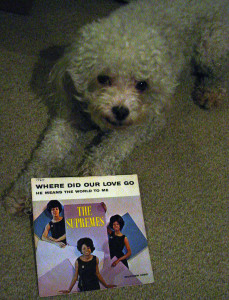
In 1964 the Motown songwriting/production team of Brian Holland, Eddie Holland and Lamont Dozier wrote a composition intended for The Marvelettes, who by that time had two top ten pop singles under their belt – “Playboy” and “Please Mr. Postman,” both co-written and co-produced by Brian Holland.

The three men went into the studio and had the instrumental track recorded, but when Lamont Dozier played the song and presented the chorus to The Marvelettes’ Gladys Horton, he got a response he wasn’t expecting. “Oh, honey, we don’t do stuff like that. And it’s the worst thing I ever heard,” she told him. In case he was still unsure how she felt, she added “No way am I gonna sing any junk like that!”

Dozier went through the Motown roster to see who he could get to record this number. He ended up with the group at the very bottom of the list, a trio of women signed to Motown several years earlier, but who had no big hit records to their name. Originally a quartet called The Primettes, the group had released nine singles, only one of which, a song written by Holland-Dozier-Holland entitled “When the Lovelight Starts Shining Through His Eyes,” made the top 40, reaching #23. Initially they declined Dozier’s offer to record the song, finding it childish, repetitive and too slow, but they soon changed their mind, as they had no other material to record.

The three women in the trio, known around the Motown offices as “The No-Hit Supremes,” all sang lead vocals. As the instrumental version of this new track had already been recorded in the register in which Gladys Horton sings, the producers thought Mary Wilson, who sang in the same range as Horton, should handle the lead vocals, but Motown head Berry Gordy, Jr. wanted one of the other Supremes, Diana Ross, to be the group’s lead vocalist.

Ross complained that the music was in the wrong key, but was told to sing it the lower key. She wasn’t crazy about doing so, nor were the other two women eager to learn the intricate background vocals that had been written. Because of their bad attitude, Dozier told them to just sing “Baby, baby.”

On June 17, 1964, Motown released the track, entitled “Where Did Our Love Go,” as a single. As the “No-Hit Supremes” toured as part of Dick Clark’s American Bandstand Cavalcade of Stars, where they received credit at the bottom of the poster as part of “And Others,” the song climbed the charts. It hit #1 in August 1964, and by the time the tour ended, the Supremes had top billing.
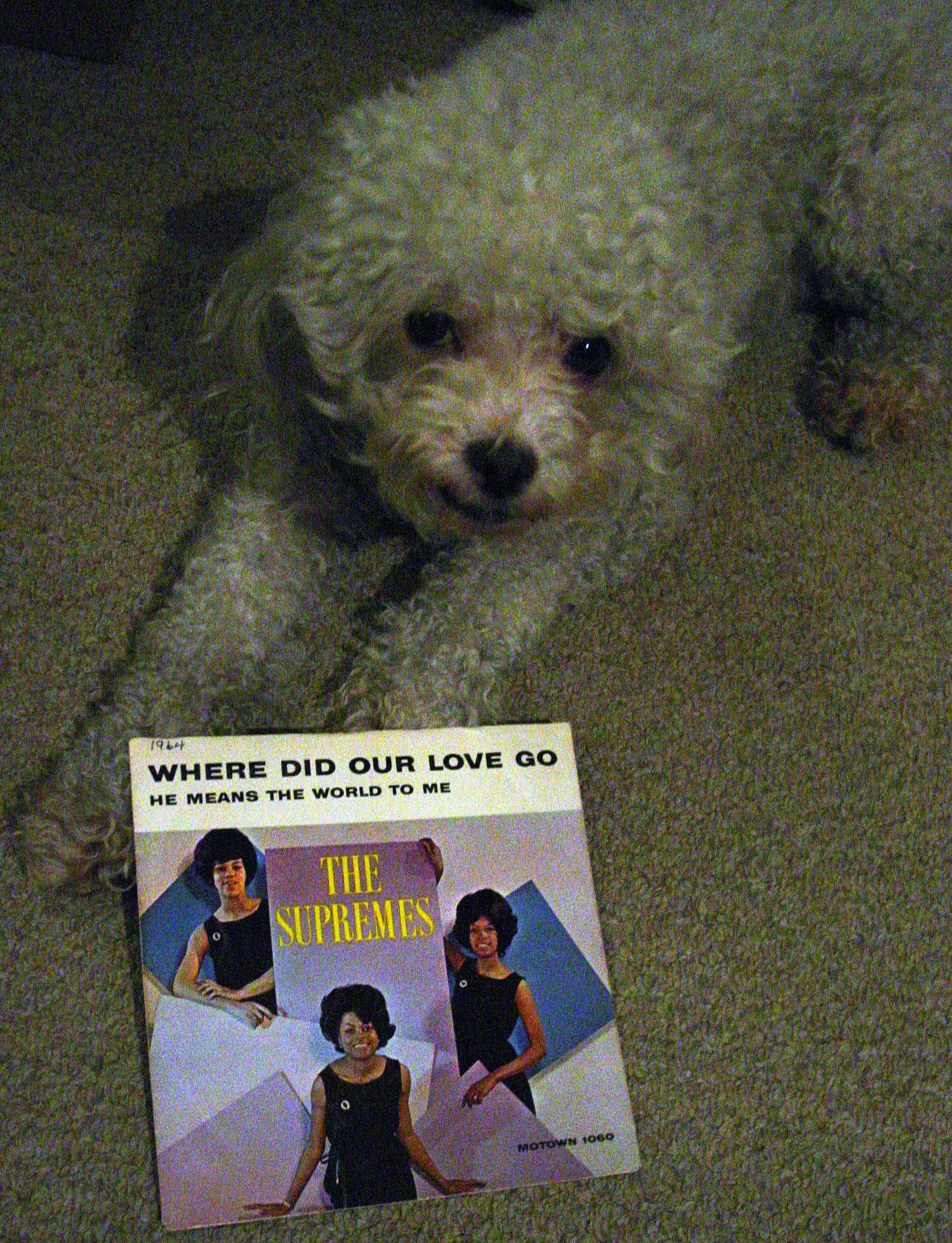
doggies + Diana 003

Holland-Dozier-Holland went on to write many more songs for the Supremes, including their next four singles, all of which went to #1. The women scored twelve #1 pop hits between 1964 and 1969, ten of which were written by the same trio of men who came up with “Where Did Our Love Go,” which made Rolling Stone’s list of the 500 Greatest Songs of All Time.

Today Tunes du Jour celebrates the woman who may not have become a household name had she not given in to recording the now classic tune. Happy 70th birthday, Diana Ross!
Ringo + Aretha 004

Chatting With Aretha Franklin About Change

Ringo + Aretha 004
In 2008, Senator Barack Obama was elected President of the United States. He ran on a message of hope and change.

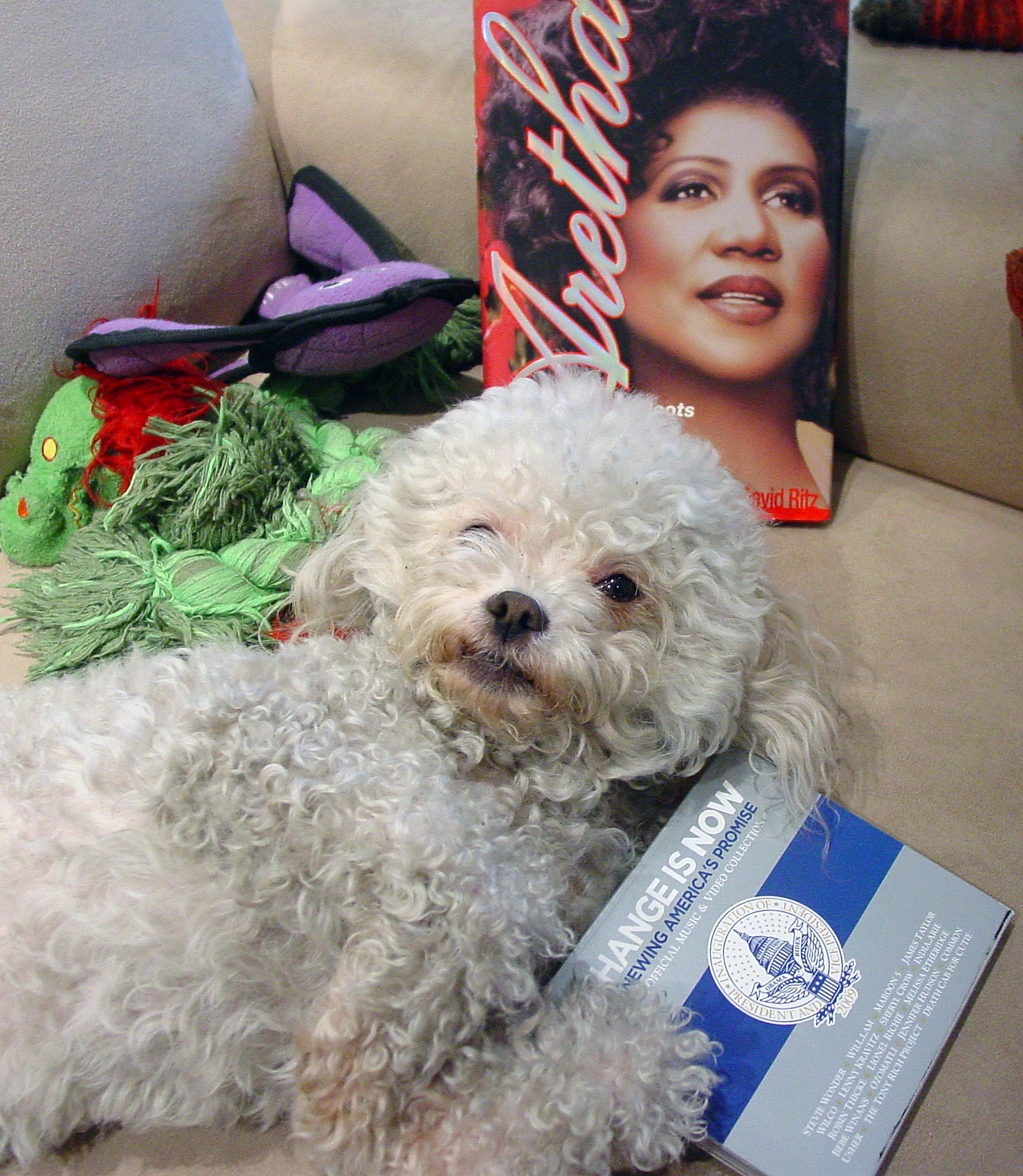
As a memento of his inauguration, Hidden Beach Recordings decided to put together a compilation of songs that expressed these messages. As the head of licensing at Warner Music Group, they approached me about licensing some recordings from our catalogue for inclusion thereon. I suggested Aretha Franklin’s version of Sam Cooke’s “A Change Is Gonna Come.” They thought that was a great idea.

I wanted to be sure Ms. Franklin was fine with having her recording used on the album (this was before she and her hat appeared at the inauguration, so I wasn’t positive she was an Obama supporter). I told her attorney of my idea and a day or two later, Ms. Franklin called me. She liked my suggestion of having her recording included on this compilation. Unfortunately, there was a dispute about Warner’s rights to license the track so the song did not end up on the album, which came out under the title Change Is Now: Renewing America’s Promise.

In his on-line entertainment column, Roger Friedman, then of Fox News, wrote about the compilation, listing all of the artists whose songs were included. He wrote that Warner Music Group refused to make any deals for their artists to be included, which is untrue. I got permission from Wilco and Death Cab For Cutie to license tracks of theirs; they were among the artists Friedman listed just two paragraphs previously. He wrote “I’m sure, in fact, that Aretha Franklin has no idea that requests for a couple of her classic tracks like ‘A Change is Gonna Come’—were declined.” Patently untrue, as you can see from my story. It was a Warner employee’s idea (mine!) to include the track and Ms. Franklin was well aware of it. I guess, unlike me, Friedman couldn’t get Ms. Franklin on the phone. Too bad.

Today the Queen of Soul turns 72 years old. Here are twenty of her best recordings. I left out some classics such as “Respect,” “(You Make Me Feel Like) A Natural Woman,” “Think” and “Freeway of Love” to make room for some lesser-played tracks, though you can hear those here, here, here and here. Enjoy!

Winston + Nick Lowe 002

Get Lowe. Nick Lowe.

Winston + Nick Lowe 002
As a producer, Nick Lowe has worked with Elvis Costello, Johnny Cash, Pretenders, Graham Parker, John Hiatt, The Damned, Paul Carrack, and The Fabulous Thunderbirds, among others.

As a songwriter, Lowe’s works have been covered by Wilco, Dave Edmunds, and most famously, Elvis Costello, whose version of “(What’s So Funny ‘Bout) Peace, Love and Understanding” is a must for every music fan’s library.

As a musician, Lowe has played in Rockpile, Brinsley Schwarz (no relation to yours truly), and Little Village.

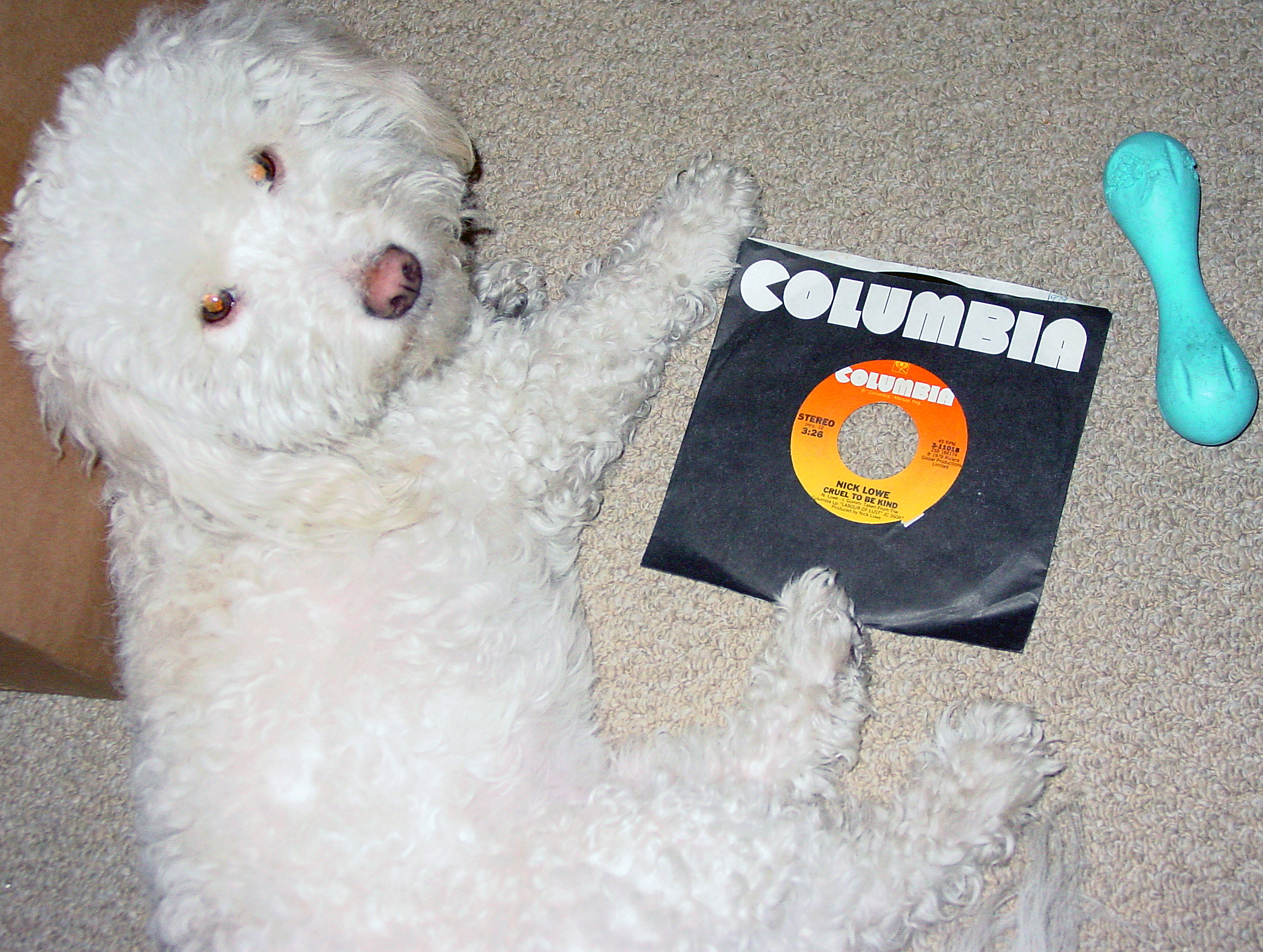
As a solo artist, Nick Lowe has had one top 40 hit in the US. Written with Harold Melvin and the Blue Notes’ “The Love I Lost” in mind, “Cruel to be Kind” reached #12 in 1979 and was one of the 206 music videos that aired on MTV’s first day of broadcasting, August 1, 1981. The song was written by Lowe and a Brinsley Schwarz bandmate, Ian Gomm. Coincidentally, Gomm also had his only US Top 40 hit as an artist, “Hold On,” at the same time as Lowe.

Today, Tunes du Jour celebrates Nick Lowe’s 65th birthday.

Winston + Chaka 002

Chaka Khan’s Jazz

Winston + Chaka 002
Having already displayed her vocal chops with soul, funk, ballads and disco, Chaka Khan experiments with jazz on “And the Melody Still Lingers On,” her interpretation of Dizzy Gillespie’s “Night in Tunisia.” Featuring Herbie Hancock and Gillespie himself, as well as a Charlie Parker sample, Chaka and producer Arif Mardin add lyrics that pay tribute to the classic original composition. When it arrived in 1942 “it was new and very strange” but subsequently “paved the way for generations from Coltrane to Stevie.” “The past you can’t ignore, the torch is lit, we’ll keep the flame,” vows Chaka, at once saluting the past while being very much in the present. The performance also foretold her future – one of Khan’s 22 Grammy nominations would be for Best Jazz Vocal Performance in 1983. Seventy-two years after the debut of “Night in Tunisia” and thirty-three years after Chaka’s version, its melody still lingers on.

Tunes du Jour listens to Chaka’s jazzier sides today, her 61st birthday.

Winston + Club Nouveau

It’s Friday And I Need To Dance!

In 1967 Bill Withers moved to Los Angeles to try to make it as a songwriter. While pursuing this dream he worked at Lockheed Aircraft, making around $3.50/hour. He spent $2500 of his own money to record some demo tracks. Not one record company or publisher expressed any interest.

While working at a factory making toilet seats for 747s, he formed friendships with his co-workers and appreciated how they would help each other out. The mutual support this group of workers offered inspired him to compose a song. He titled it “Lean on Me.”

His upbringing played a large part in the song’s sentiment. “Being from a rural, West Virginia setting, that kind of circumstance would be more accessible to me than it would be to a guy living in New York where people step over you if you’re passed out on the sidewalk, or Los Angeles, where you could die on the side of the freeway and it would probably be 8 days before anyone noticed you were dead. Coming from a place where people were a little more attentive to each other, less afraid, that would cue me to have those considerations.”

He recorded the track for his album Still Bill. The single went to #1 on the Billboard Hot 100 in July 1972. He left his factory job, but retained a good perspective, telling the L.A. Times: “Even when I was working on bathroom seats, this was at least constructive. I challenge anybody: I won’t sing for a month and you don’t go to the bathroom for a month and let’s see…who comes off with less misery.”

“Lean On Me” won Withers a Grammy award for Best R&B Song … in 1987. On March 21 of that year Club Nouveau took their rendition of the song to #1, only the fifth time in the rock era that two different versions of the same song hit #1. (The first four? “Go Away Little Girl” – Steve Lawrence/Donny Osmond, “The Loco-Motion” – Little Eva/Grand Funk, “Please Mr. Postman” – The Marvelettes/The Carpenters, and “Venus” – The Shocking Blue/Bananarama.)

Winston + Club Nouveau

This week’s dance playlist kicks off with the record that hit #1 on this day 27 years ago – Club Nouveau’s “Lean on Me.”

UPDATE: For some reason, the original version of Club Nouveau’s “Lean on Me” is not on Spotify; only a cheesy re-record is there. Screw it! We’ll kick off our dance party with Aretha Franklin’s “Freeway of Love.”

Ringo + Turtles 003

Your Day Of Happiness Soundtrack

Ringo + Turtles 003
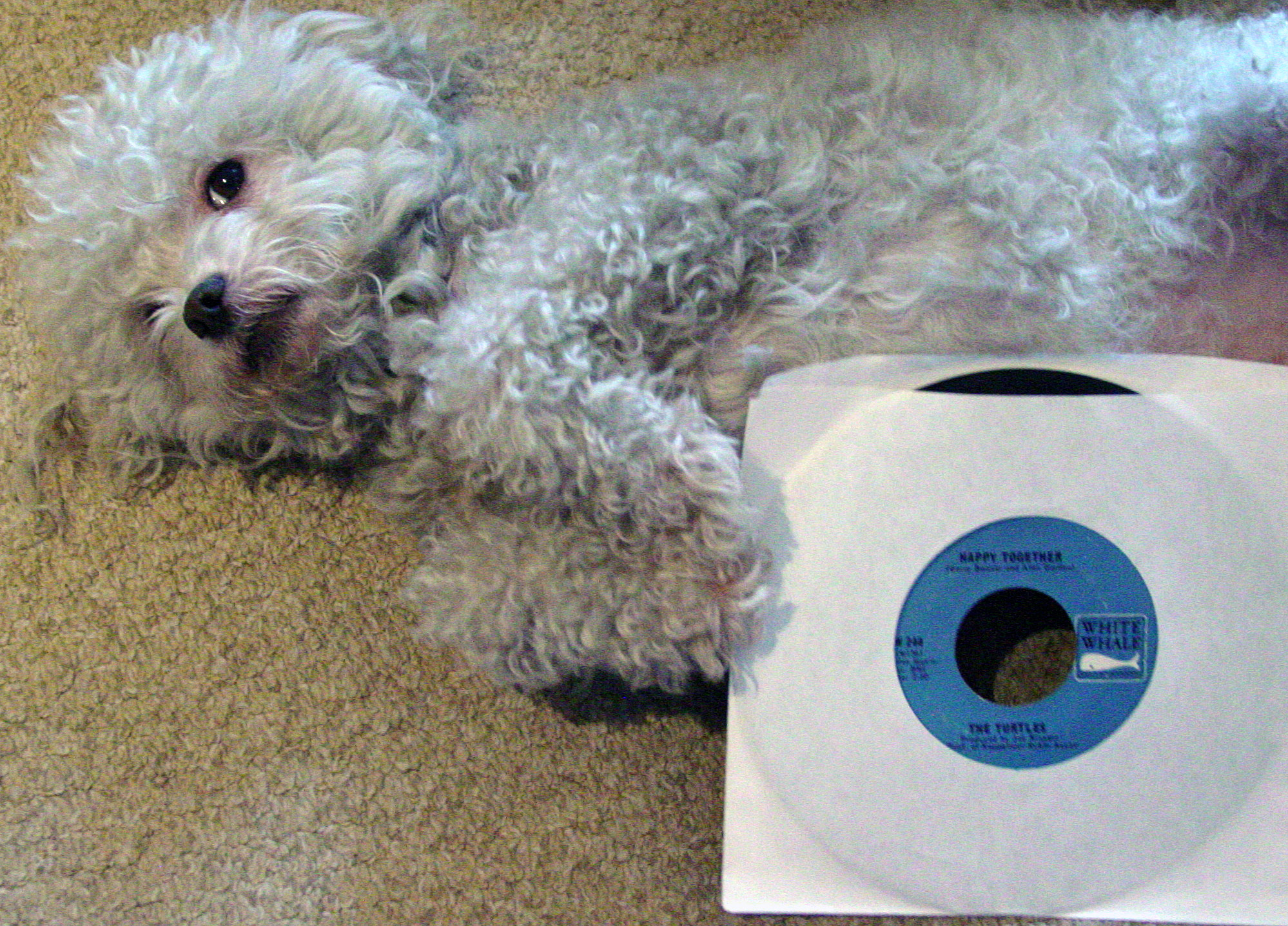
Today is the United Nations International Day of Happiness. Our soundtrack kicks off with The Turtles’ “Happy Together.”

Ironically, this is not a happy song.

Written by Gary Bonner and Alan Gordon, the song is about a one-way love affair. The singer imagines being with the girl to whom he’s singing. He’s in love with her and thinks if they were to be together the skies would be blue. He imagines how the world would be – so very fine – if they were a couple.

She doesn’t feel the same way. When this sinks in to our narrator, he makes small talk. “So how is the weather?” he asks, alternating that line with his repeated sentiment that they would be so happy together.

The song opens on a minor chord, which has a more melancholy sound than a major chord. The chorus – “I can’t see me loving nobody but you for all my life” – opens with a major chord, and the instrumentation is appropriately louder and joyous, the celebratory sound matching his feelings of ecstasy as he imagines his fantasy life with this woman.

For younger folks reading this, there used to exist public phones where one could insert a dime to make a three-minute long local call, hence the lyric “If I should call you up, invest a dime.” If the song were written today, this verse may go “If I should call you up, use up minutes from my cell phone plan / And you say you belong to me, I am your man / Imagine how the world could be, I’m hungry for flan.” Not as strong. Now I’m hungry for flan.

The Turtles recorded “Happy Together” in January 1967. Two months later it knocked The Beatles’ “Penny Lane” out of the #1 spot on the Billboard Hot 100. It stayed on top for three weeks.

Enjoy your Day of Happiness. May all your loves be requited loves.

doggies + Wilson

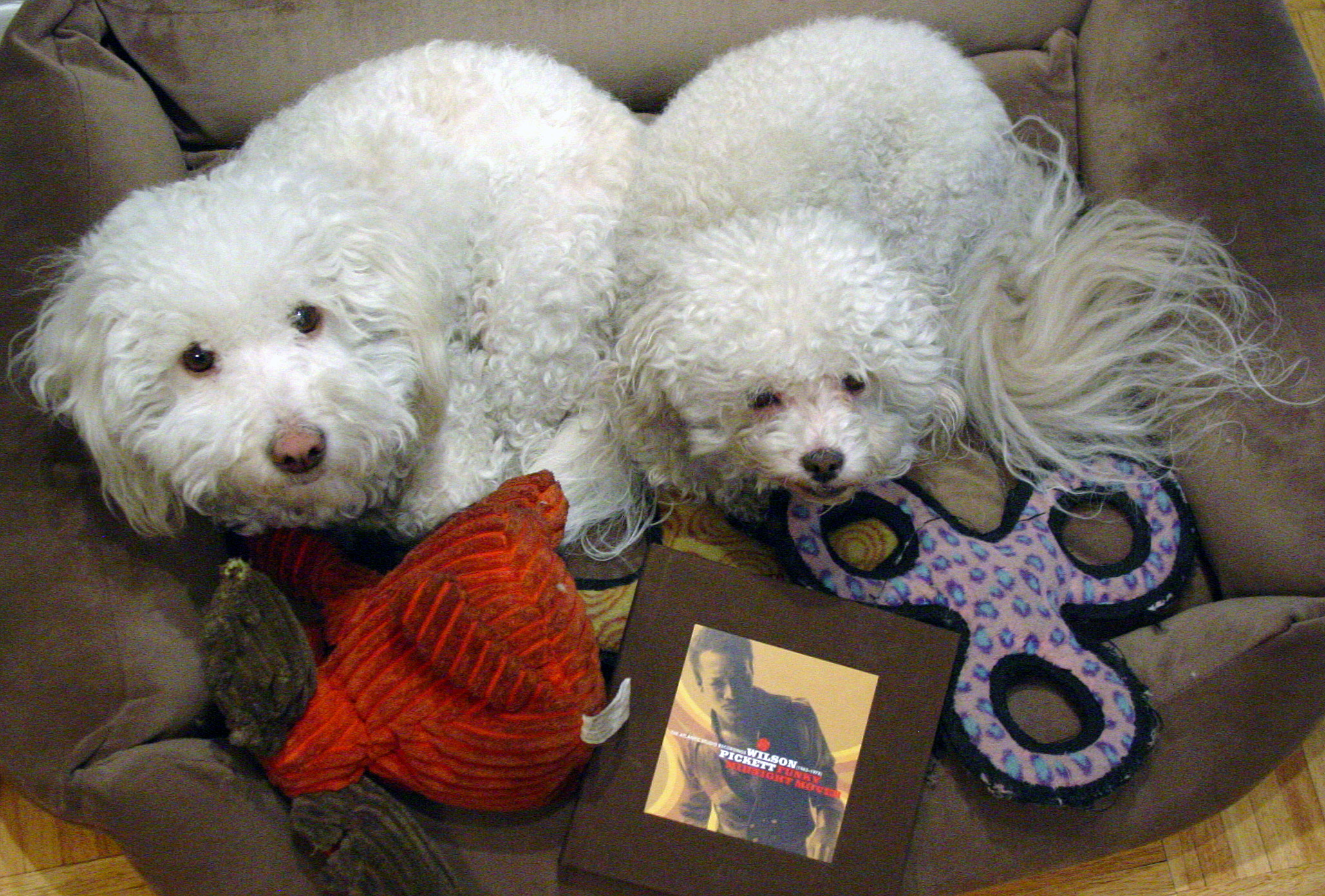
“Funky Broadway” | A Wilson Pickett Playlist

doggies + Wilson
“Funky Broadway” is a song written by Arlester “Dyke” Christian. His group, Dyke & the Blazers, released it as their first single in late 1966 on tiny Phoenix label Artco Records. It was picked up by the Original Sound label for national distribution in 1967. The single peaked at #65 on the pop charts, but went top twenty on the r&b charts and remained on that listing for nearly six months.

The Broadway in the title was not named after New York City’s Broadway. Depending on who you believe, it refers to a Broadway in Buffalo, New York or a Broadway Road in Phoenix, Arizona. However, in every town there’s a street named Funky Broadway.

More notable is the other word in the song’s title. This was the first charted record with the word “funky” in its name. It laid the groundwork and provided a name for this genre of music.

Wilson Pickett recorded a cover of “Funky Broadway” at the legendary Muscle Shoals studio in Alabama less than two weeks before the Dyke version hit the charts. It became one of Pickett’s two top ten hits on the Billboard Hot 100 (the other was 1966’s “Land of 1,000 Dances”). It was one of five #1s for him on the r&b chart.

Dyke & The Blazers managed to have two pop top 40 hits, both in 1969: “We Got More Soul” and “Let A Woman Be A Woman – Let A Man Be A Man.” In 1971, Arlester “Dyke” Christian was shot to death. He was 27 years old.

Wilson Pickett was inducted into the Rock & Roll Hall of Fame in 1991. Born on this day in 1941, he died in 2006 after a heart attack at age 64.

doggies + Sly 002

A Sly & The Family Stone Playlist

doggies + Sly 002
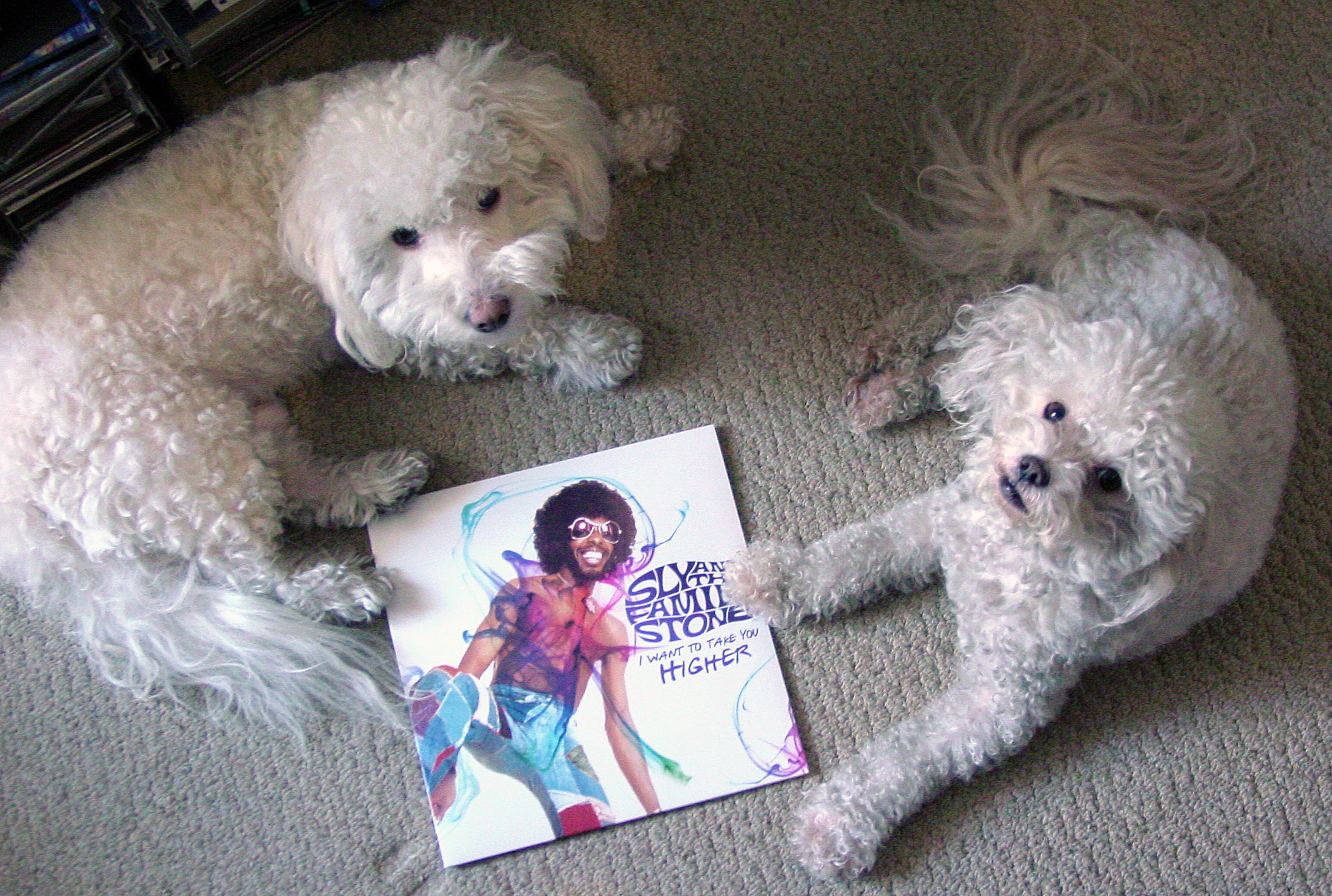
Today the musical genius that is Sly Stone turns 71 years old.

On our menu:
“Dance to the Music”
From 1968, Sly & The Family Stone’s first hit single helped launch the “psychedelic soul” sound that was a huge influence on acts such as The Temptations, The Undisputed Truth, War, Parliament and The 5th Dimension. Interestingly, the Family Stone didn’t care for the track, thinking it too commercial.

“Sing a Simple Song”
Sly & The Family Stone drummer Greg Errico said this song isn’t simple at all; it’s actually difficult to play live.

“Runnin’ Away”
“In those days it was the hippies who cut their hair and ran away from the hippy feeling. It’s about how, at a certain time, everybody runs away from something.” – Sly Stone

“Family Affair”
From 1971, this was Sly’s third #1 pop hit and his last top ten.

“Somebody’s Watching You”
A track from 1969, seventeen years after President Truman formed the NSA.

“Hot Fun in the Summertime”
This song contains the lyric “I cloud nine when I want to,” a reference to The Temptations hit song “Cloud Nine,” insinuating that the Motown band was echoing The Family Stone’s vocal style. This single went to #2 on the pop chart, kept from the top spot by The Temptations’ “I Can’t Get Next to You.”

“Don’t Call Me Nigger, Whitey”
And vice versa, per the song. Made more impactful due to the fact that this as one of the first integrated bands (which also had men and women playing major roles).

“If You Want Me to Stay”
The band’s final gold single, from 1973

“Everybody is a Star”
Recorded for an album that was never competed, this song, along with “Hot Fun in the Summertime” and “Thank You (Falettinme Be Mice Elf Agin),” was included on a 1970 Greatest Hits set from the band.

“Stand!”
“In the end you’ll still be you, one that’s done all the things you set out to do”

“I Want to Take You Higher”
Released as the b-side of the “Stand!” single, the band’s incendiary performance of the tune at Woodstock had their record label release it as a single a-side, becoming another top 40 hit for them.

“Everyday People”
“And so on and so on and scooby doobie doobie.” Has any other song said so much as elegantly?

“Que Sera, Sera”
One of the few cover versions his band recorded

“Thank You (Falettinme Be Mice Elf Agin)”
Hulk Hogan’s daughter Brooke released a cover of this song. It’s not as well known.

“Crazay”
Jesse Johnson, lead guitarist of The Time, brought in Sly to help on this 1986 club hit that went to #2 on the r&b chart.

Ringo + Quincy 001

It’s Quincy Jones’ Birthday And I Need To Dance!

Ringo + Quincy 001
Twenty Things You Should Know About Quincy Jones:
1) He’s had a record 79 Grammy Award nominations. He’s won 27.
2) He arranged the Frank Sinatra/Count Basie version of “Fly Me to the Moon,” which astronaut Neil Armstrong played when he first landed on the moon.
3) Jones produced the soundtrack of the motion picture The Wiz. He later said he hated working on it, as he didn’t like most of the songs nor did he like the film’s script. However, on the set on The Wiz he got to know the singer who played the scarecrow, Michael Jackson. Jackson asked him to recommend a producer for his next album. Jones threw out a few names and also offered to produce it himself. Jackson took him up on his offer, though his record label thought it was a bad idea. The album, 1979’s Off the Wall, went on to sell 20 million copies and won Jackson his first Grammy Award.
4) While widely known as the producer of Michael Jackson’s Thriller, Bad and Off the Wall albums, Jones is also the producer of the hit records “We Are the World” by USA for Africa; “It’s My Party,” “You Don’t Own Me” and “Judy’s Turn to Cry” by Leslie Gore; “Angel” by Aretha Franklin; “I’ll By Good to You,” “Stomp” and “Strawberry Letter 23” by The Brothers Johnson; “One Mint Julep” by Ray Charles; and “Love is in Control (Finger on the Trigger)” by Donna Summer, among others. He also worked with Bono, Stevie Wonder, Miles Davis, Little Richard, Paul Simon, Duke Ellington, Ella Fitzgerald, Herbie Hancock, Billie Holiday, B.B. King, Louis Armstrong, Dizzie Gillespie, Sarah Vaughan, Diana Ross, Dinah Washington, Peggy Lee, Chaka Khan, Tony Bennett, George Benson, Luther Vandross, Sammy Davis Jr., Johnny Mathis, James Ingram and Patti Austin, plus plenty more.
5) “Quincy Jones is one of the most versatile and potent figures of popular culture….When you listen to his impressive and monumental body of work, it’s easy to understand how and why he’s touched such a broad audience of music lovers. He’s done it all.” – Michael Jackson
6) Time magazine named him one of the most influential jazz musicians of the 20th century.
7) In the early 1960s he became the Vice President of Mercury Records, the first African-American at a major record company to reach that executive level.
8) His middle name is Delight.
9) Along with Bob Russell, he became the first African-American to be nominated for an Oscar for Best Original Song for “The Eyes of Love” from Banning.
10) With seven Oscar nominations, he is tied with sound designer Willie Burton as the African-American with the most Oscar nominations.
11) Jones produced the film The Color Purple, his first foray into film production. He asked Steven Spielberg to direct it, which he did. It was nominated for eleven Academy Awards.
12) Among his 33 movie scores are the ones for The Color Purple, In the Heat of the Night, In Cold Blood, and Bob & Carol & Ted & Alice.
13) He has a daughter with actress Nastassja Kinski as well as six other children.
14) He’s the father of actress Rashida Jones. She’s pretty.
15) In 1988 he formed Quincy Jones Entertainment, who produced the television program The Fresh Prince of Bel-Air.
16) He never learned how to drive.
17) Among the charities Jones supports are American Foundation for AIDS Research (AmfAR), Global Down Syndrome Foundation, Gay and Lesbian Alliance Against Defamation (GLAAD), MusiCares, Elton John AIDS Foundation, Rape Foundation, UNICEF, NAACP, Nelson Mandela Centre of Memory, and Barbara Davis Center for Childhood Diabetes.
18) In 1974 Jones suffered a brain aneurysm. He was given a 1 in 100 chance of surviving. Family and friends, including Richard Pryor, Marvin Gaye and Sidney Poitier, planned a memorial service for him, which he got to attend.
19) Today he turns 81 years old.
20) “The thing is to find your lightning – and ride your lightning.” – Quincy Jones

As Friday is dance day at Tunes Du Jour, we’ll kick off today’s playlist with Q’s #3 club hit of 1981, “Ai No Corrida.”

Winston + Neneh 002

So Don’t You Get Fresh With Me

Winston + Neneh 002
I’m lookin’ good today. I’m lookin’ good in every way. Lookin’ good’s a state of mind. I haven’t mastered a buffalo stance, though.

Originally recorded by Neneh Cherry as the b-side of Morgan McVey’s “Looking Good Diving” single, “Buffalo Stance” became a worldwide smash for her in 1989.

Two weeks ago Cherry released her first solo album in 18 years. Titled The Blank Project, its reviews have been overwhelmingly positive, as were the reviews for her debut album, Raw Like Sushi, and its follow-up, Homebrew.

This talented artist turns 50 years old today. To celebrate, Tunes du Jour gives you a taste of Cherry.