Grammy Nominees Were Announced And I Need To Dance!

This year’s Grammy nominations were announced this morning. Here they are:

Record of the Year
Iggy Azalea ft. Charli XCX – “Fancy”
Sia – “Chandelier”
Sam Smith – “Stay With Me (Darkchild Version)”
Taylor Swift – “Shake It Off”
Meghan Trainor – “All About That Bass”

Song of the Year
Same as Record of the Year, except instead of “Fancy” you’ve got Hozier’s “Take Me to Church”

Album of the Year
They plan on announcing the nominees in this category tonight during the A Very Grammy Christmas television special. Ariana Grande, Maroon 5 and Album of the Year nominations? Cancel your Friday night plans!

Best New Artist
Bastille
Iggy Azalea
Haim
Sam Smith
Some lady I’ve never heard of

Best Pop Vocal Album
Coldplay – Zzzzz
Miley Cyrus – Zzzzz
Ariana Grande – Zzzzz
Katy Perry – Zzzzz
Ed Sheeran – Zzzzz
Sam Smith – Zzzzz

Best Rock Album
Beck – Morning Phase
Ryan Adams – Ryan Adams
The Black Keys – Turn Blue
Tom Petty & The Heartbreakers – Hypnotic Eye
U2 – Are You Fucking Kidding Me?!?!

Best Urban Contemporary Album
Jhené Aiko – How Do You Pronounce That?
Beyoncé – I’m Now The Most Nominated Woman In Grammy History, So Bow Down Bitches
Chris Brown – Undeserved
Mali Music – Who?
Pharrell Williams – Gurl!

Best Country Album
Miranda Lambert – Platinum
+ four others

Best Spoken Word Album (a/k/a Best Audiobook)
Forget the titles; look at this list of nominated performers – James Franco, John Waters, Joan Rivers, Gloria Gaynor, Elizabeth Warren and Jimmy Carter! They better present this one on the telecast! Gurl!

Best Rock Song
Paramore – “Ain’t It Fun”
Beck – “Blue Moon”
The Black Keys – “Jack White Better Not Be Nominated”
Ryan Adams – “Gimme Something Good”
Jack White – “The Black Keys Better Not Be Nominated”

Best R&B Song
Beyoncé featuring Jay-Z – “Drunk In Love”
Usher – “I’m Going to Lose to Beyoncé”
Chris Brown featuring Usher and Rick Ross – “I Don’t Deserve a Nomination and I’m Going to Lose to Beyoncé”
Luke James featuring Rick Ross – “You Never Heard of Me and I’m Going to Lose to Beyoncé”
Jhené Aiko – “Though I Also Have an Accent over the Second E in My First Name I’m Going to Lose to Beyoncé”

Best Country Song
Miranda Lambert – “Automatic”
+ four others

Best Dance Recording
Seriously, there is a category for the best audiobook. The Grammy Awards’ tag-line is “Music’s Biggest Night.” Unless Elizabeth Warren sang her memoirs this category should not exist.

This post doesn’t cover all nominations. In total, the Grammy Awards have nominees in 12,623 categories, three of which are presented on the air. Tune in sometime in January or February to see who wins as well as a rare live television appearance from the reclusive Taylor Swift!

As for now, it’s Friday, which is dance day on Tunes du Jour. As tomorrow is Ira Gershwin’s 118th birthday, we’ll kick off this week’s dance party with Donna Summer, who by now may have dined with the famed lyricist.

Click here to like Tunes du Jour on Facebook!

It’s Jellybean’s Birthday And I Need To Dance!

John “Jellybean” Benitez, along with Arthur Baker, was the pre-eminent remixer of the 1980s. If I saw his name on a 12-inch single, I knew I was going to get something good. He worked with many big names in that decade and beyond. Artists whose work he remixed include Talking Heads, Michael Jackson, Fleetwood Mac, Paul McCartney, Donna Summer, Santana, ZZ Top, Billy Joel, Afrika Bambaataa, Whitney Houston, Daryl Hall & John Oates, Sting, Bangles, A-ha, Cher, Shakira, Bonnie Tyler, The Romantics and, most famously, Madonna.

These days Jellybean deejays parties around the world and is the Executive Producer of Sirius XM’s disco/dance station, Studio 54 radio. A couple of years ago, while I was working at Warner Music, Jellybean and I were discussing a project he wanted to do. I was very into the idea and told him I was confident I could get the big names he wanted on board. We also talked about a radio show he conceived for the Sirius XM channel in which new mixes of classic dance songs were played. To help him with that show I sent him a package with some modern mixes we had done of disco classics by Chic, Ashford & Simpson and others.

He never said thank you. I sent him a follow-up email to be sure he received the package, but he didn’t reply. Oh, well. So he is lacking manners. That doesn’t affect the joy I get listening to his classic remix work. (By the by, he never got around to launching the project he wanted to do about which I was excited.)

Today is Jellybean’s 57th birthday. Many of his mixes are not on Spotify, so today’s dance playlist consists of some of his mixes that are, of Madonna, David Bowie, Irene Cara, The Pointer Sisters, Shalamar and Whitney Houston, alongside other records I love to dance to.

You’re welcome.

Click here to like Tunes du Jour on Facebook!

Winston + Chic 2014-09-19 13.37

It’s Halloween And I Need To Dance!

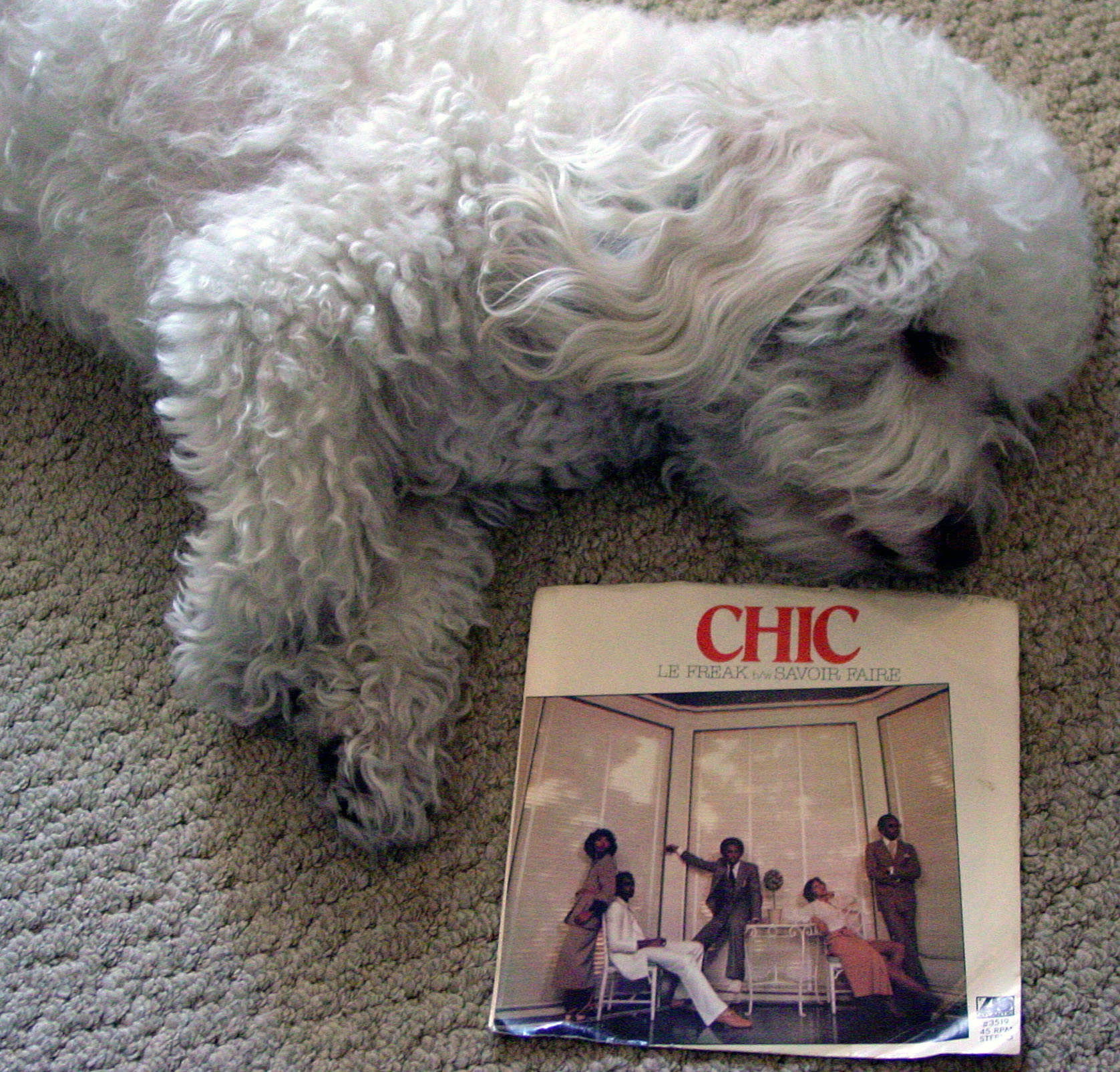
On the night of December 31, 1977, Grace Jones rang in the new year with a performance at New York City’s Studio 54. She invited Nile Rodgers and Bernard Edwards of the band Chic, whose hits such as “Dance, Dance, Dance (Yowsah, Yowsah, Yowsah)” were often played at the club, to catch her show. The guys went to the stage door, where the doorman told them to “Fuck off!” They went to the front entrance and told the doorman there they were personal guests of Jones. The doorman told them they weren’t on the list and refused them admission. Though all dressed up, they went back to the apartment where Nile was then staying. Several bottles of champagne and a little cocaine later, the two musicians started jamming on a song they improvised, inspired by the first doorman. “Awww, fuck off – fuck Studio 54 – fuck off.”

Bernard was impressed with the riff they created, though both knew they wouldn’t get radio airplay for a song that went “fuck off.” (How times have changed!) They changed “fuck” to “freak,” though “freak off” sounded lame. Then Bernard suggested changing “off” to “out.” Nile responded “Like…when you’re out on the dance floor losing it, you know you’re freaking out,” to which Bernard replied “Yeah, plus they have that new dance called ‘the Freak.’”

“Le Freak” debuted on the Billboard Hot 100 in the fall of 1978. In December it hit #1, though it got knocked from the top a week later by Barbra Streisand and Neil Diamond’s “You Don’t Bring Me Flowers.” One week later “Le Freak” went back to #1, but one week after that it got knocked out by Bee Gees’ “Too Much Heaven.” Two weeks later “Le Freak” returned to #1, staying on top for four more weeks. It went on to sell approximately twelve million units worldwide, becoming the best-selling record ever for Atlantic Records.

In 1979 “Le Freak” was included on a compilation album entitled A Night at Studio 54.

Winston + Chic 2014-09-19 13.37
All sorts of freaks and monsters will be out today/tonight for Halloween. This week’s dance party is inspired by the holiday.

Ringo + Rose Royce 2014-10-10 11.27

It’s Friday And I Need To Dance!

My plan was for today’s blog post to be a rant. Since 2011, over 80 pedestrians in West Hollywood have been hit by cars while in crosswalks. Three of them were killed. This city’s solution? Put signs on the side of the street that read “PEDESTRIAN SAFETY ZONE.” Oh, you mean we’re not supposed to run down pedestrians? Thanks for the heads up! Is there a sign when the zone ends so I can go back to business as usual?

Meanwhile, pedestrians walking on the sidewalk get run down by bicyclists. The city created bike lanes on Santa Monica Blvd., but many bicyclists prefer to ride on the sidewalk. It’s illegal, but WeHo doesn’t enforce many of its laws. I spoke to one of our city councilmembers about this, and she said they have no intention of enforcing that law or the leash laws or replacing burnt out bulbs in streetlights.

But you know what? I don’t feel like ranting. It’s Friday, and I need to dance.

Ringo + Rose Royce 2014-10-10 11.27
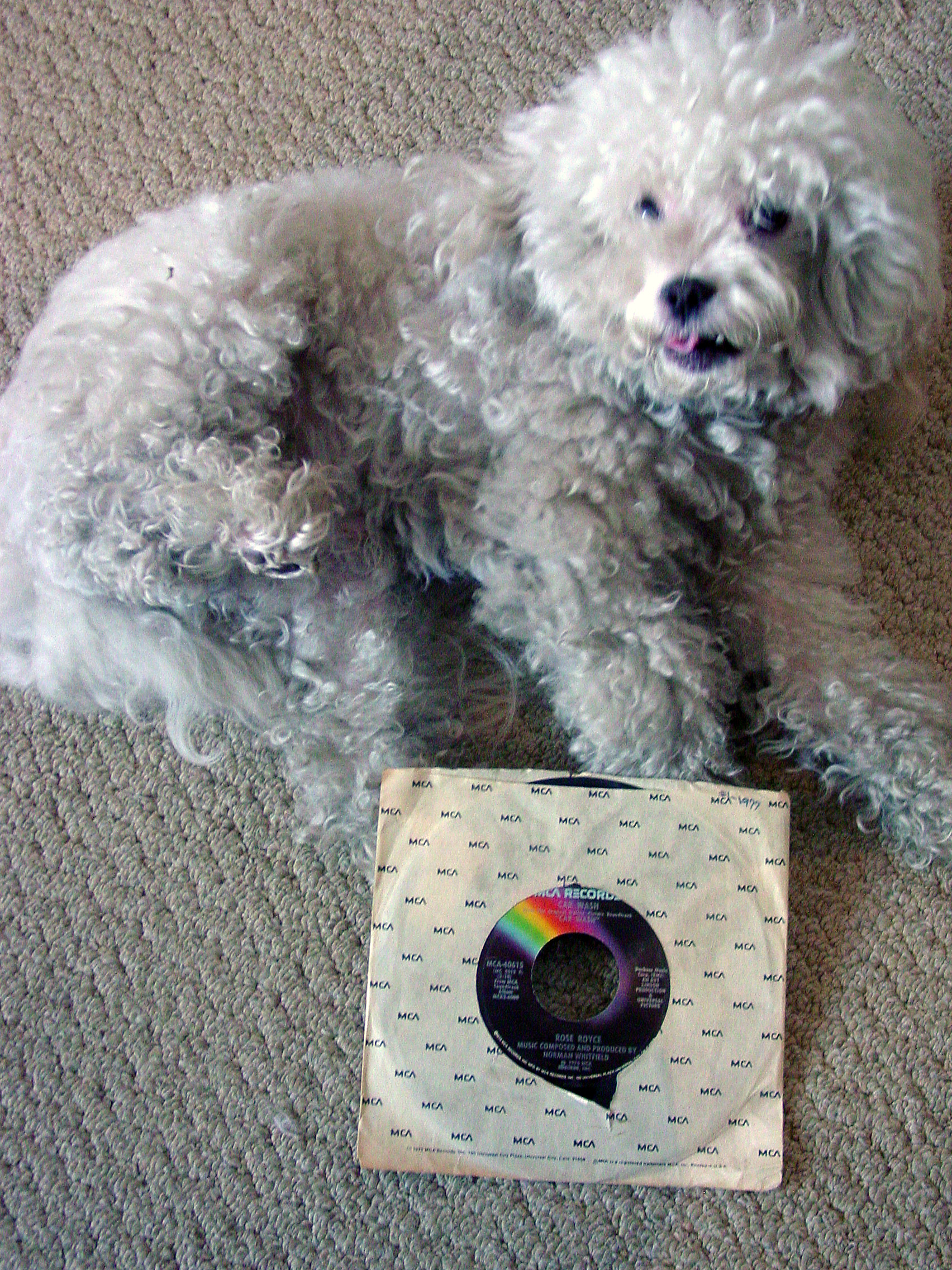
This week’s dance playlist kicks off with Rose Royce’s “Car Wash,” which gives the sage advice that a car wash “ain’t no place to be if you planned on bein’ a star.” Now you know.

Click here to like Tunes du Jour on Facebook!

Winston + Chic 2014-09-19 13.37

It’s Nile Rodgers’ Birthday And I Need To Dance!

Winston + Chic 2014-09-19 13.37

Nile Rodgers, with his friend Bernard Edwards, formed the band Chic in the mid-1970s. The pair wrote and produced the group’s music. In 1978, they had their first top ten pop single, “Dance, Dance, Dance (Yowsah, Yowsah, Yowsah),” which went to #1 on the Disco/Dance chart and remained on top for eight weeks.

Later in 1978, Chic released “Le Freak,” which was #1 on the pop chart for six weeks and became the biggest-selling single in Atlantic Records’ history.

Two more top ten singles followed in 1979 – “I Want Your Love” and the #1 smash “Good Times.” Rodgers and Edwards also wrote and produced Sister Sledge’s We Are Family album, which spawned that quartet’s only top ten pop hits – “He’s the Greatest Dancer” and the classic title track.

By late 1979 a disco backlash hit hard in the US. Any act the public perceived as a disco act had trouble getting hit records. “Good Times” was to be Chic’s last top 40 single. Even in clubs the group faltered. “Good Times,” coupled with “My Feet Keep Dancing” and “My Forbidden Lover,” hit #3 on the Disco/Dance chart. Chic wouldn’t make the top ten on that chart again until 1992.

By 1980, Chic the band were considered over, just two years after they arrived. Luckily, Chic were more than a disco band, and one person who knew that was Suzanne de Passe. De Passe was the president of Motown Productions. She hired Rodgers and Edwards to work with Diana Ross, who hadn’t had a top ten single since “Love Hangover” in 1976. The resulting album, diana, sold over ten million copies and remains the singer’s biggest-selling album to date. (I should note that it wasn’t the Chic mix of the album that got released. We’ll save that story for another time.) It spawned the top ten smashes “Upside Down” (#1 for four weeks) and the classic “I’m Coming Out,” both Rodgers/Edwards compositions.

In 1982, Nile Rodgers met David Bowie at New York club The Continental. Bowie hired Rodgers to work with him on a new album. The result? Let’s Dance, co-produced by Bowie and Rodgers. The title track became Bowie’s first top ten single since 1976’s “Golden Years” and his second (and last) #1, with 1975’s “Fame” the first. “China Girl” and “Modern Love” were also hit singles.

1983 kept Rodgers busy, working with Paul Simon, INXS, Daryl Hall and John Oates and Southside Johnny. One night he went to New York’s Roxy to catch a performance by Jenny Burton. He was intrigued by Burton’s opening act, an up-and-coming singer who went by her first name, Madonna. By the summer of ‘84, Madonna had three pop hits – “Holiday,” “Borderline” and “Lucky Star” – under her belt. When it came time to record her sophomore album, she called on Nile Rodgers.

Madonna named her second album Like a Virgin. Its title track, produced by Nile Rodgers, became Madonna’s first #1 single, staying on top for six weeks. Other hits pulled from the album were “Material Girl,” “Angel” and “Dress You Up,” all produced by Rodgers. The album has sold 21 million copies worldwide.

I won’t go into detail about every artist Nile worked with, but here’s a partial list: Duran Duran, Mick Jagger, Debbie Harry, Bob Dylan, Eric Clapton, Michael Jackson, Prince, Rod Stewart, Robert Plant, Depeche Mode, Peter Gabriel, Grace Jones, Bryan Ferry, Johnny Mathis, Kim Carnes, Jeff Beck, Thompson Twins, Sheena Easton, Laurie Anderson, Al Jarreau, Ric Ocasek, The B-52s, David Lee Roth, Michael Bolton, Adam Lambert and Daft Punk.

Today Nile Rodgers turns 62. As it’s Friday, and I need to dance dance dance yowsah yowsah yowsah, today’s playlist consists entirely of songs Rodgers worked on. Good times!

Click here to like Tunes du Jour on Facebook!

It’s Friday And I Need To Dance!

I recently came across the following piece of advice:

We tend to beat ourselves up when we fail and fail to celebrate when we succeed. Strengthen your belief in yourself by reflecting on each decade of your life and every success you’ve experienced. You can begin as early as age five when you learned how to ride a bike. Write it all down. You’ll be inspired, motivated and amazed by your list and how and can be used to face your fear.
(from lifehack.org: 13 Tips To Face Your Fear and Enjoy the Ride)

My list includes:
Cast as the second male lead in high school production of Fiddler on the Roof
First person in my family to graduate college
Became a Vice President at Warner Music
Performed stand-up comedy – won contests, was mentioned in Backstage cover stories and secured an agent
Became a homeowner at 30
Adopted two rescue dogs (previously I had a fear of dogs)
Second place in Toastmasters humorous speech contest
Named President of ImprovMasters
Successfully sued landlord
Paid off student loans
Skied down the Swiss Alps
Learned how to ride a bike

I recommend doing this exercise. You’ll remember many things you haven’t thought about in a while or perhaps take for granted. Look at the list whenever you need a reminder of your fabulousness.

Now if you’ll excuse me, it’s Friday and I need to dance!

Like Tunes du Jour on Facebook. Click here!

me July 25 2014 at IM

It’s Friday And I Need To Dance!

Last week I regaled an audience with the story of the time I accidentally hired a prostitute to show me around Prague. These things happen. To me, anyway.

Half-glass-full guy that I am, once I realized what I did, I looked at the positive – I hired a prostitute to show me around Prague! Complications arose when the police got involved and I had to explain to my bank why they needed to credit that charge.

Though I ended up sightseeing that spectacular city on my own, I got a great story out of the trip. Sometimes things don’t go according to plan, but you make the best of the situation and try to turn it into a positive.

me July 25 2014 at IMSomeday I’ll talk about the time I boarded a bus in Mexico to go on what I thought was a nature trip to the hot springs. Let’s just say I don’t think the springs got any hotter than they did that night.

In 1987, two bands, both interested in making a dance record, got together in the studio at the suggestion of the head of their record label, 4AD. Colourbox and A R Kane didn’t hit it off, so each worked on their own track, which they then turned over to the other group to embellish.

Colourbox came up with “Pump up the Volume,” its title line sampled from Eric B & Rakim’s “I Know You Got Soul.” A R Kane added some guitar to the track, and DJs CJ Macintosh and Dave Dorrell added a bunch of samples.

The record was released under the name M|A|R|R|S. “Pump up the Volume” became a worldwide smash and was groundbreaking in its use of samples on a British house track.

Though the idea of a true collaboration between the two bands didn’t come to fruition, and the acts didn’t get along and never worked together again, they did produce a dance classic. “Pump up the Volume” kicks off today’s dance playlist. Have a great weekend and before you buy anything, make sure you know exactly what it is you are paying for.

Like Tunes du Jour on Facebook! Click here.

Winston + Chuck 2014-06-30 11.25

A Change Is Gonna Come If You Make It So

A company I worked for – I won’t say which one – has an amazing catalogue of rhythm & blues music, arguably the best r&b catalogue of any record label. Despite possessing this goldmine, most of our catalogue releases were from white rock bands. I asked a member of senior management why we didn’t do more with our black artists, and the answer I got was “We don’t know how to sell that music.”

Is that not a stupid response? If you don’t know how to do that, hire someone who has that expertise, or learn how to do it. Why ignore a large swath of your potential market, especially when you already own the assets?

Years ago I was put in charge of licensing at a record label. I knew the music and I knew the components of licensing deals; however, I wasn’t a very good negotiator. I found the process intimidating. I could have left it at that – “I don’t know how to negotiate.” My company would have made money nonetheless, though not at its full potential. For that matter, I wouldn’t be working at full potential.

I took a course in negotiations. Six weeks, $300. Money well spent. I put what I learned in the class into action. Practice makes perfect, and I became an excellent negotiator. In my four years at that company our licensing revenue increased 400%. My skills also led to my next job as the Vice President of Licensing at another company.

Is a lack of some skill or knowledge holding you back? Fix that. Read a book, attend a seminar, take an on-line course or find a mentor. Saying “I don’t know how” won’t lead to success; learning how will.

Winston + Chuck 2014-06-30 11.25
Today is the last day of Black Music Month. It would be ludicrous to think a 40-song playlist would cover black music in any comprehensive way. Enjoy it for what it is – nearly three hours of fantastic music. Listen to it while you research how to learn a new skill.

Winston + Village People

“Go West” a/k/a It’s Gay Pride Weekend And We Need To Dance!

Winston + Village People
In 1979, the Village People released “Go West,” a celebratory disco romp whose message to listeners in the know was “go west, young man, to San Francisco, a utopia for gays.” The lyrics included “Together we will love the beach / Together we will learn and teach.” And “I love you, I know you love me. I want you happy and carefree / So that’s why I have no protest when you say you want to go west.”

San Francisco was a popular gay destination and in 1977, home to the nation’s first openly gay elected official, Harvey Milk.

In 1993, Pet Shop Boys released their cover of “Go West.” They kept all the Village People’s lyrics and they kept the dance beat, yet their version has a tinge of melancholy.

The duo’s Chris Lowe explained “When the Village People sang about a gay utopia it seemed for real, but looking back in hindsight it wasn’t the utopia they all thought it would be.”

Tunes du Jour readers – join me as we go back in time and look at the evolution of a gay dance classic.

Disco music was born in the early seventies in black, Hispanic and gay clubs. As explained in The Queer Encyclopedia of Music, Dance and Musical Theater, “Perhaps no other popular art form is more closely identified with gay culture than disco and dance music. Gay men in particular adopted the intense, loud, thumping 4/4 beat of the dance music predominantly at the bars and discos that were among the few places where they could openly express their sexual identities in the 1970s and 1980s. As the musical backdrop for generations of gay men who came of age is such venues, dance music became inextricably connected with the gay experience.”

Disco really hit the mainstream in 1977 with the release of the film Saturday Night Fever, based on a magazine article. The film’s soundtrack album became the biggest-selling album of all time in the United States, a record it held until Michael Jackson’s Thriller surpassed it.

As disco became a major commercial force, many rockers, including The Rolling Stones, Rod Stewart and Kiss, turned to the genre to score some of the biggest hits of their careers.

In June of 1978, the Village People entered the pop top 40 with their first crossover hit, “Macho Man.” Hard as it may be to believe, most people at that time had no idea they were gay, despite the costumes and despite song titles such as “Hot Cop,” “San Francisco,” “Sodom and Gomorrah,” “Key West” and “Fire Island.” Everyone in the whole family enjoyed their second hit, “Y.M.C.A.,” where one can “hang out with all the boys.”

In March of 1979 the group scored their third hit single in under a year – “In the Navy.” The U.S. Navy considered using it as a recruitment theme. Said a Navy spokesperson, “The words are very positive. They talk about adventure and technology. My kids love it.”

During the Seventies San Francisco remained a popular destination for gays. A report by Alfred Kinsey in the early 1970s found: “San Francisco is generally considered the best city in the U.S. for homosexuals. It was partly due to the city’s ‘tradition of tolerance.’ Another factor was the city’s size and geography, as it is smaller and less residentially dispersed than New York or Los Angeles, which made it “more conductive to a tightly knit homosexual community.”

In March of 1978 the San Francisco Board of Supervisors passed “the most stringent gay rights laws in the country.” Elsewhere in the U.S., the few existing gay rights laws were rapidly being repealed.

In June of 1978 San Francisco’s Gay Freedom Day Parade drew approximately 350,000 marchers.

On May 21, 1979, Dan White, the assassin who killed gay rights leader Harvey Milk as well as San Francisco’s mayor, was sentenced to only seven years and eight months in prison. The verdict led to massive riots in that city in which demonstrators burned a dozen police cars and more than 160 people, including 50 policemen, were injured. This happened just days after the Village People released their follow-up to “In the Navy,” “Go West.” Suddenly, San Francisco didn’t seem as peaceful and idyllic as it does in that song.

A few weeks later, a disc jockey from a Chicago rock radio station hosted an anti-disco demonstration at Comiskey Park between two baseball games in a double-header. Tens of thousands of people brought disco records to be set ablaze in center field while the crowd chanted “disco sucks.” I’d posit that this was in effect an anti-gay anti-black demonstration by white heterosexual rock fans.

Authors Andrew Edelstein and Kevin McDonough agree. In their book The Seventies they wrote “If you were a white, heterosexual teenage male who preferred to wear jeans and a t-shirt and sit passively at a stadium-size rock concert, then disco could be an especially threatening experience.”
After the Comiskey Park demonstration, disco quickly went back underground and was heard primarily in gay clubs. It soon came to be called house music and hi-nrg.

It should be noted that while rock fans tried to kill disco in the U.S., it stayed popular in the U.K., Europe, and elsewhere in the world.

The 1980s brought about the rise of the so-called Moral Majority in the United States. Not coincidentally, it also brought the scourge that came to be known as AIDS, which initially hit the gay population hardest. Homophobia contributed to a delayed response by the government.

Ten years into the AIDS epidemic there was still no sign of an effective treatment or cure.

In 1992 the British duo Pet Shop Boys were invited to perform at an AIDS fundraiser. Chris Lowe came up with the idea to do the Village People’s “Go West.” He played the record for his singing partner, Neil Tennant, who called it “ghastly” and “awful.” He got more into it when he thought about what he and his partner could bring to it, including the addition of “a big choir of butch men.”

A year later, the Boys released their studio recording of the song, complete with the big choir of butch men. In the context of the AIDS pandemic and the devastation it caused, particularly to the gay population, the song “Go West” takes on a different meaning than it did in 1979. As the website Shmoop puts it, “The sunny utopia the Village People had once sung of was literally full of sick and dying people; hospital beds in San Francisco were full of dying patients and there seemed to be no end in sight.”

The spread of AIDS led to a rise in gay activism, which is acknowledged in a verse the Pet Shop Boys added to their version: “There, where the air is free, we’ll be what we want to be / Now, if we take a stand, we’ll find our promised land.”

Of this record, Wayne Studer, in his book Rock on the Wild Side, a collection of songs by or about gay males, wrote “As the Boys do it, ‘Go West’ becomes an eerily uplifting disco dirge, both happy and sad at the same time. Extraordinary.”

Both the Village People’s and Pet Shop Boys’ “Go West” failed to cross over to the Top 40 of the U.S. pop charts; however, both were hits in the dance clubs, with the Pet Shop Boys version going to #1 on the U.S. Dance Club chart. The Pet Shop Boys version did make the top ten pop charts in the U.K., Germany, France, Austria, Sweden, Switzerland, the Netherlands, Norway, Ireland, Italy, Japan and Australia.

It was around this time that Neil Tennant, the duo’s usual vocalist and lyricist, came out, to the surprise of nobody.

“Go West” was the second single released from the group’s fifth album, Very, an album that is included in the book 1001 Albums You Must Hear Before You Die. The opening line of the book’s write-up is “Though the Pet Shop Boys had always been really gay, Very was their first really, really gay album – and their first U.K. number 1.”

Very produced four top ten club hits in the U.S., including two #1’s – “Go West” and “Can You Forgive Her?”

In 2008 Australian web-site SameSame polled their listeners to find the “gayest songs of all-time.” Pet Shop Boys’ “Go West” came in at #6. The Village People’s “In the Navy” was #18, their “Macho Man” was #16, and their “Y.M.C.A.” was named the second gayest song of all-time, kept from the top spot by ABBA’s “Dancing Queen.”

Pet Shop Boys’ album Very made Out magazine’s list of the Gayest Albums of All-Time. It also made British music magazine Q’s list of the 100 Greatest British Albums Ever. It has sold over five million copies worldwide.

Where has “gay music” come since the release of Very? Here are two interesting facts: the very first openly gay artist to have a #1 album in the U.S. was Adam Lambert, and that happened just two years ago. One year earlier, a song went to #1 on the U.S. pop charts and stayed there for six weeks – a song that explicitly called on gays, lesbians, bisexuals and transgenders to love who they are, ‘cause baby we were born this way.

As for the key players in my story, Pet Shop Boys have sold over 50 million records worldwide, had twenty-two top ten hits in the U.K. thus far, and won Outstanding Contribution to Music at the 2009 BRIT Awards, England’s equivalent to the Grammys. Their most recent album, 2013’s Electric, hit #3 on the UK album chart. It included the single “Vocal,” a top three club hit stateside.

The Village People still tour with three of their original members. They have sold over 100 million records.

Despite the efforts of some folks, disco, while suffering some setbacks, didn’t die. As a matter of fact, one of last year’s most popular hits was Daft Punk’s “Get Lucky,” a disco-influenced record featuring guitar work by Nile Rodgers of the seventies disco band Chic.

Similarly, despite the efforts of some folks, the LGBT populations, while suffering some setbacks, continues to make great strides toward equality and respect.

Should you attend this Sunday’s Gay Pride Parade in West Hollywood, or any Gay Pride Parade this season, you will hear coming from many floats disco and house music, for that is the soundtrack of our movement.

I wish all my readers a very happy Pride. Dance!

Ringo + Chic 002

It’s Friday And I Need To Dance!

Ringo + Chic 002

In August of 1979 the band Chic had their second #1 pop and r&b hit with “Good Times.” Later that year they played at New York’s Bonds nightclub on a bill with The Clash and Blondie. When they launched into “Good Times,” a handful of audience members jumped on stage and started freestyling rhymes over the song’s instrumental break.

Later that year those audience members, under the name The Sugarhill Gang, released “Rapper’s Delight.” Built around the bass line from “Good Times,” “Rapper’s Delight” became the first rap record to make the pop top 40. The rules around “sampling” had not yet been established, so Chic threatened legal action over the rap trio’s use of the bass line, created by Chic’s bassist, Bernard Edwards. The Sugarhill Gang’s record label settled with Chic, and Edwards and his bandmate Nile Rodgers received a writing credit on “Rapper’s Delight.”

Friday is dance day at Tunes du Jour, and today’s dance playlist kicks off with Chic’s “Good Times,” in memory of Bernard Edwards, who died on April 18, 1996.