Winston + Bobby Brown

The Song Retains The Name

Winston + Bobby Brown
Today is Bobby Brown’s 46th birthday. A former member of New Edition, Brown had his first solo hit in 1988 with “Don’t Be Cruel,” which reached #8 on the Hot 100. Though it shares its title with an Elvis Presley #1 hit from 1956, Brown’s “Don’t Be Cruel” is not a remake.

That brings us to today’s playlist, which I call The Song Retains the Name. It consists of different songs with the same title. I initially planned to include twenty such songs, but more kept springing to mind. Before I knew it, I passed 100 entries. There are plenty more, so I decided to open this up to my reader(s). If you have songs that share titles you’d like to add, feel free to do so.

(NOTES: I included The Jacksons’ “This Place Hotel” because when it was released in 1980 its title was “Heartbreak Hotel.” Thought he didn’t have to, Michael Jackson, the song’s writer, later changed its name to “This Place Hotel” to avoid confusion with the Elvis Presley song “Heartbreak Hotel.” Whitney Houston didn’t feel the need to make the same Hotel accommodation.

Also, though it is listed on Spotify as “The Best of My Love,” the Eagles track does not have a “The” on the 45 or the band’s On the Border album.)

Click here to follow Tunes du Jour on Facebook!
Follow me on Twitter: @TunesDuJour

A Soulful Christmas Playlist

TRIVIA QUESTION: Who was the first woman to hit the top ten on the Billboard Hot 100 with a song she wrote herself?

ANSWER: Carla Thomas. She was 16 years old when she wrote “Gee Whiz (Look at His Eyes),” which hit #10 in 1961. Today she turns 72.

In 1963, Thomas incorporated the title of her first hit into a seasonal offering, “Gee Whiz, It’s Christmas.”

“Gee Whiz, It’s Christmas” inspires today’s playlist – fifty great soul and r&b Christmas jams, with some fun extra treats thrown in.

Click here to like Tunes du Jour on Facebook!

It Never Rains In Southern California

As you may have heard, our sleepy little hamlet of Los Angeles got some rain over the past week. I assume you heard this because Los Angeles is the center of the world and our weather is likely reported everywhere, especially when we get rain, which lesser cities take for granted. More rain is forecast for this week.

If you were near a radio in the United States in 1972, you heard Albert Hammond’s hit single “It Never Rains in Southern California,” and learned that while in L.A. it never rains, it pours. Man, it pours.

Today’s playlist consists of songs with word rain or some variation thereof in the title. It includes Albert Hammond’s “It Never Rains in Southern California,” one of two top forty singles Hammond had as an artist. (The other was 1974’s “I’m a Train.” Remember that one? Didn’t think so.) As a songwriter, Hammond’s hits include The Hollies’ “The Air That I Breathe,” Leo Sayer’s “When I Need You,” Starship’s “Nothing’s Gonna Stop Us Now,” Whitney Houston’s “One Moment in Time,” Chicago’s “I Don’t Wanna Live Without Your Love,” Ace of Base’s “Don’t Turn Around,” Julio Iglesias and Willie Nelson’s “To All the Girls I’ve Loved Before” and The Pipkins’ “Gimme Dat Ding.” His son is a founding member of The Strokes.

Back to the weather. Get your umbrella and enjoy today’s playlist while the sun is still shining.

It’s Berry Gordy’s Birthday And I Need To Dance!

It’s interesting that Berry Gordy, the head of Motown Records who in 1970 told his top male vocalist Marvin Gaye that the new song Gaye had written, “What’s Going On,” was “the worst thing I ever heard in my life” and that he shouldn’t do protest songs, would five years later have Motown be the first major label to release a pro-gay anthem.

Bunny Jones, a heterosexual Christian woman, owned several beauty salons in Harlem. Most of her employees were gay. Seeing how they needed to suppress their natural selves and being aware of the issues they faced, she wrote song lyrics about a man who says he’s “happy, carefree and gay,” the way God made him.

Set to music written by Chris Spierer, also straight, Jones looked for a male vocalist to record her song. After catching a performance of Hair at the Westbury Music Fair, she approached one of the show’s actors, Charles “Valentino” Harris, and told him of the song.

In 1975, at age 22, Valentino recorded his only record, a single entitled “I Was Born This Way.” Jones released it on a label she started, named Gaiee. On her own she sold 15,000 copies of the song. This got the attention of Berry Gordy, whose Motown Records picked up the single for distribution.

Valentino’s record got some club play, particularly in the UK where it was a #1 disco hit.

Two years later Motown approached a gospel singer named Carl Bean and asked him if he would record a new version of “I Was Born This Way.” Unbeknownst to Motown, Bean was gay. In early 1978, Bean’s version of the tune reached #15 on the Billboard Disco chart.

The song has since become something of a classic. Two years after Bean’s success with “I Was Born This Way,” Motown released Diana Ross’ “I’m Coming Out.” It would hold the #1 position on the Disco chart for five weeks and have much crossover success at pop and r&b radio as well.

Today Berry Gordy celebrates his 85th birthday. Friday is dance day at Tunes du Jour. Here are twenty of Motown’s best disco/dance tracks from the 1970s thru 1990.

Click here to like Tunes du Jour on Facebook!

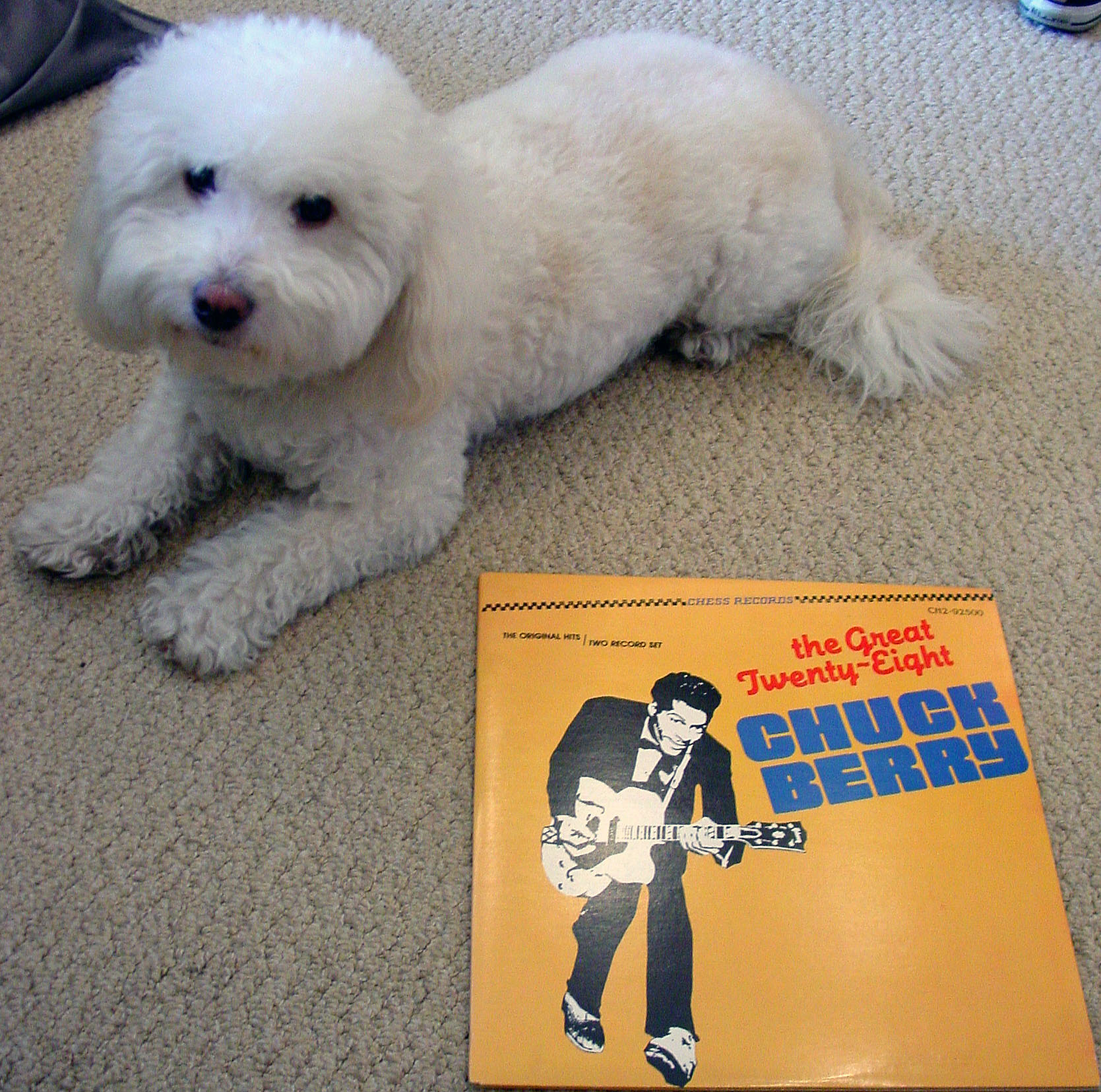
Winston + Chuck 2014-06-30 11.25

A Change Is Gonna Come If You Make It So

A company I worked for – I won’t say which one – has an amazing catalogue of rhythm & blues music, arguably the best r&b catalogue of any record label. Despite possessing this goldmine, most of our catalogue releases were from white rock bands. I asked a member of senior management why we didn’t do more with our black artists, and the answer I got was “We don’t know how to sell that music.”

Is that not a stupid response? If you don’t know how to do that, hire someone who has that expertise, or learn how to do it. Why ignore a large swath of your potential market, especially when you already own the assets?

Years ago I was put in charge of licensing at a record label. I knew the music and I knew the components of licensing deals; however, I wasn’t a very good negotiator. I found the process intimidating. I could have left it at that – “I don’t know how to negotiate.” My company would have made money nonetheless, though not at its full potential. For that matter, I wouldn’t be working at full potential.

I took a course in negotiations. Six weeks, $300. Money well spent. I put what I learned in the class into action. Practice makes perfect, and I became an excellent negotiator. In my four years at that company our licensing revenue increased 400%. My skills also led to my next job as the Vice President of Licensing at another company.

Is a lack of some skill or knowledge holding you back? Fix that. Read a book, attend a seminar, take an on-line course or find a mentor. Saying “I don’t know how” won’t lead to success; learning how will.

Winston + Chuck 2014-06-30 11.25
Today is the last day of Black Music Month. It would be ludicrous to think a 40-song playlist would cover black music in any comprehensive way. Enjoy it for what it is – nearly three hours of fantastic music. Listen to it while you research how to learn a new skill.

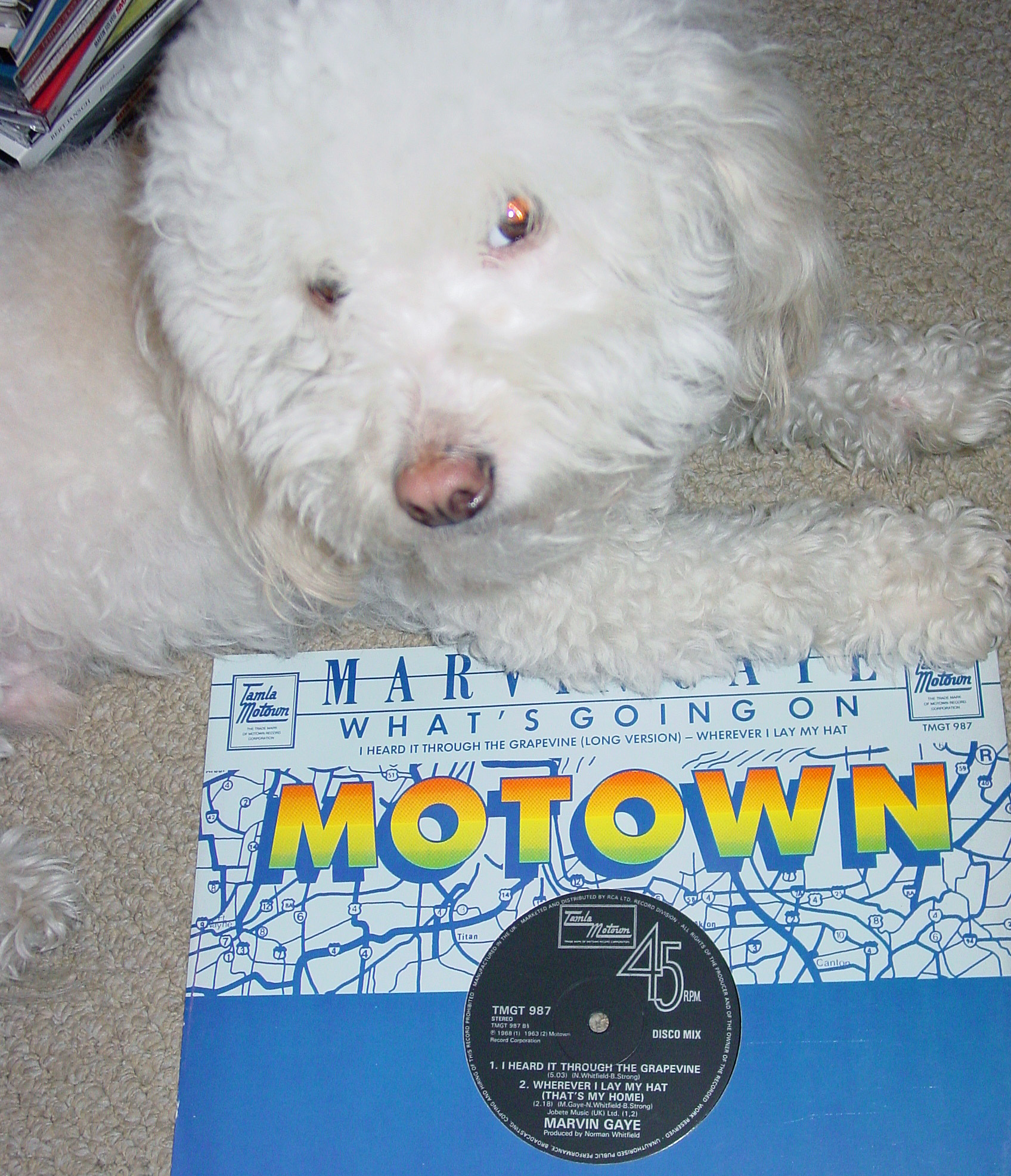
Winston + Marvin 003

“I Heard It Through The Grapevine”

Winston + Marvin 003

By 1966, Barrett Strong, the singer on Motown Records’ first hit single, “Money (That’s What I Want),” had the core of a song based on expression that emanated from the Civil War era. Slaves in the United States passed along information via a “human grapevine.” In Strong’s time he often heard people passing along gossip, saying they “heard it through the grapevine.” With that line as the chorus and a bass line, he brought the song to Norman Whitfield, who added lyrics about someone who hears gossip that their lover is unfaithful and will leave him/her for another lover.

Whitfield produced a version of their new song, “I Heard It Through the Grapevine,” with Smokey Robinsons and the Miracles, but Motown chief Berry Gordy, Jr. rejected it.

In 1967, Whitfield entered the studio with Marvin Gaye. At the time Gaye was married to Berry Gordy’s sister Anna. Gaye heard that Anna was being unfaithful to him. The lyrics surely resonated with him (though in (un)fairness, he was cheating on Anna). To wring more emotion out of Gaye, Whitfield had him perform the song in a higher key than he normally used. This did not sit well with Gaye, who is quoted in his biography as saying “Norman and I came within a fraction of an inch of fighting. He thought I as a prick because I wasn’t about to be intimidated by him. We clashed. He made me sing in keys much higher than I was used to. He had me reaching for notes that caused my throat veins to bulge.”

All may have been for naught, as Berry Gordy rejected the Gaye recording as well.

In June of 1967, Aretha Franklin went to #1 with her version of Otis Redding’s “Respect.” With that record as his model, Whitfield again brought “I Heard It Through the Grapevine” into the studio later that year, this time with Gladys Knight and the Pips. This version was faster than the versions he produced for the Miracles and Gaye, with the intention to “out-funk” Aretha.

Gordy reluctantly approved the Pips version for release. It rose to #2 on the pop chart and went to #1 on the r&b chart, where it remained for six weeks. It became Motown’s biggest-selling single to that point.

The Gaye version ended up on his 1968 album In the Groove. The first single from that album, “Chained,” hit #32 on the pop chart. “Grapevine” got the attention of some radio disc jockeys, who gave it airplay. Said Gordy, “The DJs played it so much off the album that we had to release it as a single.”

Marvin Gaye’s version of “I Heard It Through the Grapevine” was released as a single in fall of 1968. In mid-December it went to #1 on both the pop and r&b chart, and stayed on top of each for seven weeks, becoming Motown’s biggest hit to date. The week this went to #1 on the pop chart, Motown had the top three hits (#2 was “Love Child” by Diana Ross & the Supremes and #3 was “For Once in My Life” by Stevie Wonder.) The company held onto the top three for four consecutive weeks. “I Heard It through the Grapevine” bookended the r&b #1 slot in ’68 – the Pips’ version was #1 on January 1 and Gaye’s was #1 on Dec. 31.

By the time his “Grapevine” was released Marvin Gaye already had 23 top 40 pop hits. This was his first #1.

Gaye’s version made Rolling Stone’s list of the Greatest Songs of All Time and was inducted into the Grammy Hall of Fame.

“I Heard It Through The Grapevine” was the first collaboration between Barrett Strong and Norman Whitfield. The duo went on to compose “Papa Was a Rollin’ Stone” and “Just My Imagination (Running Away with Me)” for The Temptations.

Marvin Gaye died at age 44 on April 1, 1984, shot to death by his father the day before his birthday. The gun used was a Christmas present from Marvin.

doggies + Diana 003

Just Sing “Baby, Baby”

In 1964 the Motown songwriting/production team of Brian Holland, Eddie Holland and Lamont Dozier wrote a composition intended for The Marvelettes, who by that time had two top ten pop singles under their belt – “Playboy” and “Please Mr. Postman,” both co-written and co-produced by Brian Holland.

The three men went into the studio and had the instrumental track recorded, but when Lamont Dozier played the song and presented the chorus to The Marvelettes’ Gladys Horton, he got a response he wasn’t expecting. “Oh, honey, we don’t do stuff like that. And it’s the worst thing I ever heard,” she told him. In case he was still unsure how she felt, she added “No way am I gonna sing any junk like that!”

Dozier went through the Motown roster to see who he could get to record this number. He ended up with the group at the very bottom of the list, a trio of women signed to Motown several years earlier, but who had no big hit records to their name. Originally a quartet called The Primettes, the group had released nine singles, only one of which, a song written by Holland-Dozier-Holland entitled “When the Lovelight Starts Shining Through His Eyes,” made the top 40, reaching #23. Initially they declined Dozier’s offer to record the song, finding it childish, repetitive and too slow, but they soon changed their mind, as they had no other material to record.

The three women in the trio, known around the Motown offices as “The No-Hit Supremes,” all sang lead vocals. As the instrumental version of this new track had already been recorded in the register in which Gladys Horton sings, the producers thought Mary Wilson, who sang in the same range as Horton, should handle the lead vocals, but Motown head Berry Gordy, Jr. wanted one of the other Supremes, Diana Ross, to be the group’s lead vocalist.

Ross complained that the music was in the wrong key, but was told to sing it the lower key. She wasn’t crazy about doing so, nor were the other two women eager to learn the intricate background vocals that had been written. Because of their bad attitude, Dozier told them to just sing “Baby, baby.”

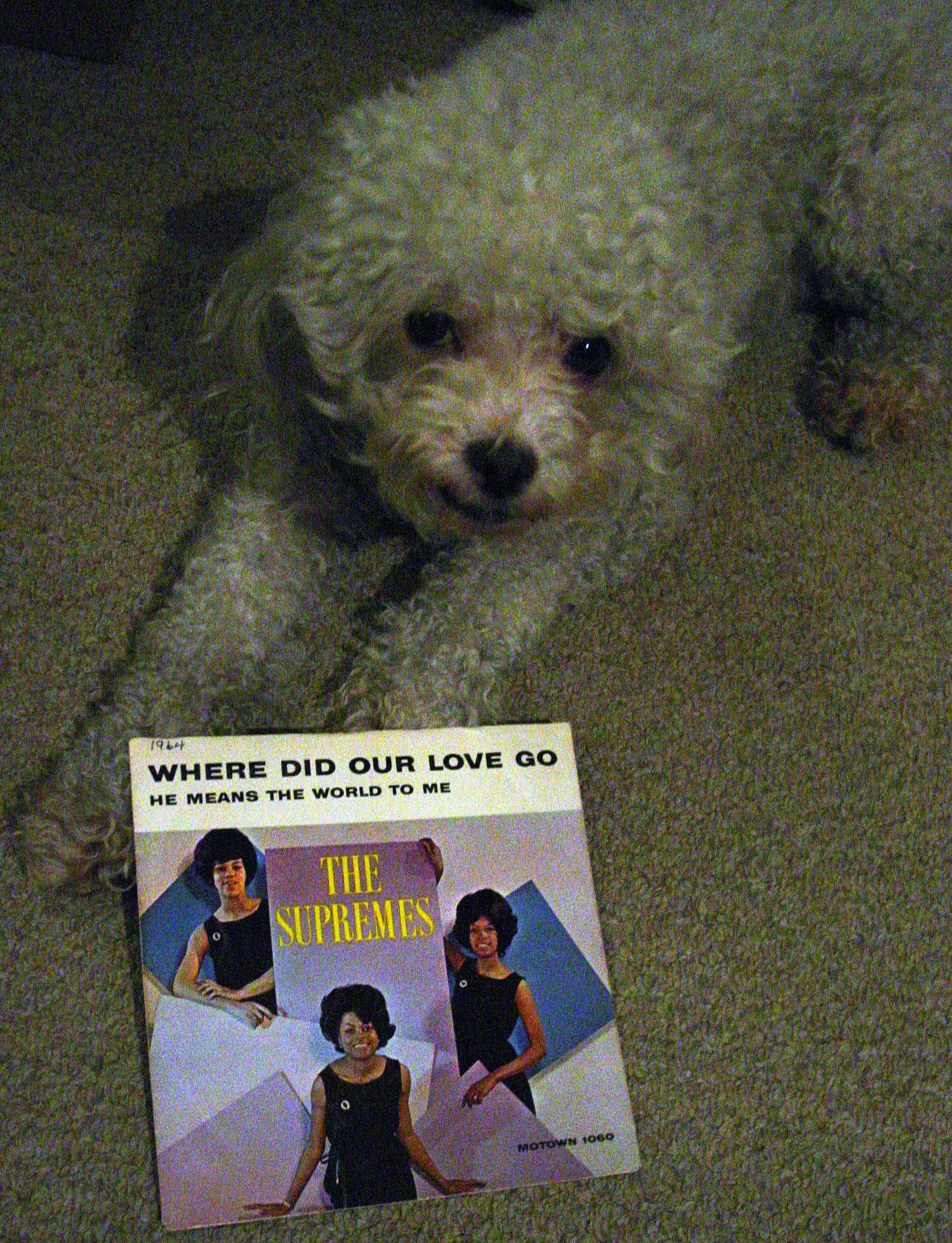
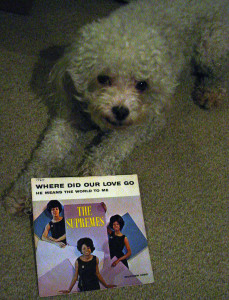
On June 17, 1964, Motown released the track, entitled “Where Did Our Love Go,” as a single. As the “No-Hit Supremes” toured as part of Dick Clark’s American Bandstand Cavalcade of Stars, where they received credit at the bottom of the poster as part of “And Others,” the song climbed the charts. It hit #1 in August 1964, and by the time the tour ended, the Supremes had top billing.
doggies + Diana 003

Holland-Dozier-Holland went on to write many more songs for the Supremes, including their next four singles, all of which went to #1. The women scored twelve #1 pop hits between 1964 and 1969, ten of which were written by the same trio of men who came up with “Where Did Our Love Go,” which made Rolling Stone’s list of the 500 Greatest Songs of All Time.

Today Tunes du Jour celebrates the woman who may not have become a household name had she not given in to recording the now classic tune. Happy 70th birthday, Diana Ross!
doggies + Sly 002

A Sly & The Family Stone Playlist

doggies + Sly 002
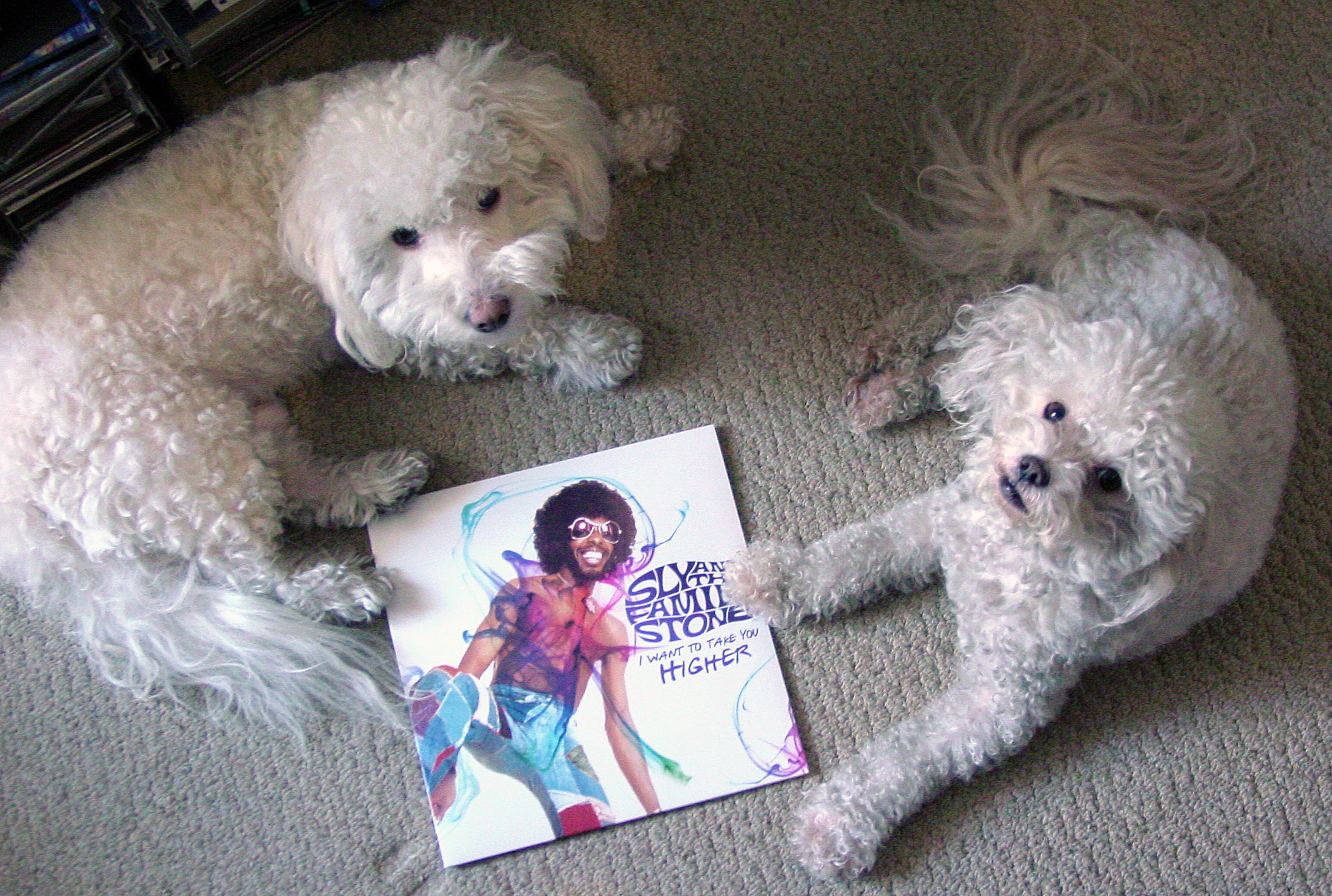
Today the musical genius that is Sly Stone turns 71 years old.

On our menu:
“Dance to the Music”
From 1968, Sly & The Family Stone’s first hit single helped launch the “psychedelic soul” sound that was a huge influence on acts such as The Temptations, The Undisputed Truth, War, Parliament and The 5th Dimension. Interestingly, the Family Stone didn’t care for the track, thinking it too commercial.

“Sing a Simple Song”
Sly & The Family Stone drummer Greg Errico said this song isn’t simple at all; it’s actually difficult to play live.

“Runnin’ Away”
“In those days it was the hippies who cut their hair and ran away from the hippy feeling. It’s about how, at a certain time, everybody runs away from something.” – Sly Stone

“Family Affair”
From 1971, this was Sly’s third #1 pop hit and his last top ten.

“Somebody’s Watching You”
A track from 1969, seventeen years after President Truman formed the NSA.

“Hot Fun in the Summertime”
This song contains the lyric “I cloud nine when I want to,” a reference to The Temptations hit song “Cloud Nine,” insinuating that the Motown band was echoing The Family Stone’s vocal style. This single went to #2 on the pop chart, kept from the top spot by The Temptations’ “I Can’t Get Next to You.”

“Don’t Call Me Nigger, Whitey”
And vice versa, per the song. Made more impactful due to the fact that this as one of the first integrated bands (which also had men and women playing major roles).

“If You Want Me to Stay”
The band’s final gold single, from 1973

“Everybody is a Star”
Recorded for an album that was never competed, this song, along with “Hot Fun in the Summertime” and “Thank You (Falettinme Be Mice Elf Agin),” was included on a 1970 Greatest Hits set from the band.

“Stand!”
“In the end you’ll still be you, one that’s done all the things you set out to do”

“I Want to Take You Higher”
Released as the b-side of the “Stand!” single, the band’s incendiary performance of the tune at Woodstock had their record label release it as a single a-side, becoming another top 40 hit for them.

“Everyday People”
“And so on and so on and scooby doobie doobie.” Has any other song said so much as elegantly?

“Que Sera, Sera”
One of the few cover versions his band recorded

“Thank You (Falettinme Be Mice Elf Agin)”
Hulk Hogan’s daughter Brooke released a cover of this song. It’s not as well known.

“Crazay”
Jesse Johnson, lead guitarist of The Time, brought in Sly to help on this 1986 club hit that went to #2 on the r&b chart.

doggies + Smokey 004

When Smokey Sings Or Writes

doggies + Smokey 004

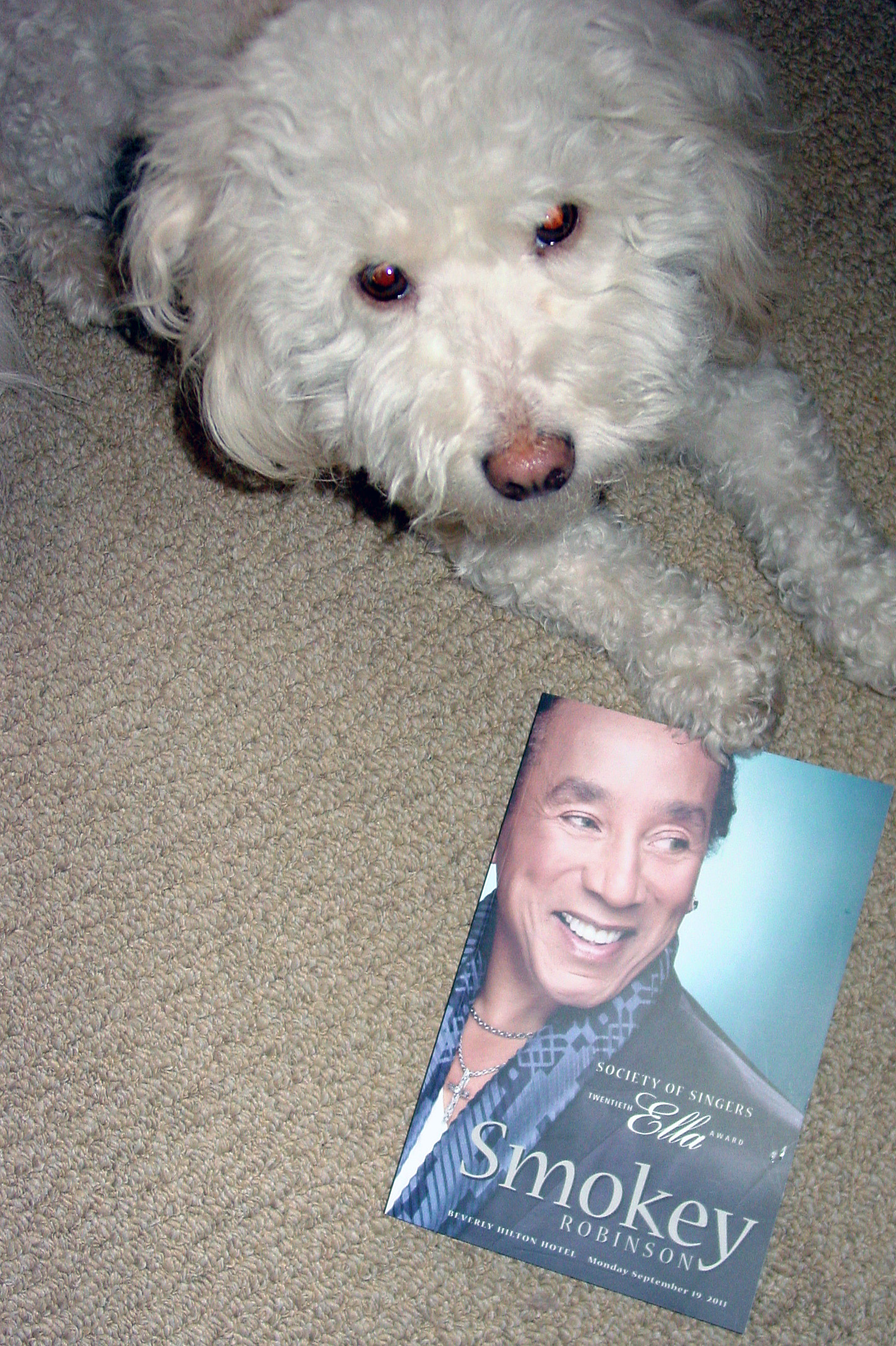
In 2011, I attended the Society of Singers’ tribute to Smokey Robinson. The award was well-deserved, as anyone who has heard him sing knows that Smokey Robinson possesses a sweet, soulful voice, one that he has used to beautiful effect on records going back more than fifty years. The British band ABC paid tribute to him on their top ten single “When Smokey Sings.” In their hit “Genius of Love,” Tom Tom Club sing “No one can sing quite like Smokey, Smokey Robinson.”

doggies + Smokey 005

In addition to his singing talent, Smokey is a writer on many classics in the great American songbook. Chances are you know “The Tracks of My Tears,” “My Girl” (click here for more about that song), “You’ve Really Got a Hold on Me” (originally recorded by Smokey’s group The Miracles as the b-side of a 45), “The Tears of a Clown,” “My Guy,” “Shop Around,” “Ooo Baby Baby,” “I Second That Emotion,” “Cruisin’,” and “The Way You Do the Things You Do.”

doggies + Smokey 006Here’s my cocktail napkin from the Society of Singers event. I need to wash that placemat.

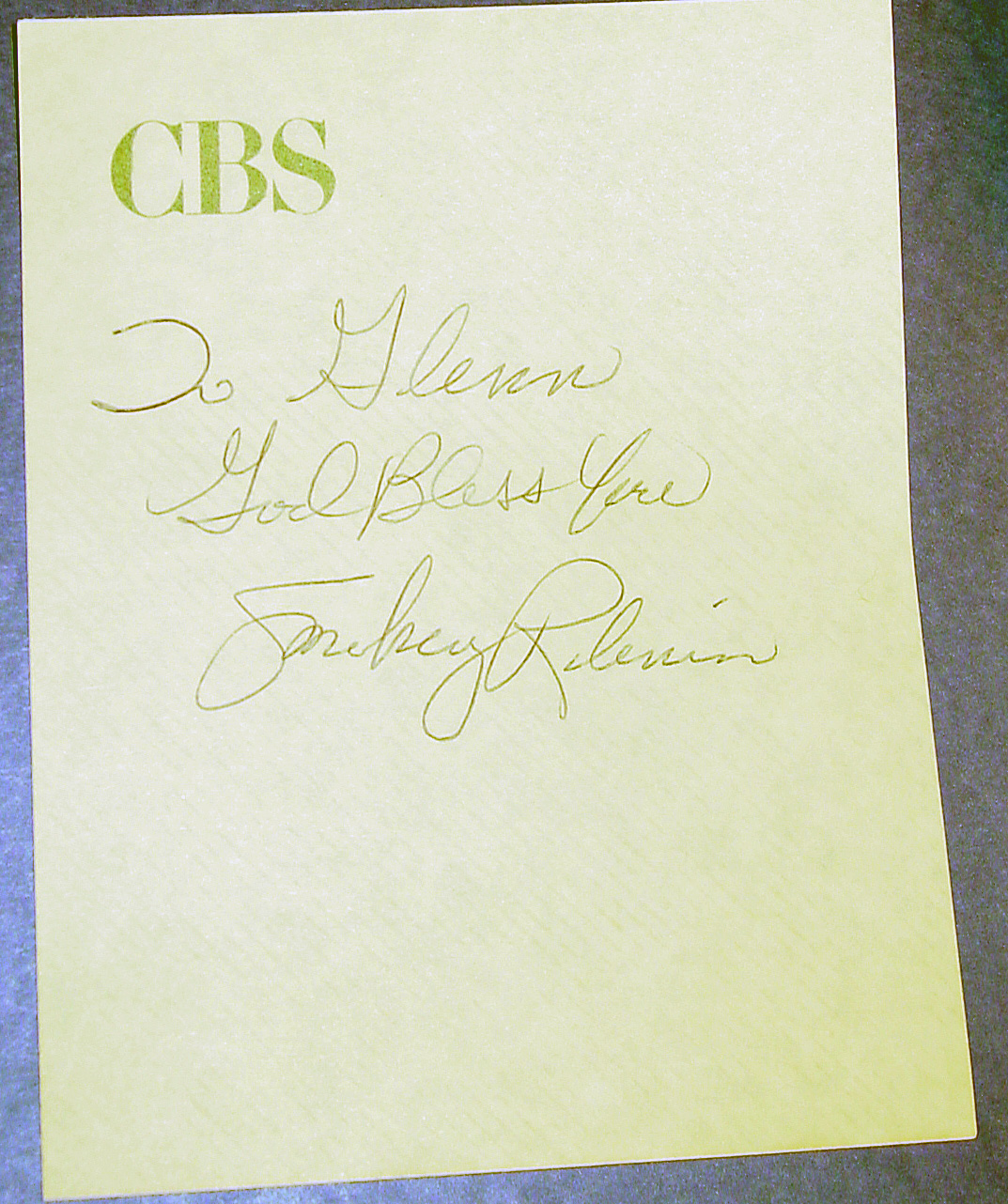
I met Smokey one time in the late 1980s. I was working at CBS Records in midtown Manhattan. Our offices were in the Black Rock building, which was also home to WCBS radio. Smokey had just done an interview at the radio station when I bumped into him in the building’s lobby. I told him I enjoyed the article about him in the new issue of Rolling Stone, which I was holding. He said he hadn’t seen it yet and took my magazine from me to look at it. I wouldn’t let him keep my issue – I was a poor office clerk, after all – but he was gracious enough to sign an autograph for me.

Smokey autograph

Today is Smokey’s 74th birthday. Enjoy this playlist comprised of songs Smokey sings and songs Smokey wrote or co-wrote, songs you know and songs you should know.

Temptations 003

You Should Know David Ruffin

Temptations 003

The Temptations already performed and recorded before David Ruffin joined the group in 1964. Lead vocals were usually handled by Eddie Kendricks or Paul Williams. Smokey Robinson, who co-wrote songs and produced tracks for the group during this period, heard something in Ruffin’s voice that told him he could be more than a background singer.

Challenging himself to come up with this perfect song for Ruffin to sing, Smokey delivered what became the group’s first #1 record on the pop and r&b charts. The song was “My Girl,” the first of several classic Temptations sides on which Ruffin sang lead.

Ruffin wasn’t with the group for very long. He was fired in 1968 after missing performances. He had a couple of solo hits after leaving The Temptations but for the most part, his hit-making days were behind him.

Ruffin died at age 50 in 1991. On today, Ruffin’s birthday, Tunes du Jour presents a playlist of some of Ruffin’s best work. It’s amazing how many great tunes he sang lead on during his brief tenure with The Temptations.